Rolling stock
The rolling stock in the Kharkiv metro is quite diverse. Before the full-scale invasion, the Kharkiv Metro operated a fleet of 326 passenger cars, as well as a track geometry car and a signalling and track inspection car.
Ezh3/Em508T metro cars (operated since 1975)
Operated on the Kholodnohirsko-zavodska line
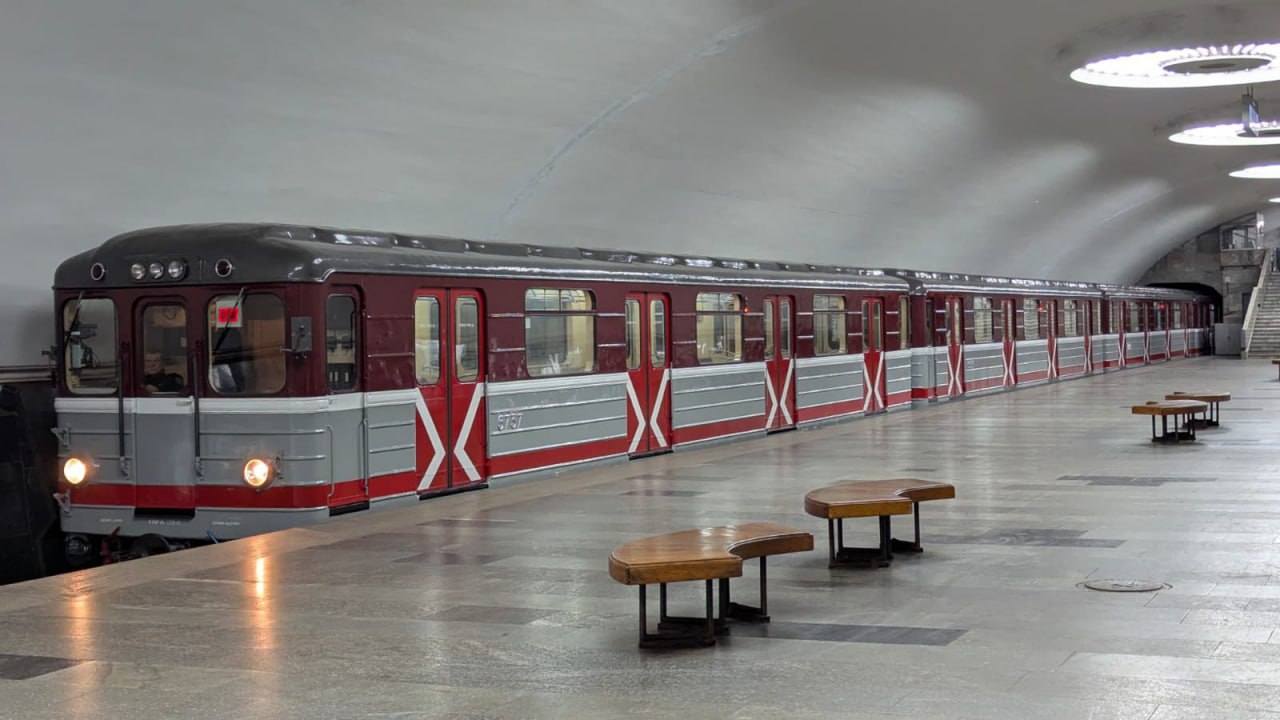
The opening of the Kharkiv Metro in 1975 coincided with a new generation of Soviet metro rolling stock. Based on the successful Type E design, several improved variants were developed to meet the needs of different metro systems. For its inauguration, the Kharkiv Metro received one of the most modern train types available at the time — the Ezh3, built by the Mytishchi Machine-Building Plant.
Compared with earlier Type E cars, the Ezh3 introduced a number of important improvements. The new four-motor traction system increased the power output of each traction motor to 72 kW. The cars were also equipped with radio communication for train dispatching and featured a redesigned driver’s control desk. In addition, they were designed for operation with the Automatic Train Protection (ATP) system, which was introduced on the Kharkiv Metro shortly afterwards.
The Em508T cars were built by the Leningrad Carriage Building Plant specifically to operate together with Ezh3 cars. Unlike the Ezh3, the Em508T was not fitted with batteries for the ATP system and therefore used a different battery box arrangement. Otherwise, its traction motors and most electrical and pneumatic equipment were identical. Externally, the Em508T is almost indistinguishable from the Ezh3.
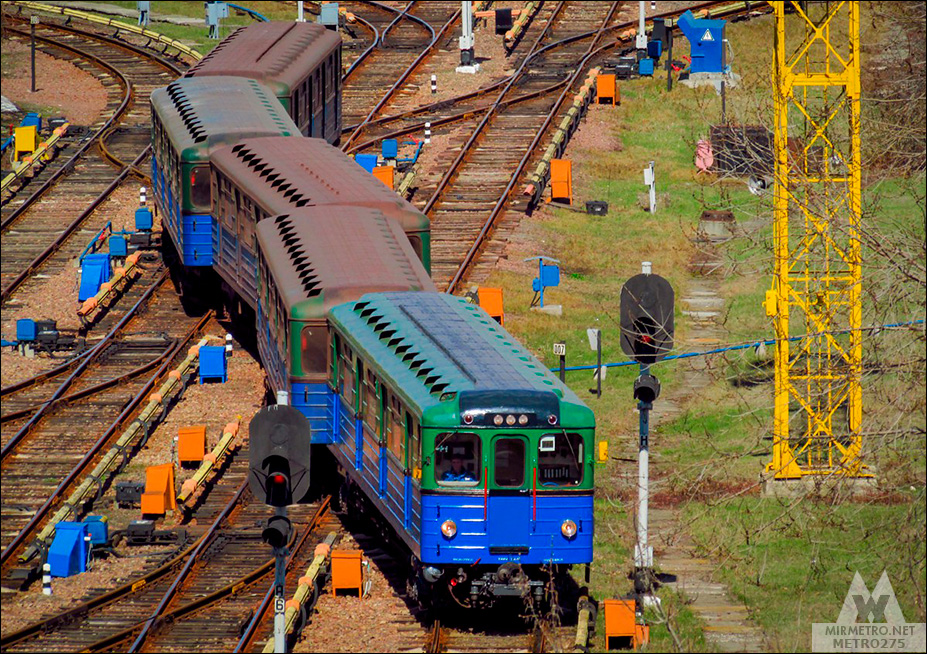
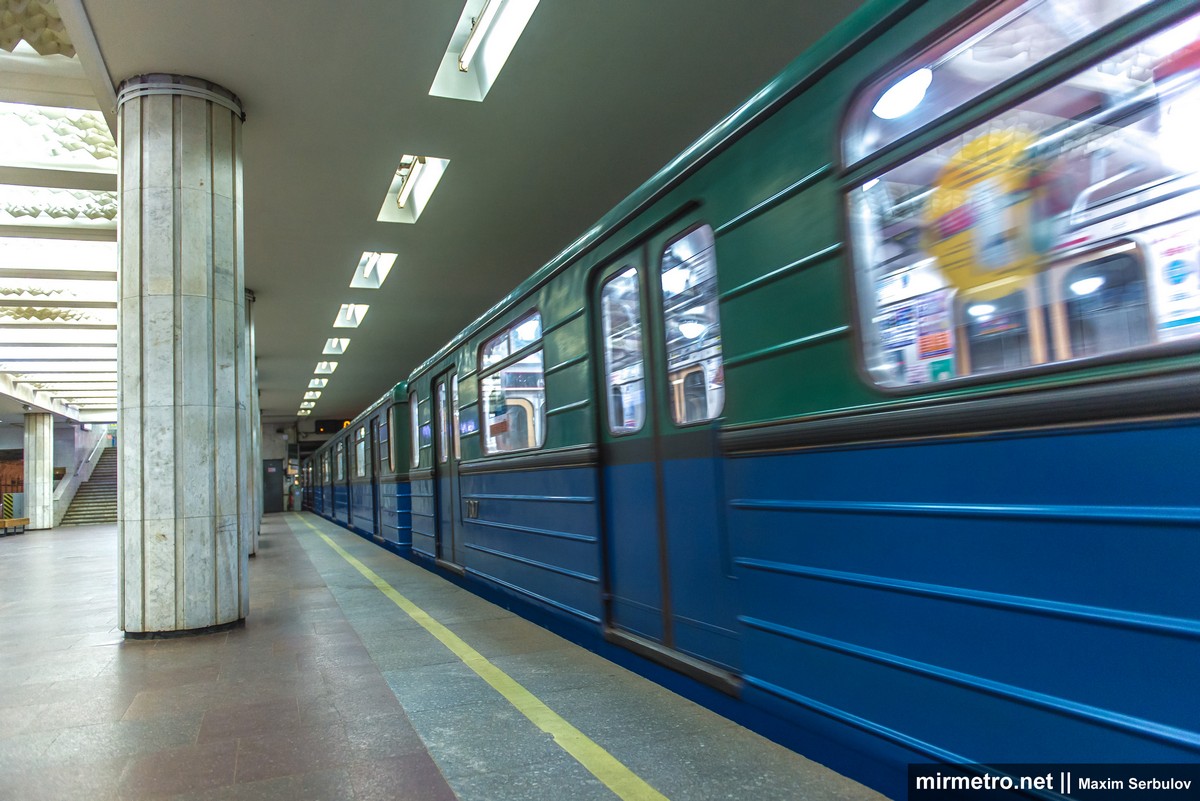
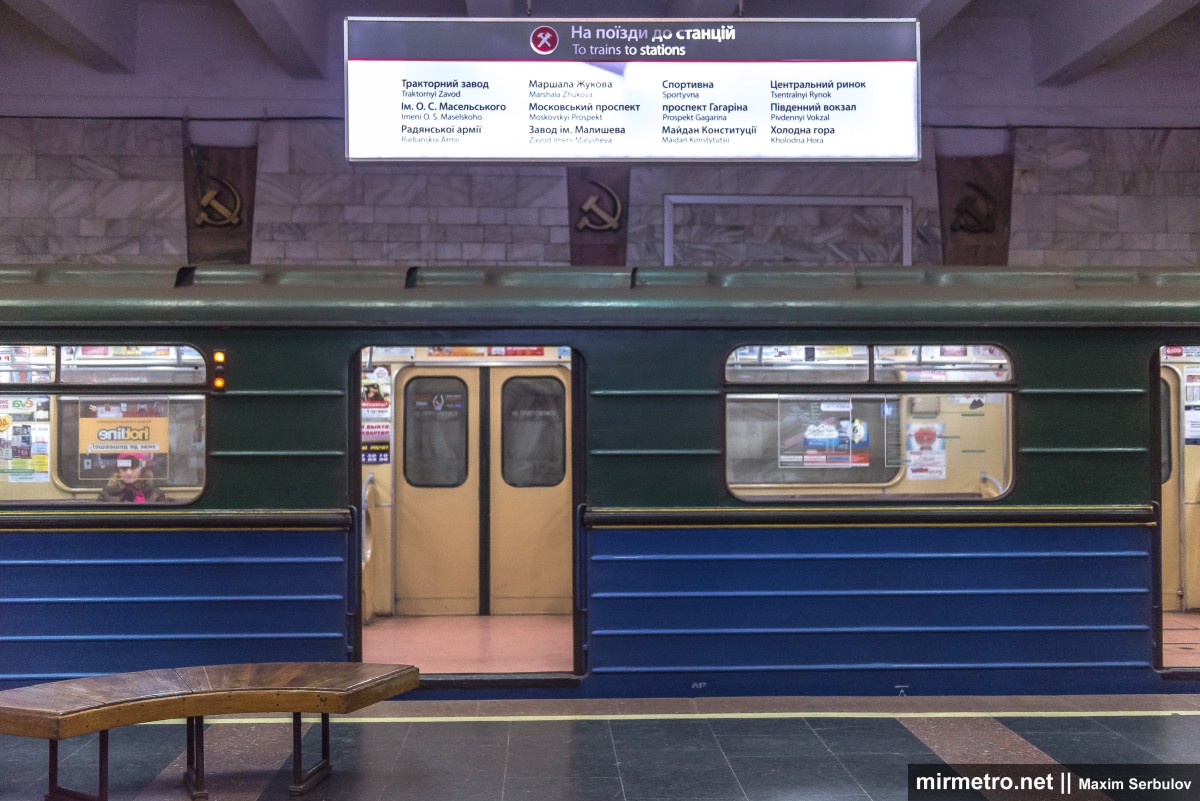
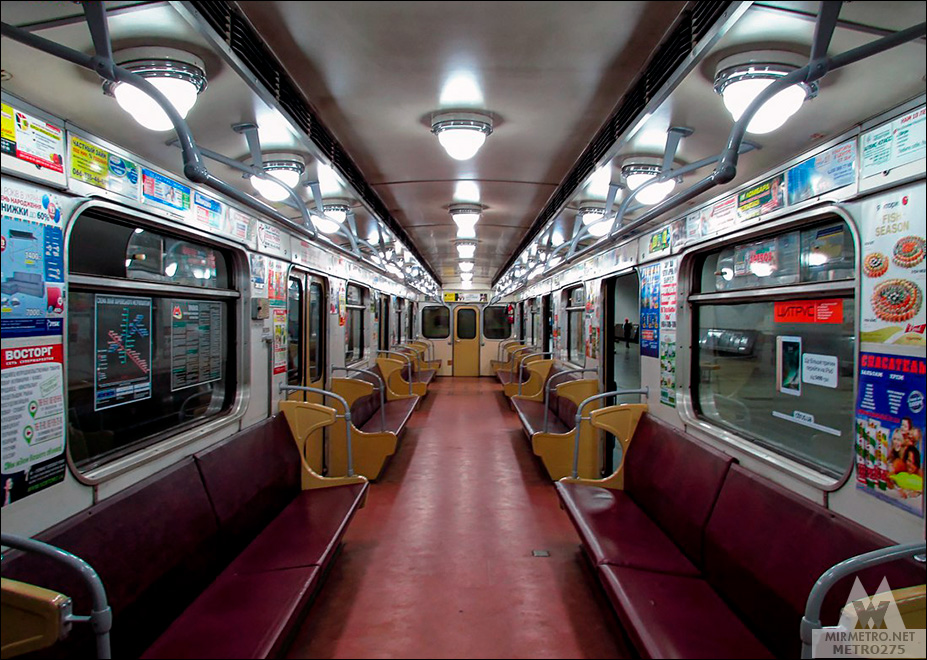
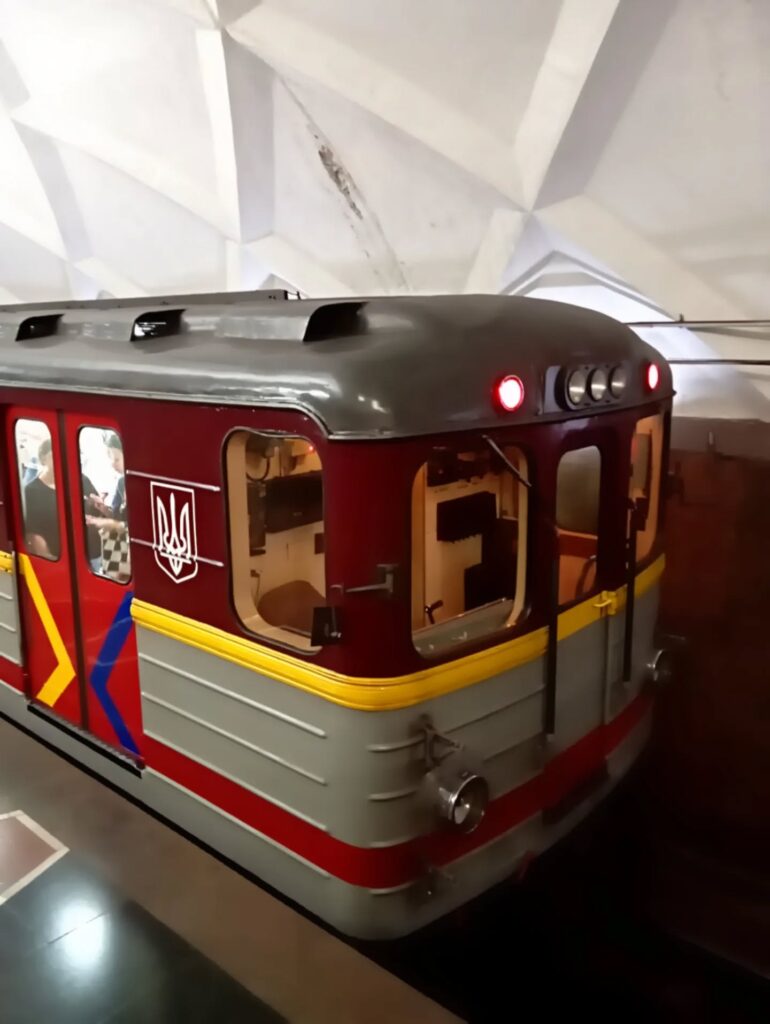
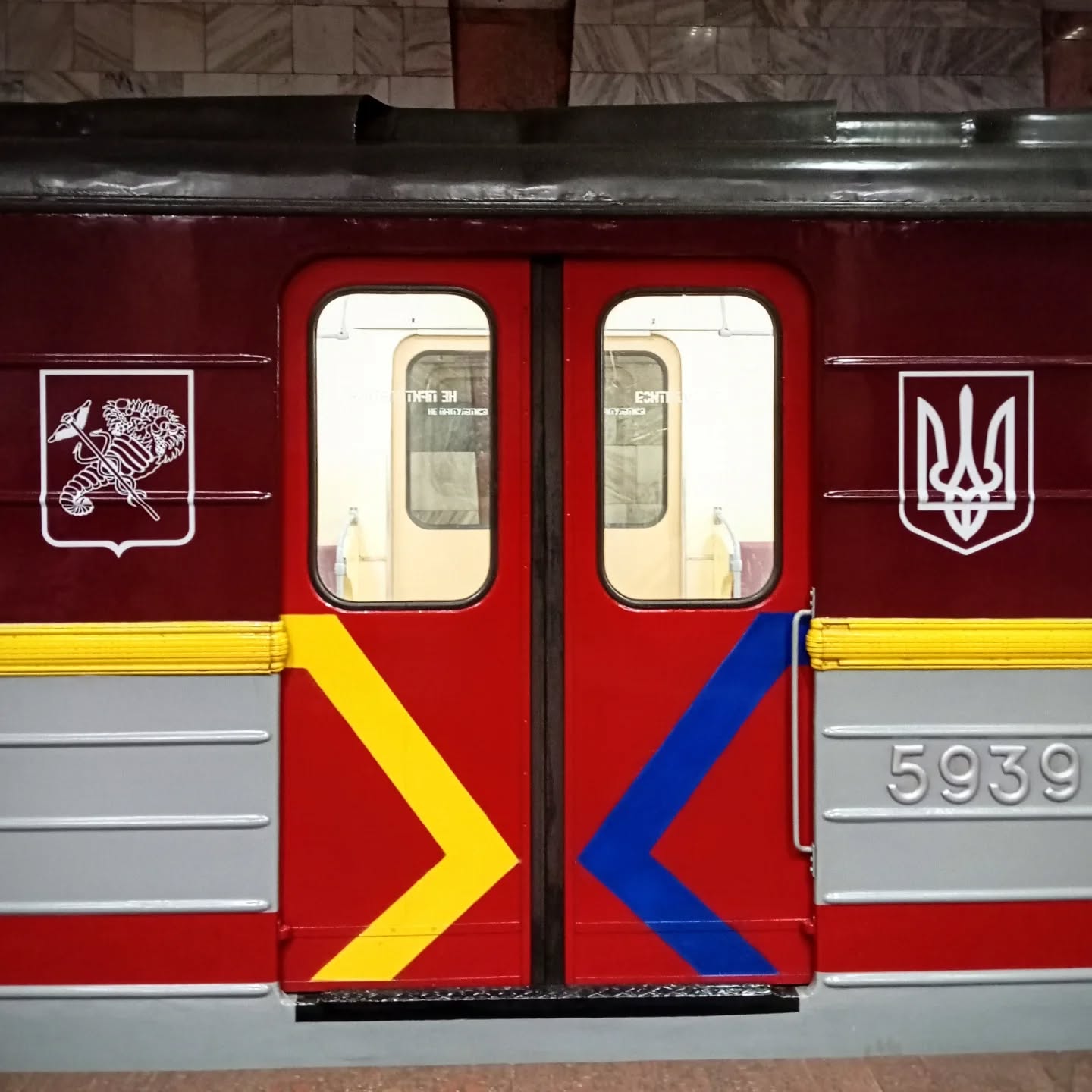
The passenger saloon features a plastic interior finish and firmer seating than earlier models. Lighting is provided by incandescent lamps housed in circular ceiling fittings arranged in three rows. Externally, the trains were delivered in the standard factory livery of the period: a dark green upper body, blue lower body, and a black waistline. In early 2025, however, Kharkiv residents spotted a train in a new livery combining grey, brown, and red, decorated with the coats of arms of Kharkiv and Ukraine.
Between 1975 and 1979, approximately 140 Ezh3 and Em508T cars were delivered to Kharkiv. Among railway enthusiasts and metro staff, they are affectionately known as “hedgehogs” because of the pronunciation of the designation Ezh. The cars have always operated in mixed formations, with Ezh3 cars serving as the driving cars at both ends of the train. When the metro first opened, trains consisted of four cars. Five-car formations were introduced in January 1978 and remain in operation today. More than fifty years after entering service, these trains continue to operate exclusively on the Kholodnohirsko-Zavodska Line.
Today, all cars of this type have exceeded their original 35-year design service life. To keep them in operation, they undergo regular major overhauls, during which worn components are replaced, the passenger interiors are refurbished, and the original incandescent lighting is replaced with LED fixtures. Only one intermediate car has had its driver’s cab removed during refurbishment; the remainder retain their original cabs. In addition, many cars still have their original wooden window frames.
Cars that have not undergone an overhaul can easily be identified at terminal stations. For a brief moment after arrival, the interior lights go out as the train changes over between power sections. This occurs because the motor-generator temporarily loses its power supply while passing through a neutral section. On later generations of metro cars, onboard batteries maintain the electrical supply during this transition, preventing the lights from going out.
These are the oldest passenger cars in the Kharkiv Metro fleet. For many years, a rare Type D car built in 1962 served as the system’s track geometry car. Sadly, it was destroyed, together with several other vehicles, during a Russian missile strike on the Nemyshlianske Depot in June 2022.
Specifications of Ezh3/Em508T cars
| Ezh3 | Em508T | |
| Body length, mm | 19 166 | 19 210 |
| Body width, mm | 2 700 | 2 700 |
| Height above rail level, mm | 3 695 | 3 695 |
| Service weight, t | 31.7 | 32.2 |
| Maximum speed, km/h | 90 | 90 |
| Acceleration, m/s² | 1.1 | 1.1 |
| Service braking deceleration, m/s² | 1.2 | 1.2 |
| Traction motor output, kW | 72 | 72 |
| Passenger capacity (at 10 passengers/m²) | 264 | 264 |
| Seating capacity | 42 | 42 |
| Design service life, years | 35 | 35 |


81-717/714 metro cars (operated since 1983)
Operated on all three lines
By the mid-1970s, further development of the Type E family by the Mytishchi Machine-Building Plant had resulted in a completely new generation of metro rolling stock: the 81-717 driving car and the 81-714 intermediate car. Among railway enthusiasts and metro staff, these cars became known simply as “numbers”, as they were the first Soviet metro cars to be identified by numerical rather than alphabetical designations. Production was established at the Mytishchi Machine-Building Plant (now Metrovagonmash) and the Leningrad Carriage Building Plant (later Vagonmash). Within a few years, the 81-717/714 series became the most widespread type of metro rolling stock throughout the CIS and Eastern Europe.
The new cars were equipped with significantly more powerful traction motors. They also introduced a static auxiliary power supply (SAPS), which provides power for the control circuits and battery charging. This equipment produces the characteristic continuous humming sound that can often be heard while the train is standing at a station.
The 81-717/714 series also received reinforced bogies with a nose-suspended traction motor arrangement and wheelsets with larger-diameter axles. Traction motors are controlled by a rheostatic-contactor control system (RCCS). The driver’s controls were relocated from the right-hand side of the cab to the centre, while visibility was greatly improved thanks to a large one-piece windscreen replacing the smaller front windows used on earlier models. For the first time, intermediate cars were built without driver’s cabs, increasing the available passenger space by approximately 5–10%. The pneumatic equipment and the overall electrical system remained largely unchanged. The design proved exceptionally successful, and its continuous development led to numerous later modifications, many of which remain in production to this day.
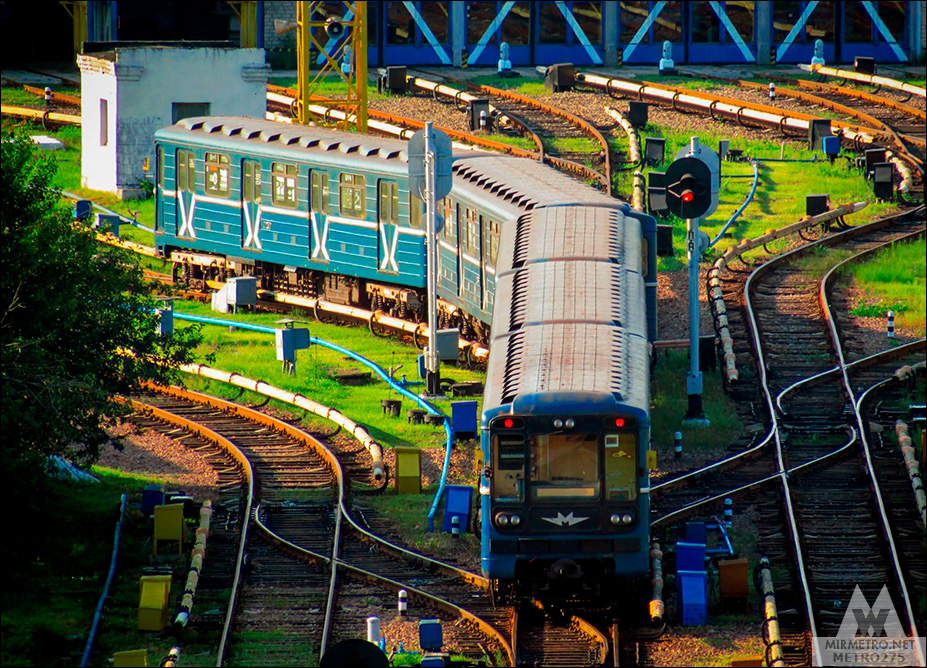
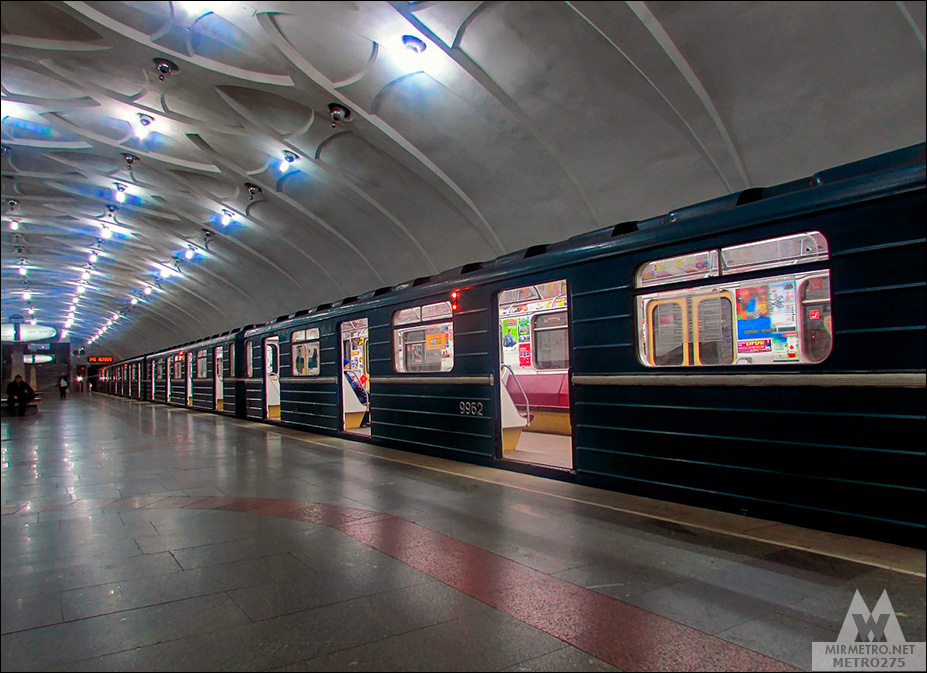
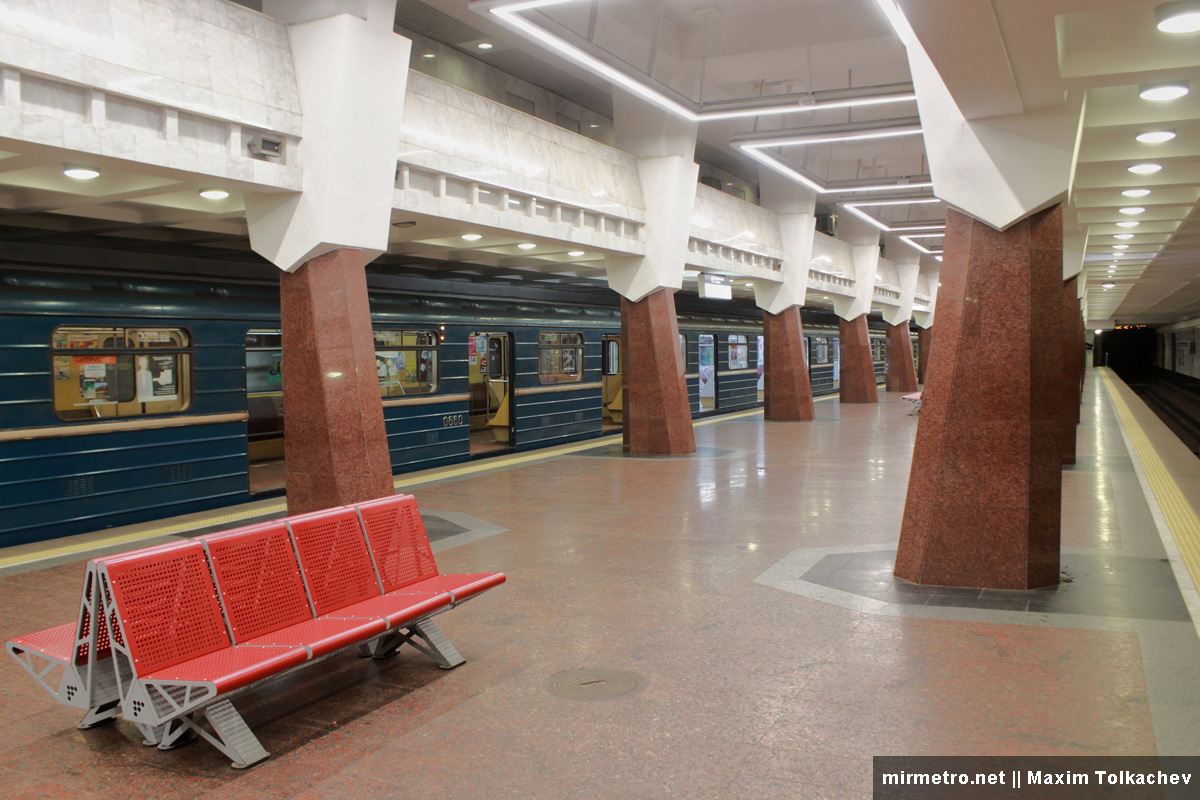
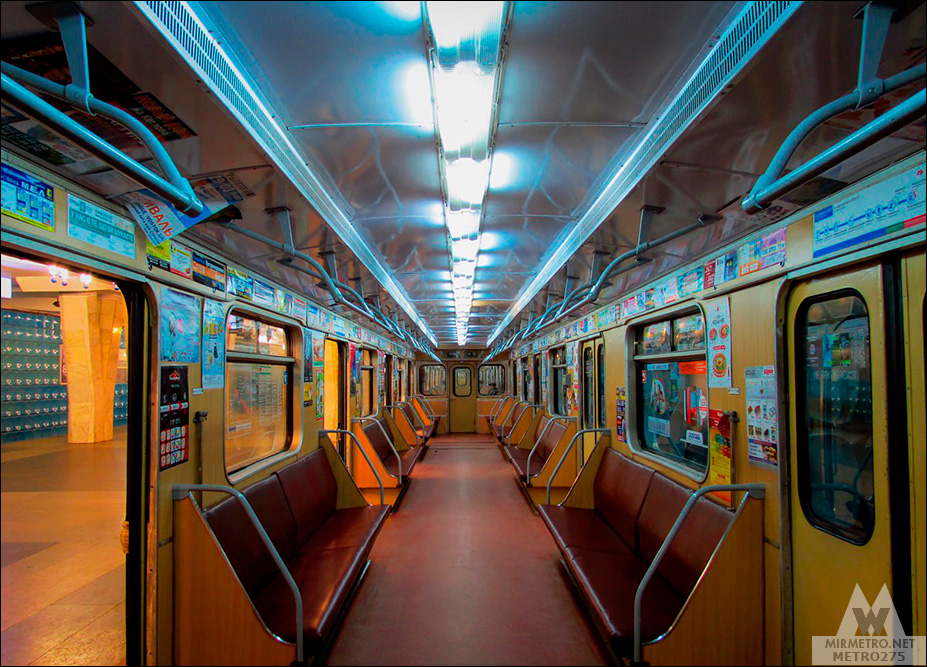
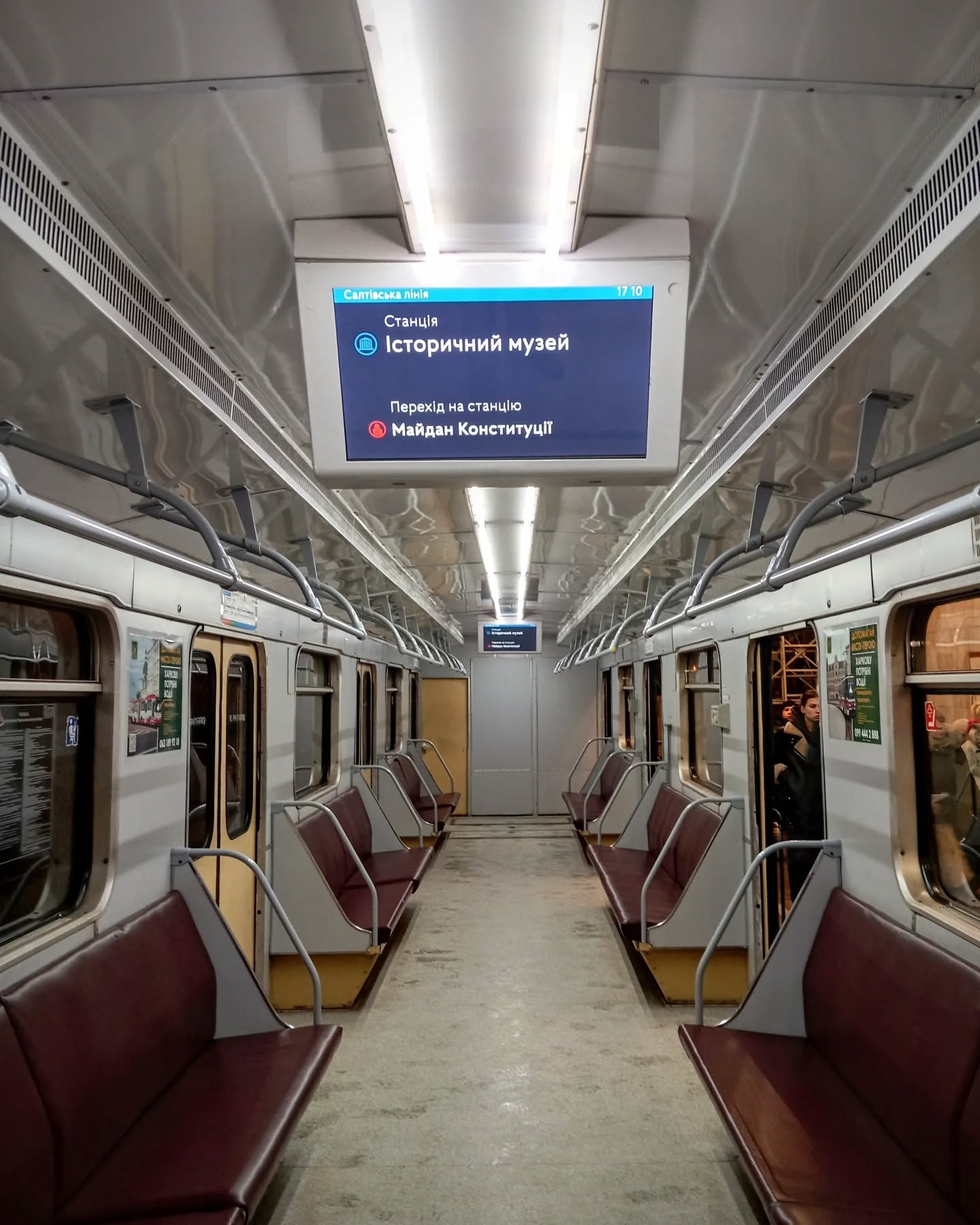
The original incandescent lighting was replaced with continuous rows of fluorescent lamps running along the centre line of the passenger saloon. The interior was also updated with redesigned handrails. The cars were delivered in the standard factory livery: a dark blue upper and lower body separated by a white waistline. Two front-end design variants were used. One featured a distinctive double-chevron motif on the doors, popularly nicknamed the “condensed milk” pattern by railway enthusiasts because it resembled the graphics on Soviet condensed milk cans. The other used a simpler V-shaped white stripe.
The first two trains entered Kharkiv in the summer of 1983, and regular passenger service began in October of the same year. Between 1983 and 1991, the city received a total of 28 trainsets of this type. Today, these trains operate primarily on the Saltivska Line. Until 2015, all passenger services on this line were operated exclusively by 81-717/714 cars. Several trainsets are also assigned to the other two lines, while two trainsets can be transferred between the red and green lines as operational requirements dictate.
Cars delivered between 1989 and 1991 featured some design improvements. They were equipped with a new static auxiliary power supply operating at 150 Hz, as well as plug-in electrical jumper connections between cars. The revised design also introduced more reliable bogies, together with an automatic fire detection and suppression system. In addition, the arrangement of the headlights on the driving cars was changed. These upgraded vehicles were designated 81-717.5 and 81-714.5.
During their service life, many 81-717/714 cars have undergone major overhauls, including the replacement of worn components and the refurbishment of the passenger interior. On many trains, the original fluorescent lighting has been replaced with LED fixtures. In some cars, several seats have been removed to provide dedicated space for passengers using wheelchairs or travelling with pushchairs.
A particularly distinctive trainset operates on the Saltivska Line, although it has never been officially designated as a themed train. The exterior carries the inscription “Kharkiv – City of Military Glory”, while the interior of each car is devoted to a different historical theme. The exhibition covers the history of the Kharkiv Metro, Kharkiv during the Second World War, the fighting in the Donbas, Ukrainian soldiers who took part in the Anti-Terrorist Operation (ATO), and veterans of the Soviet–Afghan War. The trainset was created in memory of a Kharkiv Metro employee who lost his life while serving in Afghanistan.
Sound of 81-717/714 metro cars
Specifications of 81-717/714 metro cars
| 81-717 | 81-714 | |
| Body length, mm | 19 206 | 19 206 |
| Body width, mm | 2 670 | 2 670 |
| Height above rail level, mm | 3 650 | 3 650 |
| Service weight, t | 34 | 33.5 |
| Maximum speed, km/h | 90 | 90 |
| Acceleration, m/s² | 1.1 | 1.1 |
| Service braking deceleration, m/s² | 1.2 | 1.2 |
| Traction motor output, kW | 110 | 110 |
| Passenger capacity (at 10 passengers/m²) | 308 | 330 |
| Seating capacity | 40 | 44 |
| Design service life, years | 31 | 31 |


81-718/719 metro cars (operated since 1992)
Operated on the Oleksiivska line
In the late 1980s, the Mytishchi Machine-Building Plant attempted to develop an entirely new generation of metro cars. The result was the experimental Type I train. However, the project was abandoned after the prototype failed fire safety requirements, and the new design never entered mass production. As a result, engineers decided to retain the proven body design of the 81-717/714 series while focusing on modernising the equipment and electrical systems. The outcome of this work was the 81-718/719 series. Its most significant innovation was the introduction of a thyristor chopper control system (TCCS) for the traction motors. Unlike the traditional rheostatic-contactor control system, the new equipment regulates motor power electronically by rapidly switching the current on and off through high-power thyristors. This provides much smoother acceleration and braking, eliminates the characteristic jerks experienced on older trains, and significantly improves energy efficiency. The system also produces the distinctive high-pitched humming sound that can easily be heard as the train accelerates or approaches a station.
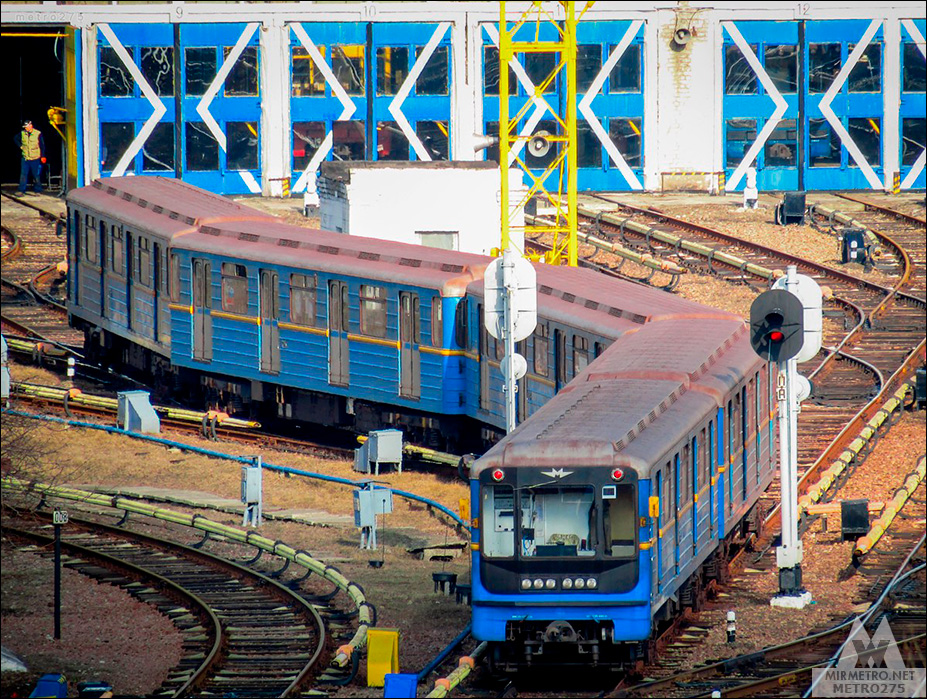
Compared with the earlier 81-717/714 series, the new cars offered higher reliability and lower operating costs. By eliminating energy losses in starting resistors, electricity consumption was reduced by approximately 20%. Most of the underfloor electrical equipment was built in modular units, many incorporating integrated electronic circuits, making maintenance and the replacement of faulty components much easier. The driver’s cab became more spacious and comfortable and was equipped with air conditioning. The arrangement of the headlights was also revised. The passenger saloon received a forced-ventilation system with eight ceiling-mounted fans fitted with air filters, eliminating the need for the roof-mounted ventilation scoops used on earlier models. The fluorescent lighting was rearranged into two continuous rows. The bogies, mechanical equipment, and pneumatic systems remained largely unchanged.
The factory livery was also distinctive, featuring a blue upper and lower body, grey roof and doors, and a yellow waistline. The doors were decorated with blue opposing arrow motifs. Since 2012, the original fluorescent lighting has gradually been replaced with LED fixtures.
The new trains had originally been intended for the Moscow Metro, but the project was abandoned because they were considered too expensive. Instead, the Kharkiv Metro was chosen as the testing ground for the new rolling stock. The first experimental trainset arrived in August 1992, and trial operation began in November. The new cars had originally been purchased for the future Oleksiivska Line. However, as the opening of the line was delayed, the train entered service on the Kholodnohirsko-Zavodska Line instead. It appeared only occasionally, making it a rare and memorable sight for passengers.
By the opening of the Oleksiivska Line in 1995, two additional trainsets had been purchased at a cost of approximately US$1.1 million each. Even with three trainsets, however, the fleet was far too small for the new line. One 81-717/714 trainset was therefore transferred from the Kholodnohirsko-Zavodska Line. Despite this, service intervals on the Oleksiivska Line remained unusually long — five minutes during peak hours and seven minutes during off-peak periods. In 1998, after considerable financial difficulties, the city managed to purchase one more trainset, allowing the intervals to be reduced slightly. Few people know that there were once plans to purchase Yauza trains instead, but the city’s financial situation made this impossible.
Between July 2001 and January 2003, the Oleksiivska Line temporarily operated four-car 81-718/719 trains instead of the usual five-car formations. To ensure passenger safety, temporary barriers were installed along the unused sections of station platforms. These measures were introduced as part of a strict cost-saving programme during a period of severe financial hardship for the metro system.
In 2004, three additional trainsets were purchased from Metrovagonmash for the extension of the Oleksiivska Line to 23 Serpnia station. Only the car bodies, complete with the mechanical and pneumatic equipment, were delivered from the factory. The traction power electronics were installed later at the Kharkiv Metro’s own repair workshops.
The new cars were equipped with more powerful 119 kW traction motors, while the passenger saloons received six-seat vandal-resistant benches instead of the earlier leatherette seating. Although these cars were mechanically different, they were delivered in the same factory livery as the 81-717/714 series and were repainted into the Kharkiv Metro’s own colour scheme after entering service. These vehicles were designated 81-718.2/719.2.
For several years after entering service, the trains carried commemorative decals marking the 350th anniversary of Kharkiv. One train also bore an inscription stating that it had been presented to the city by the President of Ukraine as an anniversary gift.
Outside Kharkiv, the 81-718/719 family entered passenger service only on the Tashkent Metro. Owing to the popularity of these trains among both passengers and metro staff in Kharkiv, negotiations were held in 2012 on the possible transfer of surplus cars from Tashkent. However, no agreement was ultimately reached, and the proposal was never implemented.
Sound of 81-718/719 metro cars
Specifications of 81-718/719 metro cars
| 81-718 | 81-719 | |
| Body length, mm | 19 200 | 19 200 |
| Body width, mm | 2 700 | 2 700 |
| Height above rail level, mm | 3 650 | 3 650 |
| Service weight, t | 33.5 | 32.5 |
| Maximum speed, km/h | 90 | 90 |
| Acceleration, m/s² | 1.2 | 1.2 |
| Service braking deceleration, m/s² | 1 | 1 |
| Traction motor output, kW | 117 | 117 |
| Passenger capacity (at 10 passengers/m²) | 308 | 330 |
| Seating capacity | 40 | 44 |
| Design service life, years | 31 | 31 |


81-7036/7037 metro cars (operated since 2015)
Operated on the Saltivska line
Following Ukraine’s independence, the need arose to develop a new generation of domestically built metro rolling stock that would meet modern technical standards while remaining economical to operate. For many years, however, the country’s difficult economic situation prevented such a project from moving forward. Finally, in 2003, the Kryukiv Railcar Building Works began developing a completely new metro train. After several years of design and testing, the first production cars entered service on the Kyiv Metro in 2009. Development continued, and the next stage was the creation of a version equipped with asynchronous traction motors and a microprocessor-based control system. In July 2012, three prototype cars were delivered to the Kharkiv Metro for trial operation on the Oleksiivska Line. After completing the test programme, they were returned to the manufacturer.
The new traction system represented a major technological step forward. Unlike traditional DC traction motors, asynchronous AC motors are controlled electronically by frequency converters, providing smoother acceleration and braking while significantly reducing maintenance requirements. During braking, the motors are capable of regenerative braking, returning electrical energy to the traction power network and reducing overall energy consumption by up to 30%. For this model, the manufacturer designed a new generation of more durable air-suspension bogies. However, at the request of the Kharkiv Metro, the prototype cars were instead fitted with the more familiar bolster-type bogies already used on the existing fleet.
The driver’s cab was completely redesigned in accordance with modern ergonomic standards. It features air conditioning and heating, an adjustable driver’s seat, an onboard computer with digital displays, and an integrated diagnostic system that continuously monitors the train’s equipment. Thanks to the new traction control system, the trains are capable of exceptionally smooth acceleration and braking.
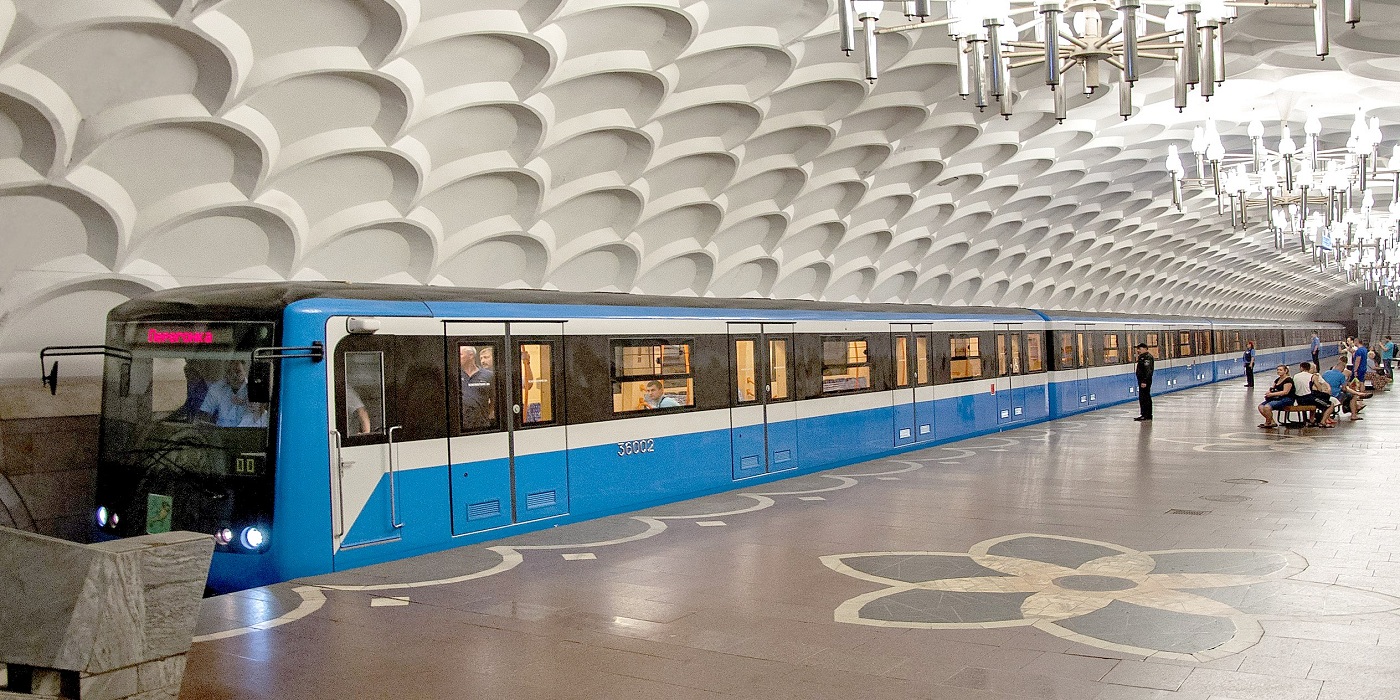
The new cars feature a more angular body design. Their welded steel bodies are constructed from all-welded low-alloy steel, while the streamlined front-end fairings are made of fibreglass. The passenger saloon is finished with orange plastic interior panels and fitted with vandal-resistant seats upholstered in fabric. Dedicated spaces for wheelchair users are provided in the driving cars. Passenger ventilation is fully forced and is backed up by battery power in the event of a loss of the main electrical supply. All cars are equipped with CCTV, automatic fire detection and suppression systems, and security alarms for the driver’s cab. The driving cars are also fitted with emergency evacuation ladders for use in the event of an emergency. The doors use an outward-sliding mechanism: they first move away from the body and then slide sideways along its exterior. Each doorway is fitted with an emergency release button that allows the doors to be opened manually, but only when the train is completely stationary. Not all passengers appreciated the advantages of the new trains. Not all passengers appreciated the advantages of the new trains. Some felt that the advertised improvements in capacity and ventilation were less noticeable than expected. Others criticised the heavily tinted windows, which made it difficult to see outside, as well as the distinctive sound produced by the doors when opening, which many found rather irritating.
The new trains were delivered in a distinctive livery consisting of a blue roof and lower body, a black window band, and two white stripes running above and below the windows. Externally, they are almost identical to the trains operating in Kyiv. The most noticeable difference is that the side windows use sliding vents rather than hinged ones, leading many passengers to mistake them for the same model.
The trainset was purchased for 118 million hryvnias (approximately US$5 million) and arrived in Kharkiv in July 2015. Regular passenger service on the Saltivska Line began on 21 August 2015, marking the 40th anniversary of the Kharkiv Metro. At the time, the city authorities announced plans to purchase around ten additional trainsets. However, the subsequent economic situation made those plans impossible to realise. It was also expected that further trains of this type might be acquired for the future extension of the Oleksiivska Line to Odeska station using loans provided by the European Bank for Reconstruction and Development (EBRD) and the European Investment Bank (EIB).
Sound of 81-7036/7037 metro cars
Specifications of 81-7036/7037 metro cars
| 81-7036 | 81-7037 | |
| Body length, mm | 19 030 | 18 810 |
| Body width, mm | 2 676 | 2 676 |
| Height above rail level, mm | 3 650 | 3 650 |
| Service weight, t | 33 | 32 |
| Maximum speed, km/h | 90 | 90 |
| Acceleration, m/s² | 1.2 | 1.2 |
| Service braking deceleration, m/s² | 1.15 | 1.15 |
| Traction motor output, kW | 180 | 180 |
| Passenger capacity (at 10 passengers/m²) | 332 | 338 |
| Seating capacity | 36 | 36 |
| Design service life, years | 35 | 35 |


81-710.1 metro cars (operated since 2017)
Operated on the Kholodnohirsko-Zavodska line
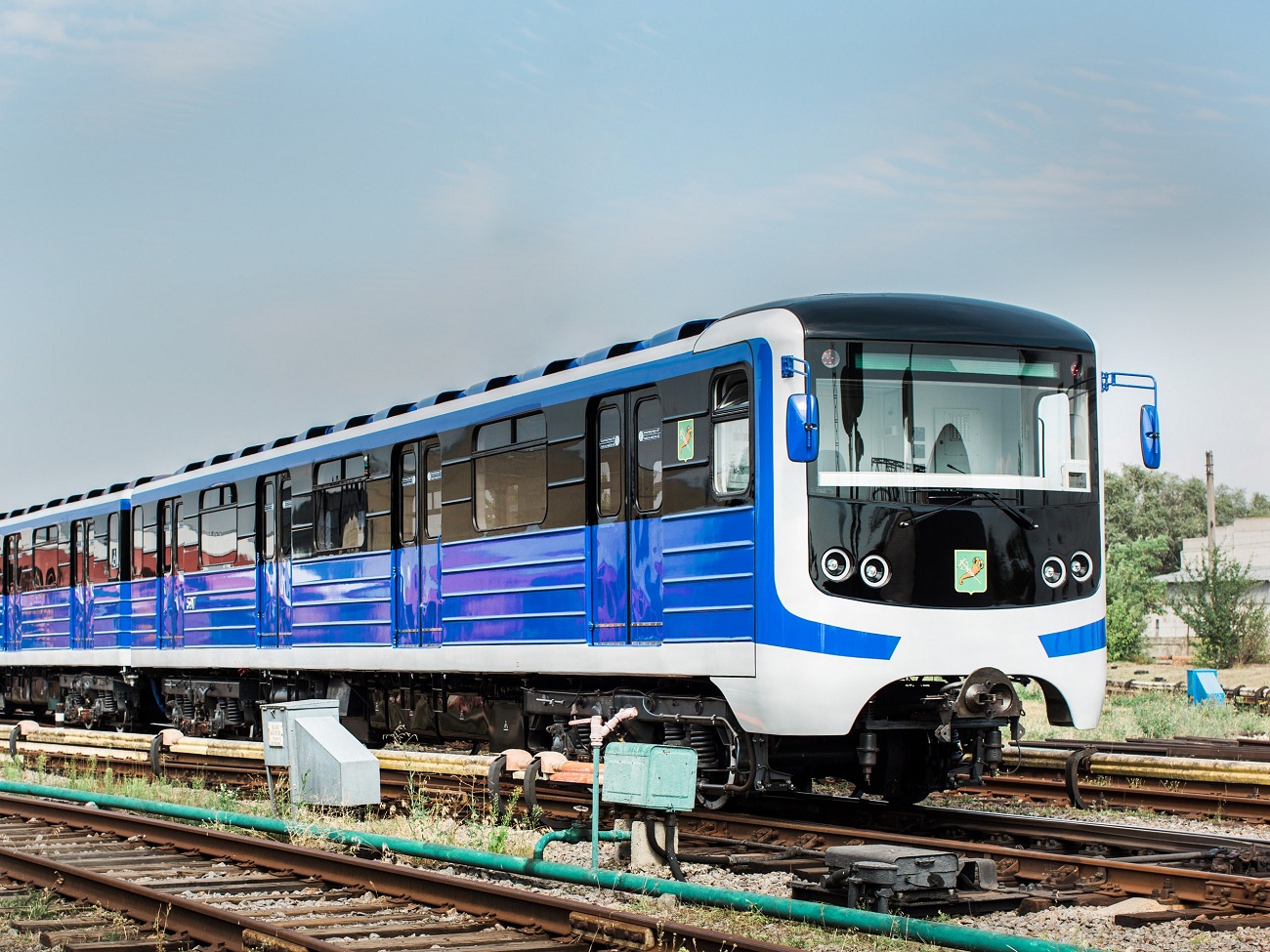
As the purchase of new rolling stock became increasingly difficult due to its high cost (a new trainset cost approximately 200–250 million hryvnias before the full-scale invasion), the Kharkiv Metro decided to extend the service life of its oldest Ezh3/Em508T trains. In August 2017, the first comprehensively modernised trainset was unveiled. The work was carried out at the Saltivske Depot.
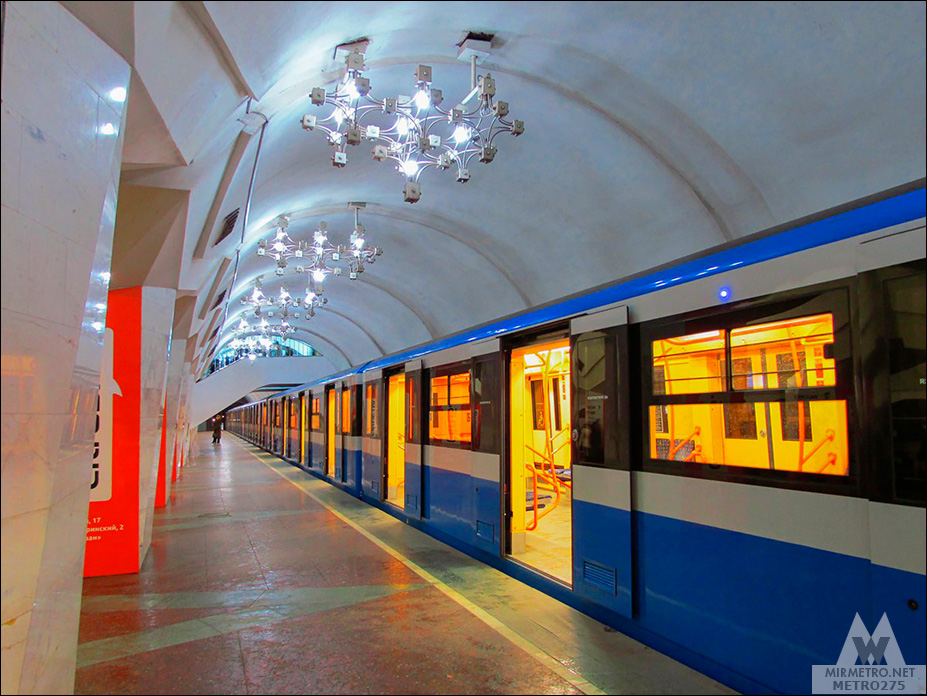
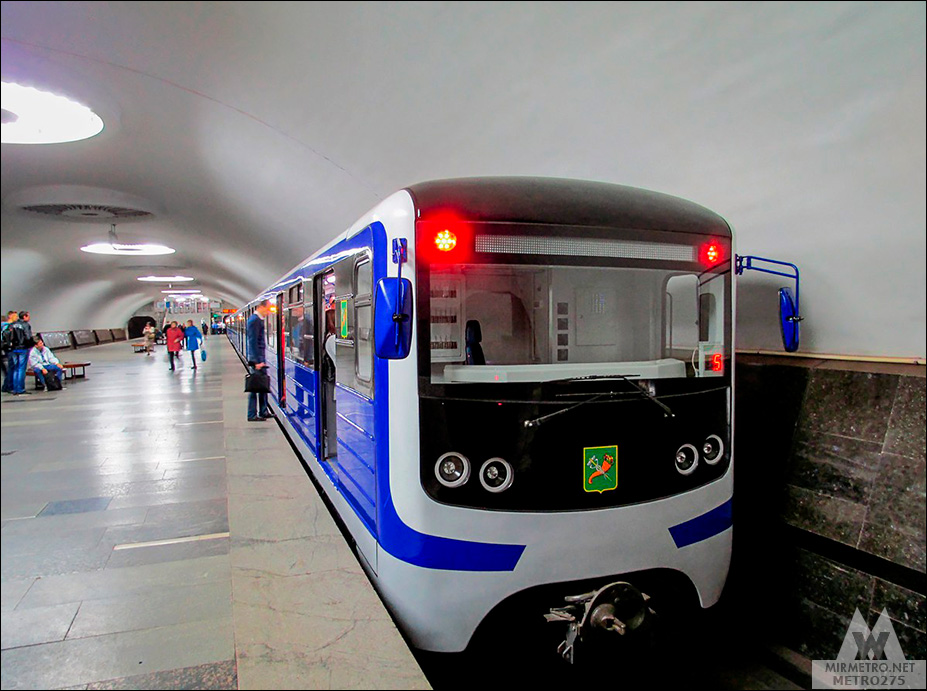
The modernisation included new traction equipment and upgraded electrical systems. The compressors were fitted with asynchronous motors powered by frequency converters supplied through high-power DC converters that reduce the supply voltage from 825 V to 540 V. These components were designed and manufactured by Kharkiv specialists. At the same time, the trains retained their original rheostatic-contactor traction control system. The driving cabs were completely redesigned, receiving modern control consoles, improved ergonomics, CCTV monitors, and much better forward visibility thanks to enlarged windscreens. The redundant driver’s cabs were removed from the intermediate cars, increasing passenger space. Air conditioning, automatic fire detection and suppression systems, electronic acceleration and braking control modules, and onboard CCTV were also introduced. Flexible gangway barriers were installed between the cars, preventing passengers from accidentally stepping onto the track through the gap between vehicles.
The passenger saloons were also completely refurbished. They received new plastic interior panels, continuous LED lighting running along the centre of the ceiling, and six-seat vandal-resistant benches upholstered in artificial leather. The exterior livery was redesigned as well, with blue becoming the dominant colour, complemented by a black window band and white stripes along the upper and lower sections of the body.
The modernised train entered regular passenger service on 1 September 2017. The refurbishment cost approximately 44 million hryvnias, around five times less than purchasing a brand-new train. The programme extended the service life of the vehicles by an additional 25 years.
The second modernised trainset was unveiled in the summer of 2018 and entered service on the Kholodnohirsko-Zavodska Line on 23 August. This version introduced further improvements, including passenger information displays at the ends of the cars and redesigned handrails that provided more convenient standing positions throughout the saloon.
Given the high cost of purchasing new rolling stock, it is likely that additional Ezh3/Em508T trains will eventually undergo the same modernisation programme, as they currently have no direct replacement.


Thanks to Anatoly Afeychuk (metro275) for the photos provided.