
23 Serpnia
Opening date: 21 August 2004
Architects: V. Spivachuk, H. Karpenko
Engineers: R. Denisyuk, L. Koba
Artists: V. Pohorielov, I. Pohorielova
Station type: Shallow three-span column station
English equivalent: August 23rd
Average daily ridership: 14,500 passengers (2015)
The station opened on 21 August 2004 as part of the second section of the Kharkiv Metro’s third line, extending service from Naukova to 23 Serpnia with two new stations. With the opening of this section, the metro reached the Pavlove Pole residential district. The inauguration was timed to coincide with the 350th anniversary of Kharkiv.
When the station served as the line’s terminus, passenger traffic was considerably higher, as it handled most passengers travelling to and from the Oleksiivka residential district. Beyond the station lies a track arrangement consisting of a single siding, which is used for overnight train stabling and allows trains to reverse direction.
Description
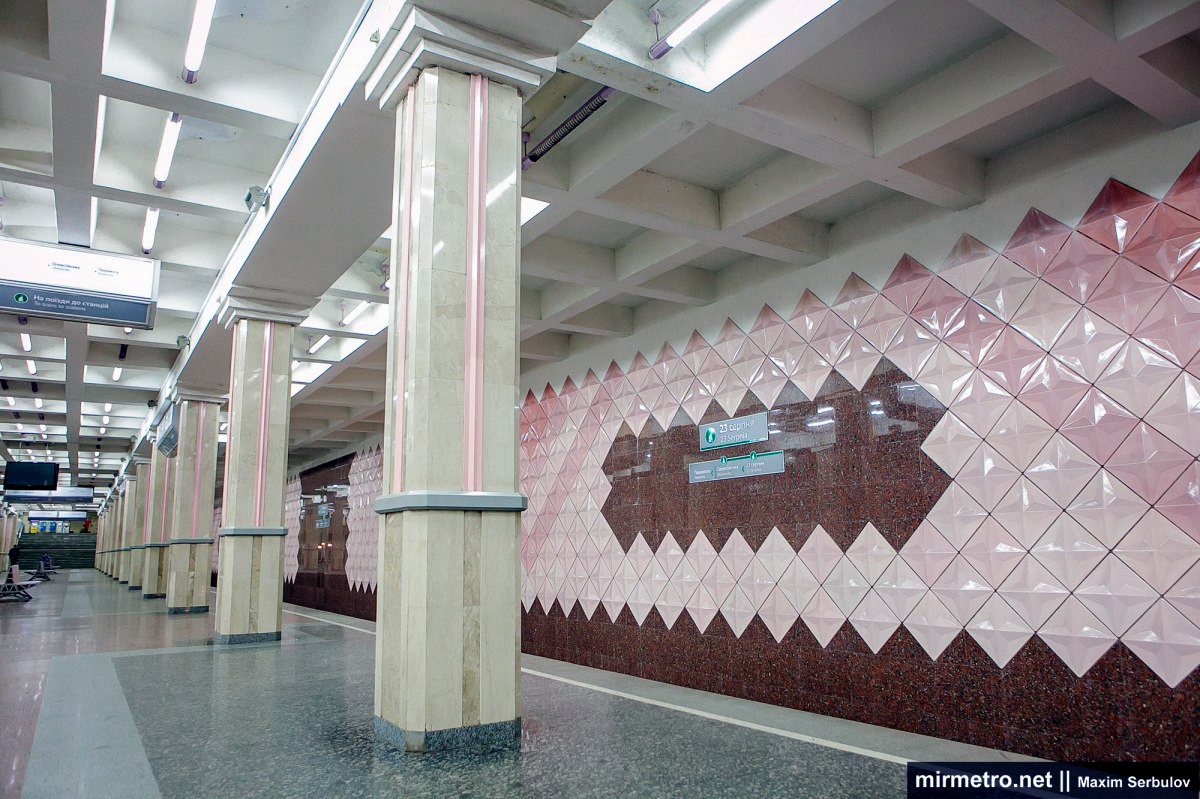
The 23 Serpnia station was built to a standard three-span column design. Its architectural concept is dedicated to 23 August—the day of Kharkiv’s liberation during the Second World War and also the city’s official anniversary. Accordingly, the station combines bright colours to create a festive and ceremonial atmosphere. Considering the severe financial constraints during construction, the architectural result is remarkably successful.

The 23 Serpnia station became the last metro station designed by chief architect Volodymyr Spivachuk. Ironically, with its opening, his own home finally came within walking distance of the metro.
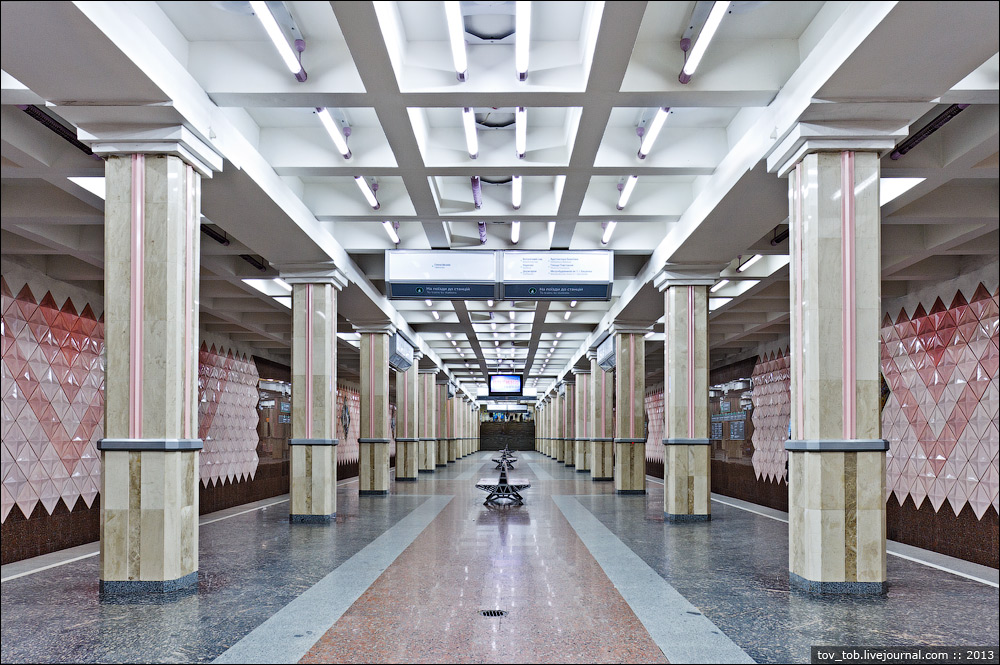
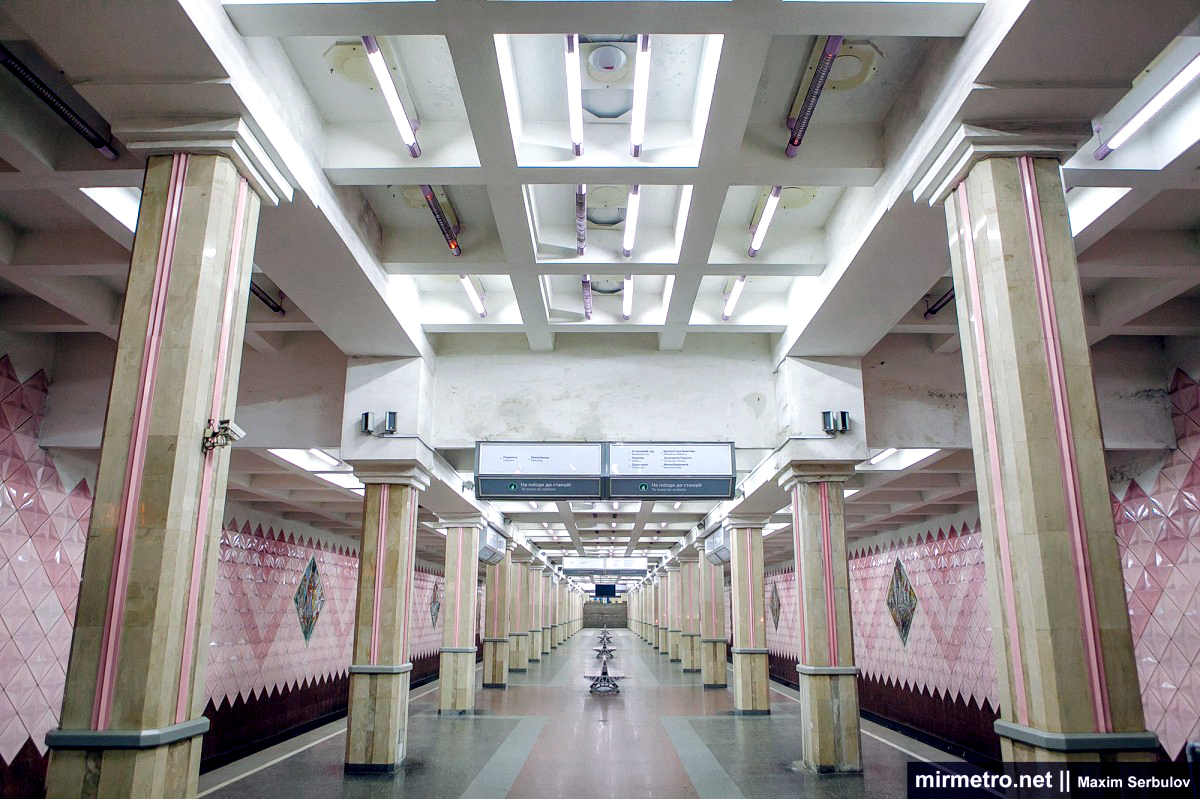
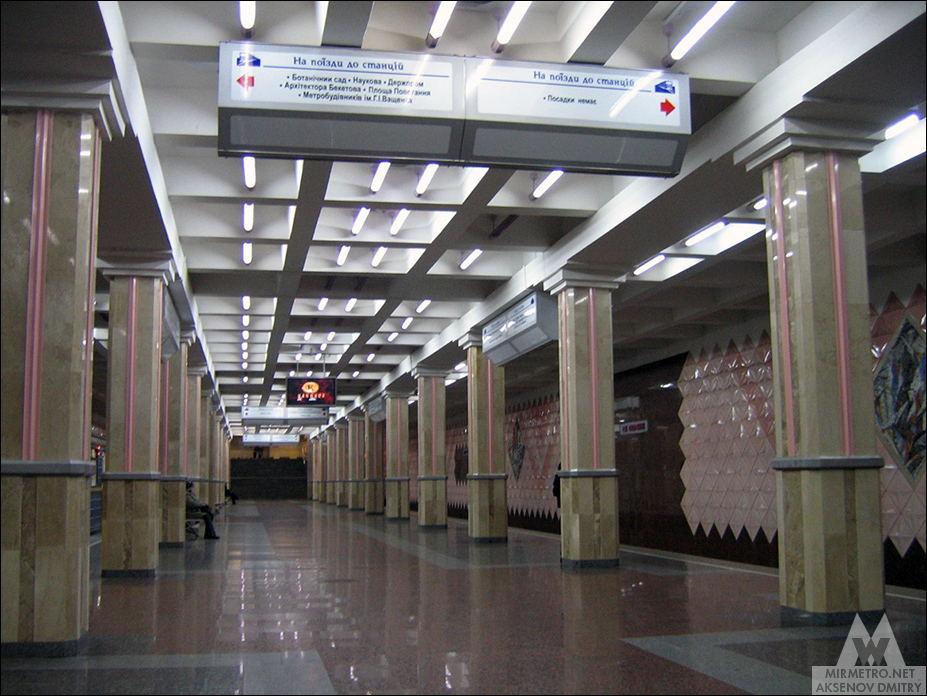
The ceiling has a deliberately simple design, consisting of square coffers with recessed oblong light fittings housed in pink casings. Every luminaire was illuminated only on opening day; afterwards, many were routinely switched off to reduce electricity consumption.
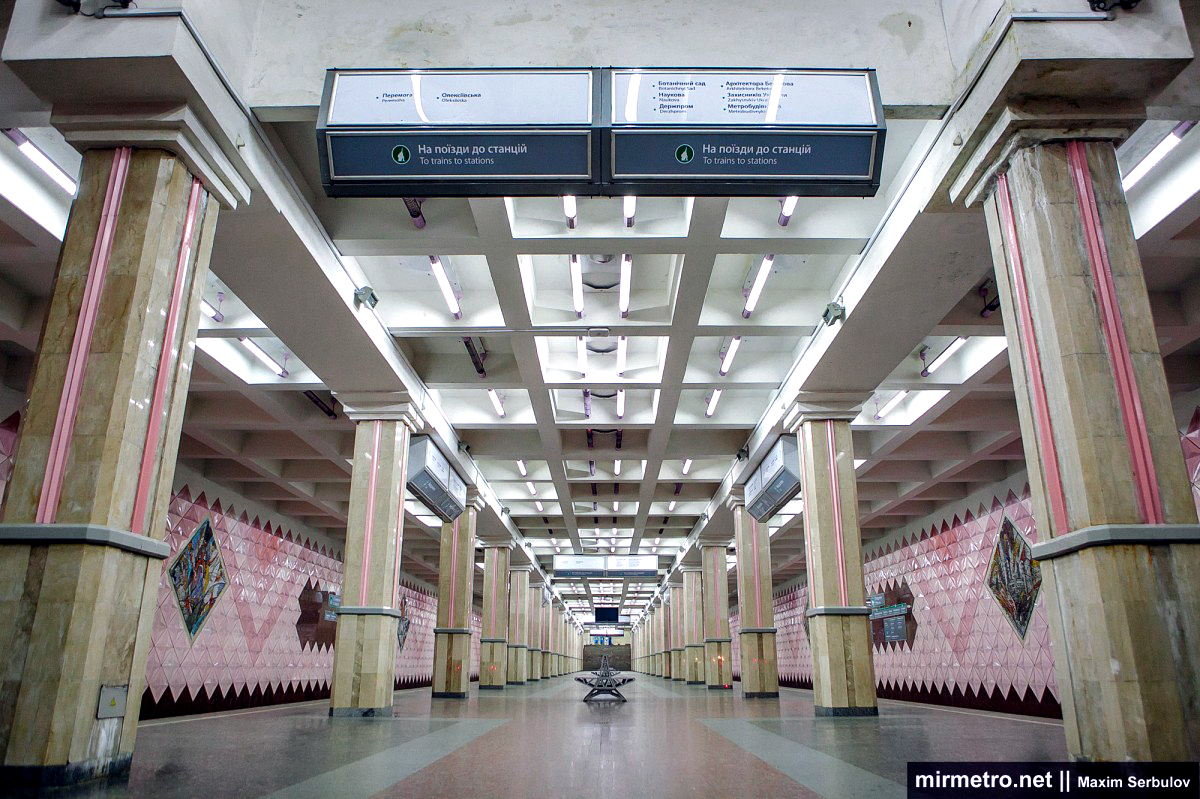
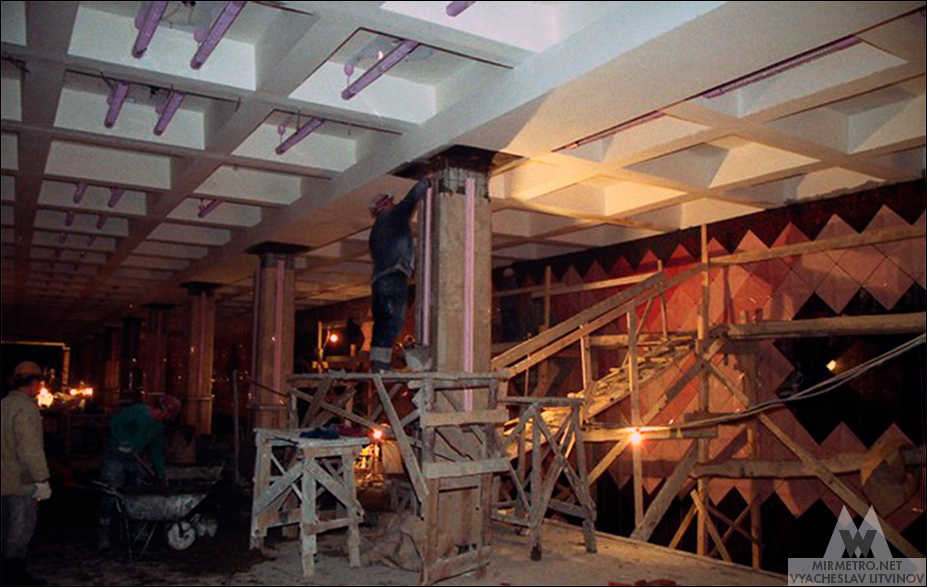
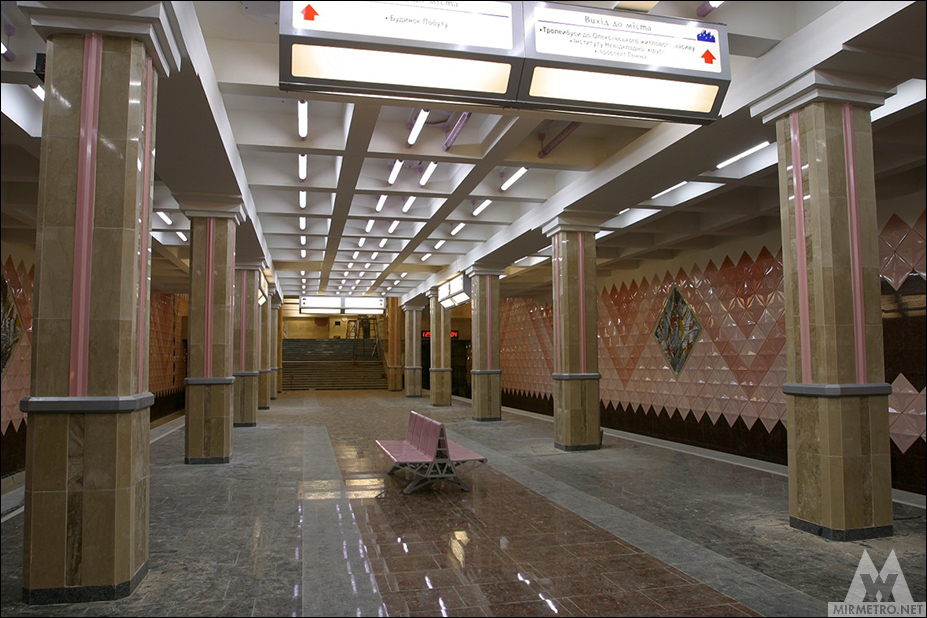
The station’s square columns are clad in yellow and light-brown marble and accented with decorative aluminium inserts. The original design called for the upper sections to be faced with sheet metal, but this idea was abandoned because it did not meet fire safety requirements.

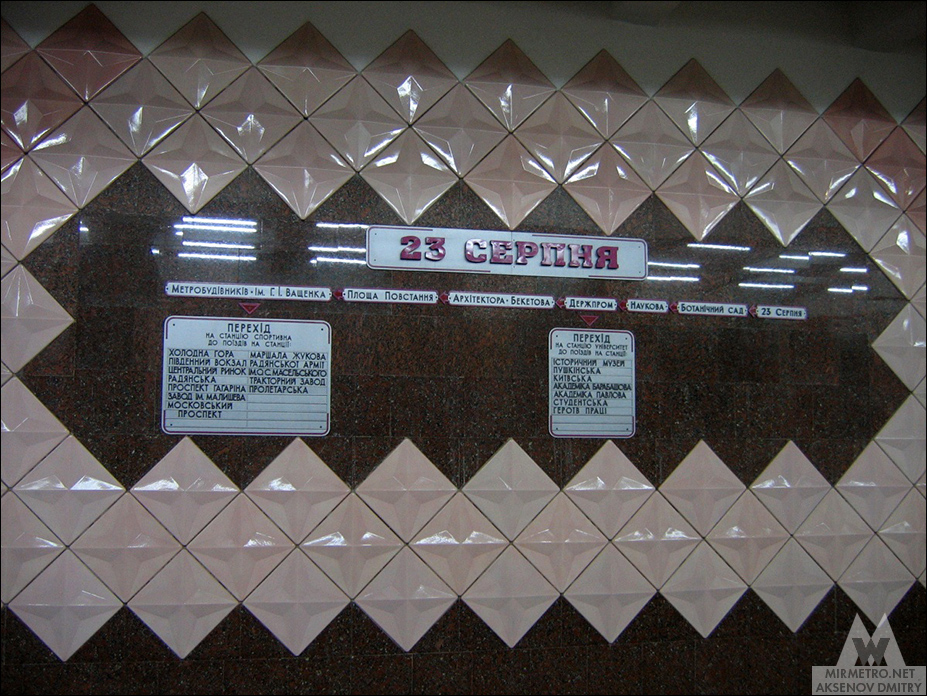
The most distinctive feature of 23 Serpnia station is its track walls, which are clad in pink and red metal-enamel panels embossed with four-pointed stars. These panels were stamped from sheet steel.

The lower sections of the track walls and the station name panels are faced with reddish-brown granite.
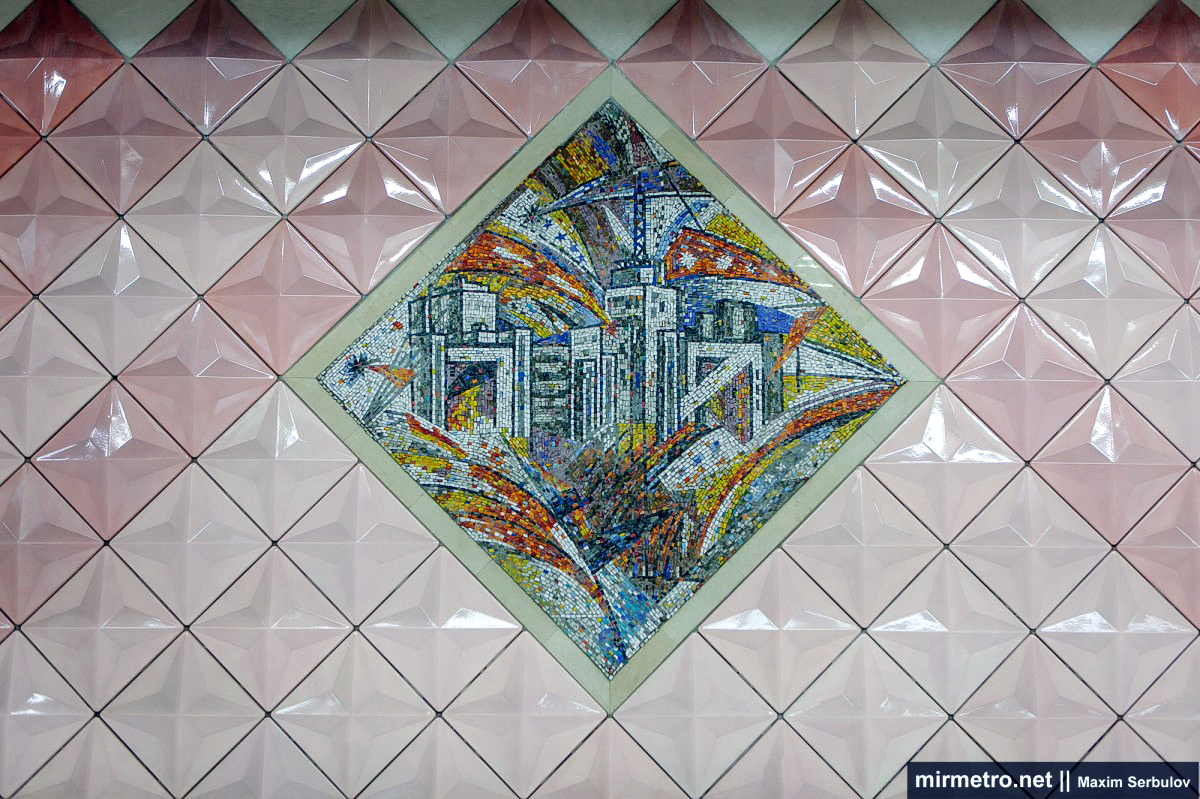
The station’s principal decorative feature is a series of eight smalt mosaic panels mounted along the track walls. Pictured: the mosaic panel Abstract Composition.
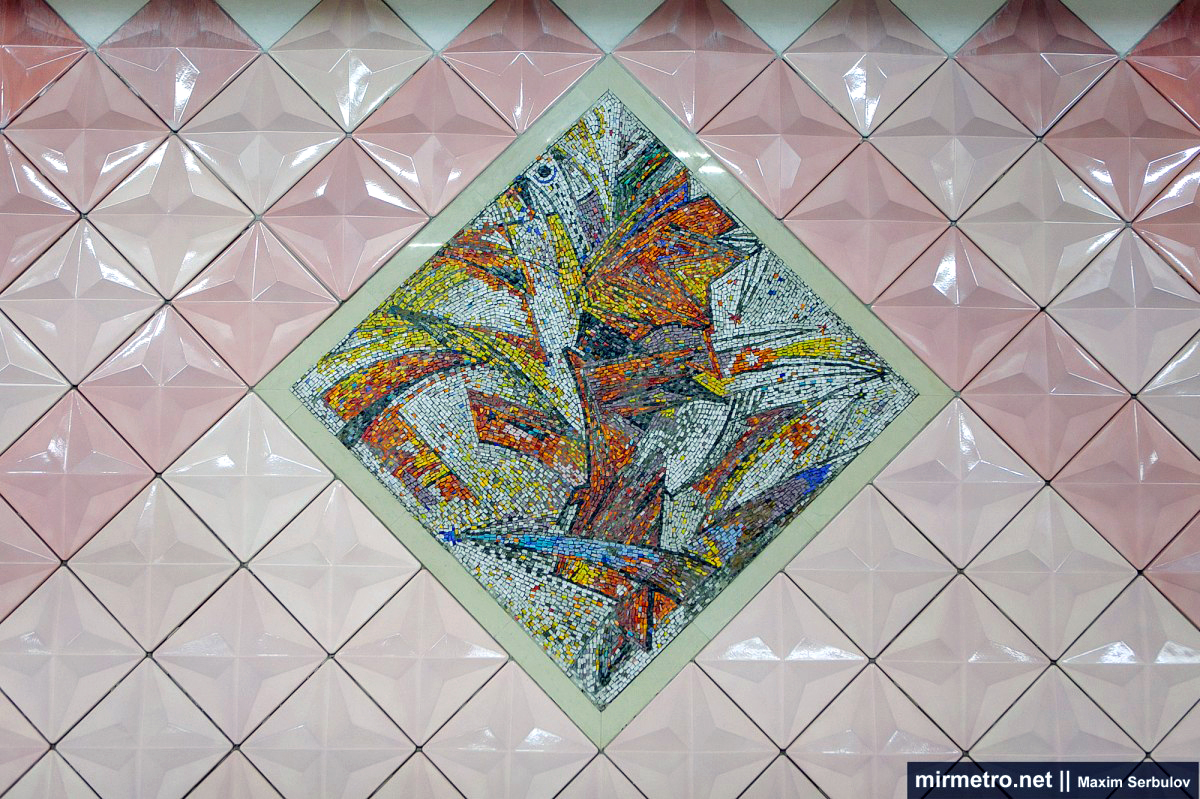
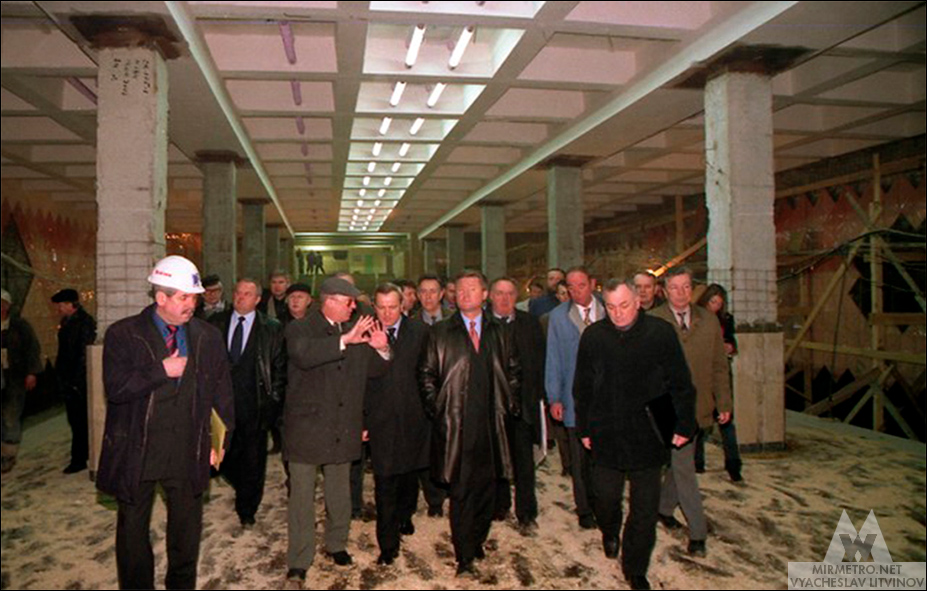
Curiously, the station’s original design included no decorative artwork at all, and none had even been considered during construction. In early 2004, the head of the Kharkiv Regional State Administration, Yevhen Kushnaryov, visited the station while it was still under construction. After inspecting the interior, he remarked that he found it too plain and felt that it lacked a clear artistic identity. At his initiative, the Union of Artists was commissioned to provide decorative artwork for the station, and the artists were assigned the project with little opportunity to decline. They accepted it with some apprehension, unsure whether they would be able to produce a satisfactory result in such a limited time. Pictured: the mosaic panel Mirror Stream.
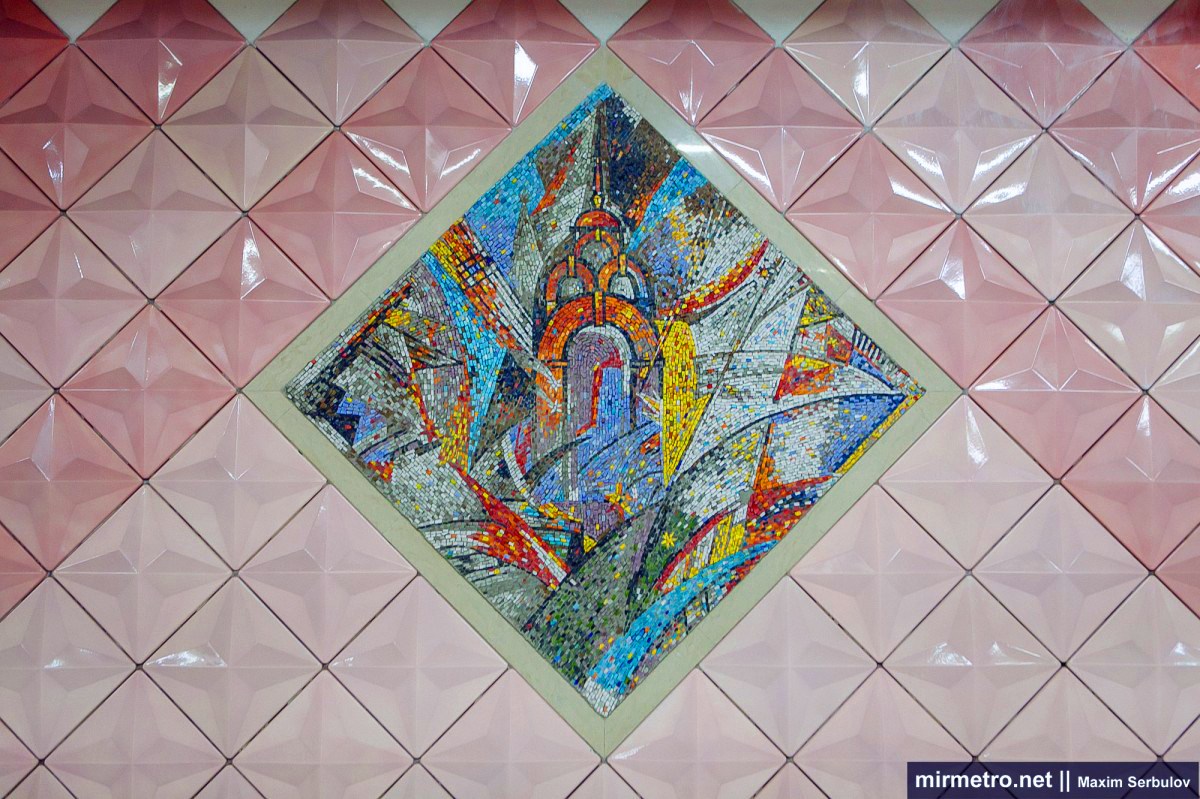
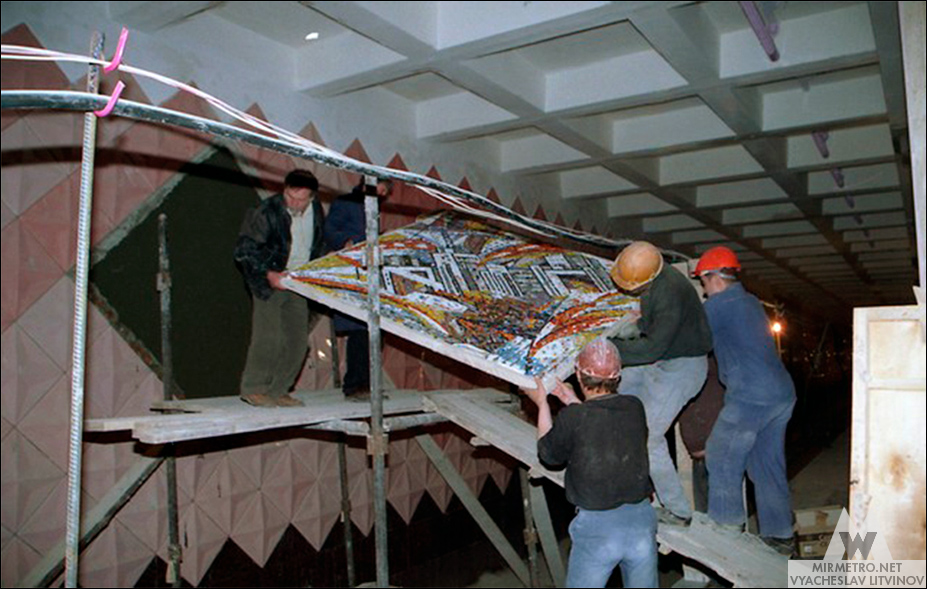
The artists proposed a series of mosaics depicting Kharkiv landmarks, adding fireworks to the compositions at Kushnaryov’s request. The sketches were warmly received and approved almost immediately. The mosaics themselves were completed in less than three months. The greatest challenge, however, was not the limited time but the shortage of smalt—the coloured glass traditionally used in mosaic art. Because the mosaics had to fit within the already completed design of the track walls, their size was reduced to just four square metres each, and they were installed in slanted rather than rectangular frames. Pictured: the mosaic panel Ukraine Concert Hall.

Mosaic panel Assumption Cathedral.

Mosaic panel Memorial of Glory.

Mosaic panel Monument to Taras Shevchenko.

Mosaic panel Railway Station.
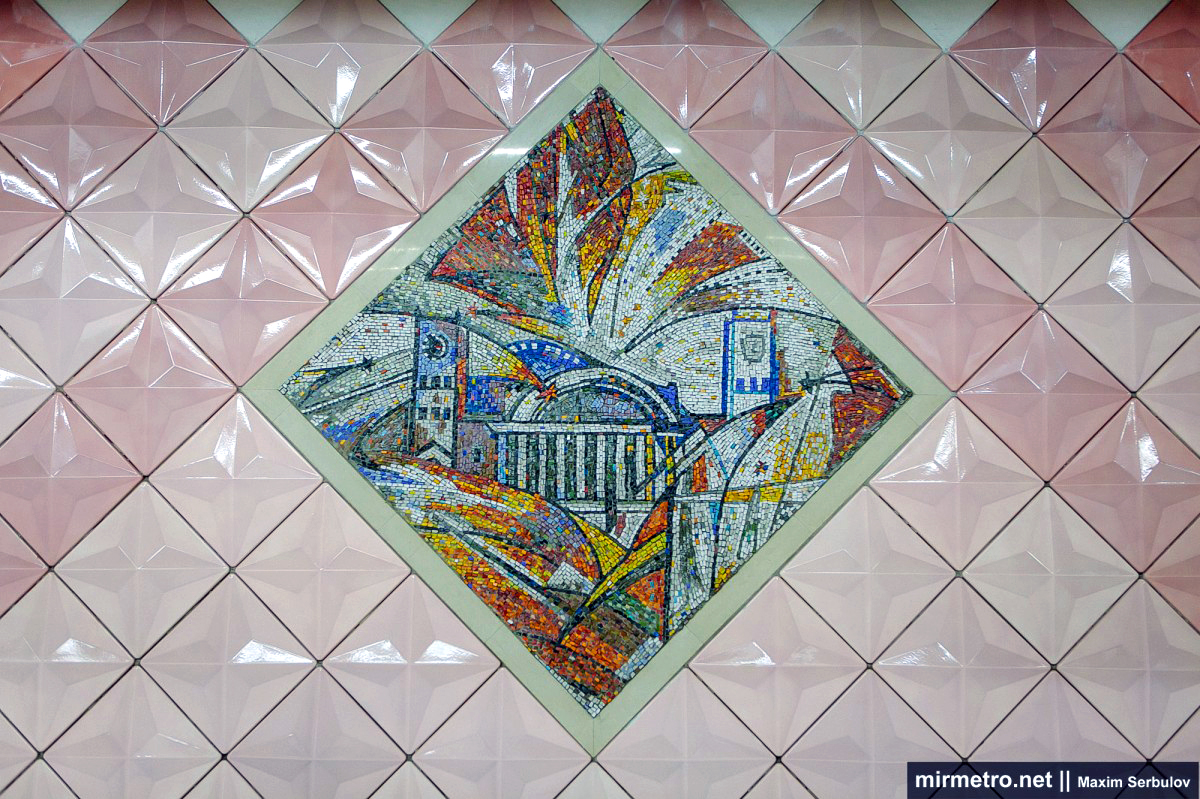
Mosaic panel Derzhprom.
The station takes its name from 23 Serpnia Street, on which one of its entrances is located. The street itself commemorates 23 August 1943, the day Kharkiv was liberated from Nazi occupation.

The station floor is laid out in the form of a carpet-like pattern using reddish-brown and grey granite.
Initially, benches made of perforated sheet metal, painted pink to match the station’s colour scheme, were installed along the centre of the platform.
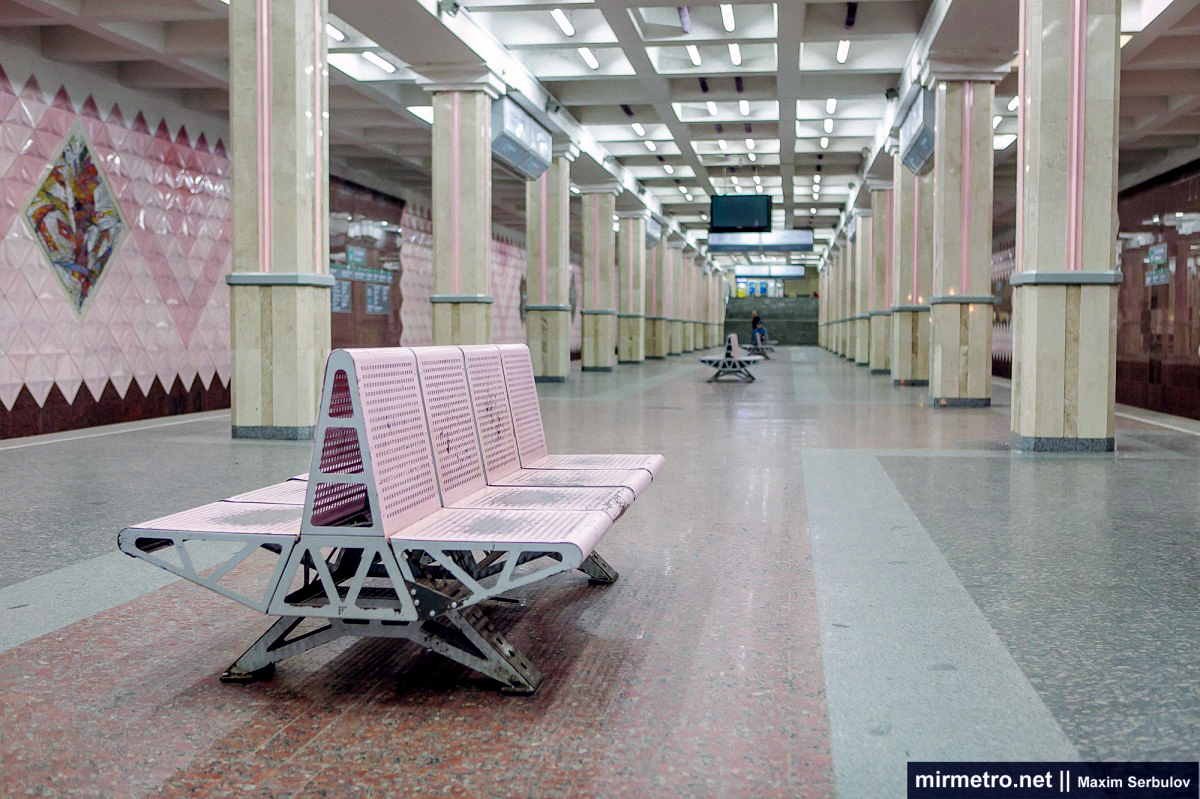
Over time, the paint began to wear away, and in April 2017 the metal seats were replaced with wooden ones.

The six-metre-wide staircases are faced with grey granite.
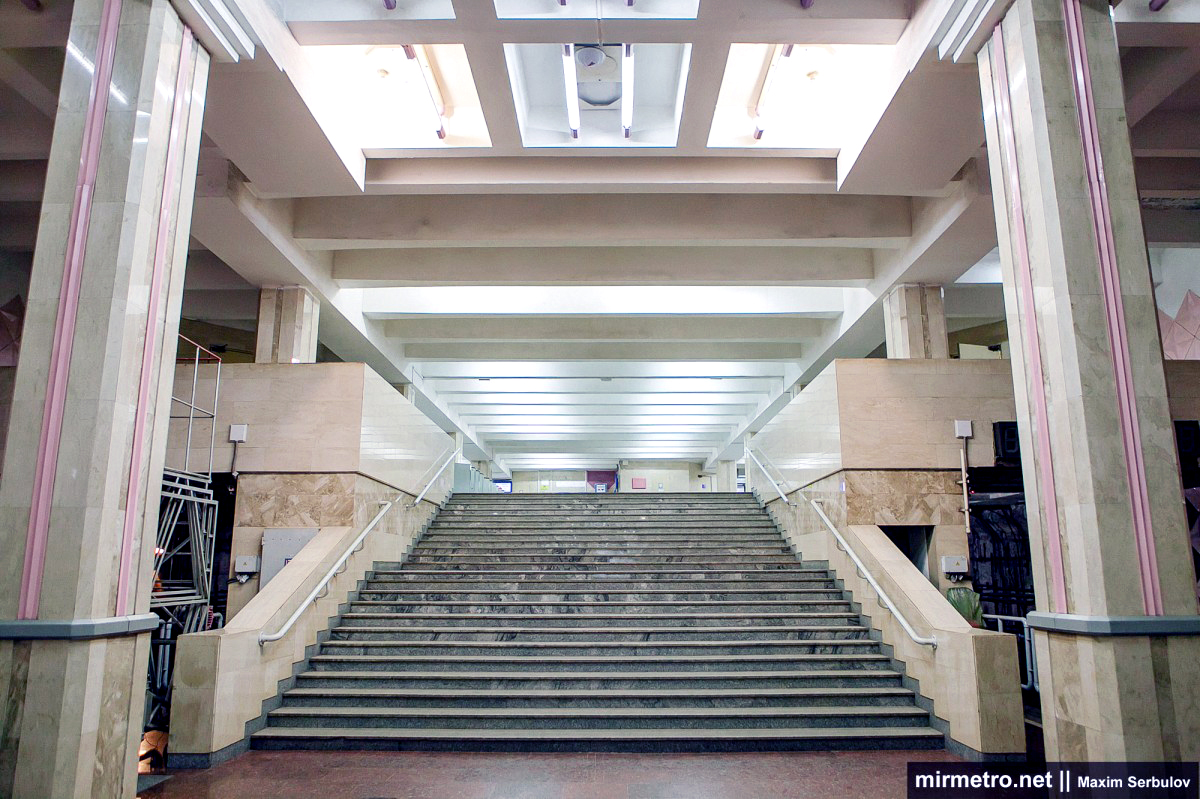
At 23 Serpnia station, an open vestibule layout was used, providing a direct visual connection between the concourse and the platform.
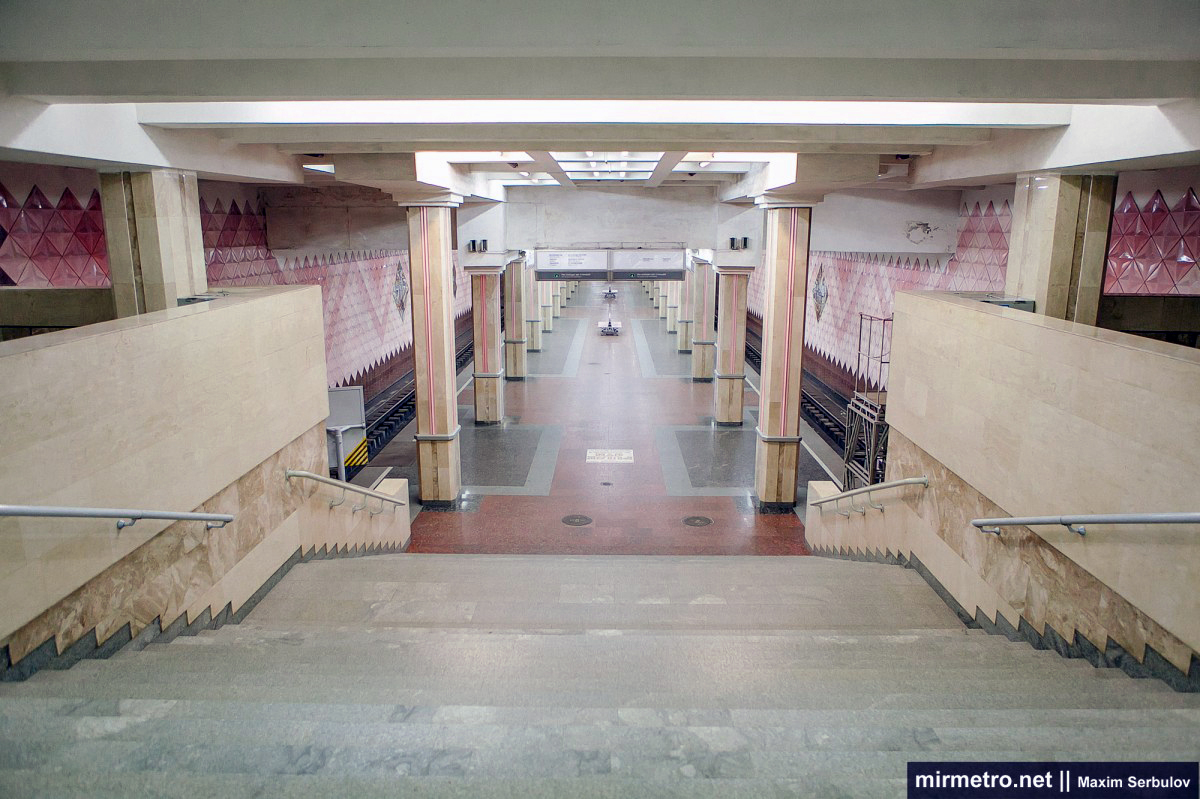
The vestibule is faced with cream-coloured marble.
The station during its first months of operation.

One of the 81-718/719 trainsets purchased specifically for the extension of the Oleksiivska Line carried an inscription stating that it had been presented by the President of Ukraine to mark the 350th anniversary of Kharkiv. The commemorative decals remained on the train for many years.

The station in 2008.
Old interval clock.

The previous station name signs and directional indicators were made as three-dimensional letters that blended perfectly with the station’s architecture and looked considerably more elegant than the current ones.
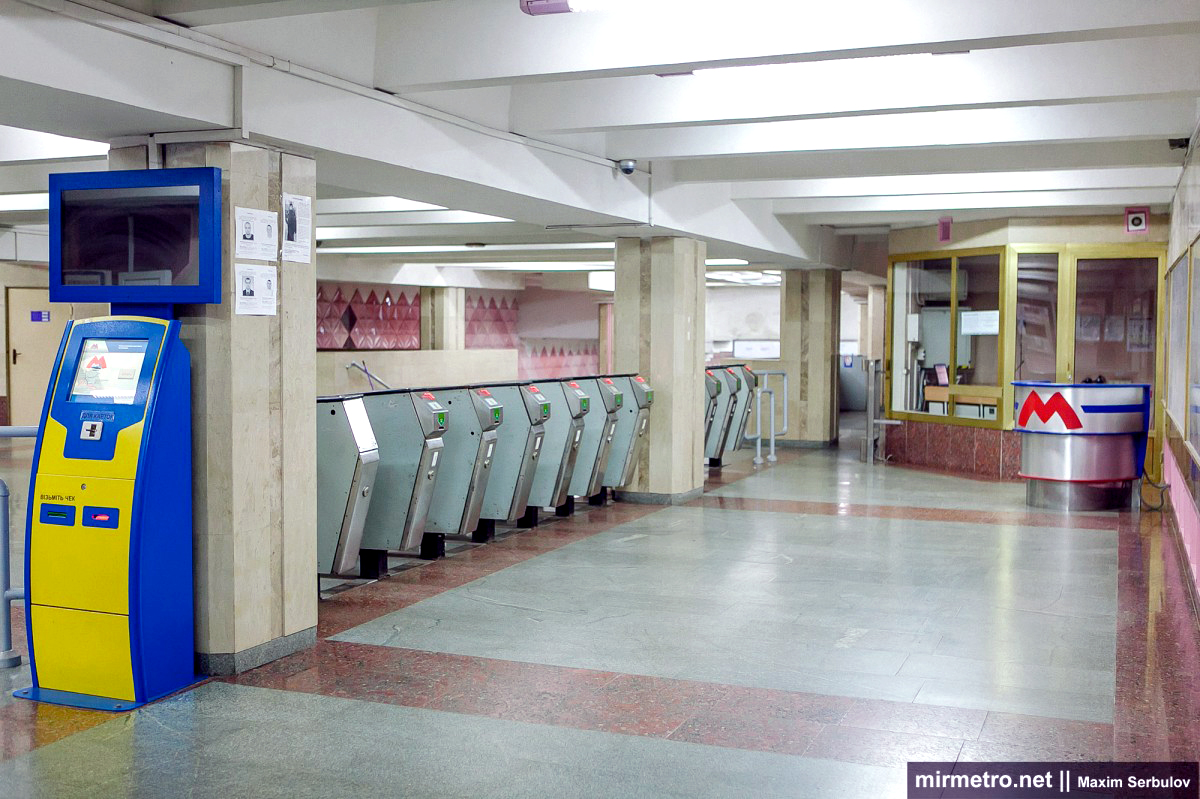
When the station opened, a new type of turnstile was installed in the vestibule. However, these proved unreliable and suffered from frequent technical failures. They were also less convenient for passengers because the tripod arms had to be pushed manually. After only a few years, they were replaced by the older, more reliable models.

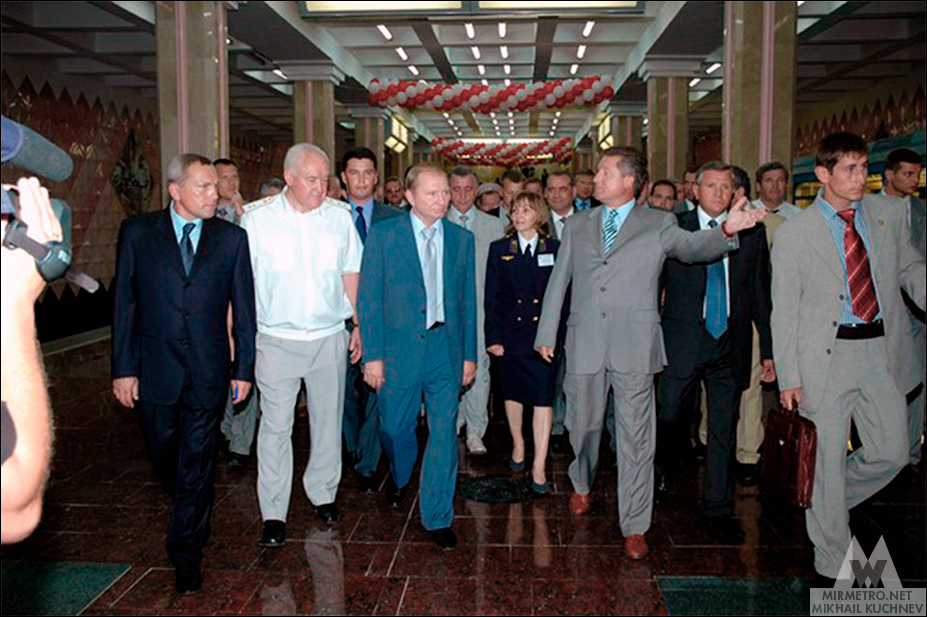
The official opening ceremony for the new section took place on 21 August 2004 at the Liberator Soldier Monument at the intersection of Lenin Avenue (now Nauky Avenue) and 23 Serpnia Street. After the ceremonial ribbon-cutting, the invited guests descended into the station and travelled by metro to Botanichnyi Sad.

The station on its opening day.
Construction and projects
Preparatory work for the future 23 Serpnia station began as early as 1990, but due to a sharp funding cut, all available resources were redirected toward completing the first section of the Oleksiivska Line. In 1994, a bypass road for ground transportation was built, and the first 600 meters of tunnel were completed, with excavation beginning toward Oleksiivska station. In 1995, the city planning council officially approved the design for a standard shallow column station made of precast concrete elements. After the opening of the first section of the Oleksiivska Line, construction shifted to its second section. Of course, the previous pace of construction was abandoned; nevertheless, there were promises to open the 23 Serpnia station in 1996, although this was unlikely at the time, even with stable funding.
Reality proved far harsher than expected: the tunnelling rate initially dropped to 15-20 meters per month, and in May 1996, construction halted completely. This was due to a complete lack of financial support from the state, as the region was unable to finance such a project on its own. At that point, only 500 meters of the connecting tunnels toward Botanichnyi Sad station had been completed. Many construction workers were laid off or sent on unpaid leave. Others, having gone months without pay, voluntarily left the Kharkiv metro construction site in search of a better life. The once-large team thinned out with each passing month, and those remaining merely maintained the already constructed underground workings in a safe condition. For several years, the construction site remained virtually idle, although the remaining workers advanced the tunnel boring machine 10-15 meters per month, as best they could. These were difficult years for Kharkiv’s metro builders. Yet, given the geological conditions, the Botanichnyi Sad – 23 Serpnia section was perhaps the simplest in the entire history of Kharkiv metro construction: it was built in dry clays and has an almost perfectly straight trajectory. Tunnels in both directions were dug using a mechanical tunnel boring machine.
After six difficult years, the first tunnel was finally completed, and on 25 March 2000, a breakthrough was made on the section 23 Serpnia – Botanichnyi Sad, and on May 15, 2001, the second section tunnel was ready.
Excavation of the station’s foundation pit began only in January 1997, but due to a lack of funds, work was halted before it had even begun. The first real signs of recovery came in November 2000, when significant funds were finally allocated from the state and regional budgets. Throughout 2001, gantry cranes were installed, precast concrete structures and a combined traction and step-down substation were assembled, and construction of the first vestibule and exit chamber began. Because of the shortage of steel supports, reinforced-concrete supports were used instead for the first time. Fortunately, the 23 Serpnia station was built in perfectly dry soil, so groundwater did not bother the builders.
Throughout 2002, construction of the platform section, the main ventilation chamber, and the city exits was in full swing, and by the end of the year, the station was 70% complete. During the first half of 2003, the excavation pit was filled and permanent tracks were laid, and cladding work began in the summer. Six months before opening, the station was already nearing completion.
The exits to the city were the last to be completed. A curious incident occurred there. In the spring, hot water pipes burst near the construction site, causing the unfinished pedestrian passages to flood within a short time. Bags of cement were hastily stacked across the passages, and pumps were later installed to remove the water. Kharkivmetrobud later recovered the cost of the damage from Kharkivvodokanal.
On 2 August 2004, a test train arrived at the 23 Serpnia station. Thanks to the dedicated efforts of hundreds of Kharkiv metro workers, the residents of Pavlovo Pole received a long-awaited gift for Kharkiv’s 350th anniversary. Many wonder why the opening took place on August 21st instead of August 23rd. The answer is simple: the opening of the new section was indeed planned for the 23rd, but the date was adjusted to accommodate President Leonid Kuchma’s visit to Kharkiv.
A mining crew after the breakthrough on the 23 Serpnia–Botanichnyi Sad section. The usual smiles are absent this time—the workers had gone almost a year without receiving their wages. 23 March 2000.
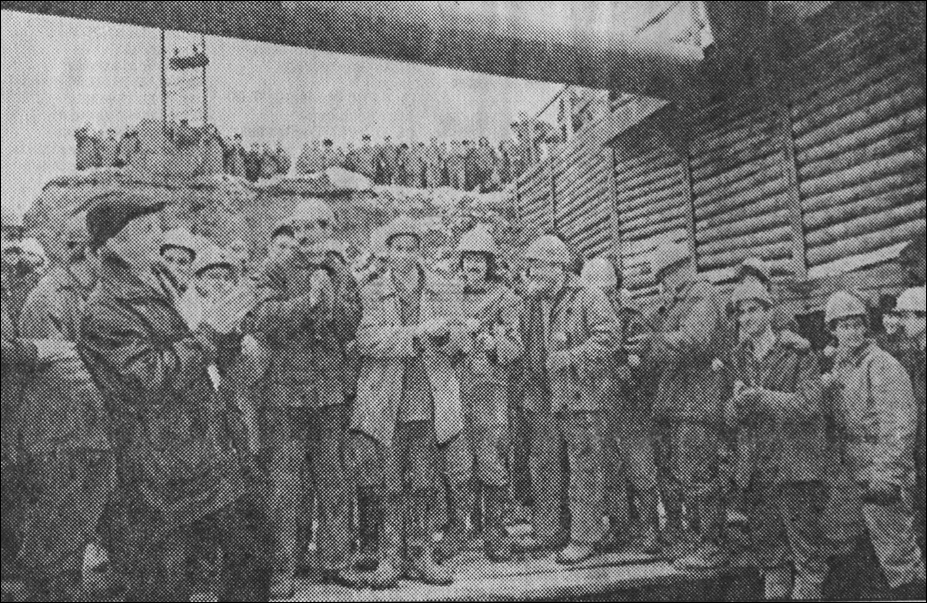
A crew after a breakdown on the Botanichnyi Sad – 23 Serpnia section. May 15, 2001.

Excavation of the 23 Serpnia station pit in the area of the junction with the transfer tunnels.

Construction of the 23 Serpnia station. November 2002.

The station structure has been completed.
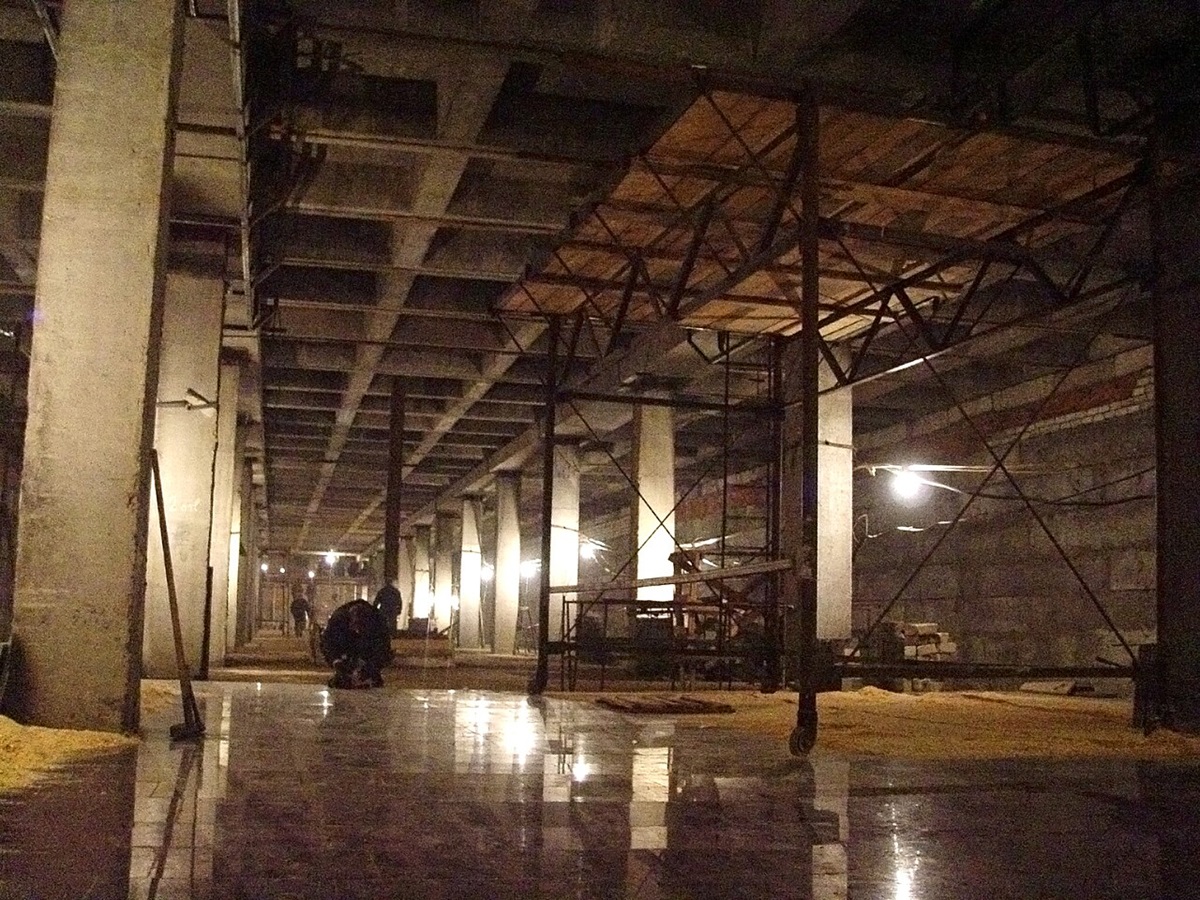
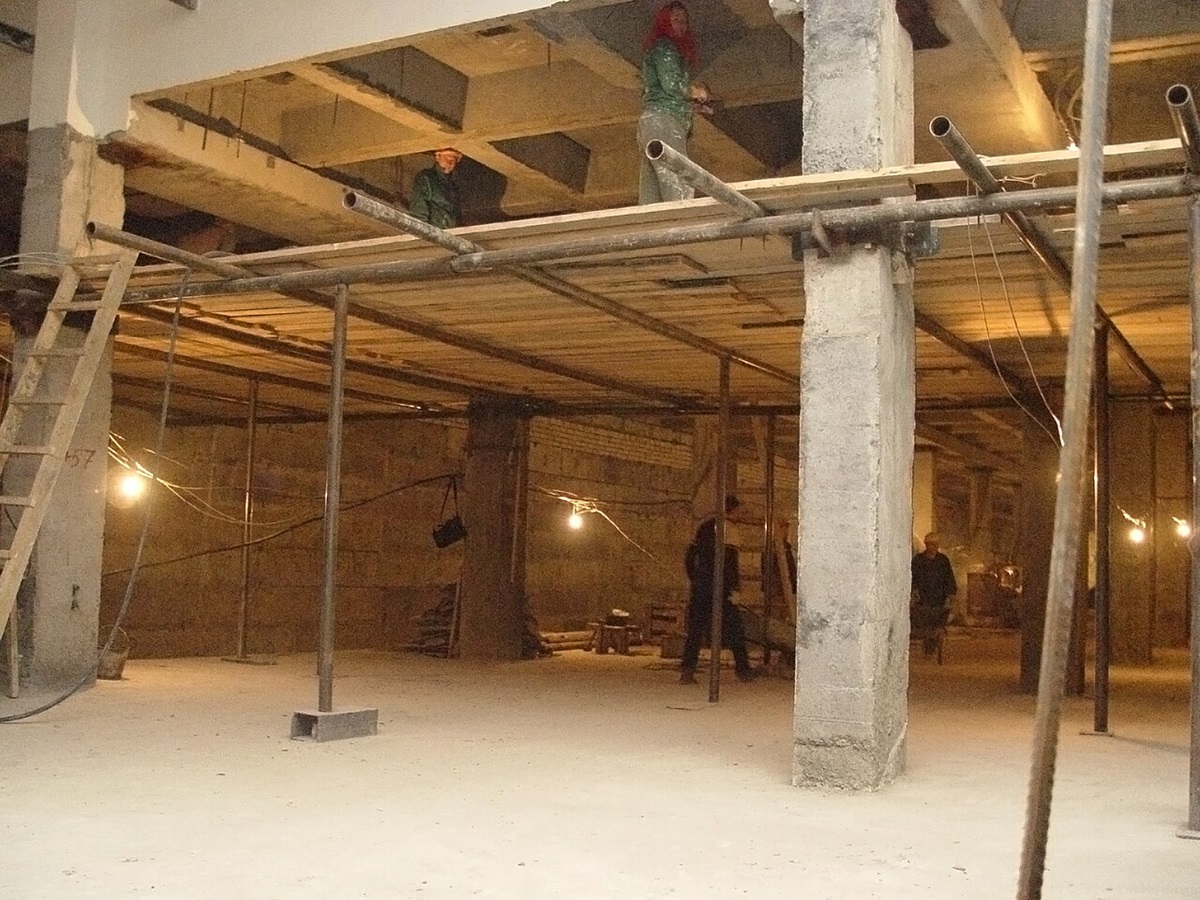
The station at the end of 2003.
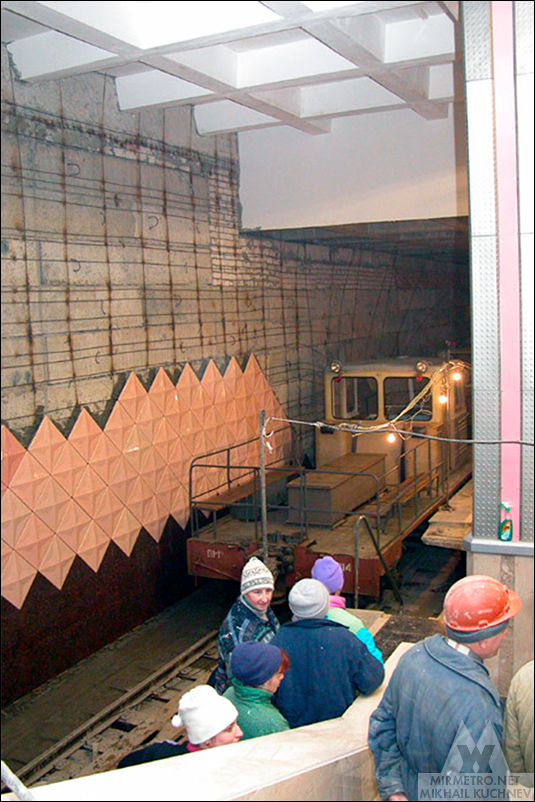
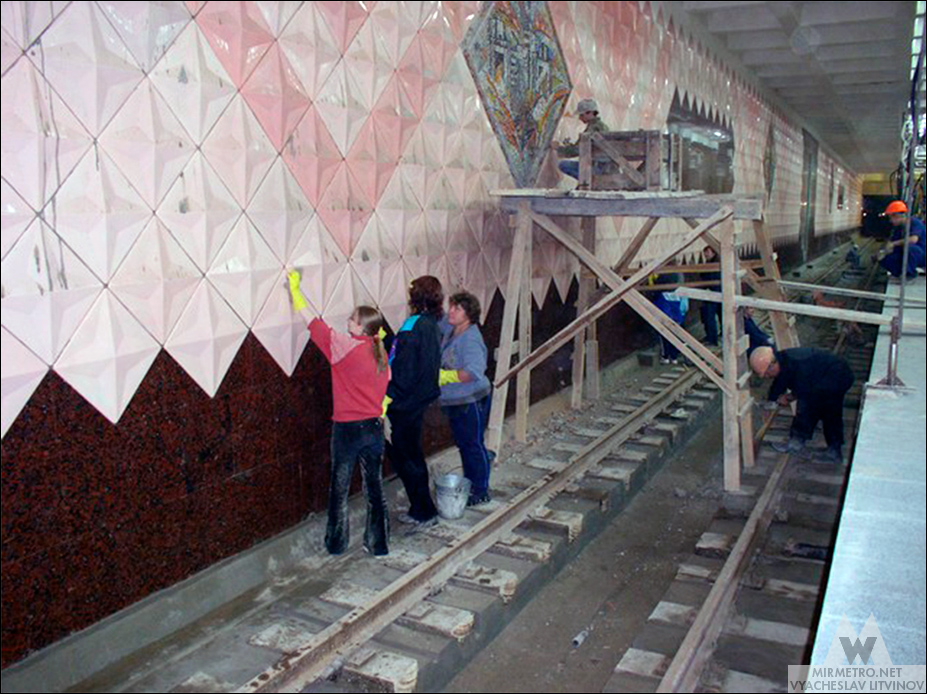
The cladding of columns and track walls is in full swing.
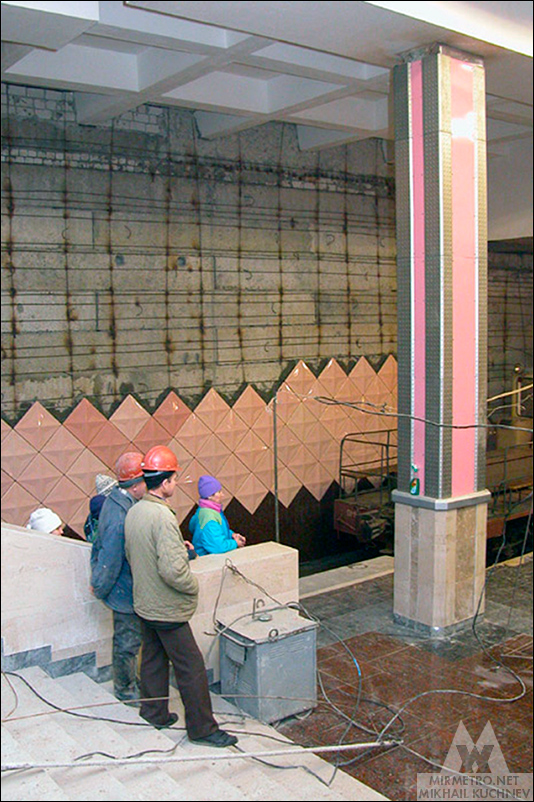
Representatives of the metro construction authority and the city administration inspect the station under construction. 2 December 2003.

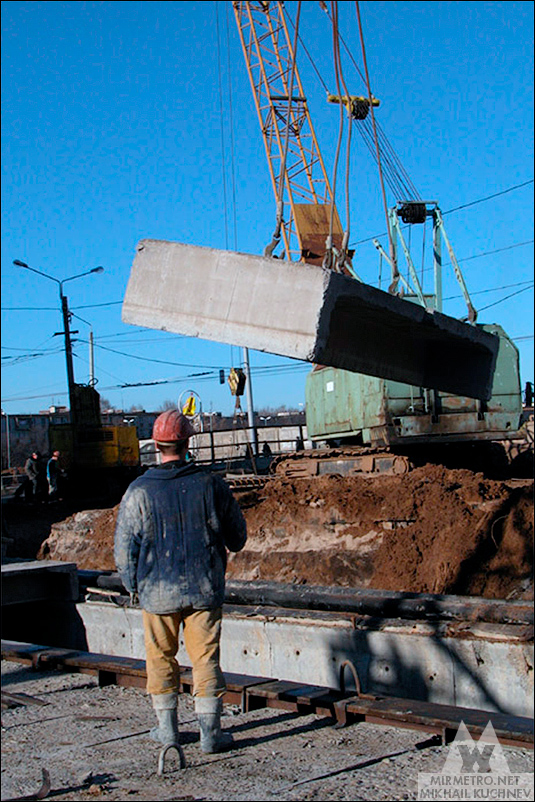
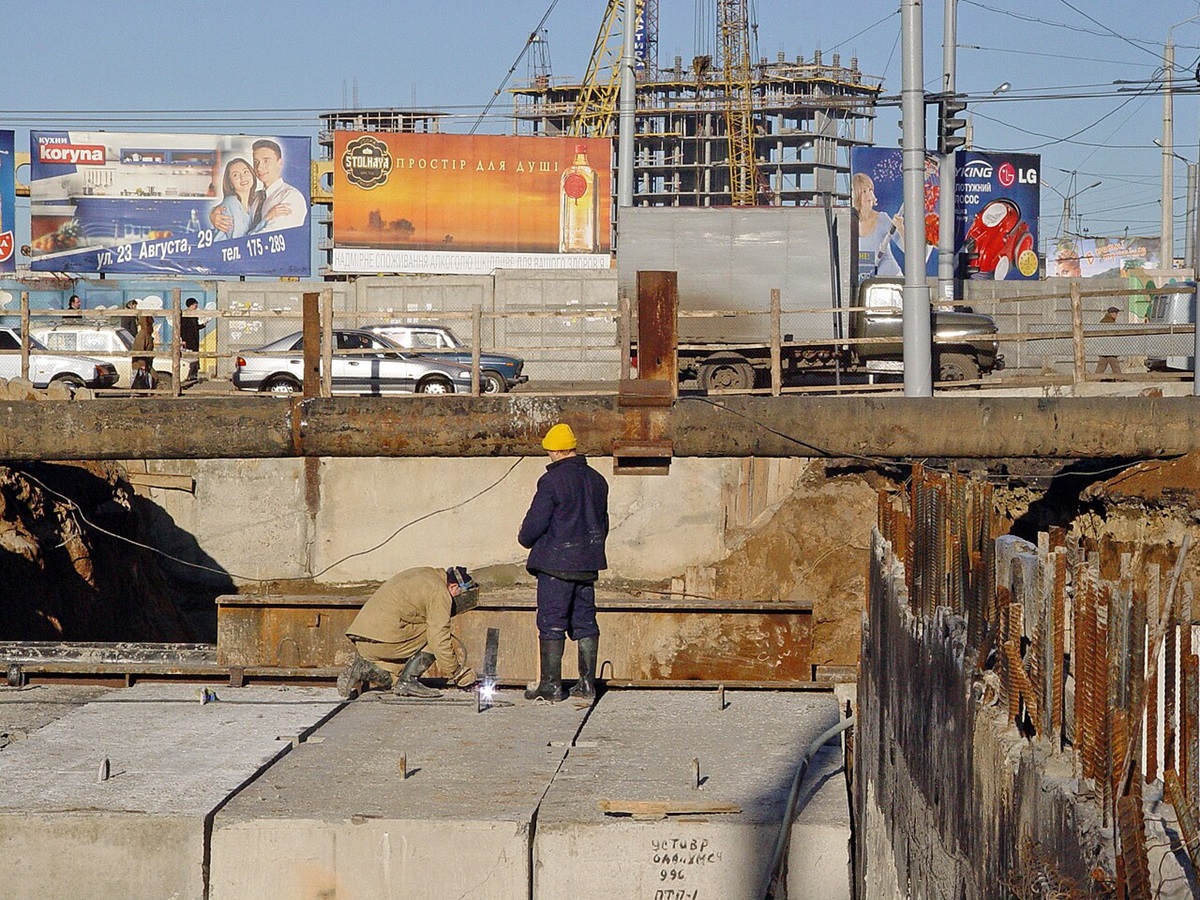
Laying concrete tray blocks in the future underground passage.
Construction of the underground passage.
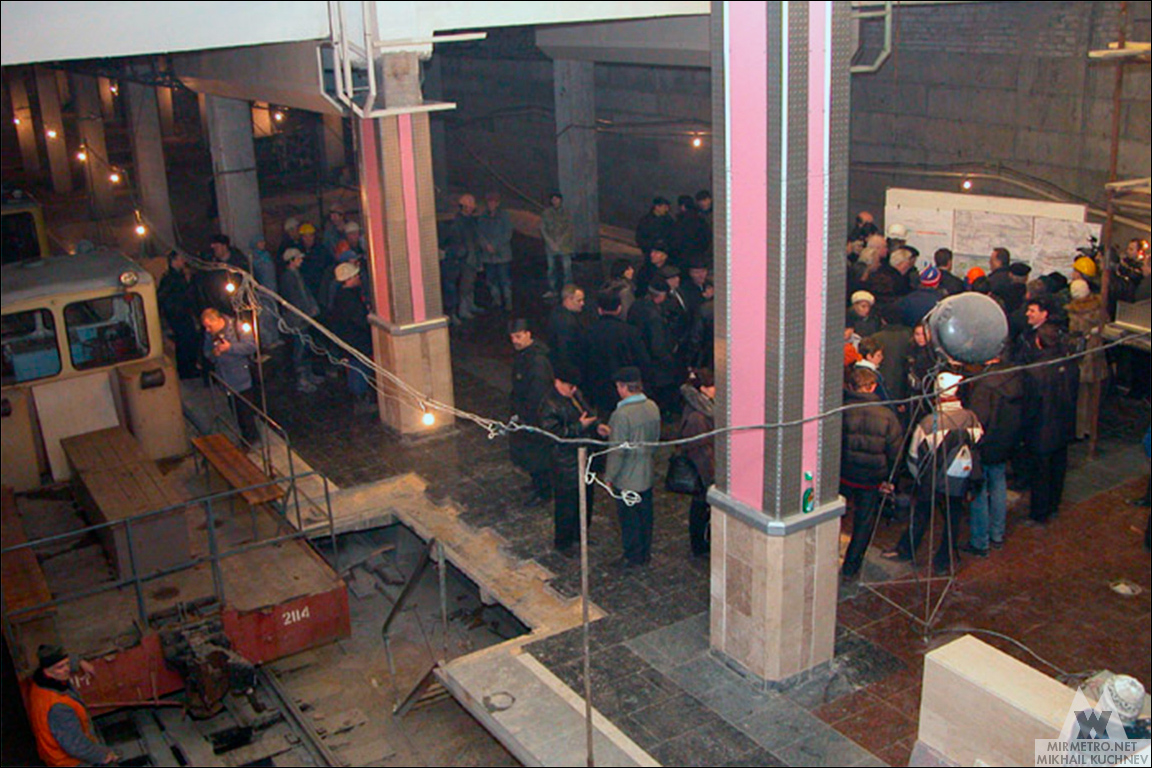
Visit by the Governor to the station under construction.
This is what the 23 Serpnia station looked like shortly before the main work was completed. March 18, 2004.

Installation of mosaic panels.
The station is almost ready – only the finishing touches remain. May 18, 2004.
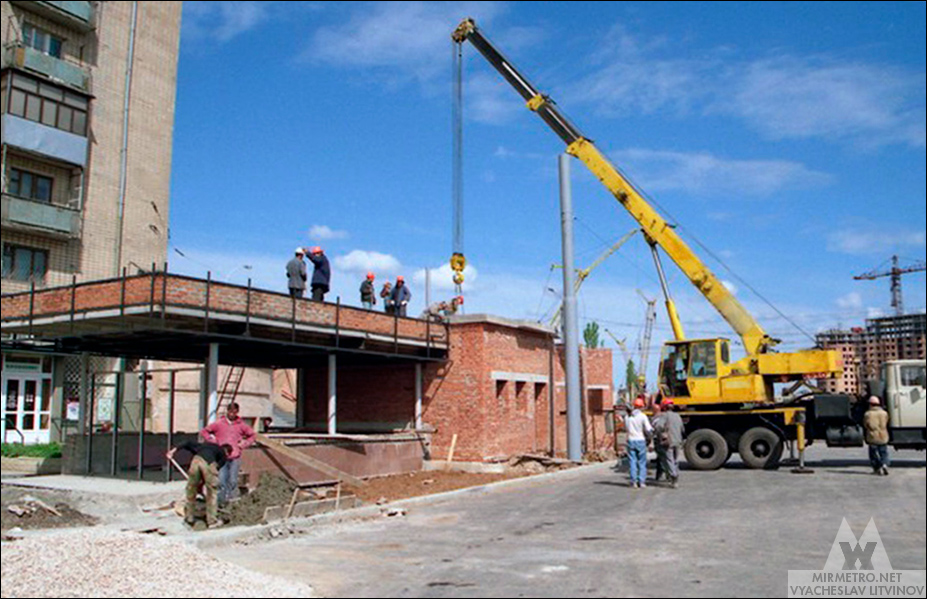
Construction of one of the station entrances.
Polishing of track walls and cleaning of the platform.
Installation of information signs. July 6, 2004.

A test train awaits distinguished passengers. August 2, 2004.
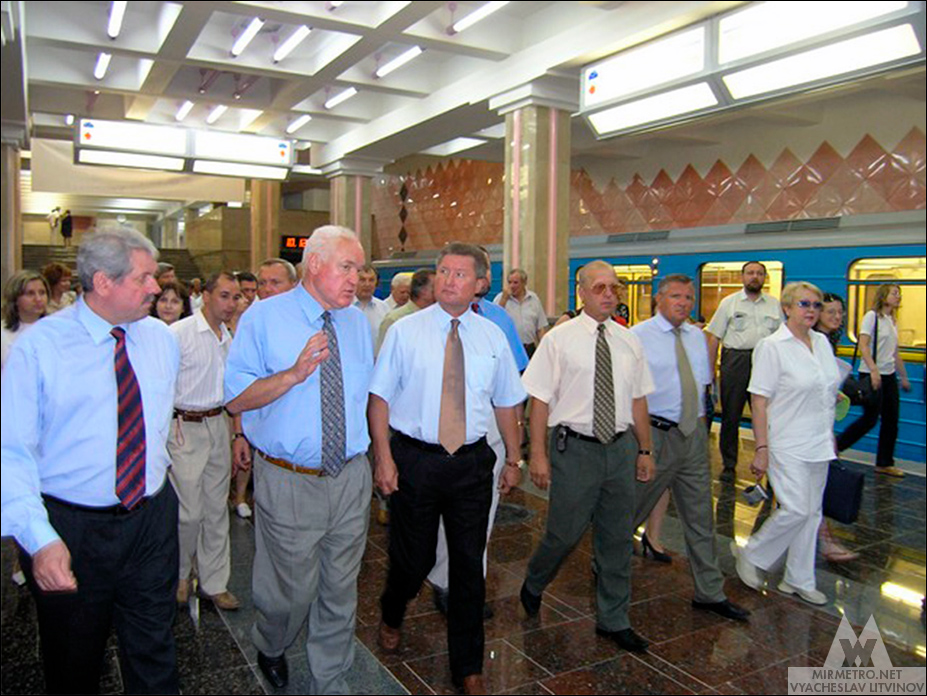
Distinguished guests before a test drive.

23 Serpnia station two weeks before opening.
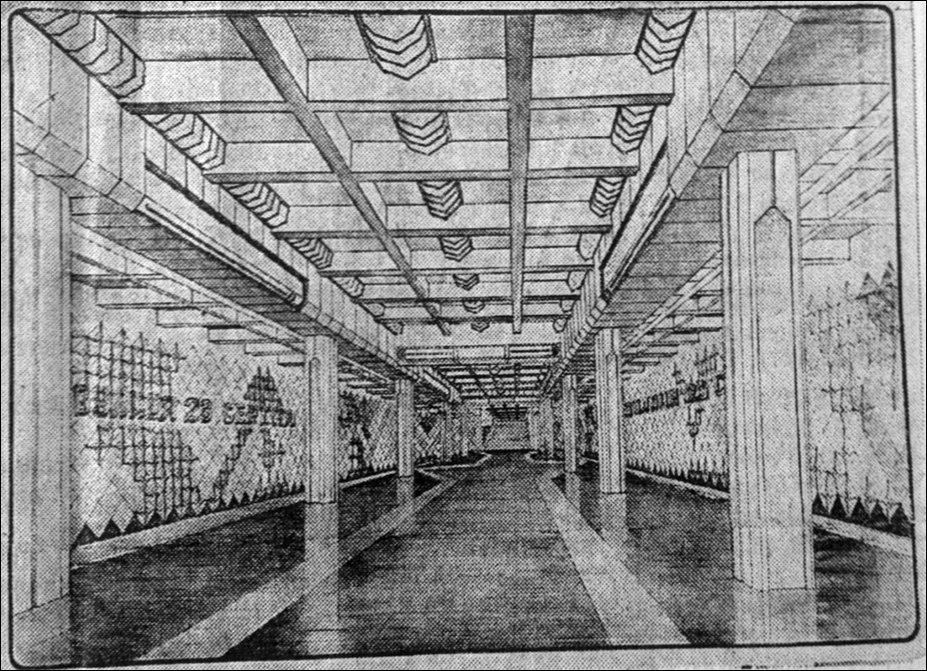
Initial concept design of the station.

Implemented concept design.