Kharkiv Metro Bridge
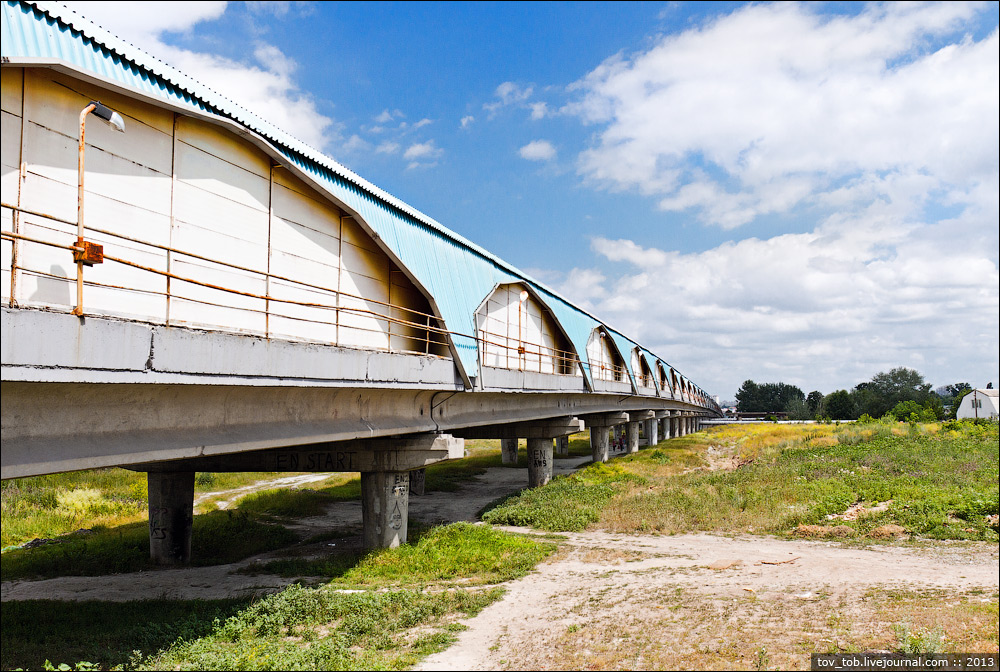
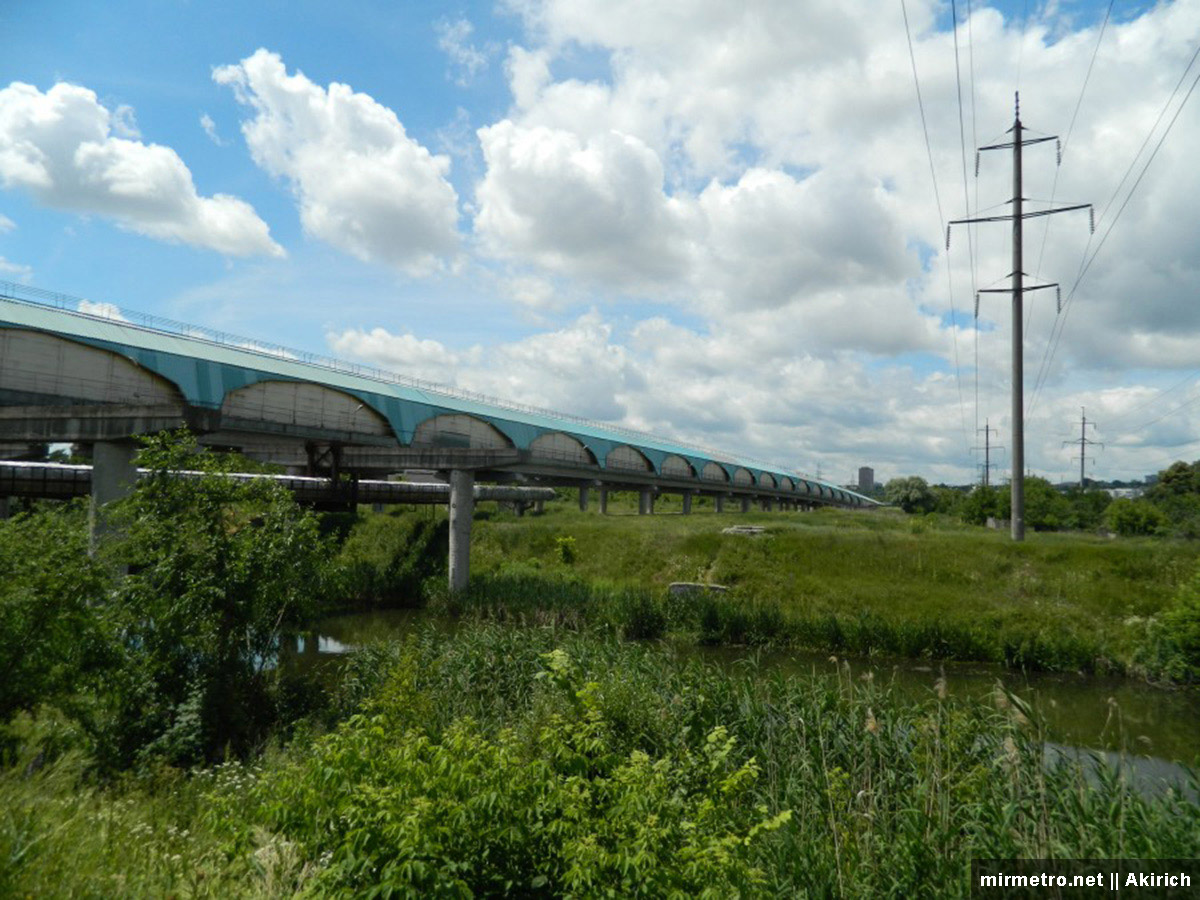
The Kharkiv Metro Bridge is a unique enclosed metro bridge. It consists of a fully insulated gallery approximately 980 metres long and is one of the few structures of its kind in the world. The bridge was commissioned on 10 August 1984 as part of the Saltivska Line. It is located between Kyivska and Akademika Barabashova stations, crossing the Zhuravlivka slopes. The bridge begins near the Zhuravlivka district, spans the Kharkiv River, and ends in the industrial area near the Barabashovo Market.
Interestingly, many Kharkiv residents are unaware that the city even has a metro bridge. Even some regular metro passengers do not realise that, for nearly one kilometre, their train is travelling across a bridge rather than through a tunnel.

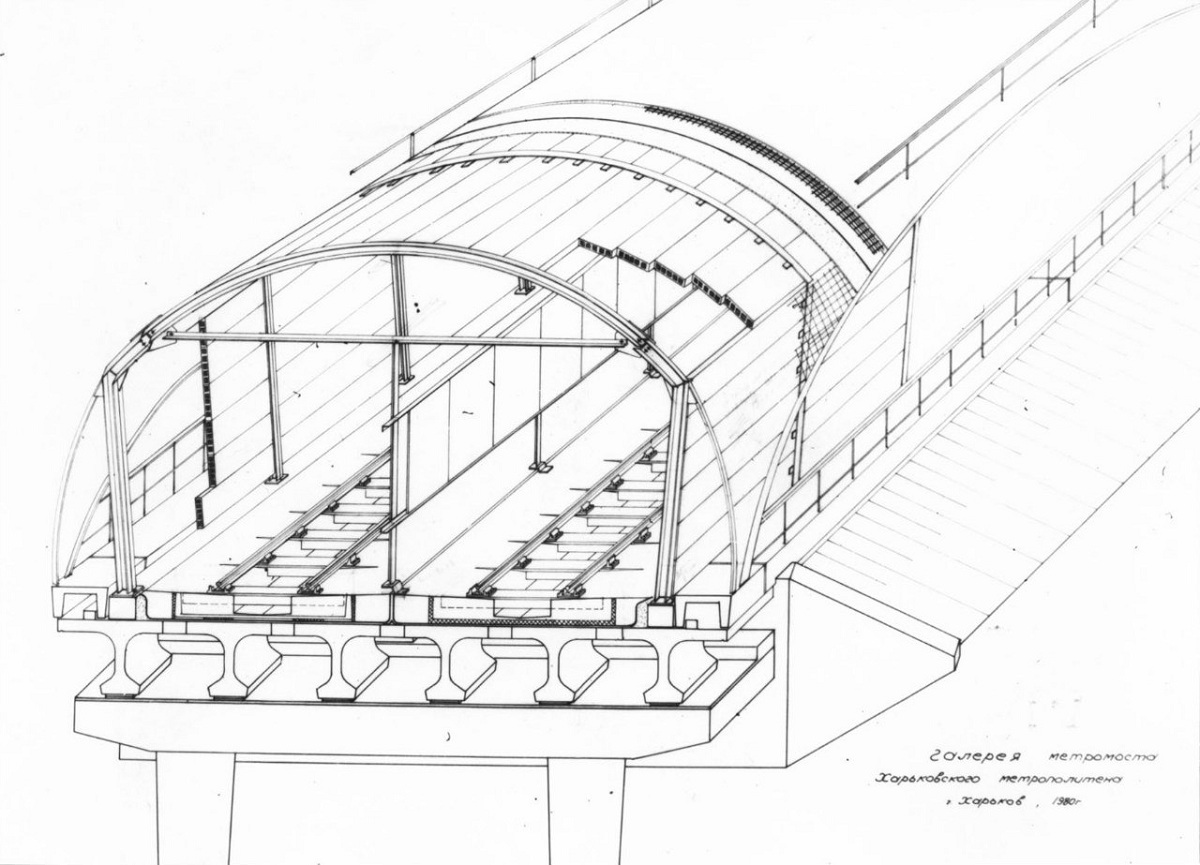
Structurally, the gallery consists of a series of steel portal frames with a span of 10 metres. Thermal insulation is provided by expanded clay concrete laid directly above the bridge deck and track structure. To protect the interior from moisture, the asbestos-cement panels are coated with a water-repellent compound, while the steel structural members are covered with fire-resistant plaster.

The exterior walls are also protected against precipitation by a hydrophobic coating followed by oil-based paint. The roof is waterproofed with two layers of rolled waterproofing material covered by a cement-sand screed reinforced with steel mesh.
From inside the train, passengers notice only subtle changes. The curved tunnel lining gives way to angular walls, and through the gap above the central partition they can catch brief glimpses of trains passing on the opposite track. Another indication is that trains reduce their speed to 40 km/h while crossing the bridge. Mobile phone service is also available here, even for operators whose networks lack underground coverage.
Maintenance walkways run along both sides of the bridge. However, the bridge is guarded by the metro’s paramilitary security service, and access is restricted to authorised personnel only. Nevertheless, some urban explorers have found creative ways to get there.
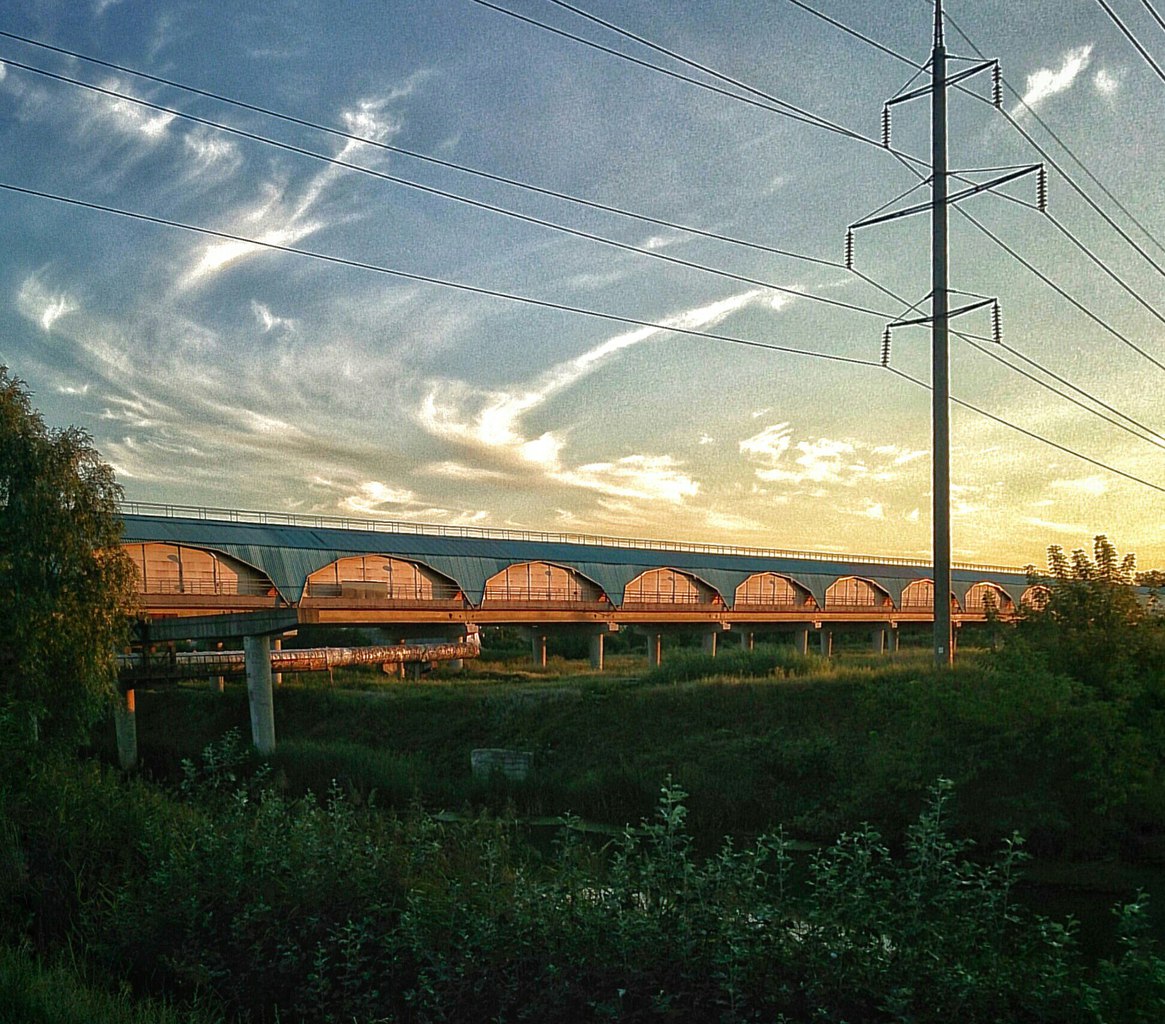
The metro bridge in winter.
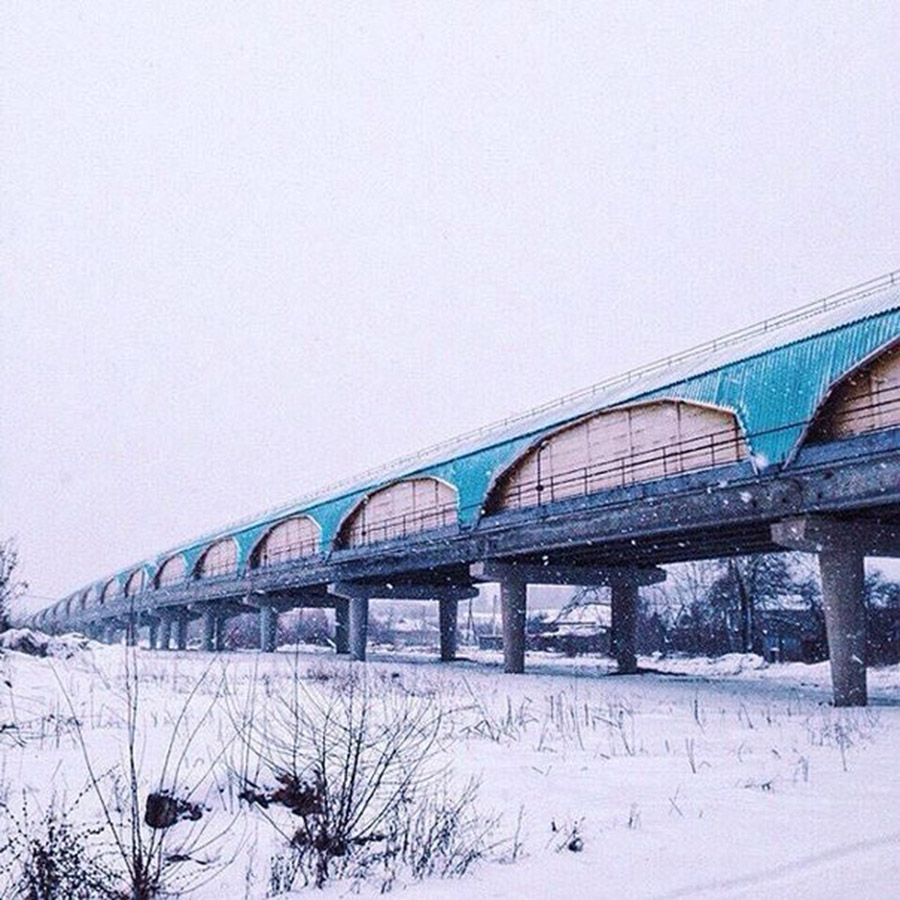
Originally, the bridge was painted blue and illuminated by exterior lighting, but it was later repainted. It was built with relatively high clearance because there were plans at the time to deepen the Kharkiv River and make it navigable for small vessels, such as boats and pleasure craft.
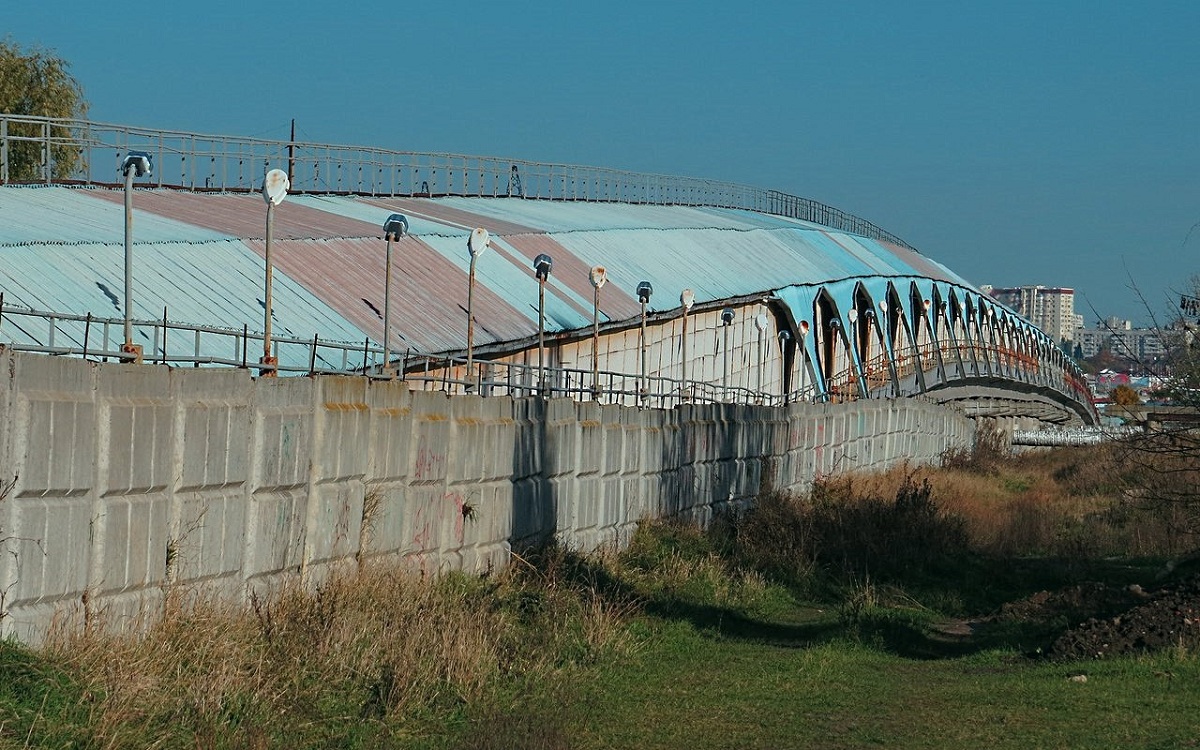
When the bridge was built, there were also plans to construct a highway alongside it, linking the Zhuravlivka district with the area now occupied by the Barabashovo Market. However, the economic turmoil that followed Perestroika and 90-ies brought the project to a halt. The only reminder of these plans is a set of four unfinished bridge piers that still stand in the river today. The construction of this road now appears highly unlikely, as the planned route has long since been occupied by the buildings of the Barabashovo Market.

This is how the metro bridge looks at the bottom.
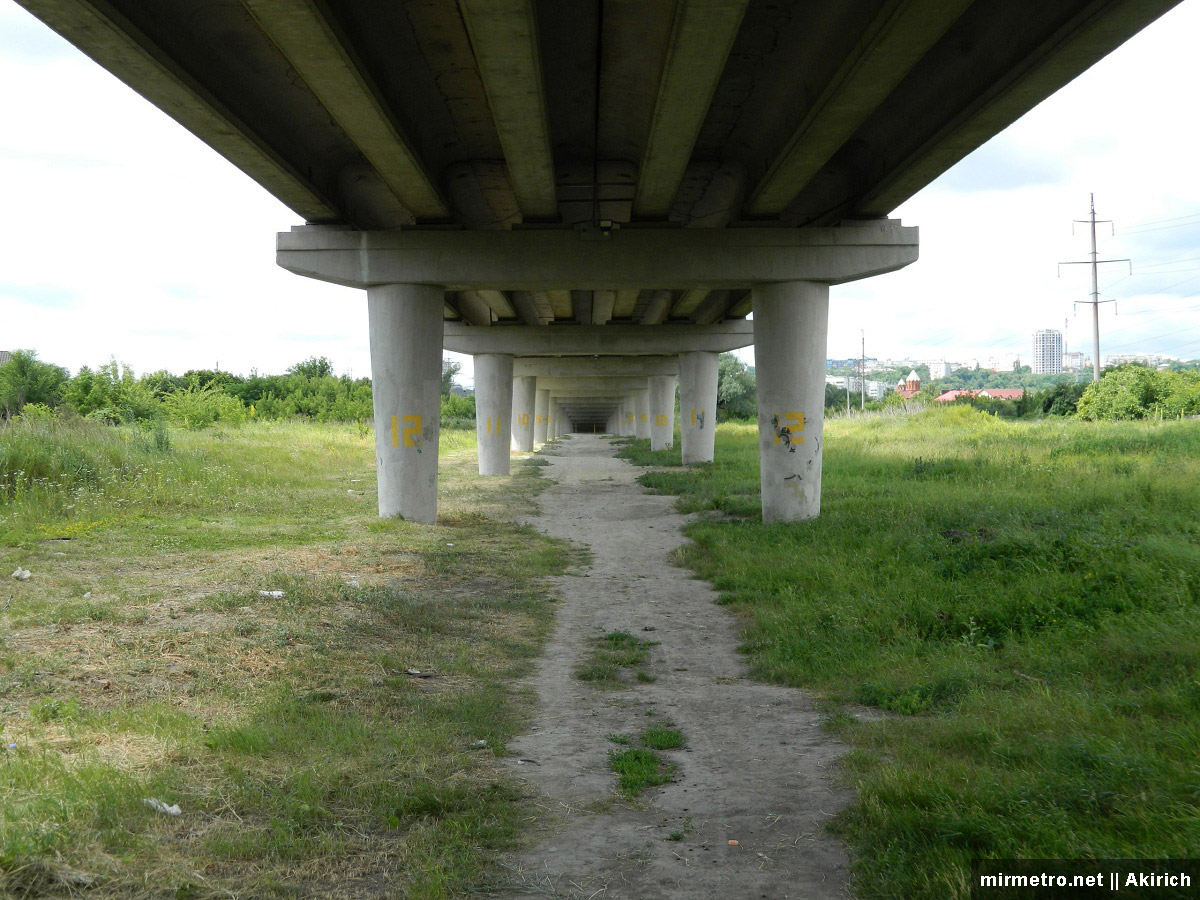
The history of the Kharkiv Metro Bridge is quite remarkable. During the design of the Saltivska Line, it soon became clear that the most challenging section would be the crossing of the Kharkiv River in the Zhuravlivka area. In addition, the terrain made the construction of the adjacent approach structures particularly difficult. Taking into account the considerable problems encountered with groundwater and quicksand during the construction of the first metro line, the engineers opted for an unconventional solution. Instead of driving tunnels beneath the riverbed using caissons, extensive dewatering systems, and other complex underground engineering methods, they decided to build an enclosed metro bridge in the form of a giant covered gallery above ground. This solution not only eliminated the need for difficult underwater construction but also proved to be simpler, faster, and more economical.
Since no comparable structure had previously been built for a Soviet metro system, the project required extensive research and development. Engineers spent considerable time refining both the structural design of the gallery and the construction methods that would be used.
Construction of the Kharkiv Metro Bridge began in late 1979. Before work could start, several blocks of single-storey houses had to be demolished, and their residents were relocated to new housing. A nearby gas pipeline also had to be rerouted. Although the bridge itself was built above ground, extensive dewatering was still required because of the difficult hydrogeological conditions. Pumps and wellpoint systems were installed throughout the construction site to lower the groundwater level.
Drawing of the Kharkiv Metro Bridge gallery.
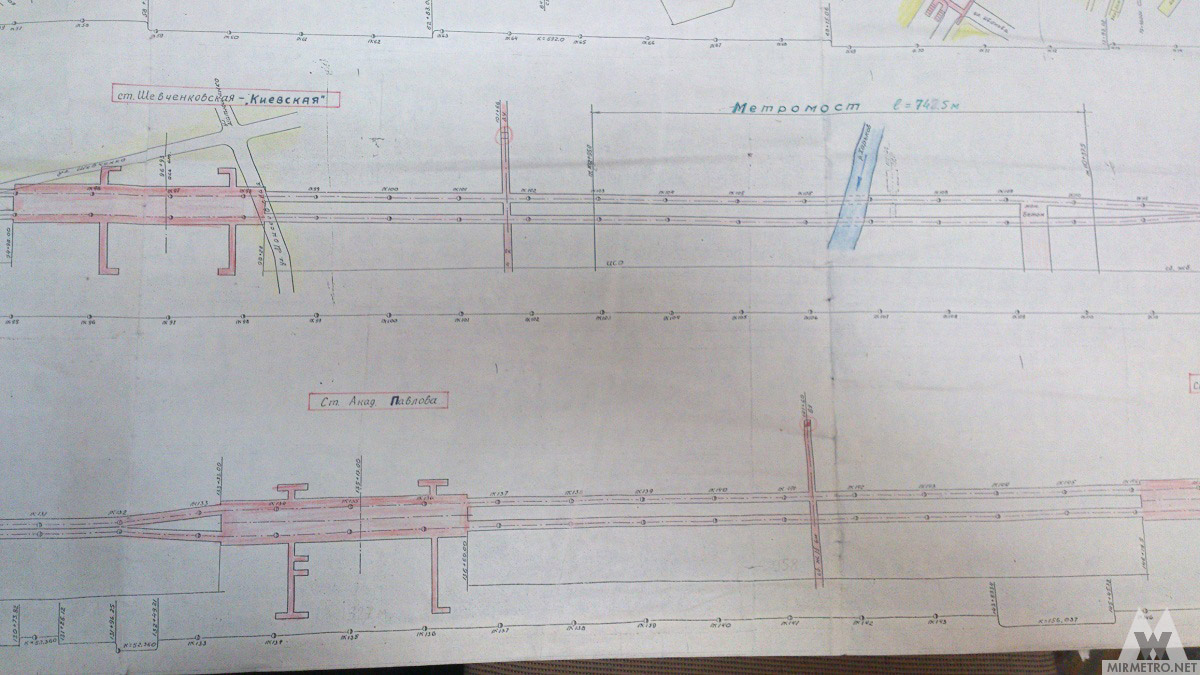
Metro bridge on the construction plan of the Saltivska line.
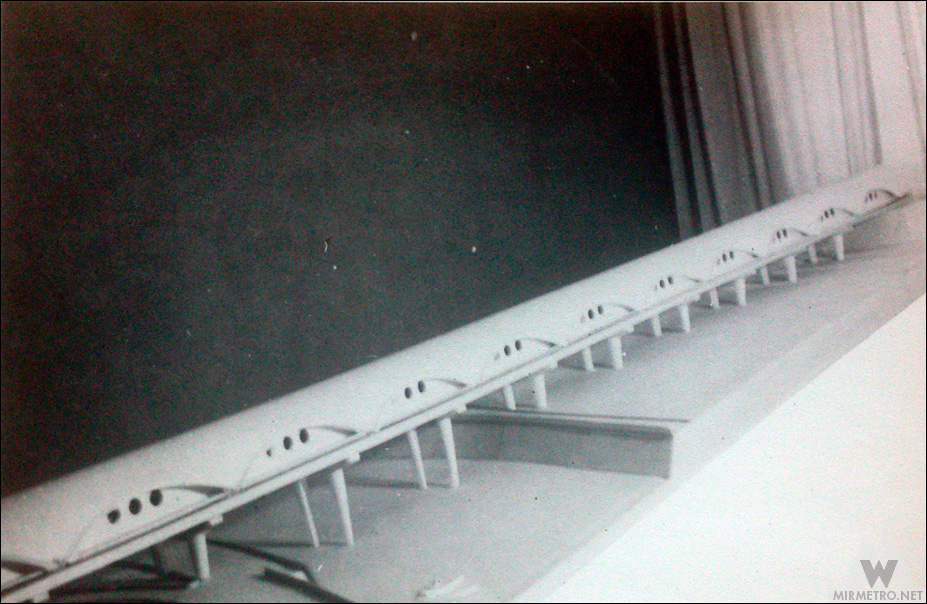
Senior engineer Lydia Koba, team leaders Rostislav Denisyuk and Pavel Chechelnitsky at the layout of the metro bridge.

The original design called for three circular windows to be built into the side recesses of the gallery. However, this idea was later abandoned in order to provide more effective natural ventilation inside the structure.
Despite the higher construction cost and greater complexity, the decision to build a fully enclosed metro bridge was made deliberately. The design offered several important advantages. All equipment inside the gallery is protected from rain, snow, and extreme temperatures. It also significantly reduces noise for nearby residential areas and prevents drivers from experiencing the sudden change in lighting that occurs when trains emerge from a tunnel onto an open bridge and then re-enter another tunnel.
There was also an aesthetic consideration. Unlike the metro bridges in Moscow and Kyiv, this bridge offers no particularly scenic views. Even when it opened, the surroundings consisted mainly of low-rise industrial buildings and vacant land. Over the years, the landscape has become even less attractive as illegal rubbish dumps have appeared in the area.
Each bridge support took approximately four days to install. Because the foundations were constructed in water-saturated soil, they were protected with a bituminous waterproofing layer to prevent groundwater from damaging the reinforced concrete. In the photograph: the construction crew gathers for a final briefing before the installation of the next bridge span.

The most challenging stage was the installation of the so-called river spans. Each support required 15 foundation piles to be driven on either side. The work was further complicated by the fact that the pile-driving rig was already obsolete, and its boom had a manufacturing defect. Under such conditions, the construction crews had to work with exceptional precision to ensure that the piles were driven perfectly vertically without any misalignment.

Installation of reinforced-concrete structures connecting the metro bridge with the running tunnels.

Installation of the reinforced-concrete bridge girders.
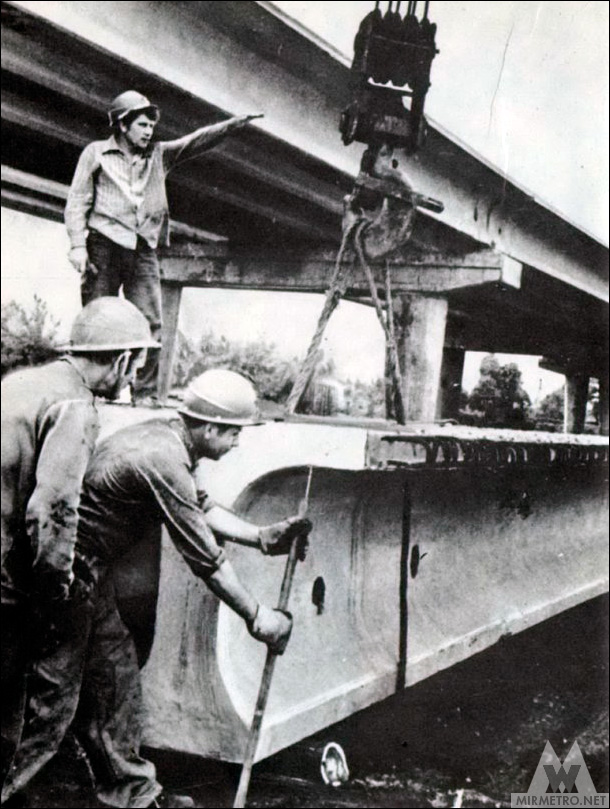
The girders were lifted into place by two 25-tonne cranes and joined together by welding the reinforcing steel.
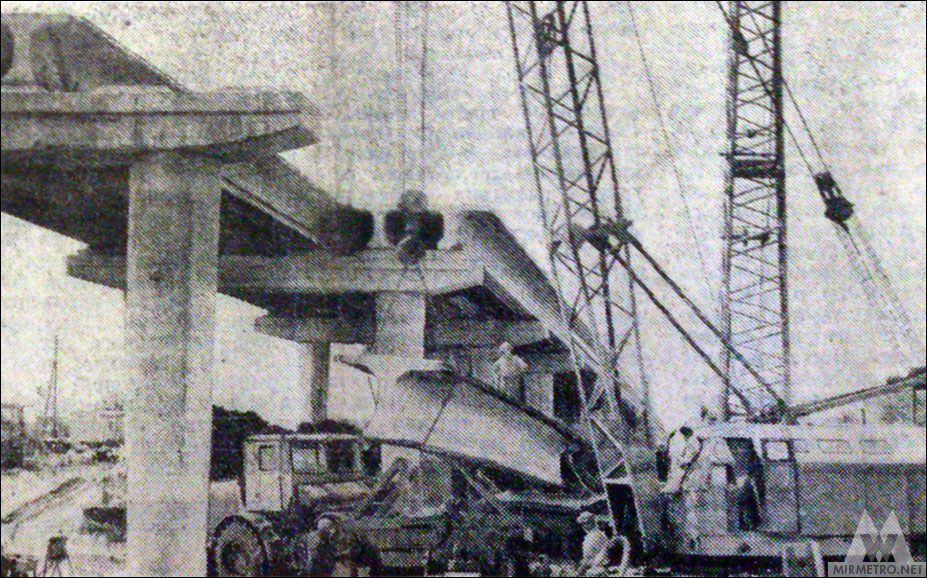
By this stage, the bridge decking was structurally complete.
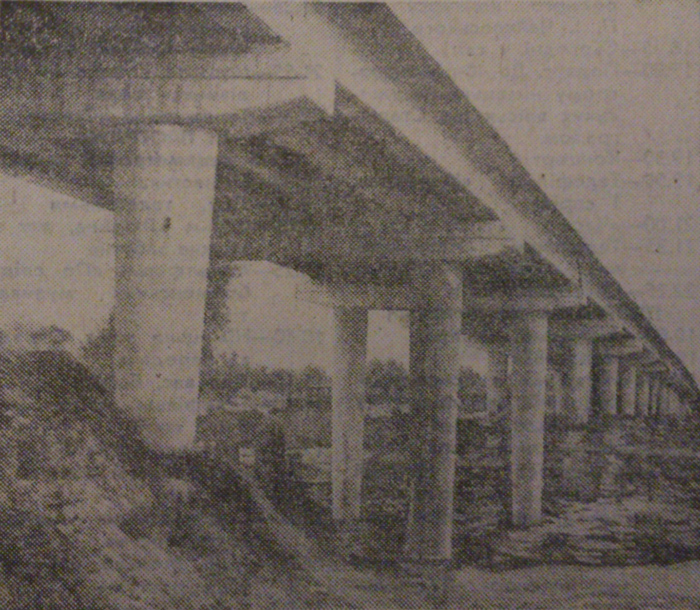
The metro bridge in the spring of 1982.

The construction of the bridge roof was carried out using a relatively simple and efficient method. Steel arch frames with transverse beams were first installed along the edges of the bridge deck. They were then fitted with tightly joined hollow asbestos-cement slabs, whose longitudinal cavities were filled with slag to provide thermal insulation. The slabs were covered with waterproofing materials and finally clad with corrugated steel sheets. To speed up the assembly of the roof, the builders designed a special rail-mounted trolley for transporting construction materials and equipment along the bridge. On average, five roof sections were completed every two days. The final sections to be assembled were the 100-metre-long transition sections adjoining the underground tunnels.
The tunnels emerge onto the surface at this point.
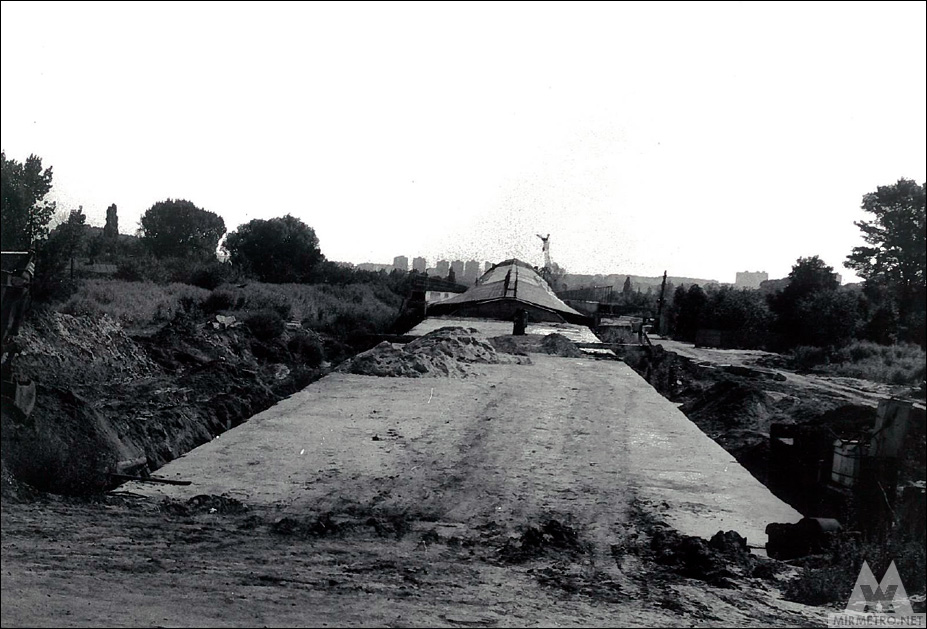
Casting the concrete troughs for the future running tunnels.

Track laying on the bridge deck.
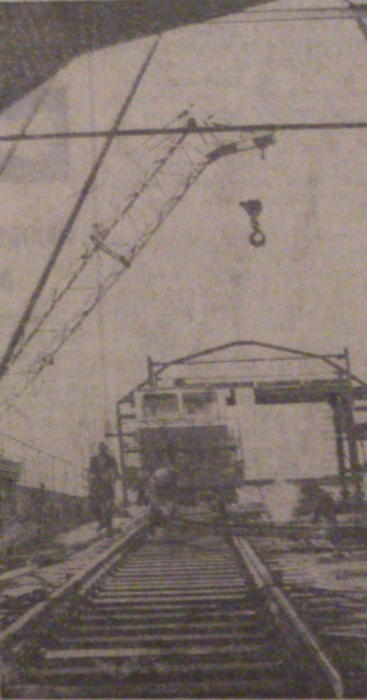
The first roof arches are installed.

Installation of the final roof arches.
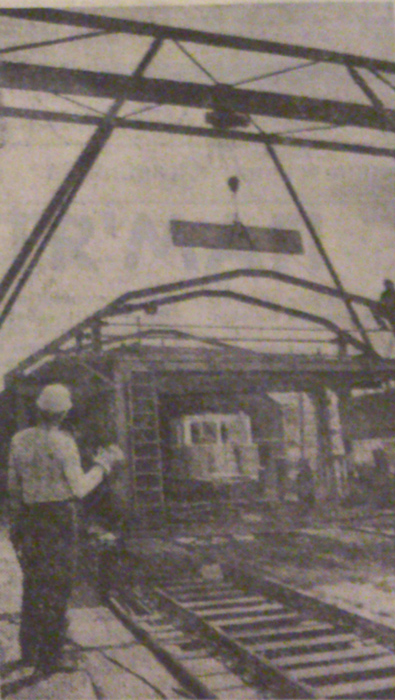
Construction of the bridge roof.
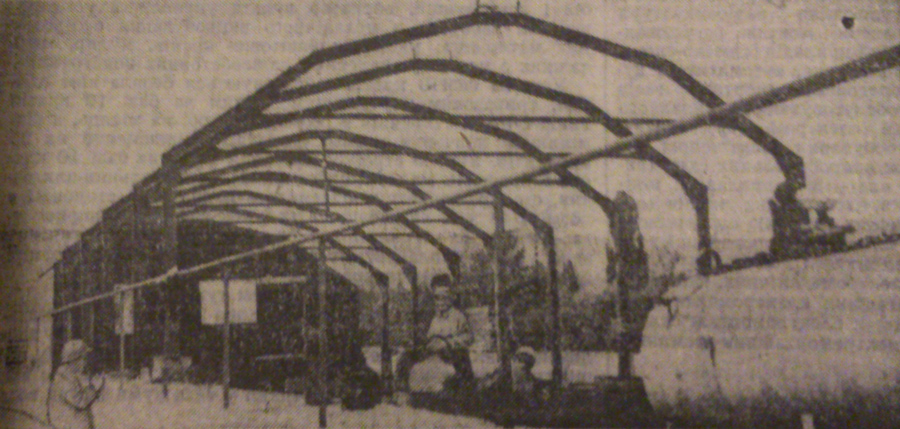
The completed roof of the metro bridge.

By early 1984, construction had been completed.
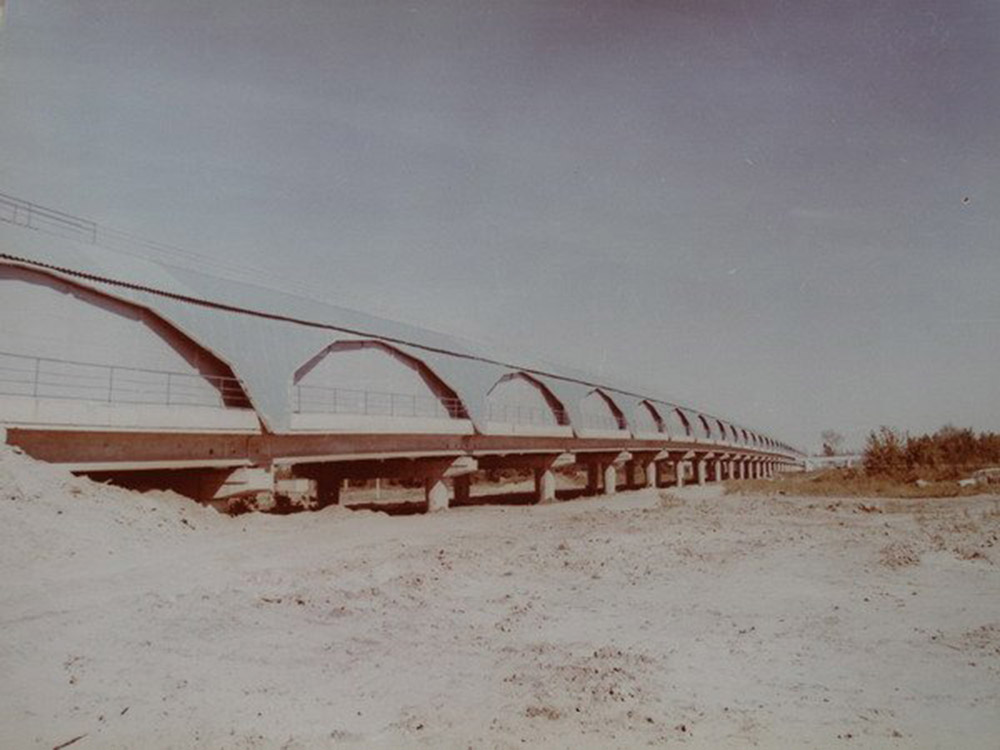
The metro bridge shortly before it entered service.
