Metro to Oleksiivka (1995-2010)
Despite the hard-won opening of the Oleksiivska line, the metro had not yet reached the Oleksiivskyi residential area itself, but had only come one station closer to it. The numerous buses and trolleybuses running from the Naukova station towards Pavlove Pole and Alekseyevka were overcrowded and packed to capacity even outside peak hours. The northern part of the city still acutely needed the metro, not least because of the unfavourable transport location of the Oleksiivskyi residential area: it is separated from the centre by the Oleksiivka gully and is linked to it by only two roads. Strange as it may seem, the economic difficulties of the preceding years in no way shook the statements of city officials about the opening of future stations: the extension of the line to Prospekt Peremohy was still promised by the end of the decade, and the section of two stations in the Pavlove Pole area — by City Day in 1996, although at that time this was scarcely possible even with uninterrupted funding and the supply of materials.
However, thunder suddenly struck where it was least expected. The summer day of 29 June 1995 gave no hint of anything untoward, when, after noon, a heavy downpour descended on Kharkiv. The fury of the elements grew ever stronger: the water level in the city centre reached the height of a car bonnet, and traffic in many districts of the city was completely paralysed. Water flooded into metro station vestibules and onto platforms; the Saltivsky radius was closed due to the flooding of stations. At 5 p.m., an accident occurred at the Dikanivka wastewater treatment facilities: water flooded the main pumping station, equipment failed, and untreated sewage poured straight into the rivers. Until 8 August, Kharkiv was left without water. Naturally, this critical problem required an immediate solution. To deal with the consequences of the accident, all the funds intended for the continuation of metro construction had to be spent.
At the same time, the situation at the Tsentralnyi Rynok station began to worsen. After the notorious downpour and the cessation of operation of deep wells located in nearby industrial zones, the groundwater level began to rise sharply. When designing the station, the engineers had calculated the maximum loads on the structures with a margin, should the groundwater level rise by one and a half metres; but within a year, the water rose by five metres, “pushing” the station towards the surface. This led to severe deformation of the bearing section: cracks appeared on the platform and walls, while the track gauge simultaneously narrowed and the rail level was disrupted. The strengthening of the station structures was carried out in two stages. First, seven deep-well pumps were installed around it to pump out water, and the laying of concrete and reinforcement under the platform began, together with the injection of cement grout into the invert section of the station. Throughout this, the station’s operating regime was not disrupted in any way, except for a speed restriction on trains over the damaged section. The final stage was the installation of columns to support the vault. This work was completed in just two weeks, from 28 June to 10 July 1996. During this time, the station was closed to passengers, and trains passed through it without stopping.
The consequences were not long in coming. Construction of the stations themselves had essentially never even begun, while the driving of tunnels in the generally dry and yielding soils began to slow down gradually and quickly dropped to 10–15 metres a month — many times lower than what was possible. In May 1996, due to a lack of funding and the gigantic debts of Kharkivmetrobud, metro construction was halted completely. Dark times set in for the workers of the underground arteries. Wage arrears swelled like dough rising — payment delays grew from 2–3 months to a year; money was not allocated; already installed equipment fell into disrepair and deteriorated. The once multi-thousand-strong collective of Kharkivmetrostroy thinned out ever more: some were laid off, others sent on unpaid leave. Going for many months without pay for their labour, specialists dispersed in all directions — to the construction of other projects, to other metros of the CIS, and so on. Those who remained (about 800 people out of 2,300) continued doing their work, literally “for love”. To the best of their ability, even if at a snail’s pace, they continued tunnelling. The shield had to be advanced by at least 5 metres a month in any case; otherwise, it would be squeezed by the surrounding rock, and subsequently extracting it would be extremely difficult. By the end of 1997, 30% of the tunnels towards the “Botanichnyi Sad” station and 20% towards “23 Serpnia” had been driven; the construction of the stations themselves, however, had essentially not begun. Builders were mainly occupied with auxiliary work: pumping out water, heating equipment and guarding materials. At meetings of the Regional Council, some hotheads proposed mothballing the construction site, but when it was calculated that the cost of conservation would be only 20% less than what was required for construction, the idea was abandoned. Besides, construction would someday come to an end, while conservation could last indefinitely. Alas, hardly anyone could then have imagined that the construction of two new stations would drag on for another whole seven years.
One of the first measures intended to rescue metro construction was the holding of the regional “Metro” lottery in 1997. For this purpose, 3 million lottery tickets were printed, costing 2 hryvnias each. The money from sales was distributed in the following proportion: 20% for organising the lottery, and 40% each for metro construction and for paying out prizes to winners. Unfortunately, this did not bring the desired results — of the projected 2.4 million hryvnias for metro construction, only about a quarter of that sum was raised, which was insufficient even to pay the builders’ wages.
By June 1998, wage arrears owed to the metro builders had grown to a record level and amounted to 16 months. At that time, a placard appeared on the fence of the construction site near the House of Projects: “Metro construction has been definitively halted. Metro builders have had no wages for over a year.” The situation reached the point of absurdity — the builders organised a picket outside the Regional State Administration building demanding that they be granted the right to… free travel on the metro, since many of them simply could no longer afford to get to their workplace. In 1998, of the required 170 million hryvnias for metro construction, only about 11 million were allocated. This situation was caused by the crisis that engulfed the country at that time, due to the ineffective macroeconomic policy pursued by the government of Ukraine in the 1990s. When visiting Kharkiv, Ukrainian prime ministers made loud promises to allocate the necessary sums for metro construction and to fully pay off the wage arrears, but, unfortunately, they went no further than promises. As for the leaders of the city and region, they would have been glad to allocate funds for the metro, except there was simply nothing to allocate. Such, alas, proved to be the harsh reality, which surpassed even the most pessimistic forecasts.
Things were no better with the operation of the metro. The financial state of the underground made it barely possible to carry out repairs and the replacement of units and mechanisms, or to purchase new rails and spare parts for the rolling stock. Many employees began to be sent on short-term unpaid leave, which further reduced their already low wages.
Despite all the adversities, in 1997, after five years of work, another technical innovation was introduced in the metro — the Unified Dispatching Centre, which had no analogues in any metro of the CIS. In this centre, with the aid of a microprocessor system, integrated control is exercised over train movement, the operation of escalators, and the power supply, ventilation, water supply, heat supply and sewerage systems. A computer program developed by metro specialists makes it possible to track the condition of all systems. At the same time, the previous states of all monitored parameters are stored in memory, which makes it much easier to identify possible failures and find ways to eliminate them.
In 1998–1999, several more attempts were made to save the fading Kharkivmetrostroy by selling its blocks of shares at auctions. Fifty per cent of the shares were sold for real money in exchange for privatisation property and compensation certificates, as well as on preferential terms (the remaining 50 per cent of shares still belonged to the state). Alas, these measures also brought no results. The metro builders felt no change either from the sale of the shares themselves or from dividend income. There was still no support from the state, and the few million a year from the Regional State Administration were only enough to pay off a small part of the wage arrears and to purchase some materials to continue construction.
At last, in November 2000, the first light appeared at the end of the tunnel. Yevgen Kushnaryov, who had just assumed the post of head of the Regional State Administration, evidently decided not to feed the people with empty promises about manifestly impossible opening deadlines, which had been voiced many times by representatives of the authorities at various levels. In his speech at a meeting of the Regional Council, he announced that the two new stations would welcome Kharkiv residents in the summer of 2004, in time for the city’s 350th anniversary. To make this statement a reality, about 150 million hryvnias were needed. Under Kushnaryov’s leadership, a headquarters for the coordination of metro construction was set up within the Regional State Administration. During official visits to Kyiv, Kushnaryov essentially persuaded them to allocate part of the funds, and a little more was added from the regional budget.
Work on the construction sites of the two new stations at last got under way in earnest, and the driving of the tunnels, which by that time had already been bored more than halfway, accelerated significantly. Over the course of 2001, 30 million hryvnias were utilised, and more work was completed than in the previous five years: a large amount of soil was excavated, the first cubic metres of concrete were poured into the platforms of the future stations, and three tunnel holings-through were accomplished. The metro builders’ collective was recovering, and by the summer of 2001 all wage arrears had been eliminated.
Thanks to the coordinated work of the Kharkiv metro builders and stable funding from various sources, by the autumn of 2002 the construction readiness of the new section stood at 70%, and by the spring of 2003 the stations had already been built in structural form. By then, no one doubted that this time the promises about the opening deadlines were not empty words. The rapid pace of the work was also facilitated by favourable geological conditions — the overwhelming majority of the soils in which the stations and tunnels are situated consist of dry clays, convenient for driving and carrying out construction.
Structurally, the new stations were nothing out of the ordinary — they are three-span column stations, built according to a standard design. The precast reinforced concrete structures were supplied by the Kharkiv Reinforced Concrete Structures Plant attached to the metro construction, which, however, was already experiencing great difficulties at that time. On this occasion, the builders had no metal supports at their disposal, so reinforced concrete ones were used for the first time instead.
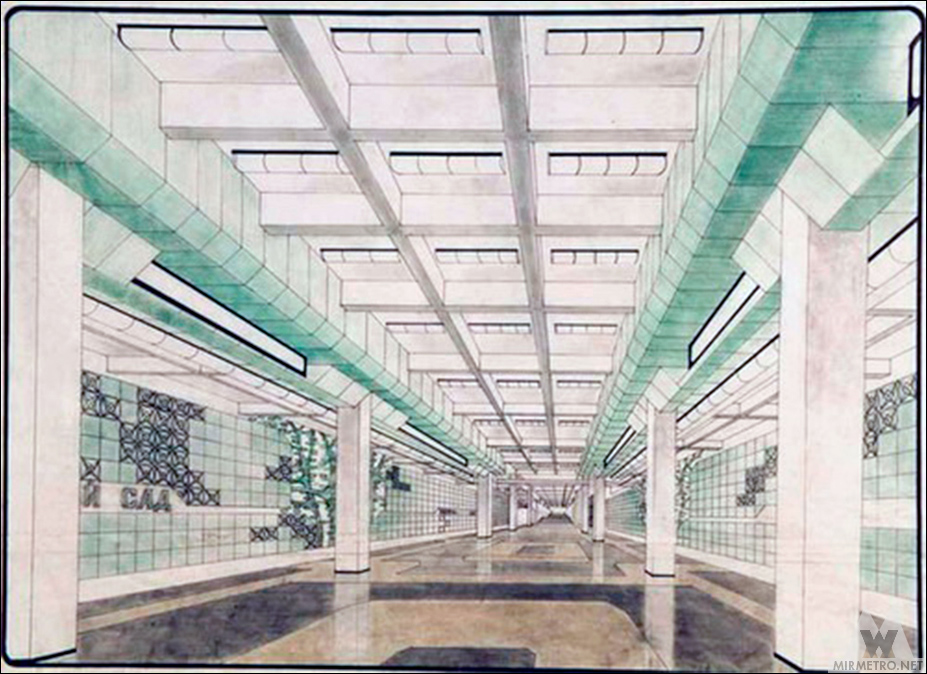
Special mention should be made of the architecture of the new stations. Without exaggeration, it is the fruit of the brilliant thinking of the architects Volodymyr Spivachuk and Gnat Karpenko. Previously, Kharkivmetroproekt had poured all its potential into their developments and had never created station designs counting on such a limited budget. This time they not only had to abandon many ideas, but also to cut spending on finishing materials to a minimum. It was then that the decision was taken to use embossed metal-enamel tiles to minimise the use of imported marble. The result was colourful underground palaces that perfectly convey the conceptual and compositional idea. The Botanichnyi Sad station is executed in green tones, while bright colours predominate at the 23 Serpnia station.
Concept design of Botanichnyi Sad station
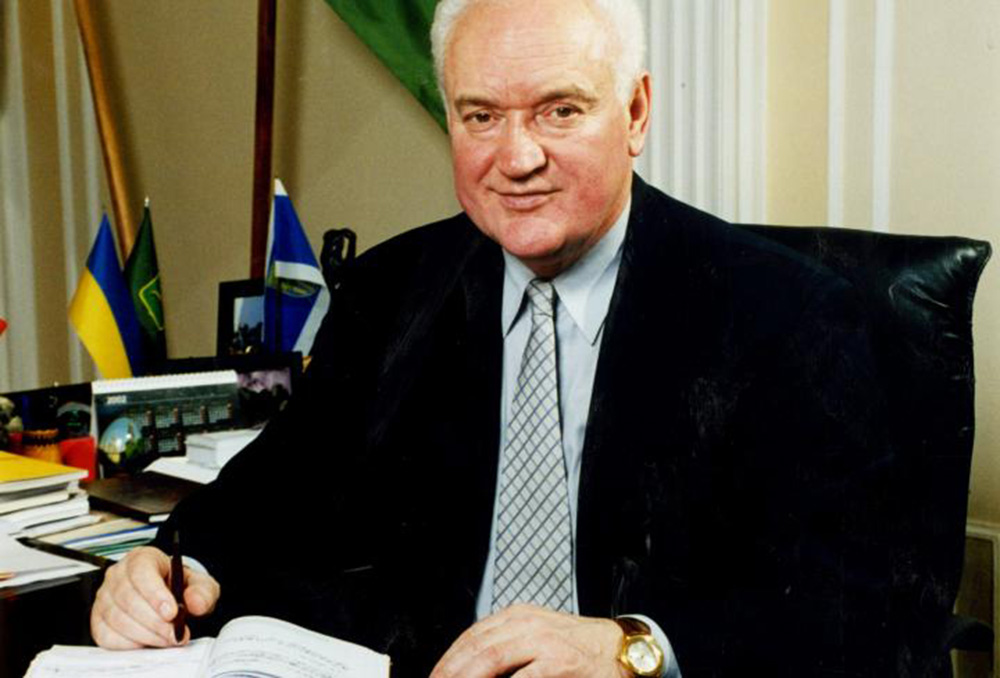
The Kharkiv Metro itself, during the aforementioned period, was experiencing severe financial difficulties; at times it was necessary to delay the payment of wages to employees, something that had hardly ever happened before. For this reason, the Oleksiivska line was temporarily switched to four-car trains in order to save money. The reason for this was the fact that the metro had not yet paid for the train that had arrived in Kharkiv back in 1998; however, the situation gradually returned to normal. From 2002 to 2006, the Kharkiv Metro collective was headed by Mykhailo Pylypchuk, who had previously held the post of mayor. During his tenure as head of the metro, he proved himself to be a talented manager, whom his subordinates respected for his personal qualities.
Mykhailo Pylypchuk
In 2004, the construction of the stations was even proceeding slightly ahead of schedule, and the main works had already been completed by summer. In addition, a wide scope of work was launched at the next station, Oleksiivska, and tunnel driving was actively underway. In order for the new stations to open on time, Kushnaryov even took out a loan of 38 million hryvnias on behalf of the region, as a result of which criminal proceedings were even initiated against him on charges of exceeding his official powers, which were subsequently closed. By May 2005, the loan had been repaid together with interest.
Yevgen Kushnaryov

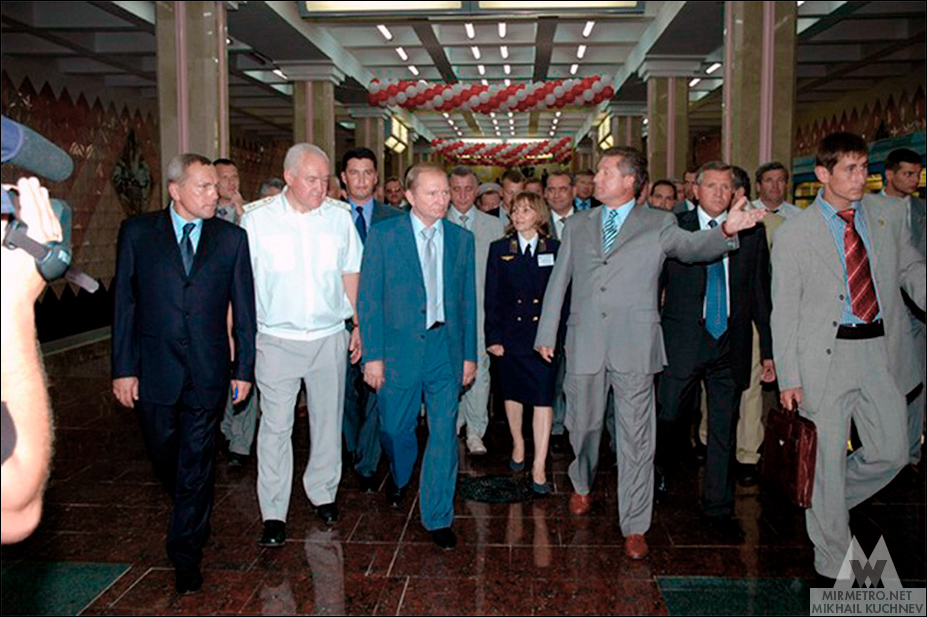
On 2 August 2004, the first trial train carrying honoured guests ran along the new section, and on 21 August the state commission signed the acceptance certificate for the operation of the second section of the third line of the Kharkiv Metro. Two stations were put into operation: Botanichnyi Sad and 23 Serpnia. The Kharkiv Metro grew to 28 stations and became 2.5 km longer. With the opening of this section, the metro arrived in the Pavlove Pole district, and the third stage of the Kharkiv Metro became a fully-fledged line. The construction of the section cost 205 million hryvnias in the prices of that time, with about 70% of this sum coming from the regional and city budgets, and the remainder from the state budget.
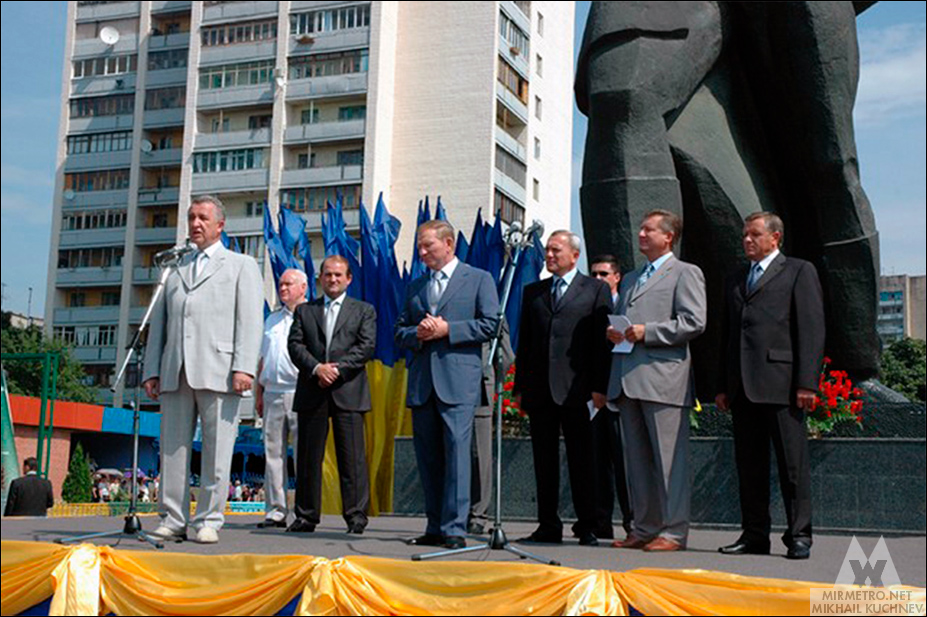
On 21 August 2004 at 11:30 a.m., a ceremonial meeting was held by the monument to the Liberator Warrior. Initially, the opening was planned for 23 August, but the date was adjusted specifically for the president’s visit to Kharkiv.
Ceremonial meeting near the monument of the Liberator Warrior
Honoured guests inspect the stations

After the ceremonial opening of the new section, a decision was taken to open the following stations one by one, and official opening deadlines were set: Oleksiivska in 2007, Peremoha in 2009. In 2005, a promising development plan for the metros of Ukraine was adopted, according to which four more stations were to appear in Kharkiv by 2010. For the construction of the two new stations, Oleksiivska and Peremoha, 360 million hryvnias were required, which were again to be allocated in instalments from the state, regional and city budgets.
Alas, reality proved far from the promises. From the end of 2004, Ukraine was gripped by a severe political crisis, and the state budget for 2005 did not even include a line item for the Kharkiv Metro, while the regional budget could not allocate significant funds as it had recently done. Builders were sent on unpaid leave en masse, and those who remained were switched to a three-day working week, causing the pace of work to plummet. In order not to halt the construction altogether, Kharkivmetrobud took out a loan of 2 million hryvnias on its own, and a few million more were allocated by the city budget. In the subsequent period, funds from the state and regional budgets came only in small portions — thus, in 2006, of the 50 million hryvnias promised by the state, only 2.6 million were received, and the then Minister of Finance even stated that “it is inexpedient to allocate state money to finance an unprofitable enterprise,” while the city allocated the promised 21 million in full. Owing to the severe underfunding of the project and the stagnation in construction, it was already clear by the middle of 2006 that the planned 2007 opening would have to be forgotten. They managed to revive the construction slightly in September 2006, when the government allocated a further 17 million, but this money too was quickly utilised. By the summer of 2007, the Oleksiivska station was roughly half ready, which did not prevent officials of various ranks from promising its opening by the end of the year. These promises again remained just promises — by the end of the year, only a small portion of the required funds had been received, and the builders were again forced to switch to a three-day, and subsequently a two-day working week.
The Oleksiivska station was built using a new technology and is unlike any of the stations already operating in Kharkiv. Firstly, for the first time a station was built as a two-span structure, i.e., with a single row of columns; secondly, the station structures were assembled from cast-in-situ rather than precast reinforced concrete elements. This decision was taken for the sake of potentially reducing the cost of construction, and also because the Kharkiv Reinforced Concrete Structures Plant, which had supplied materials previously, was already going through hard times and could not produce the structures in the required quantity. Initially, balconies were envisaged at the station, but by the will of financial circumstances it was decided to do without them.
Concept design of Oleksiivska station

Things with the operation of the metro were, to put it mildly, also far from ideal. After a change of management in April 2006, mass dismissals of metro employees began, bypassing the law and with complete indifference to their work records. Of the more than four-thousand-strong collective, only about two thousand people soon remained, and for many of those who stayed, unbearable working conditions were deliberately created. Such changes, of course, could not pass without consequences and hurt the quality of passenger service.
The Kharkiv Metro is renowned for its excellent level of safety and adherence to the train schedule. Fortunately, there have never been any incidents resulting in loss of life in the Kharkiv Metro, but one significant accident did occur. It happened on 14 March 2006 at 11:42. An empty train heading to the depot came to a halt on the section between Sportyvna and Zavod Imeni Malysheva, after which a train carrying passengers collided with it. Six people were taken to hospital with injuries that, fortunately, posed no particular threat to their health, and all were discharged within a week. As it later transpired, this accident occurred as a result of a combination of circumstances: when the train stopped in the tunnel due to a fault, an alarm signal appeared on the safety system monitor, but the dispatcher was distracted and did not react in time; the automatic train control system activated twice, stopping the following train carrying passengers in the tunnel, but the driver did not take it seriously and continued moving. On seeing the train standing ahead, the driver applied emergency braking, but it was not possible to avoid the collision. The damaged cars were not subsequently written off, but underwent a major overhaul.
Instead of the expected progress in the construction of the Oleksiivska station, such hard times set in as were not spoken of even in the most pessimistic forecasts. With weak support from the state, the Regional State Administration was also in no hurry to allocate funds — the then governor considered that if the money allocated would not be enough to complete the construction anyway, then it would be better to distribute it towards other purposes. In August 2008, the builders went on strike, demanding payment of three months’ wage arrears. Hundreds of qualified specialists left metro construction, as there was no longer any point in hoping for a decent wage. In the autumn of 2008, 50 million hryvnias were finally allocated from the state budget, but this money was quickly utilised, and by the beginning of 2009 there was once again nothing to build the metro with.
In the midst of a new economic crisis, the 2009 state budget of Ukraine made no provision at all for the Kharkiv Metro. At the beginning of the new year, the construction site stood empty: everyone who had not been laid off or had not left of their own accord was sent on unpaid leave. Only security remained on site, carrying out periodic rounds of the territory. When the builders’ wage arrears reached eight months, they went to court to obtain their honestly earned money, and they won the case; however, they did not receive any money at that time — there was simply nothing to pay them with. At sessions of the Regional Council, debates took place about mothballing the construction site. Fortunately, such a decision was not taken, for although conservation is initially cheaper than continuing construction, it would subsequently lead to much of the work already done and equipment already installed having to be redone, which according to final calculations would lead to a sharp increase in the cost of construction. In April 2009, the ruling of the Commercial Court of Kharkiv Region came as a bolt from the blue: it initiated bankruptcy proceedings against Kharkivmetrobud owing to its gigantic debts and the impossibility of repaying them, and, in connection with the bankruptcy, the contract between the metro and Kharkivmetrobud was terminated. As a result, one of the finest construction collectives, with a long history and many labour victories behind it, ceased to exist and became merely a part of history.
At last, in September 2009, the government of Ukraine allocated the 75 million hryvnias promised back in spring, and the city allocated a further 12 million. Although this money was insufficient to complete the construction, work once again got under way on the construction site, and by the end of the year all these funds had been utilised, while the readiness of the station stood at over 90%. The new contractors selected by the directorate of the metro under construction to continue the work on the basis of tender results were Tonelbud and Pivdenspetsbud joint stock companies.
In 2010, the city council allocated 25 million hryvnias, and later the city took out a loan of an additional 50 million in order to ensure against yet another prolongation and idle period in the construction. Soon afterwards, the government allocated a further 50 million. Thanks to these financial injections, the long-suffering construction at last entered the home straight, and by the autumn of 2010 the works were largely completed. On 19 October, the first trial train arrived at the station, and on 23 October — the first train carrying officials and journalists. Nineteen years after the start, the construction was finished, and the metro finally arrived in the Oleksiivskyi residential area, to the immense joy of its residents. In total, the construction of Oleksiivska cost 421 million hryvnias, with about 40% of this sum coming from the city and regional budgets.
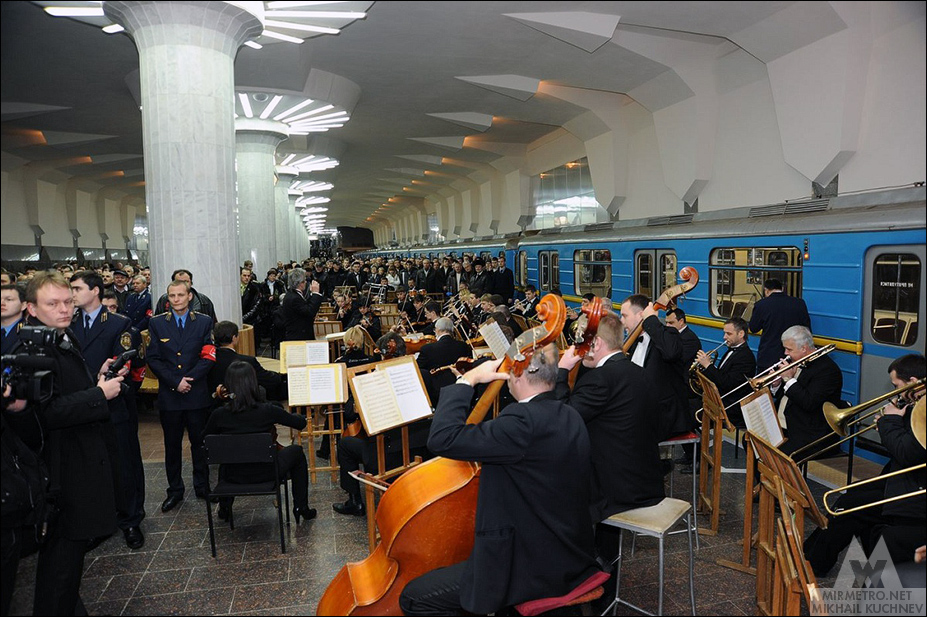
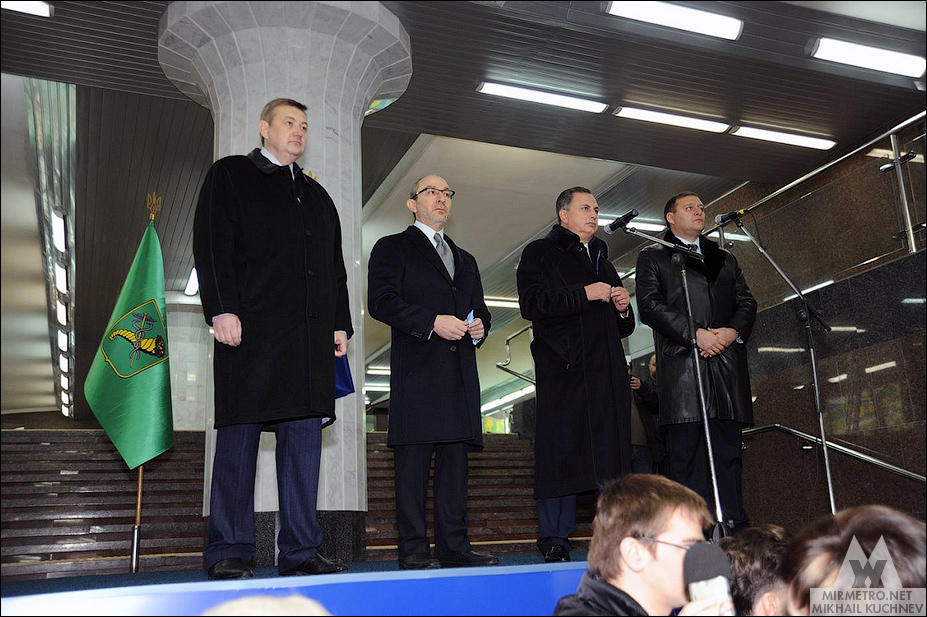
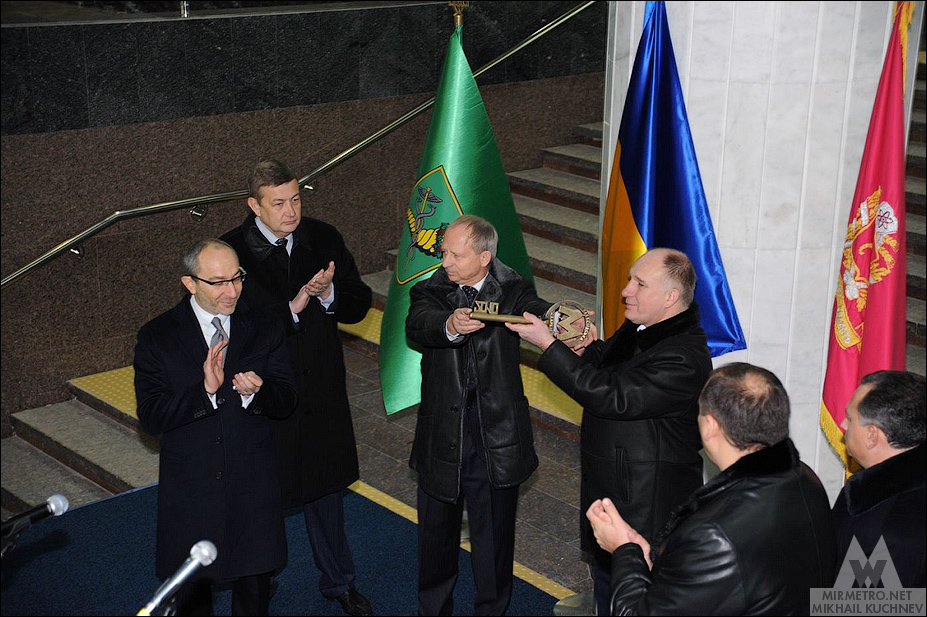
On 21 December 2010 at 9:00 a.m., a ceremonial meeting dedicated to the commissioning of the Oleksiivska station was held at the station itself. The meeting was attended by metro builders, city and state party officials, and honoured guests. To the applause of those gathered, a blue ribbon was cut. On the same day at 12:00 noon, the station was opened to passengers.
The meeting participants were greeted with a concert by the collective of the Kharkiv Regional Philharmonic.