Botanichnyi Sad
Opening date: 21 August 2004
Architects: V. Spivachuk, H. Karpenko
Engineers: R. Denisyuk, L. Koba
Artists: I. Morgunov, O. Erofeeva
Station type: Shallow three-span column station
English equivalent: Botanical Garden
Average daily ridership: 17,700 passengers (2015)
The station opened on 21 August 2004 as part of the second section of the Kharkiv Metro’s third line, extending service from Naukova to 23 Serpnia with two new stations. With the opening of this section, the metro reached the Pavlove Pole residential district. The inauguration was timed to coincide with the 350th anniversary of Kharkiv.
Description
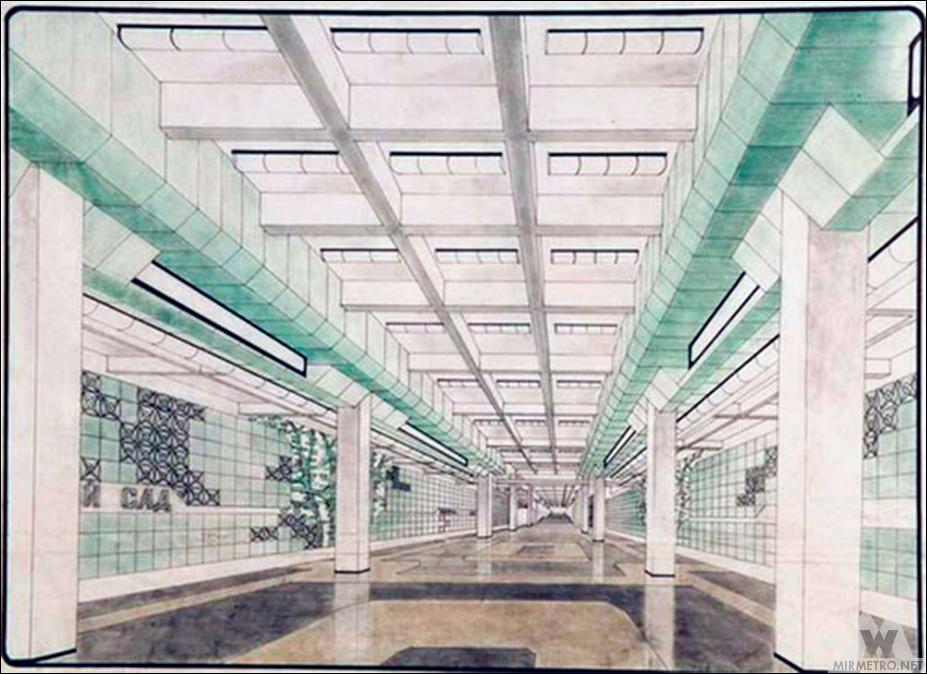
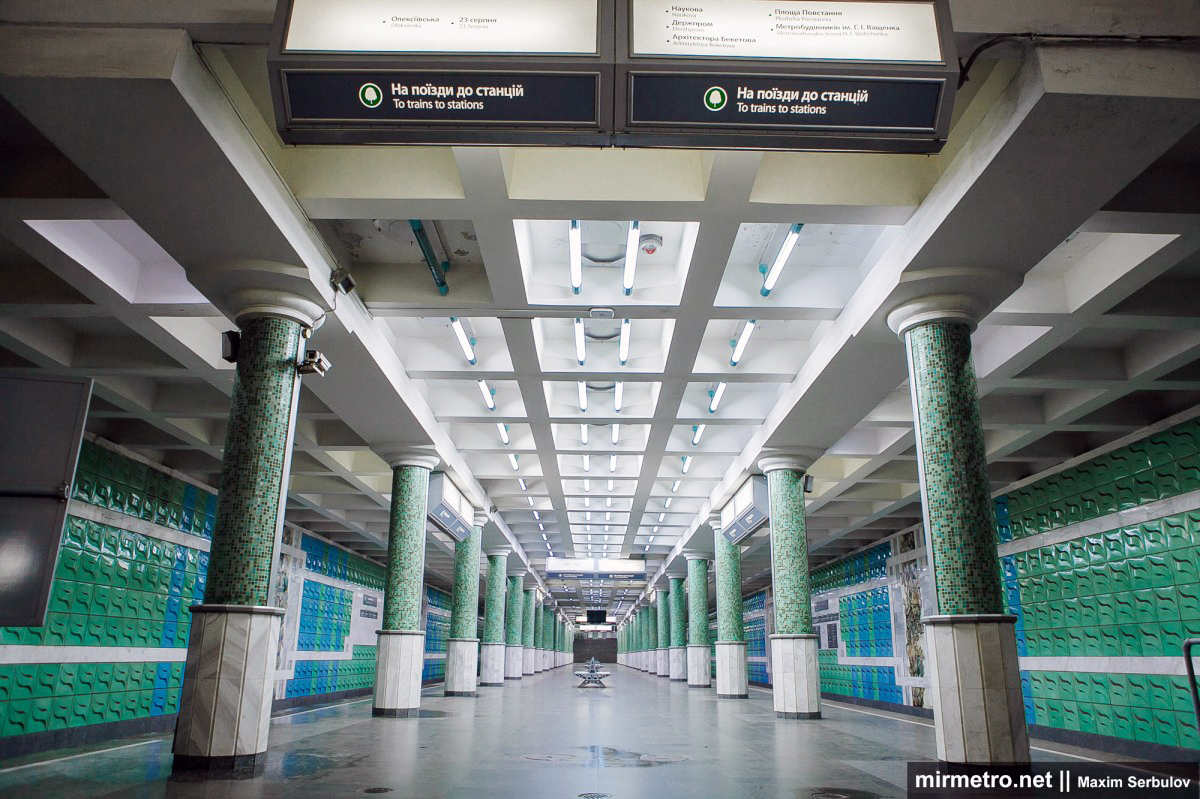
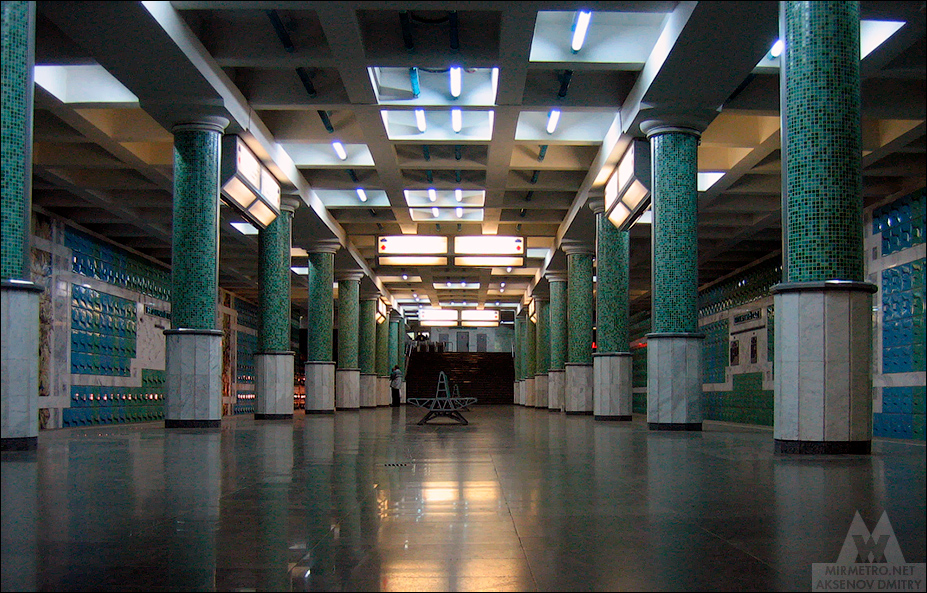
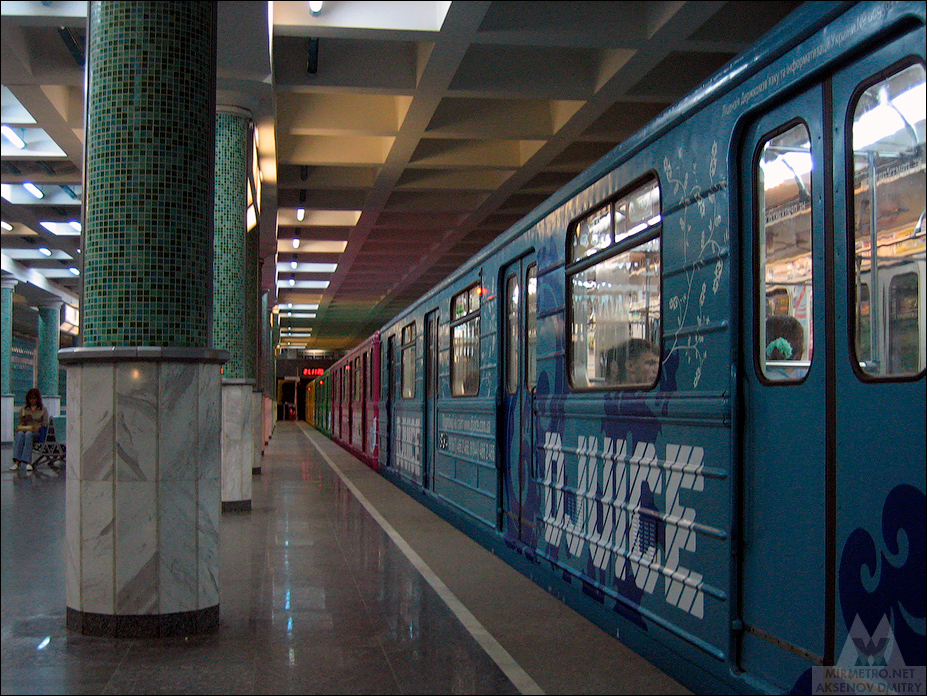
Botanichnyi Sad station follows the standard shallow three-span column design. In keeping with its name, shades of green dominate the station’s interior.
When work on the station’s design began, the architects already knew they could not count on generous funding. They understood from the outset that many design ideas would have to be simplified and that the choice of finishing materials would be extremely limited. These financial constraints inevitably restricted their creative freedom.
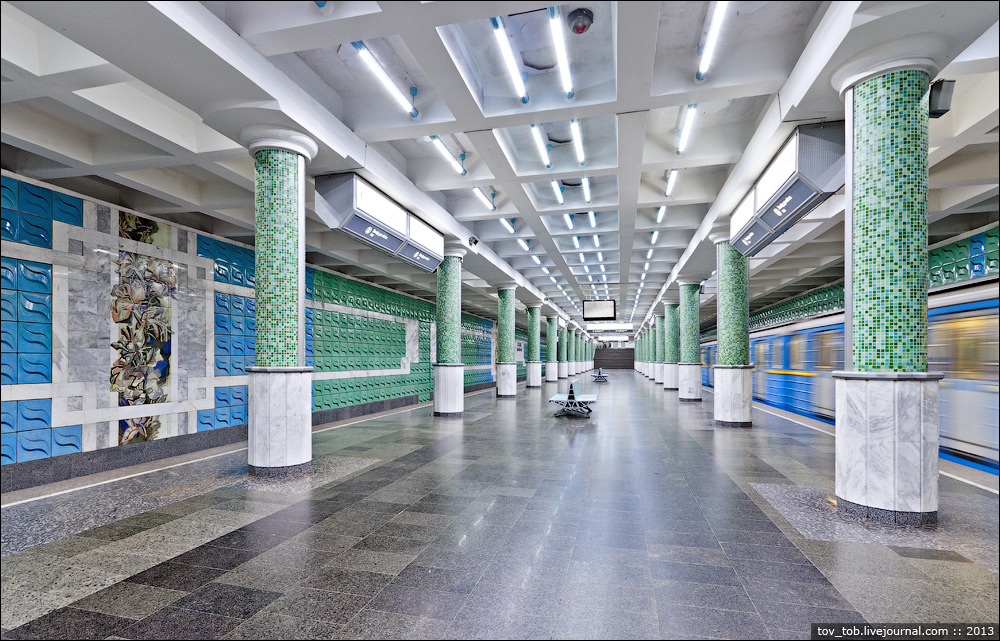
Despite these financial constraints, the station turned out both elegant and distinctive. Its design is unique while perfectly reflecting its botanical theme. Many Kharkiv residents consider Botanichnyi Sad to be the finest station on the Oleksiivska Line.
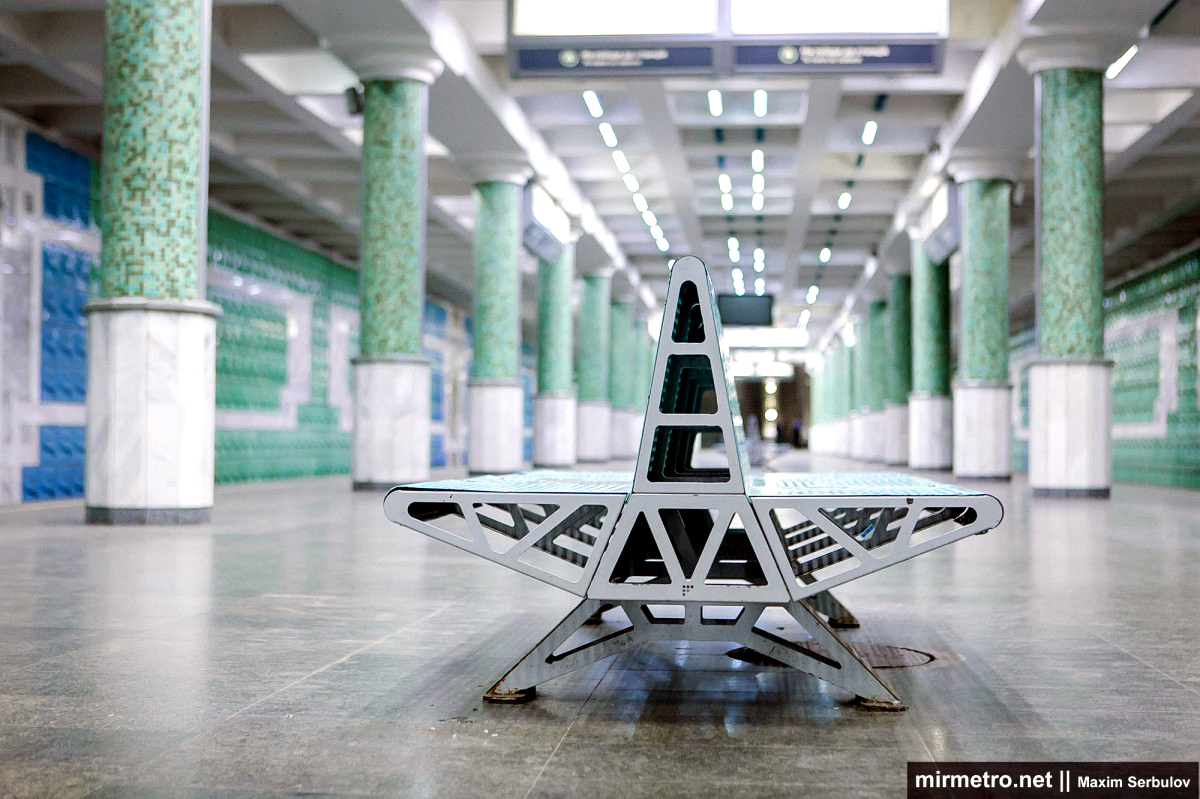
The ceiling is intentionally simple, consisting of square recessed panels with lighting fixtures housed in green casings. Every light was illuminated only on the opening day; afterward, part of the lighting has always remained switched off to reduce energy consumption. In 2013, the original incandescent lamps were replaced with LED lighting. After suspended ceilings planned for the first section of the Oleksiivska Line had to be abandoned, the architects briefly considered introducing them at the stations on the second section as well, but those plans were also eventually discarded.

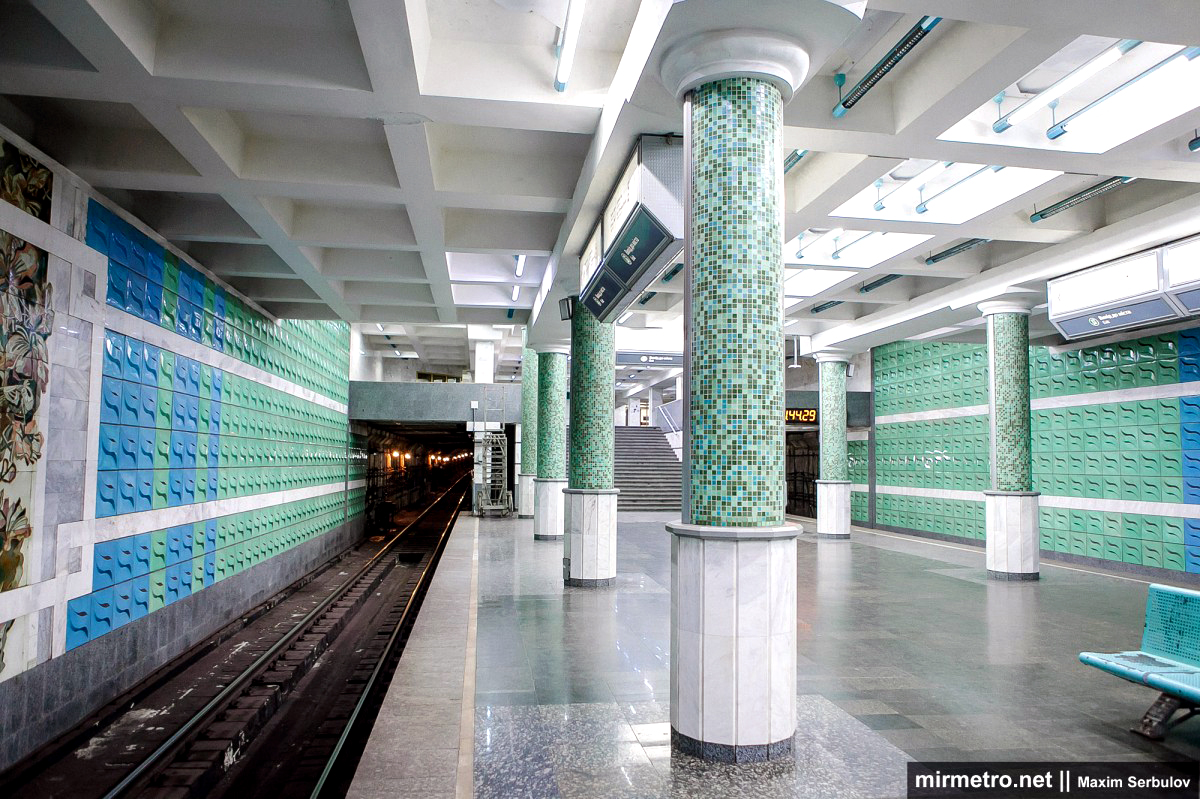
The columns at Botanichnyi Sad station have an unusual circular cross-section. Their lower third is clad in white marble, while the upper portion is decorated with mosaics in various shades of green and blue, complemented by decorative aluminum inserts. Interestingly, the columns were originally intended to be covered entirely with sheet metal, but after installation, this solution was rejected on fire safety grounds. While looking for ways to reduce the amount of expensive marble required, the architects came up with the brilliant idea of surrounding the columns with mosaics made of small ceramic tiles—a solution that proved both economical and visually striking.

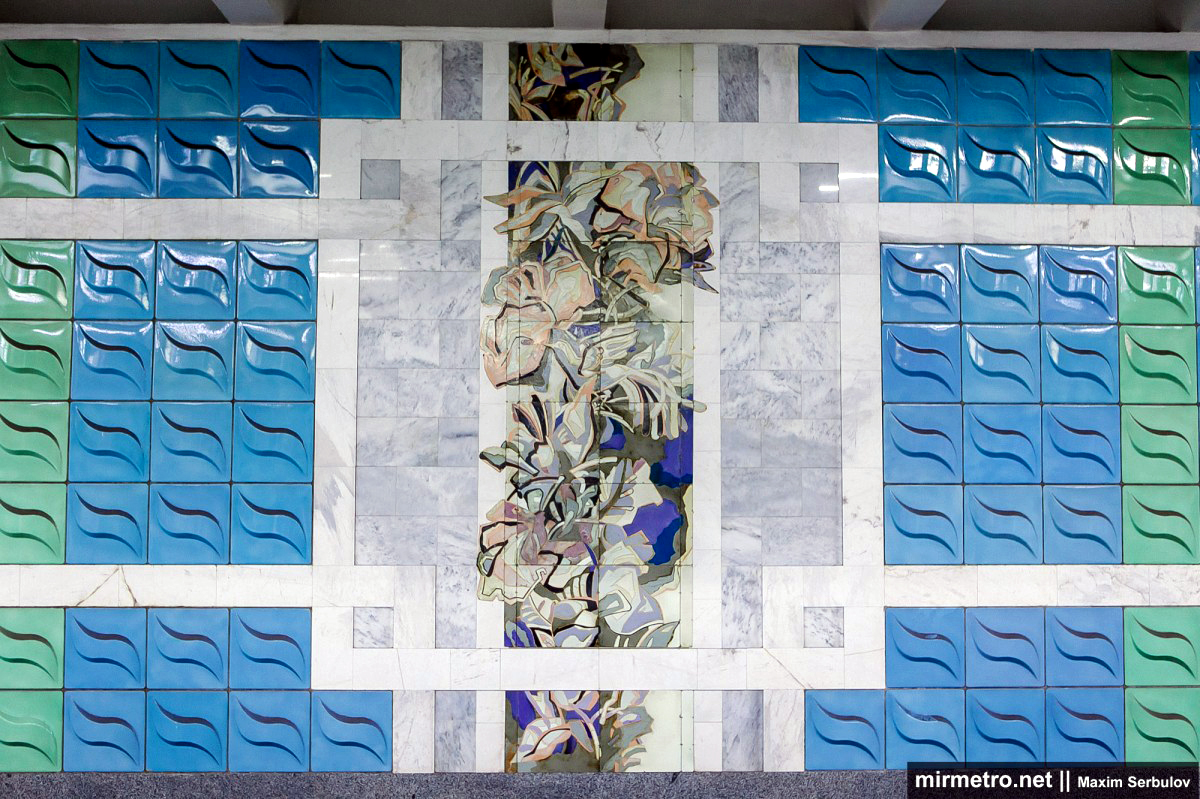
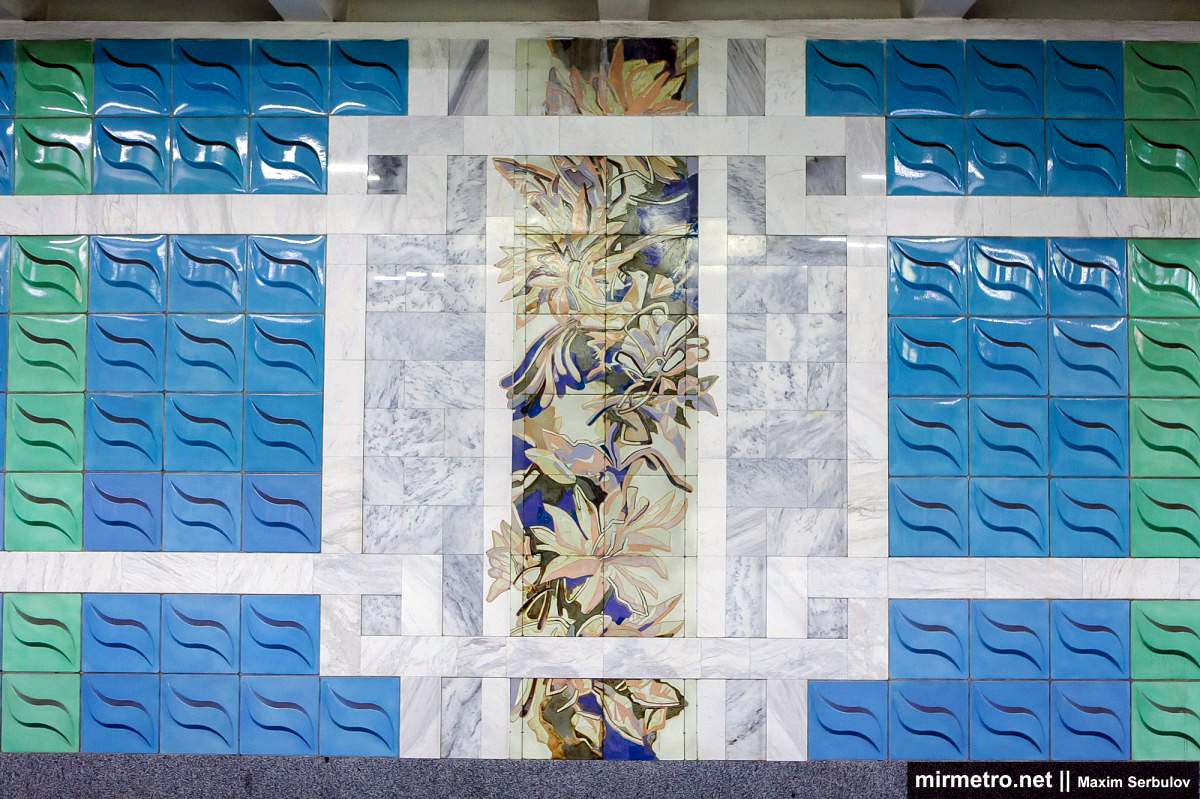
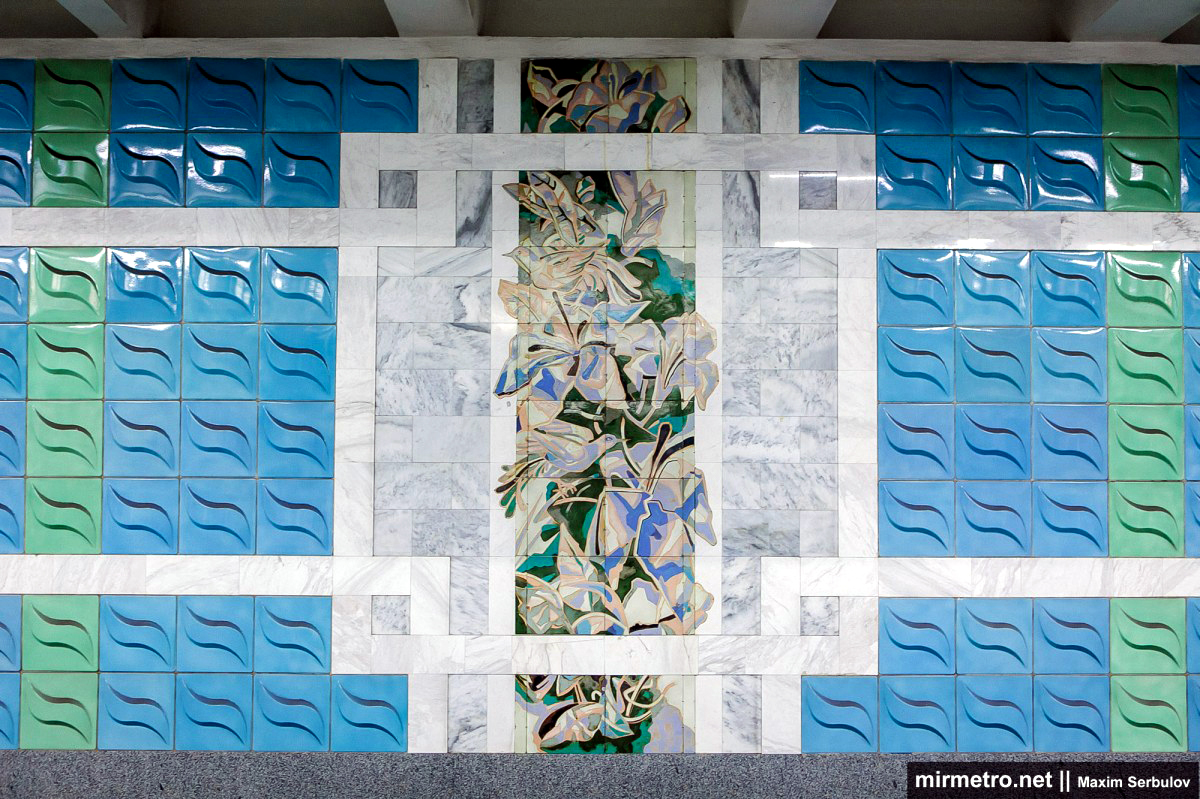
The station’s most distinctive feature is its track wall cladding, made of green and blue metal-enamel panels stamped from sheet steel. Each panel is embossed with the shape of a tree leaf, and the tiles alternate in a zigzag pattern, creating the impression of a gently undulating canopy of foliage.
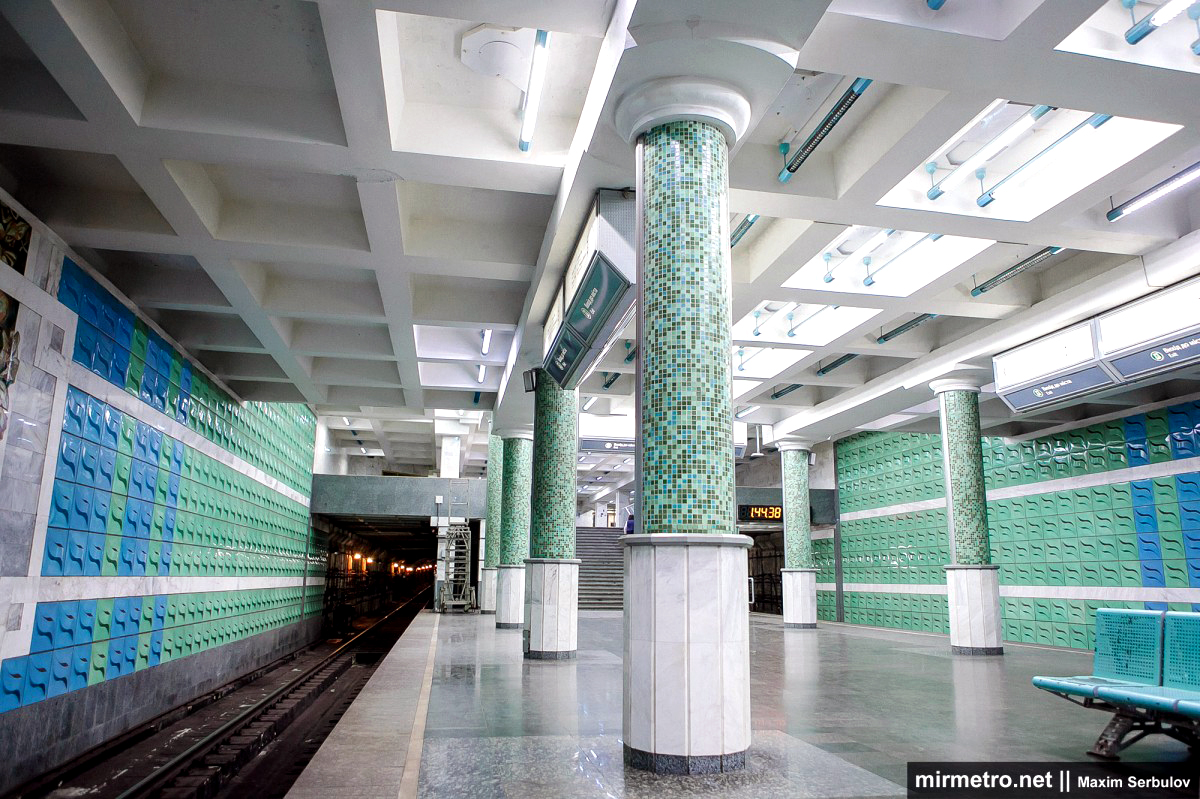
These are interspersed with rectangular inserts of white and gray marble. The lower part of the track walls is faced with gray granite.
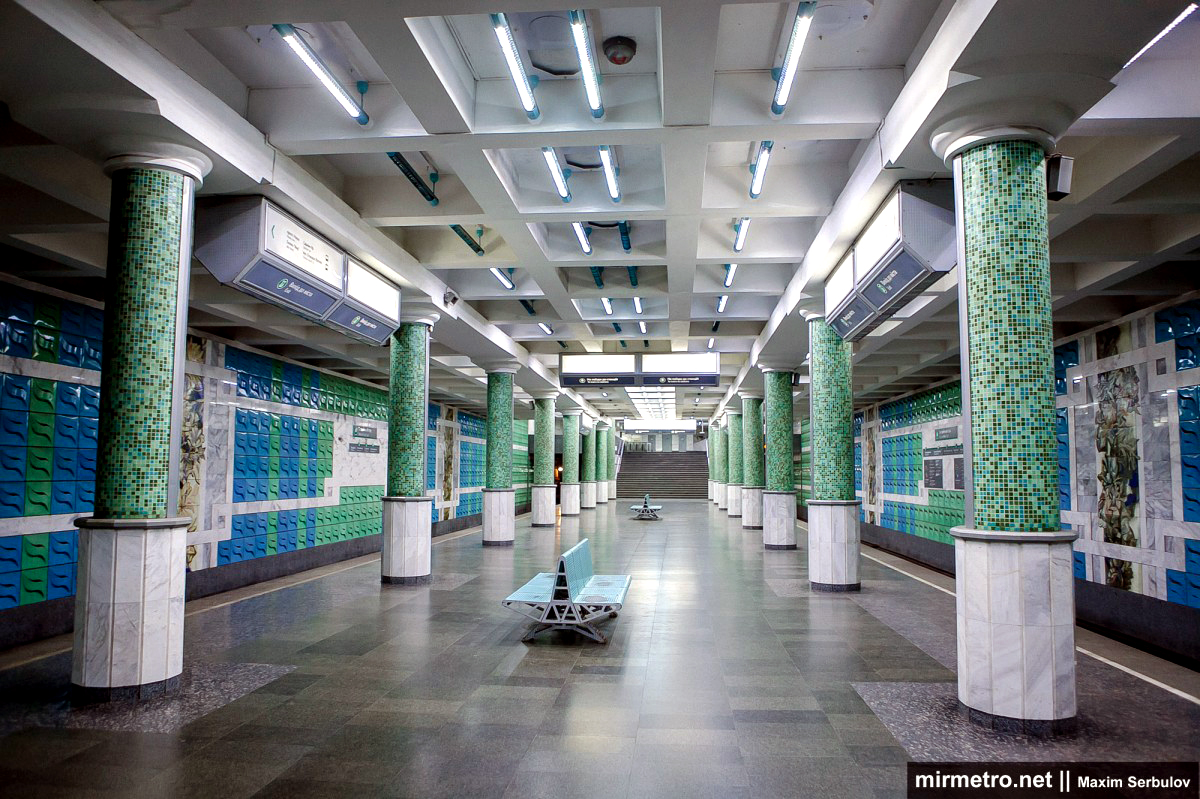
Eight artistic enamel compositions are installed along the track walls, created using the traditional enamel-on-copper technique.
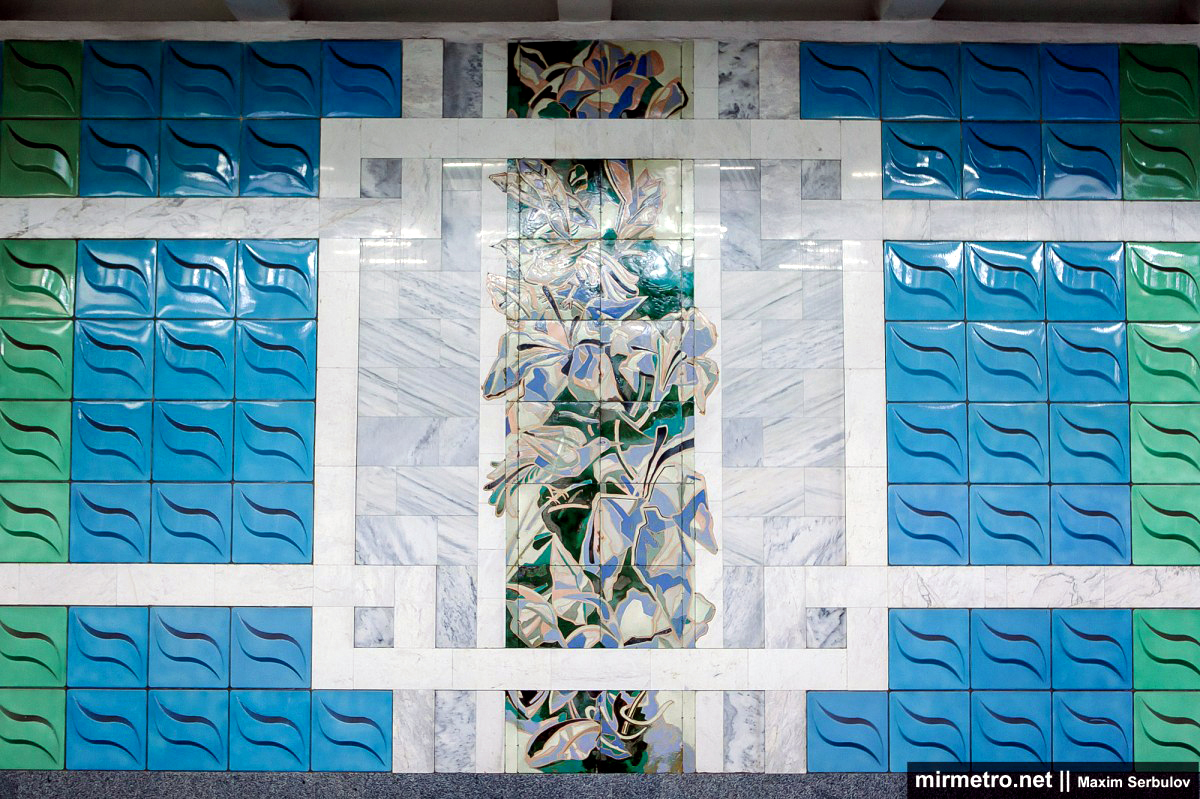
During the development of the station’s artistic concept, chief architect Volodymyr Spivachuk originally envisioned decorative compositions depicting trees and shrubs. Artists Ihor Morgunov and Olha Erofeeva proposed a different approach, moving away from literal botanical imagery in favor of stylized compositions inspired by flowers and birds, executed in a Neo-Modernist style. When the project was presented to the city planning council, the second concept was approved at the initiative of the head of the regional administration, Yevhen Kushnaryov.
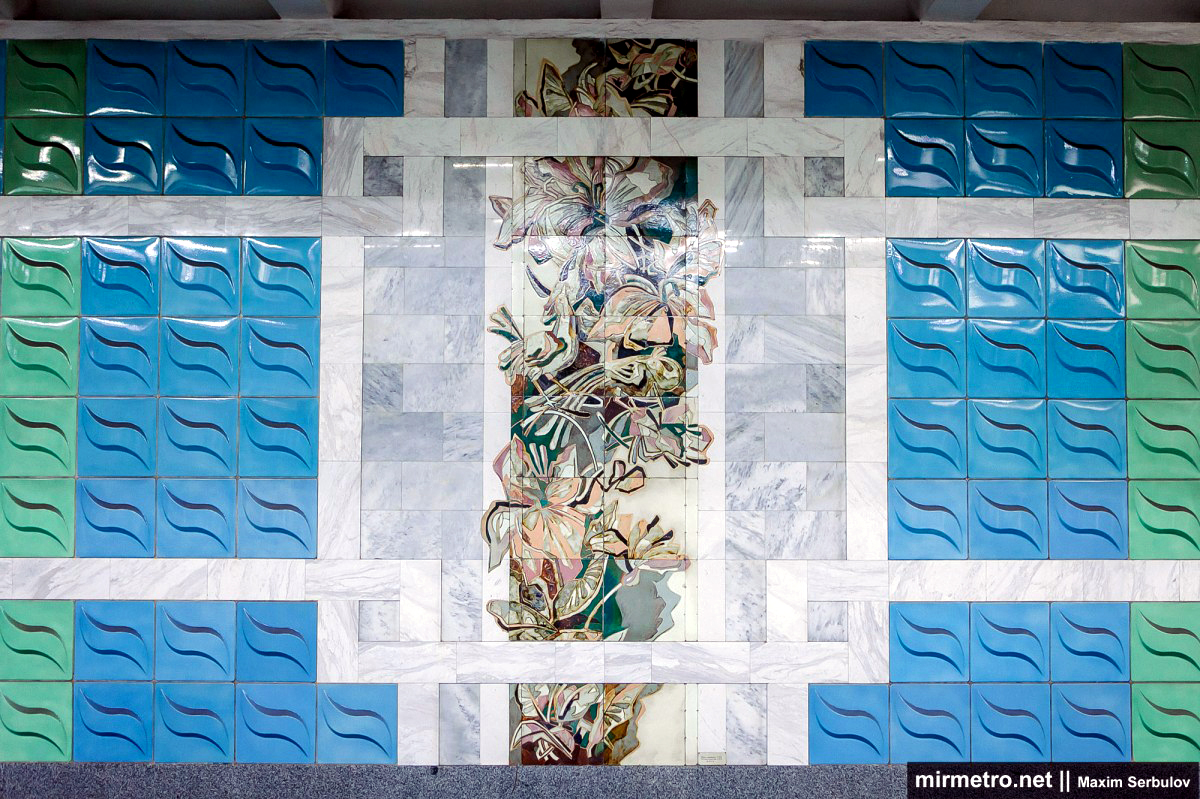
The artists faced a difficult challenge: to create enamel artworks on a very limited budget that would not only appeal to passengers but also harmonize with the station’s overall architectural design. The enamel-on-copper technique involves applying enamel to specially prepared copper plates, which are then fired in a kiln. The resulting works are exceptionally durable and resistant to moisture and temperature fluctuations. The artists spent a year and a half creating these compositions, and all eight panels were completed almost two years before the station itself opened.



The station takes its name from the Botanical Garden, which adjoins the Sarzhyn Yar ravine. Stretching for more than 12 kilometres with its gently sloping sides, the ravine separates the Pavlove Pole residential district from the Nahirnyi district. It is one of Kharkiv residents’ favourite recreational areas—a place to escape the bustle of the city and enjoy nature in every season.
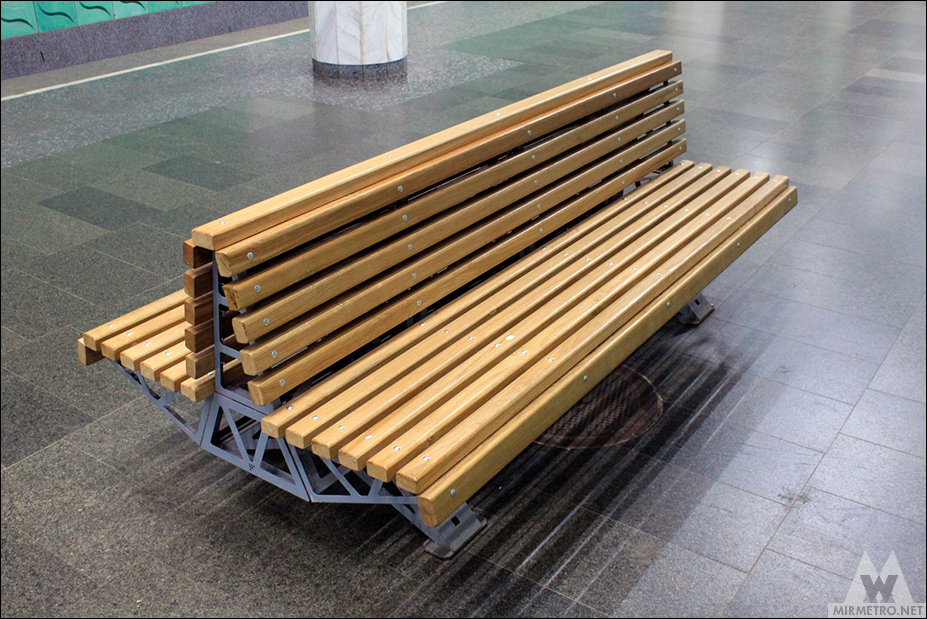
Originally, green-painted benches made of perforated sheet metal were installed along the station’s central axis, complementing the overall design of the interior.

Over the years, the paint gradually wore away, and in April 2017 the original benches were replaced with wooden ones.
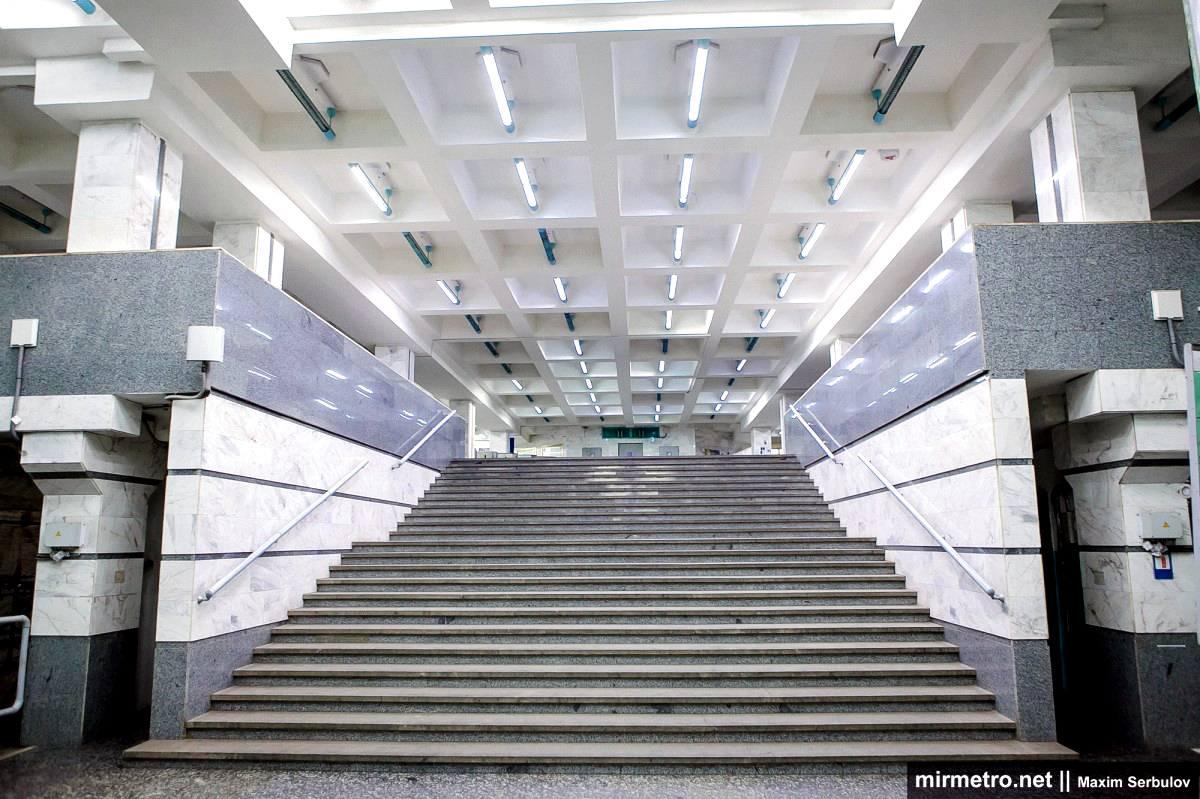
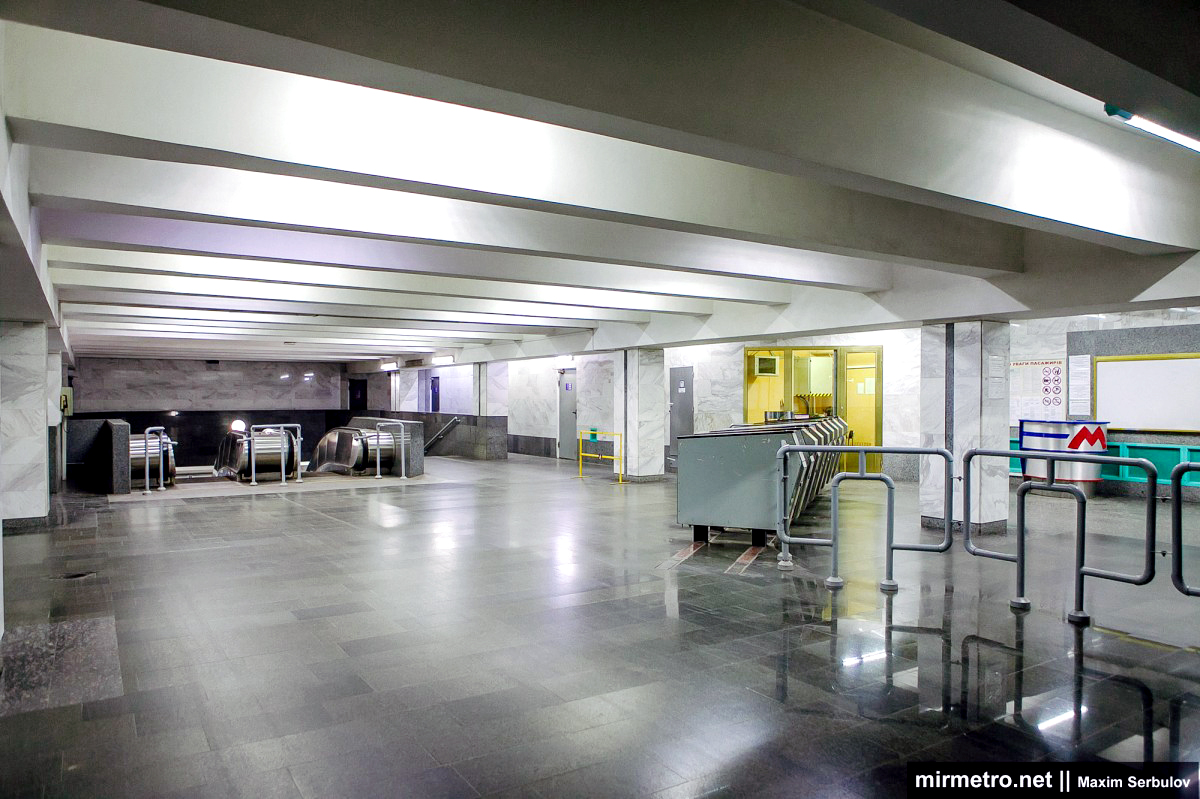
At Botanichnyi Sad station, the vestibule opens directly onto the platform area. The station floor and staircases are finished with light-gray and dark-gray granite.
The northern vestibule is equipped with a pair of escalators, although only the upward escalator is normally in service.
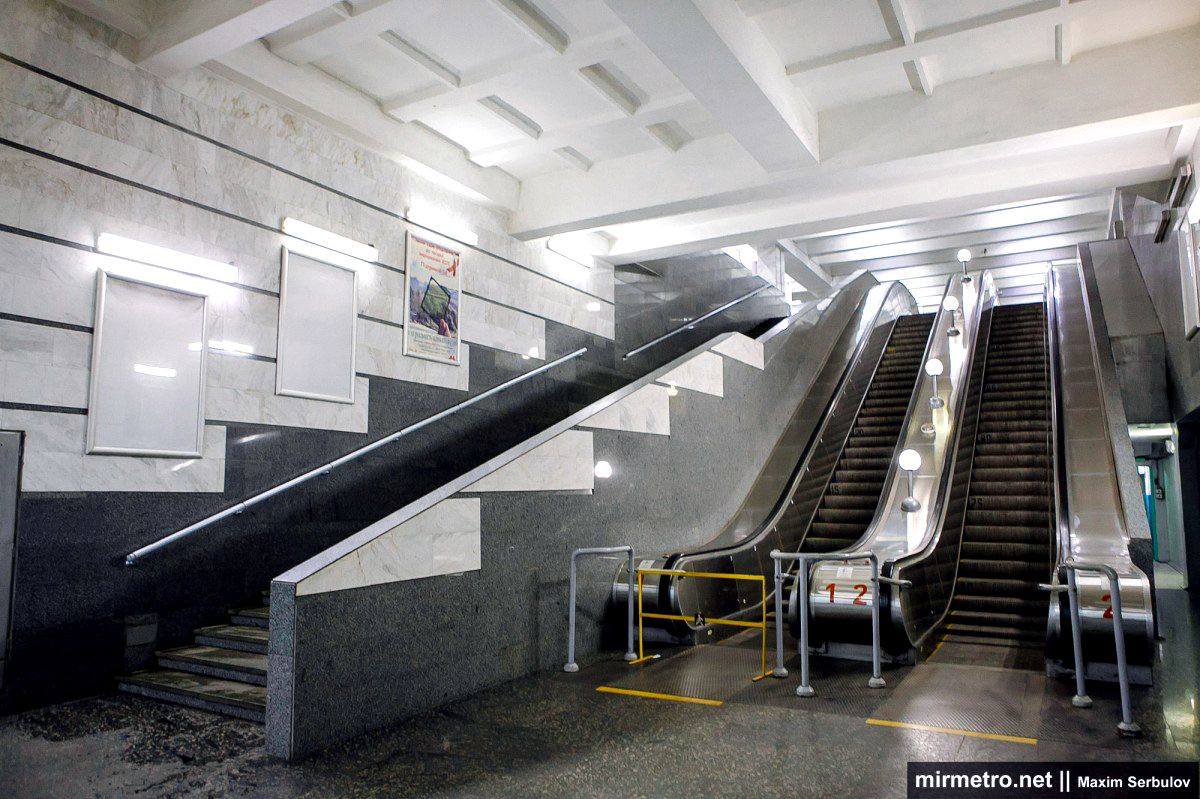

The vestibules are modest in design and finished with the same facing materials used throughout the station.
Botanichnyi Sad station during its first years of operation.

Old interval clocks.
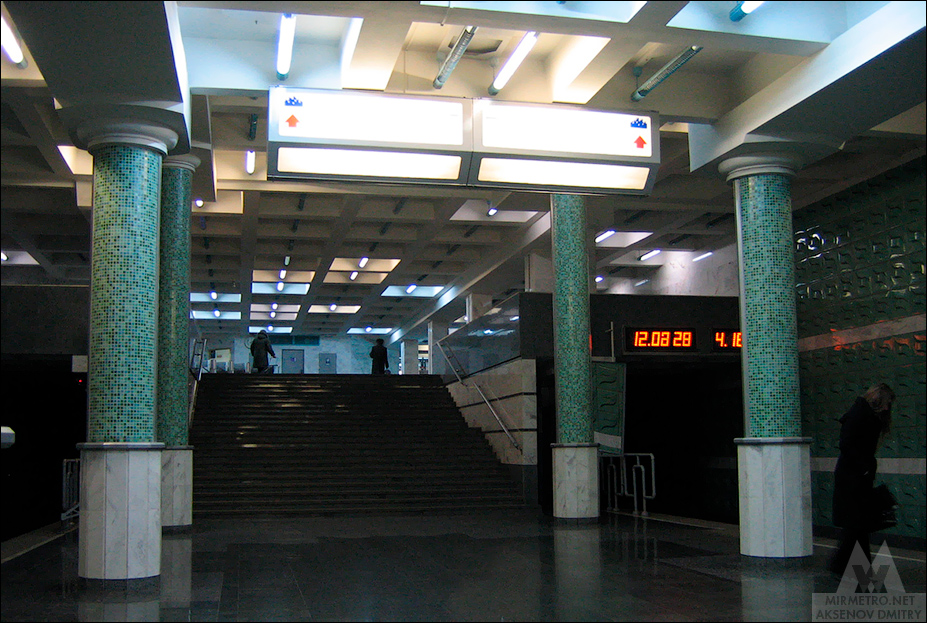
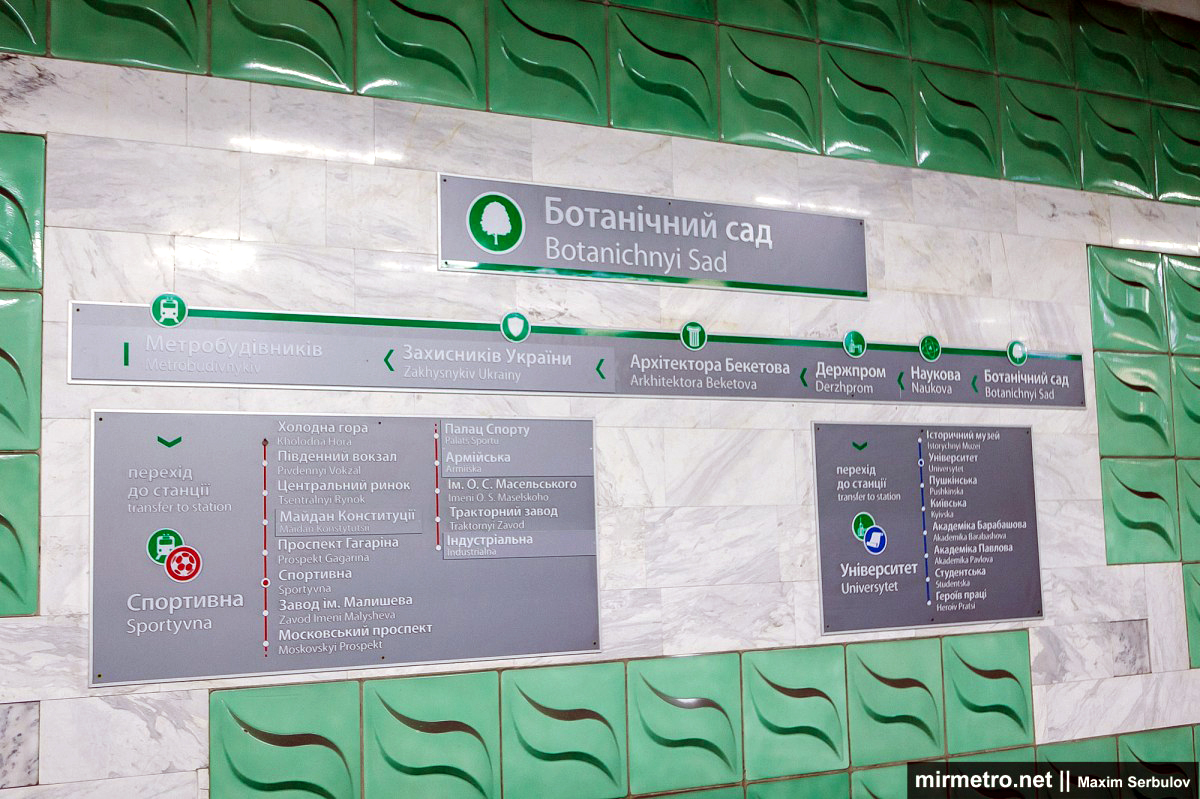
The original station name and directional signs were made as three-dimensional letters and blended much more harmoniously with the station’s overall design.

Botanichnyi Sad station on its opening day.

Metro Director Mykhailo Pylypchuk invites President Leonid Kuchma to make the first entry in the station’s guest book.

Construction and projects
Botanichnyi Sad has one of the most unusual histories of any station in the Kharkiv Metro. Until the mid-20th century, the present-day Pavlove Pole district stood empty, occupied by numerous vegetable gardens and summer cottages. Kharkiv residents enjoyed walking from the city to Sarzhyn Yar. As Kharkiv expanded and developed northward, Lenin Avenue (now Nauky Avenue) was built through Pavlove Pole. The crossing over Sarzhyn Yar was originally intended to be a road, but in the post-war poverty and haste, a cost-effective solution was adopted: constructing a temporary dam. Ultimately, this “temporary” dam remained in place for decades. In February 1988, a heated debate erupted at a meeting of the city planning council over the design of Botanichnyi Sad station. Few could have imagined that the debate would continue for another four years, accompanied by heated arguments, mutual accusations, and repeated obstruction of the council’s decisions.
The first proposal envisioned an elevated station incorporated into a bridge structure supported by V-shaped frames. The avenue would have been located on the upper deck of the bridge, while the station itself would have been on the lower deck. Passengers would have enjoyed panoramic views of Sarzhyn Yar directly from the platforms. This project was supported by the Kharkivmetroproekt architectural team, the Union of Architects of the Ukrainian SSR, and a number of design institutes and creative unions. Chief architect Vladimir Spivachuk had his own interesting ideas for surface station designs, and he was eager to bring at least one of them to reality.
The alternative proposal called for constructing a conventional shallow column station inside an earth embankment, with Nauky Avenue ultimately restored above it. Ground traffic would then be routed along a bypass road and, once the work was completed, above the dam. Metrobud and the Kharkivmetroproekt engineering team advocated this option.
Design institutes and public organizations were involved in discussions regarding the future station’s design, and surveys of Kharkiv residents were conducted. Overall, public opinion tended to favor the elevated design. The bridge option was enthusiastically received by the public and clearly stood out aesthetically, but it also constantly faced criticism. Although elevated stations are normally much cheaper to construct, in this case the opposite proved true: the very high cost of removing the dam and building a pedestrian bridge across Sarzhyn Yar was a factor. Furthermore, the station would have been more expensive to maintain; the extensive glazing would also have made the station significantly more expensive to heat during winter. Some of the criticism was objective, but much of it was highly emotional. Opponents pointed to the complexity of the design, the increased construction effort, and even claimed that such a station would be unsuitable for use as a civil defense shelter.
For months, heated debate raged, no decision was made, and construction of the second section of the Oleksiivska Line dragged on. Only in 1991 did the actual work finally begin, namely, demolishing the dam. In September 1991, the chief architect of Kharkiv approved the bridge station design, seemingly definitively. But the dam’s proponents had no intention of giving up. The metro construction authorities openly opposed the project and effectively blocked its implementation, while deputies of the District Council openly criticized it. The project was again sent back for revision, and work on the construction site was again suspended. In the spring of 1992, when funding was already clearly looming and becoming a pressing issue, the executive committee favored the dam station design as more cost-effective. Disagreements over the design of the Botanichnyi Sad station led to significant delays in construction.
Under the original schedule, Botanichnyi Sad was expected to open in 1995. However, the severe financial crisis forced all available resources to be concentrated on completing the first stage of the Oleksiivska Line. By then, only excavation work had begun at Botanichnyi Sad, while the tunnel boring machine for the section toward 23 Serpnia had merely been assembled. In 1995, the city planning council finally approved the design that would ultimately be built—a conventional shallow column station assembled from precast reinforced concrete elements.
Even when the first section of the Oleksiivska Line opened, officials promised that the next section would follow just a year later, in 1996. The running tunnels in both directions were excavated using a mechanized tunnel boring machine. Part of the tunnels leading from Naukova station had already been excavated in 1993–1994, before the line itself entered service. As the economic crisis deepened, tunnelling progress slowed to just 15–20 metres per month., the tunneling rate slowed to 15-20 meters per month. In May 1996, construction came to a complete standstill because of a lack of funding and the enormous debts accumulated by Kharkivmetrobud. Periodic financial injections were insignificant and could not fundamentally change the situation. Most workers were laid off or placed on unpaid leave, while those who remained were occupied mainly with maintaining the existing underground workings, often going for many months without receiving their wages.
By 1997, the connecting tunnels in both directions were approximately 30% complete. Construction of Botanichnyi Sad station itself had barely begun. Before work on the station could begin in earnest, two utility tunnels, 170 meters long and 2.6 meters in diameter, needed to be built to extend the utility lines under the dam. The small Sarzhynka River, which flows through the construction site, was enclosed in underground sewers that cross the station perpendicularly.
In the summer of 1998, the situation had become critical: all metro construction projects in Kharkiv had ground to a complete halt, and a sign appeared on the fence near the House of Projects reading: “Metro construction has been completely halted. Metro builders have not been paid for more than a year“. Equipment and materials rapidly deteriorated, and there was a genuine risk that some of the unfinished tunnels could begin to collapse.
It was not until November 2000, when substantial funding was finally allocated from the regional budget, that the situation began to improve. Tunnel construction accelerated significantly, and most importantly, excavation of the station pit finally began in earnest. Builders began removing fill material and reinforcing the pit walls. Because steel supports were in short supply, reinforced concrete supports were used instead for the first time. The first piles were driven in the spring of 2001, and installation began at the end of that year. Precast standardized reinforced concrete structures manufactured by the Kharkiv Reinforced Concrete Structures Plant at Kharkivmetrobud were used for the station construction. The columns themselves were constructed from cast-iron pipes 40 centimetres in diameter.
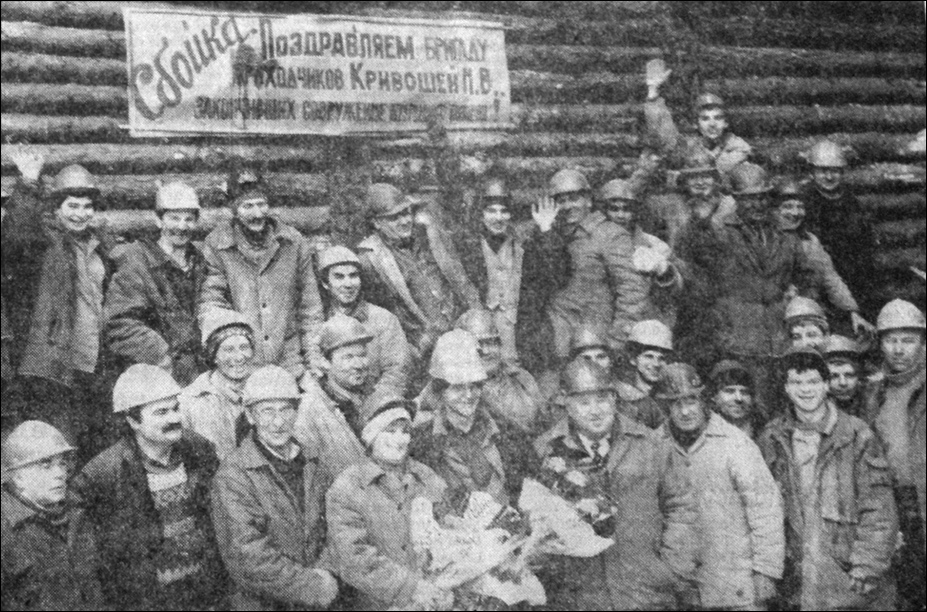
On 23 February 2001, the breakthrough on the Naukova–Botanichnyi Sad section took place. Fortunately, geological conditions along most of the route were relatively favourable, but most of the tunnels were being dug under Nauky Avenue at a very shallow depth (approximately 5 meters). Near Naukova station, however, the miners encountered unstable soils, which caused ground subsidence and several surface sinkholes. Fortunately, the situation was quickly brought under control. The most difficult section was the tunnels passing through the embankment itself, where miners regularly encountered construction debris, remnants of old utility lines, and even concrete slabs. The excavated earth was transported by mine carts to the excavation pit near the House of Projects using a rock loader, where it was unloaded using a special lift. On 15 May 2001, a breakthrough took place on the Botanichnyi Sad – Naukova section, the last one on the second extension of the Oleksiivska line.
By the end of 2002, installation of the track walls and ceilings had begun, together with construction of the station entrances. By early 2003, Botanichnyi Sad station was approximately 60% complete. Unfortunately, construction required the removal of a large number of trees, which later became one of the main arguments used by critics of the abandoned bridge-station concept.
By the end of 2003, construction had entered its final stage. Installation and finishing work on the platform and station entrances was nearing completion, and for the first time in many years there was little doubt that the station would finally open on schedule. By May 2004, Botanichnyi Sad was virtually ready to receive its first passengers.
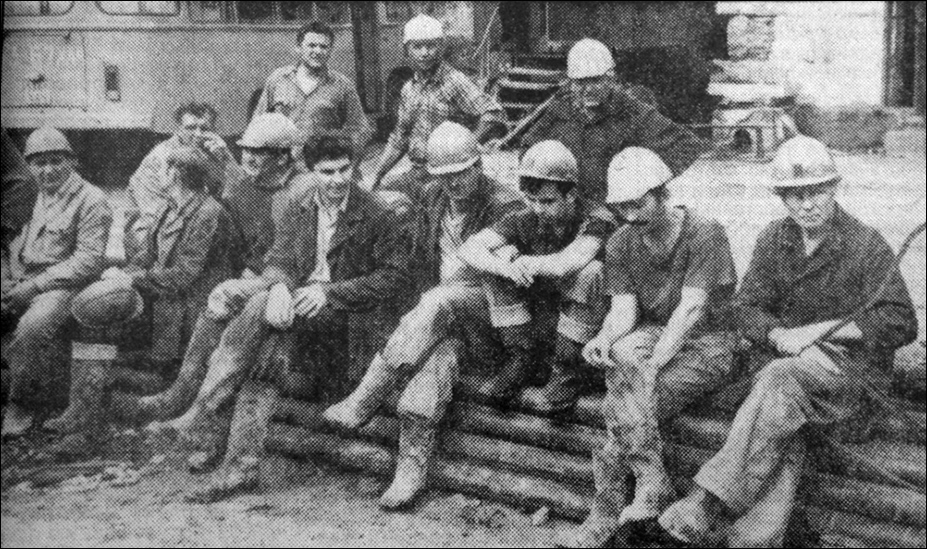
Metro builders. These people are not standing idle because they don’t want to work, but because construction has run out of funding—and they themselves have gone 11 months without wages. June 1997.
Tunnel lining segments prepared for delivery to the tunnel face. June 1998.

Excavated soil being transported in mine carts to the construction.

A construction crew after the breakthrough on the Naukova–Botanichnyi Sad section. 23 February 2001.
The Botanichnyi Sad station excavation pit during the peak of construction. June 2002.
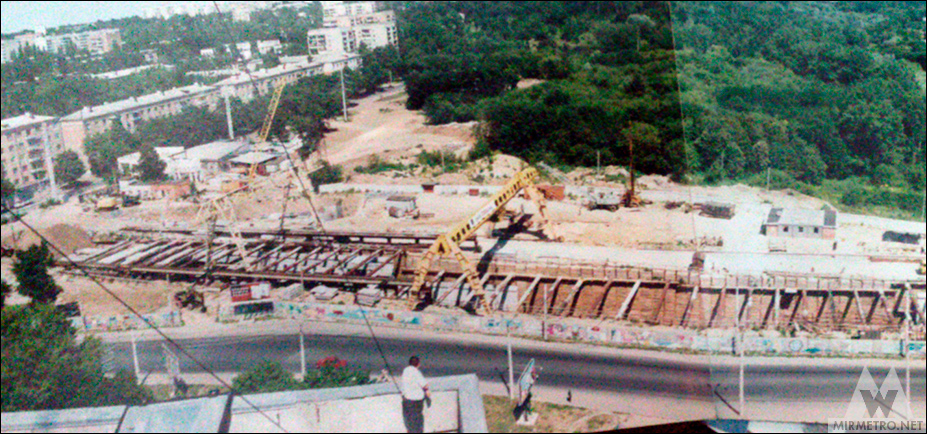
The photograph shows the temporary bypass roads built for surface traffic. Once construction was completed, the roadway was restored above the station structure.

Pouring the concrete foundation in the excavation pit.

Workers tightening the final rail joints connecting the new section to the existing Oleksiivska Line.

The completed running tunnel toward Naukova station.

One of the station entrances under construction.

Botanichnyi Sad station before the installation of its interior cladding. 3 December 2003.

Whitewashing the ceiling.
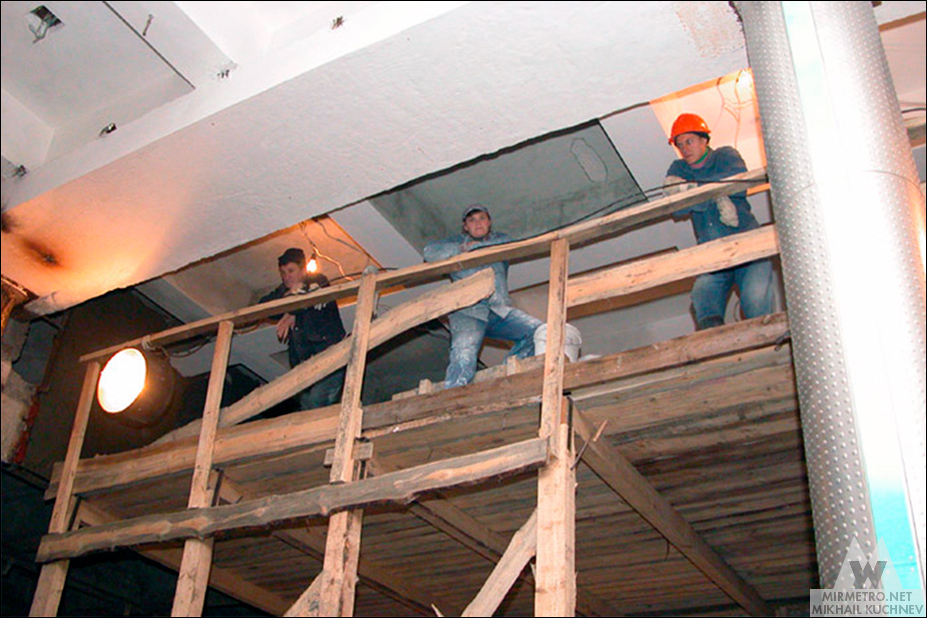
Officials from the metro construction authority and the city inspect the station under construction.

Finishing work is in full swing. 18 March 2004.

Preparing the columns for marble cladding.

Final track alignment.
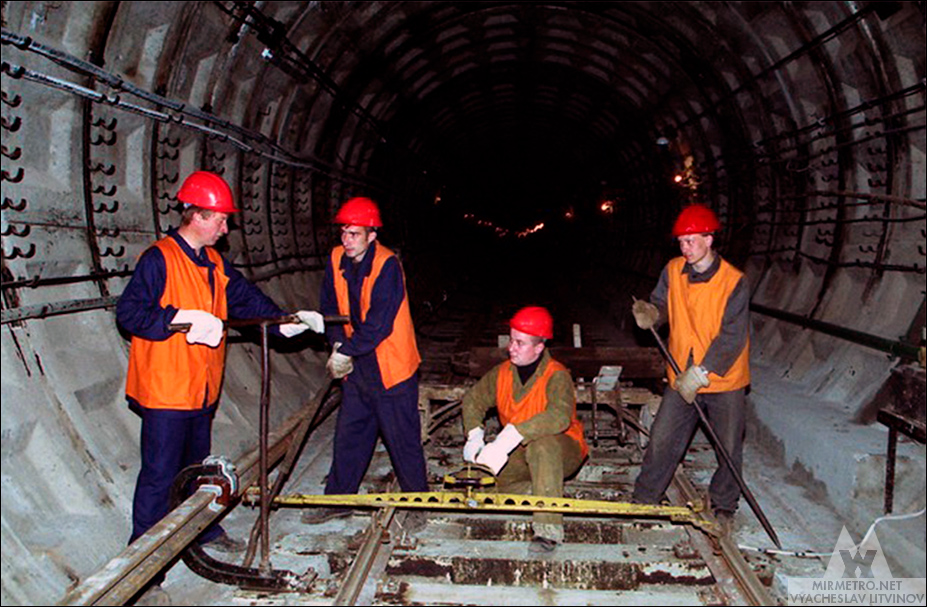
Gauge clearance inspection. 21 July 2004.

A test train at Botanichnyi Sad station. 2 August 2004.
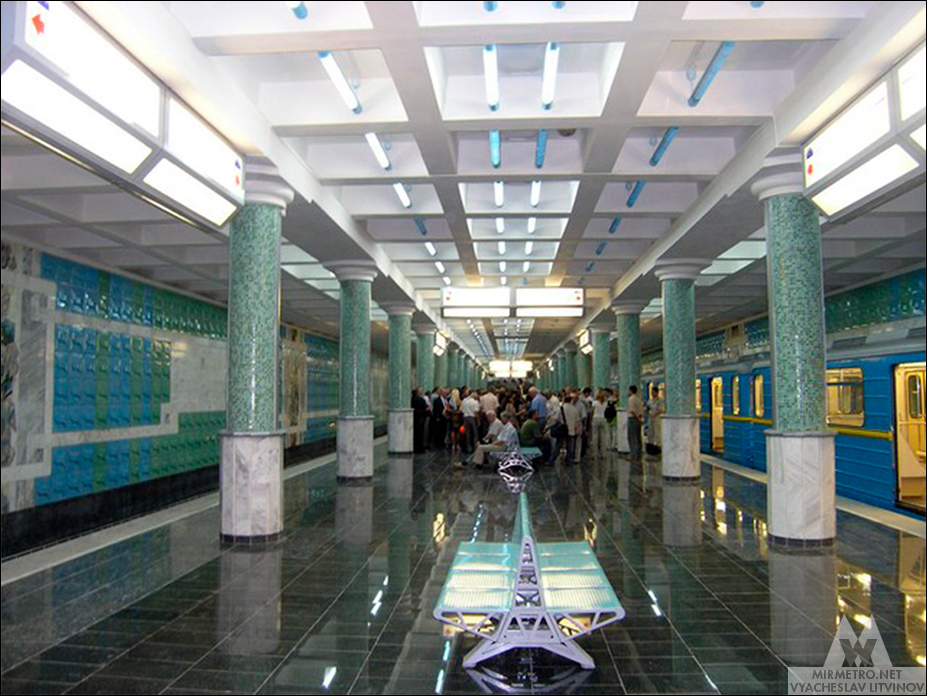
Just two weeks before the opening.

Concept design of the proposed bridge station.

Side view showing the station’s integration with the surrounding urban environment and the Botanical Garden landscape.
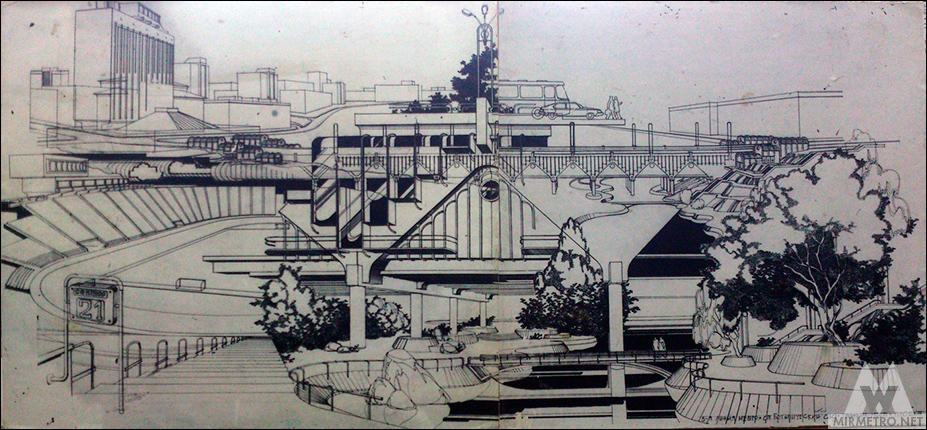
The implemented concept design.