Zakhysnykiv Ukrainy
Opening date: 6 May 1995
Architects: V. Spivachuk, O. Denisenko, O. Perepelytsia
Engineers: R. Denisyuk, L. Koba
Artist: M. Krylov
Station type: Shallow single-vault
English equivalent: Defenders of Ukraine
Former name: Ploshcha Povstannya (“Uprising Square”), until May 17, 2016
Average daily ridership: 15,300 passengers (2015)
The station opened on 6 May 1995 as part of the first section of the Kharkiv Metro’s third line, running from Metrobudivnykiv to Naukova and comprising five stations. These stations were heavily affected by budget constraints, yet the architects and artists still managed to give each one a distinct character, primarily through the use of a broader palette of colors. The station was inaugurated on the eve of Victory Day.
Description
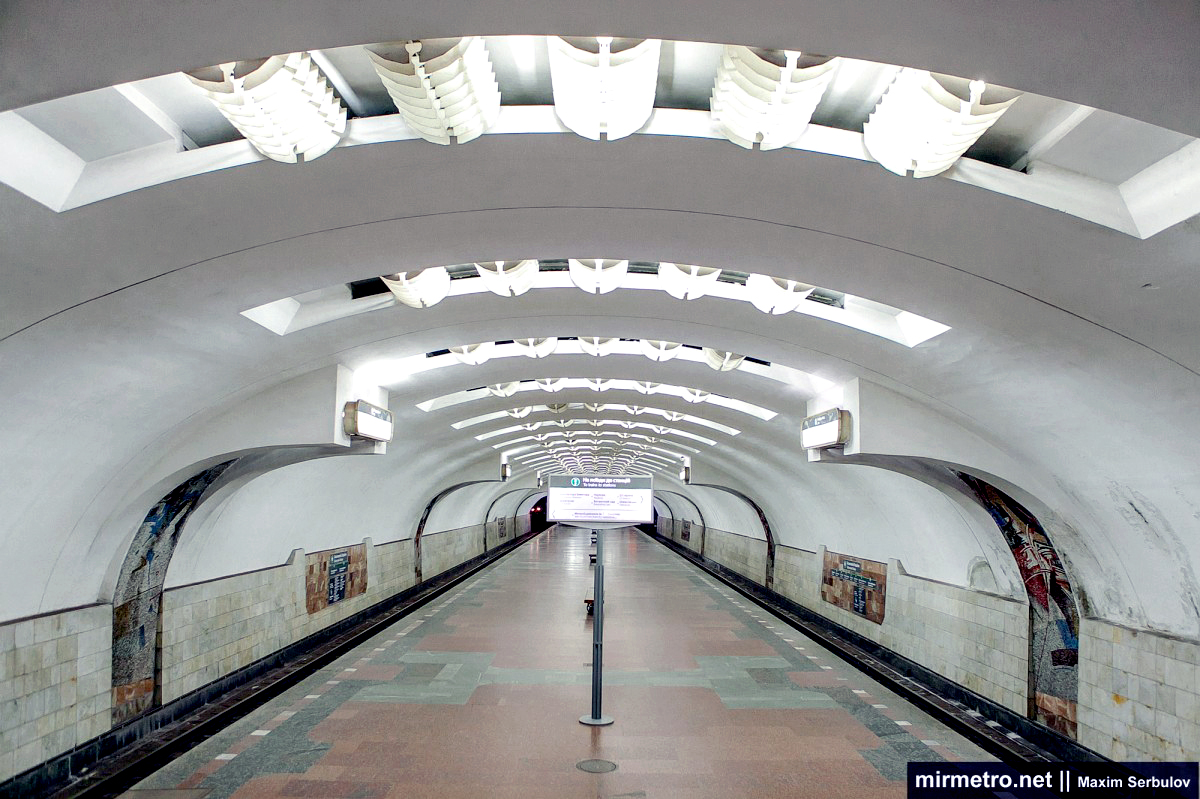
Zakhysnykiv Ukrainy station was built according to the standard Kharkiv single-vault design. Its architectural design is restrained and relatively simple.
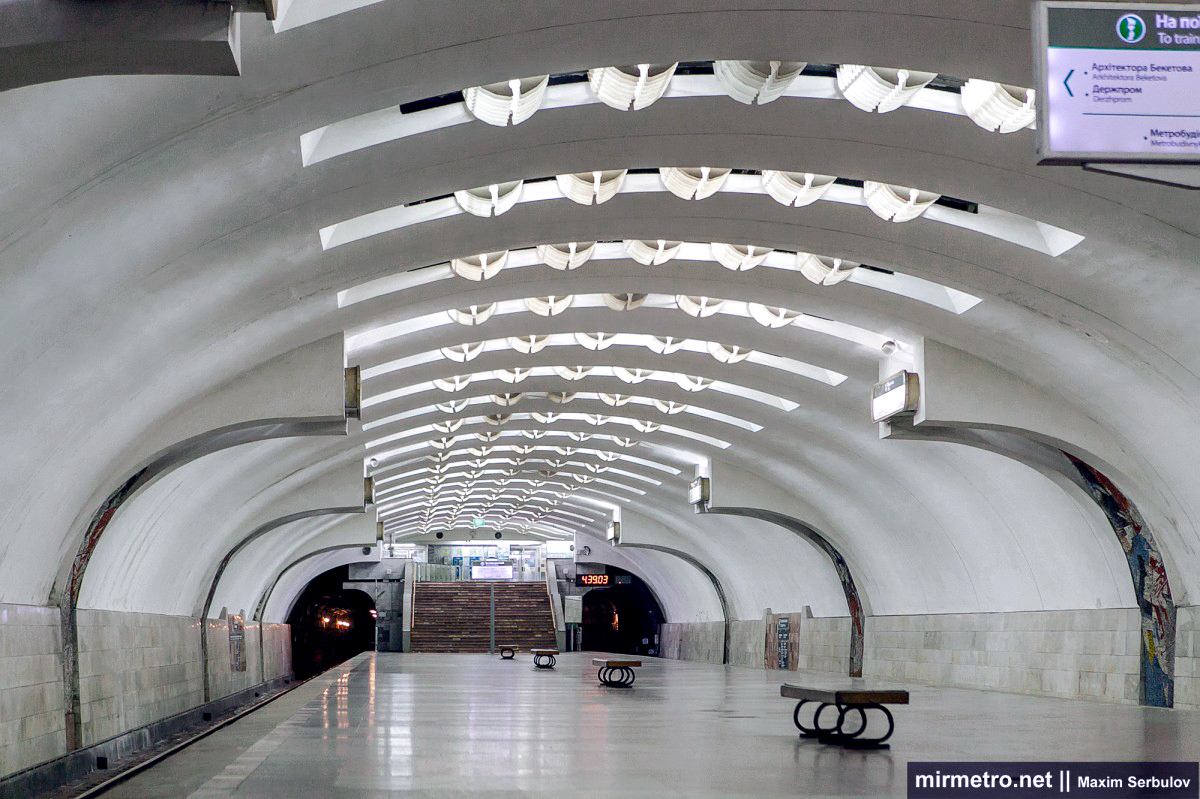
Zakhysnykiv Ukrainy is likely to remain the last single-vault station built on the Kharkiv Metro—if not permanently, then for many years to come. There are currently no plans to construct any more stations of this type, most likely because the mobile formwork used for their construction has long since deteriorated, and there are no funds to manufacture a new one. Ironically, stations based on the Kharkiv single-vault design continue to be built extensively in many other metro systems.
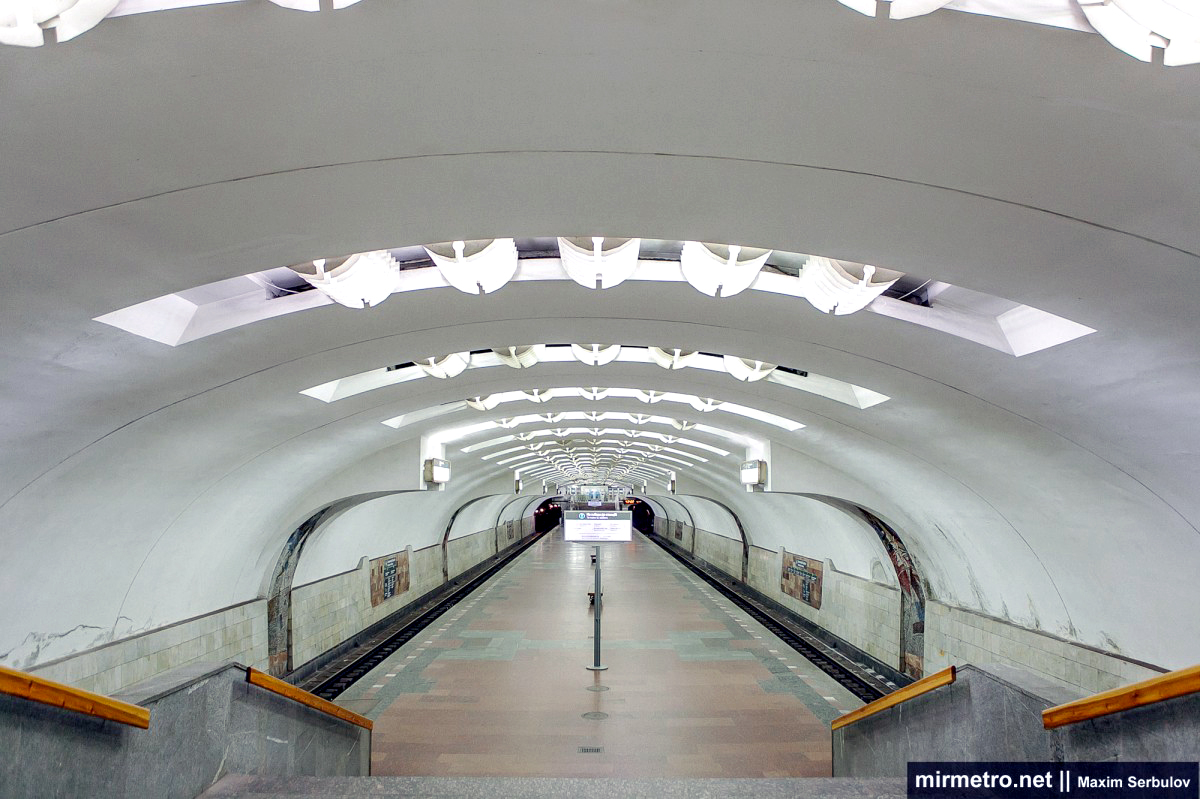
The whitewashed concrete vault is divided into sections, each containing a deep transverse recess for the lighting fixtures. The vault flows seamlessly into the ceiling of the station vestibules. Unfortunately, because of the area’s particularly difficult geological conditions, water leaks are a frequent problem. To combat them, cement grout is regularly injected behind the concrete lining of the vault during the overnight engineering maintenance window.
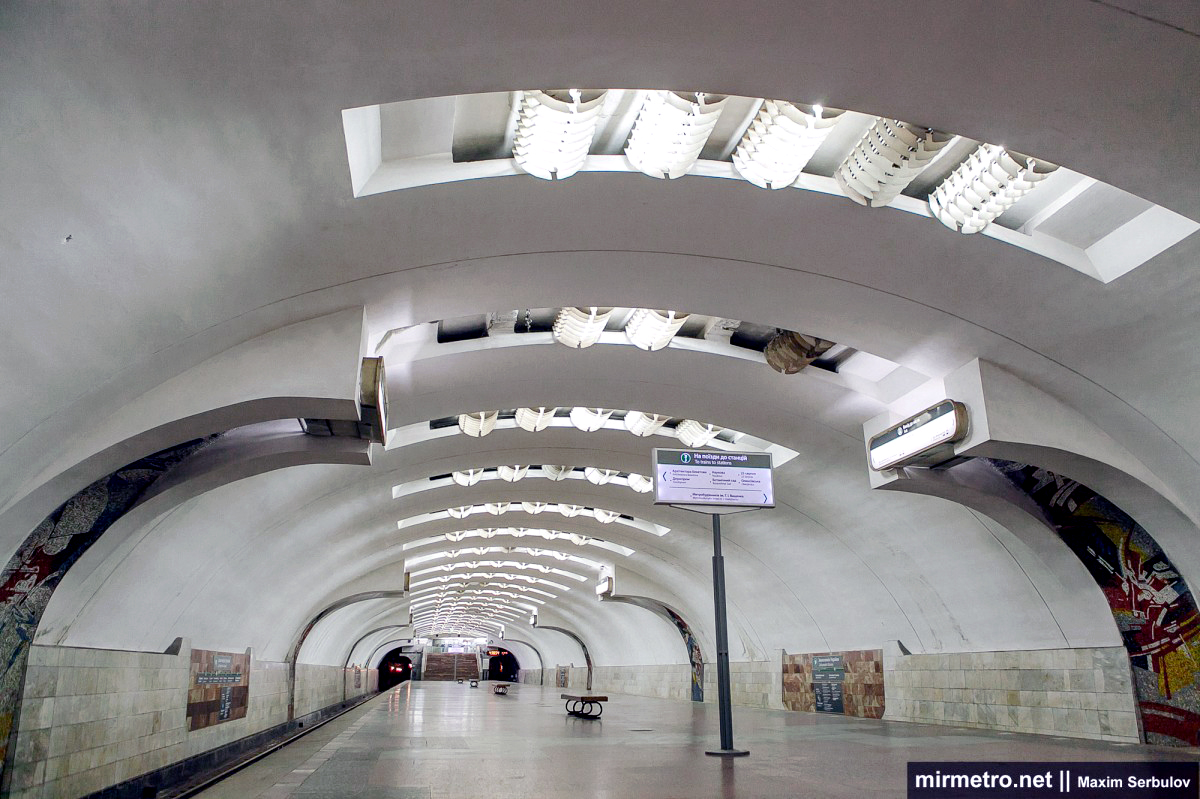
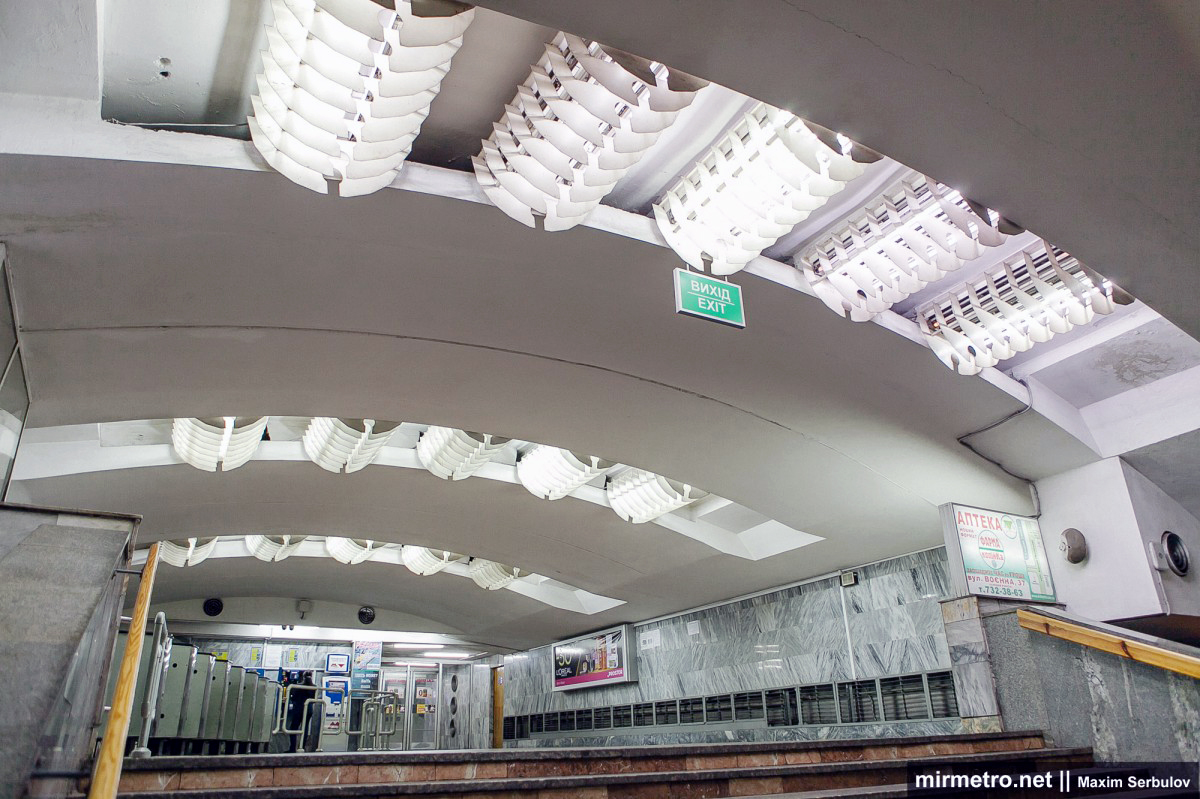
Lighting is provided by luminaires fitted with aluminum louver diffusers, arranged in five continuous rows. This layout provides ample illumination even when many of the luminaires are switched off.

The track walls are clad in white marble. The areas containing the station name and directional signs are faced with brown marble, while the wall bases are clad in gray granite. Four arched recesses are located along each track wall, each containing an information panel with a smalt mosaic beneath it.
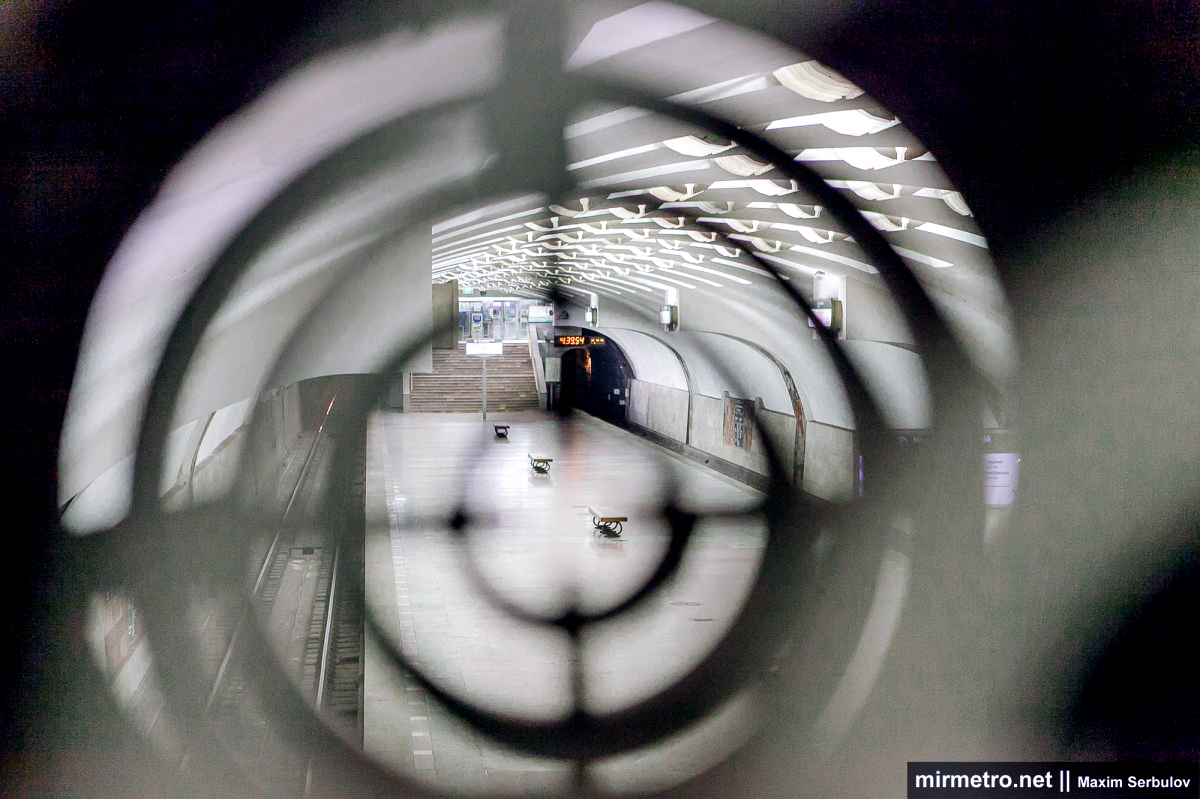
The floor of Zakhysnykiv Ukrainy station is paved with gray and red granite. The light-gray granite figures laid across the platform bear the closest resemblance to a wrench.

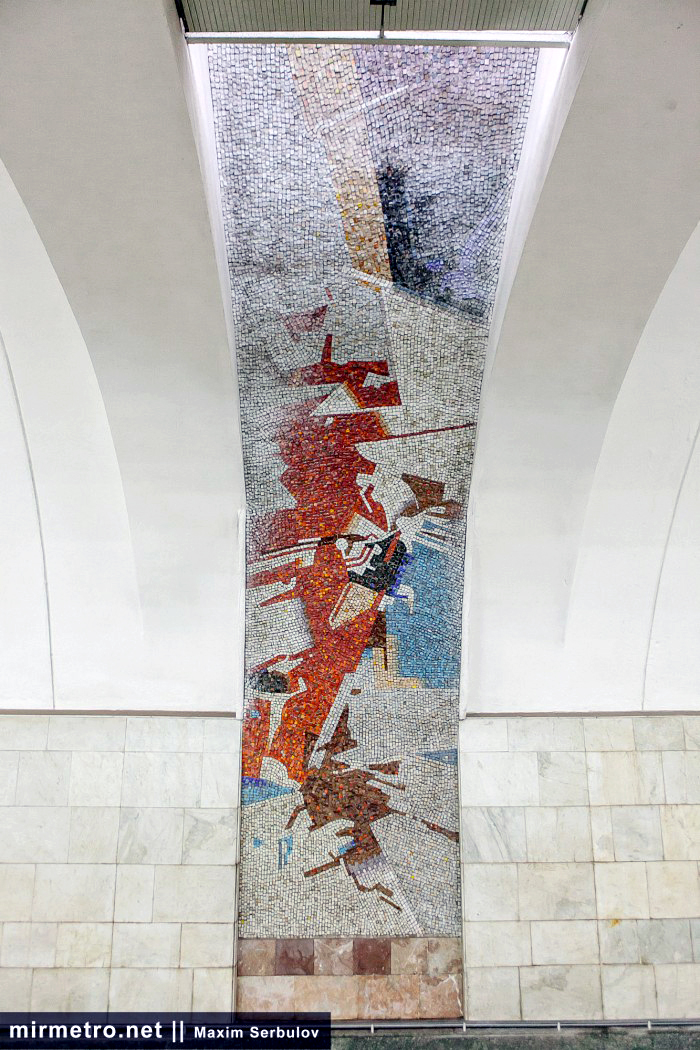
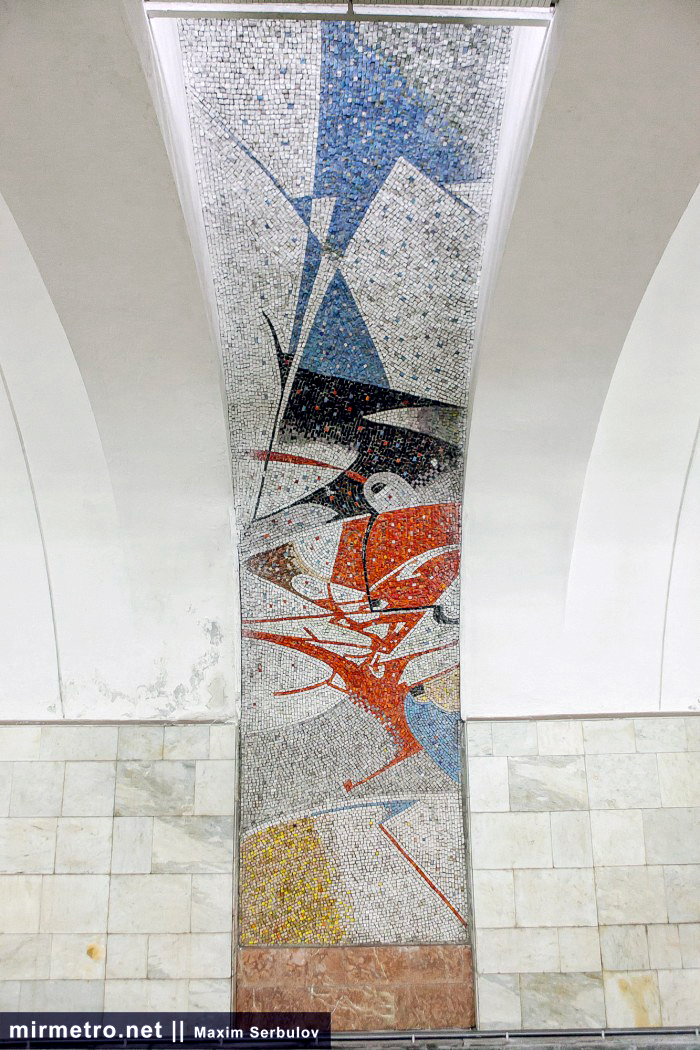
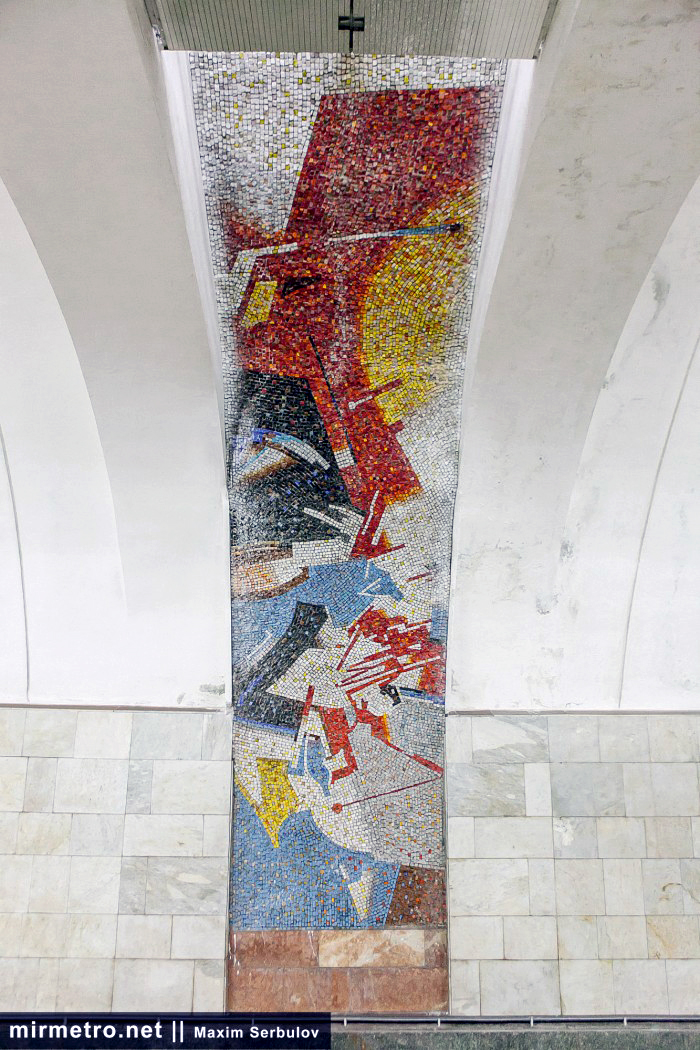
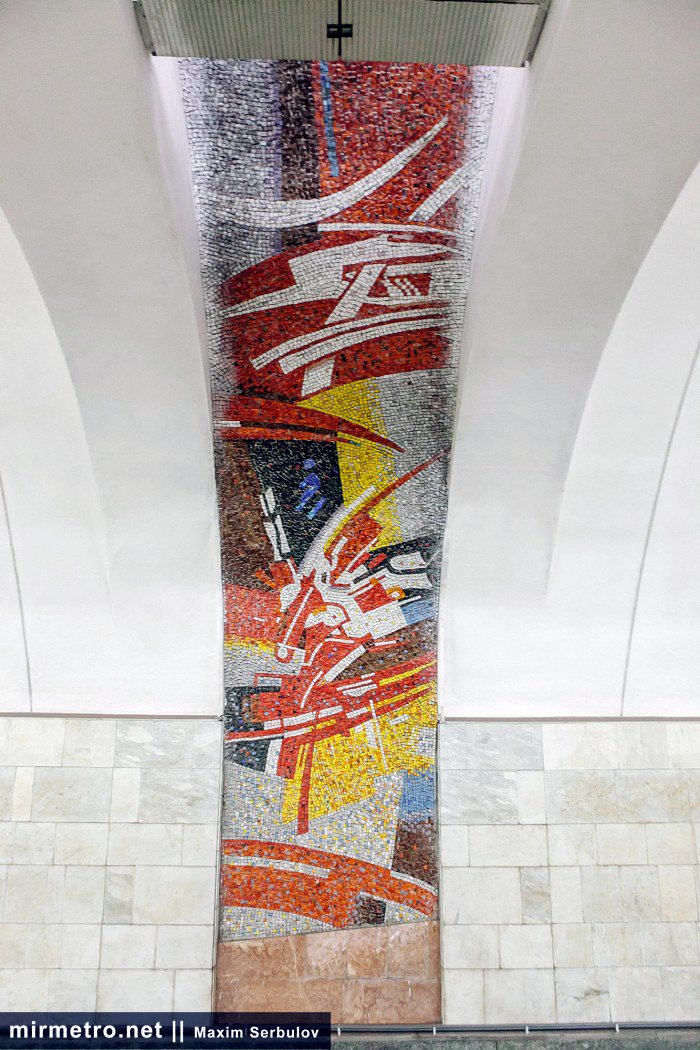
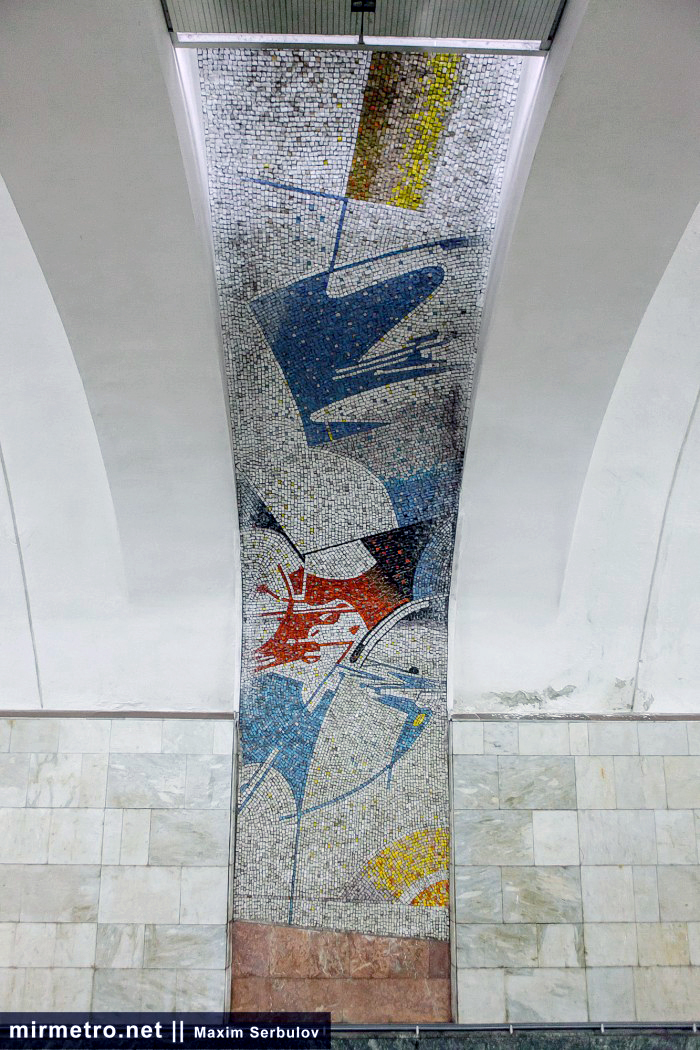
The station’s main decoration consists of eight decorative smalt mosaic compositions. Each mosaic has its own unique design.
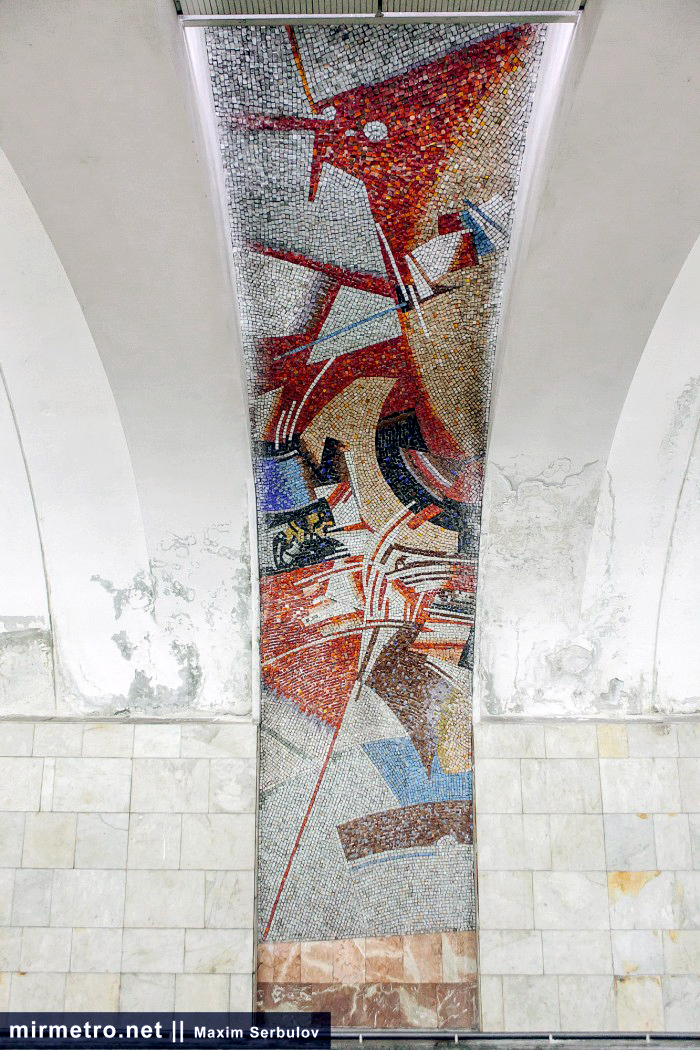
Originally, the artistic compositions were intended to reflect the theme of the uprising, after which the station was named. However, when work on the station’s artistic decoration began in 1993, architect V. Spivachuk and artist M. Krylov decided to completely revise the concept. Instead of depicting clashes between workers and soldiers, they chose to portray a symbolic clash of colors and geometric forms.

The abstract compositions, known as “Splashes,” combine a wide range of colors, with white, blue, and red predominating. In some mosaics, these colors are balanced, while in others one color dominates and seems to spill across the composition. These works are best appreciated from close range.

The square received its current name in 2016 by decision of the Kharkiv Regional State Administration. The new name was most likely proposed by the National Academy of the National Guard of Ukraine.
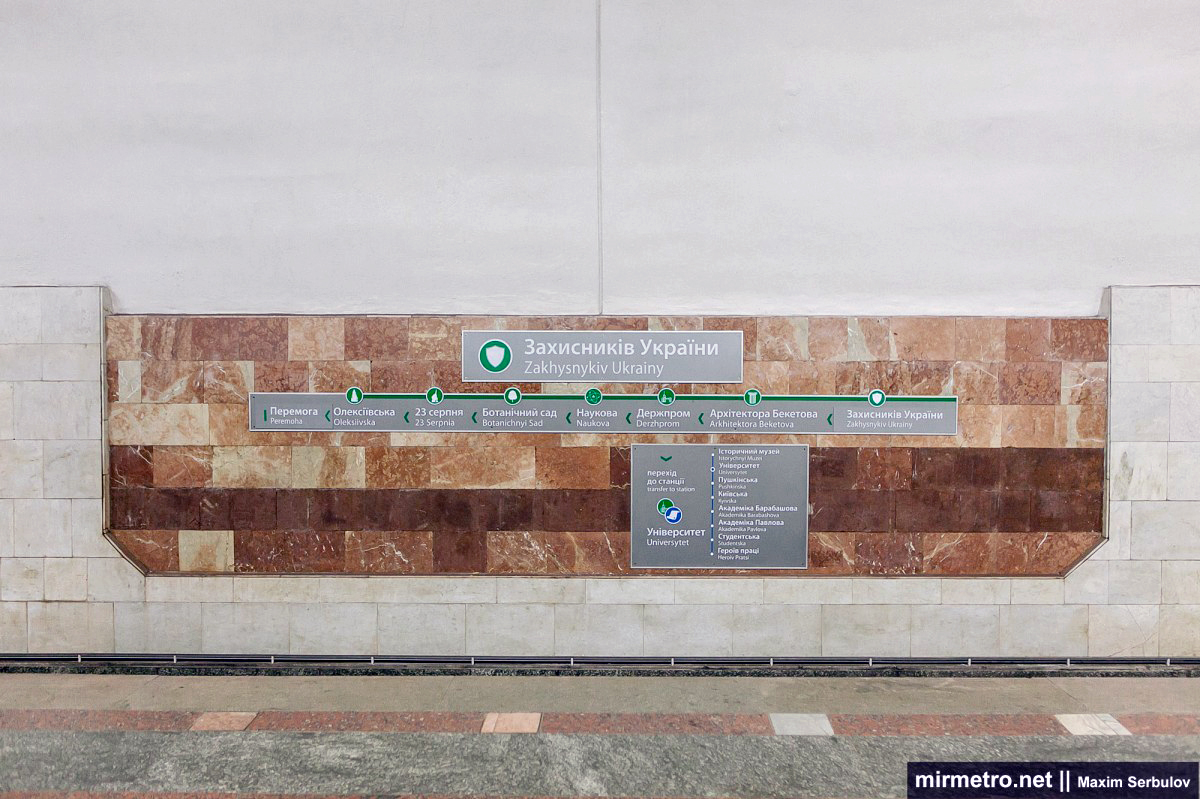
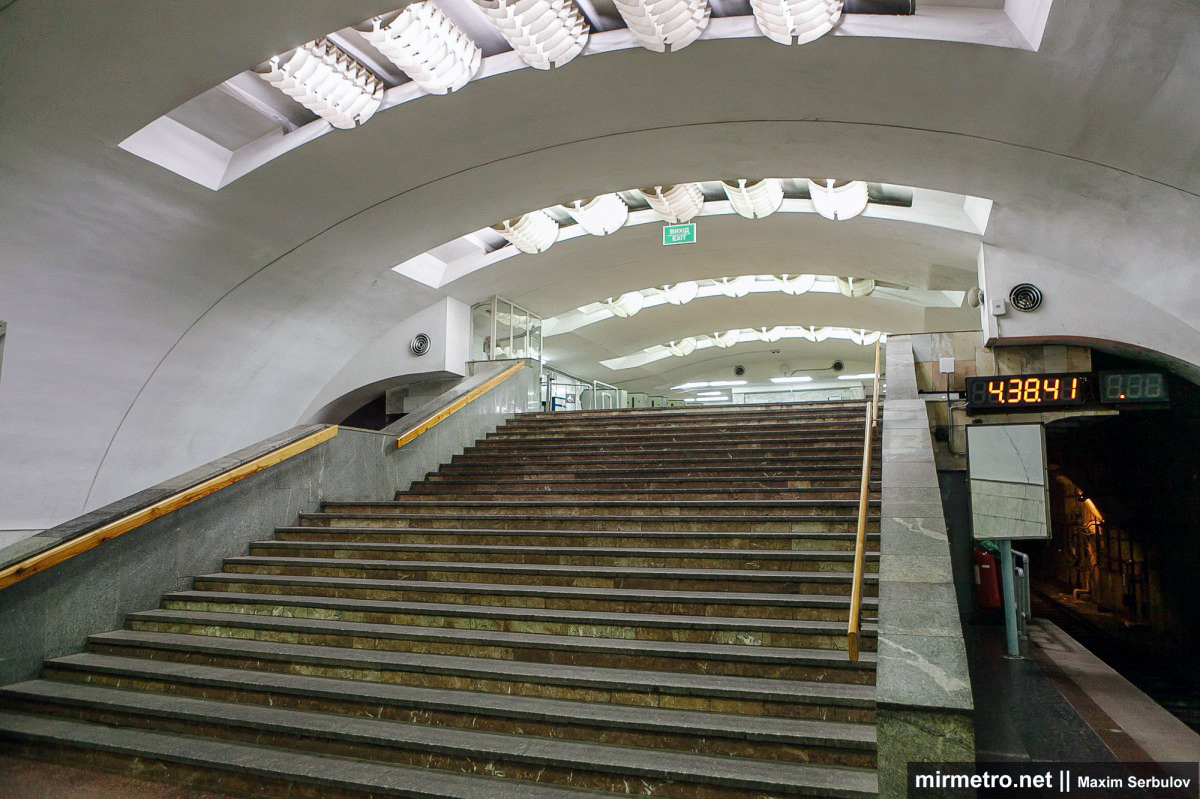
The six-metre-long stair flights are finished with gray granite and brown marble.
Gray marble was also used in the decoration of the station vestibule.

On May 13, 2023, Zakhysnykiv Ukrainy station hosted the “Heroes of the Defense of Kharkiv” boxing tournament. It became the first major sporting event held in the city since the beginning of the full-scale war.

For the duration of the event, the first three stations of the Oleksiivska Line were closed to passengers, while two shuttle trains operated between Metrobudivnykiv and Arkhitektora Beketova.

The station in 2002. Here you can see the platform barriers that were used from 2001 to 2003, when four-car trains operated on the Oleksiivska Line.
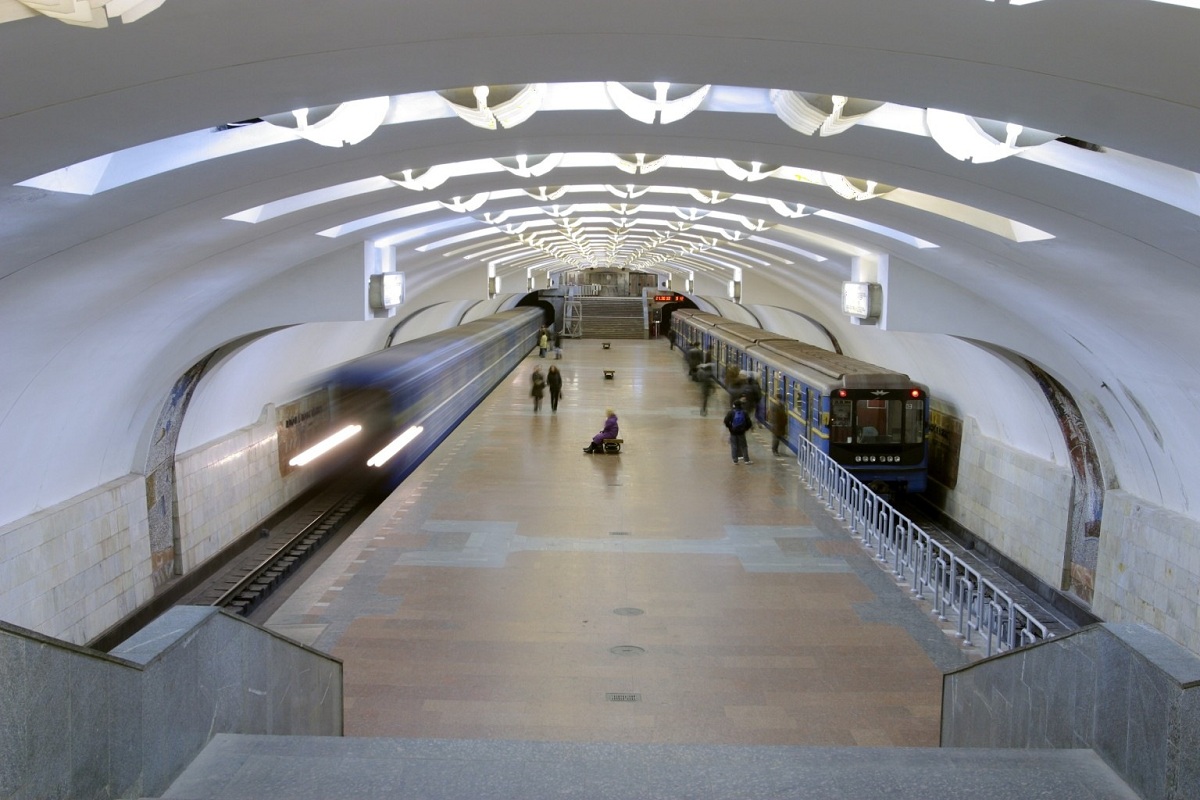
The station in 2006.

The station welcomes its first passengers.

Construction and projects
Zakhysnykiv Ukrainy station has one of the most remarkable construction histories in the Kharkiv Metro. It is no exaggeration to say that, under such conditions, the metro builders accomplished a true engineering feat.
Long before the main construction work began, contractors spent considerable time relocating the dense network of underground utilities—power cables, water mains, sewer lines, and district heating pipelines—that crossed the site. During construction, traffic had to be closed to the square several times and detours created for ground transportation. The most challenging task was rerouting the tram tracks, which required rerouting many tram routes.
Constructing a metro station in a continuous layer of quicksand, with groundwater inflows approaching 200,000 cubic metres per hour and workers often standing knee-deep in water, would be an enormous challenge even for the most experienced tunnellers.
Construction of the station began in the summer of 1985. A complex system of needle filters and numerous pumps, which regularly clogged due to the extreme load, was used to lower the water level. For tunnel construction, chilled calcium chloride solution was circulated through a network of pipes to freeze the surrounding ground before excavation began.
This time, engineers adopted the same structural concept used at Akademika Pavlova station, but with a modified construction technology. The main load-bearing and enclosing structures were constructed from precast reinforced concrete elements, assembled from precast reinforced-concrete elements using mobile formwork and a 50-tonne crane. The station was built using the advanced diaphragm wall method. This technique involves excavating narrow trenches, installing reinforcement cages, and then filling them with concrete slurry to form underground retaining walls. The walls on both sides of the station were also not monolithic, but assembled from precast concrete elements. Inside the structure, decorative wall panels were installed between the retaining walls and the vault. This reduced costs by 30%, saving hundreds of tons of metal and a significant amount of lumber. Unfortunately, this solution also had an unforeseen drawback: the station vault began leaking almost immediately after opening, and repairs have continued ever since.
The tunnels adjacent to the station pass through a narrow layer of soil trapped between two water-bearing sand strata: alluvial sand above and the Buchak aquifer below. The tunneling took place in the relatively thin layer of soil between them. A new mechanized shield was used to bore the tunnels, allowing advance rates of 40–50 metres per month despite the difficult conditions. The reinforced-concrete lining segments were manufactured at Kharkiv plants. Excavation of the 2.3-kilometre tunnel toward Arkhitektora Beketova station proved particularly difficult. The first 150 meters were driven through frozen ground, while the following 300 metres were excavated under compressed-air caisson conditions. It took two years to complete this section. The ground directly beneath the Kharkiv River cannot be frozen, so the river was blocked with an artificial earthen dam so that freezing boreholes could be drilled into the bottom.
Particular care was also required when tunnelling beneath Kharkiv’s older neighbourhoods and industrial buildings. Numerous protective measures were implemented, including structural reinforcement and underpinning of foundations.
One of the most dramatic episodes occurred while tunnelling beneath an operating plant. The factory buildings stood on isolated foundations resting directly above water-saturated quicksand. Engineering calculations showed that further tunnelling would be impossible without temporarily shutting down the plant. This was the first such case in the history of Kharkiv’s metro construction. For almost a year, the City Executive Committee debated the issue: the metro construction department proposed shutting down the plant for two months and compensating its workers, while the plant’s management proposed allocating funds for constructing an additional production building to accommodate the factory’s equipment. Ultimately, the first option was approved. To the builders’ credit, post-construction surveys revealed no significant ground settlement beneath the plant.
For the aforementioned reasons, the connecting tunnels on the Ploshcha Povstannya–Arkhitektora Beketova section were the last to be completed. In August 1992, the first tunnel breakthrough in independent Ukraine took place here. It also marked the final breakthrough of the first section of the Oleksiivska Line. Overall, these were the fifteenth and sixteenth tunnel breakthroughs of the project.
By the end of 1989, the main work on the station was complete: the station structure, the traction and step-down substation, and the main ventilation chamber were all complete. Construction workers had already begun backfilling the pit and cladding the structures, but tunneling, construction of the second vestibule, and the city exits were still ongoing. By 1991, construction was nearing completion, but due to funding issues, the final work was carried out in small increments over three years. By the summer of 1994, the station was almost ready; the only remaining task was to acquire cables and rails for the permanent tracks. However, this task took almost another year. On April 12, 1995, Ploshcha Povstannya station became the first station on the Oleksiivska Line to be formally accepted by the commissioning committee.
The excavation pit of Ploshcha Povstannya station. March 1987.

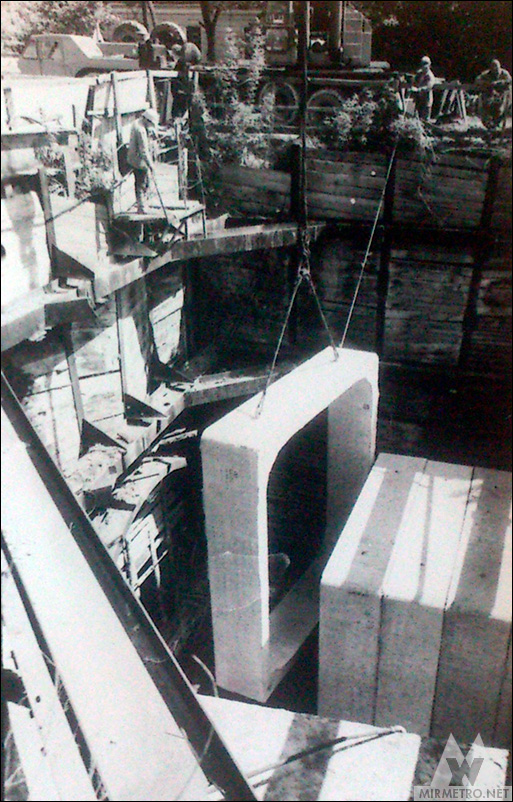
Open-cut tunnel construction toward Metrobudivnykiv station. July 1987.
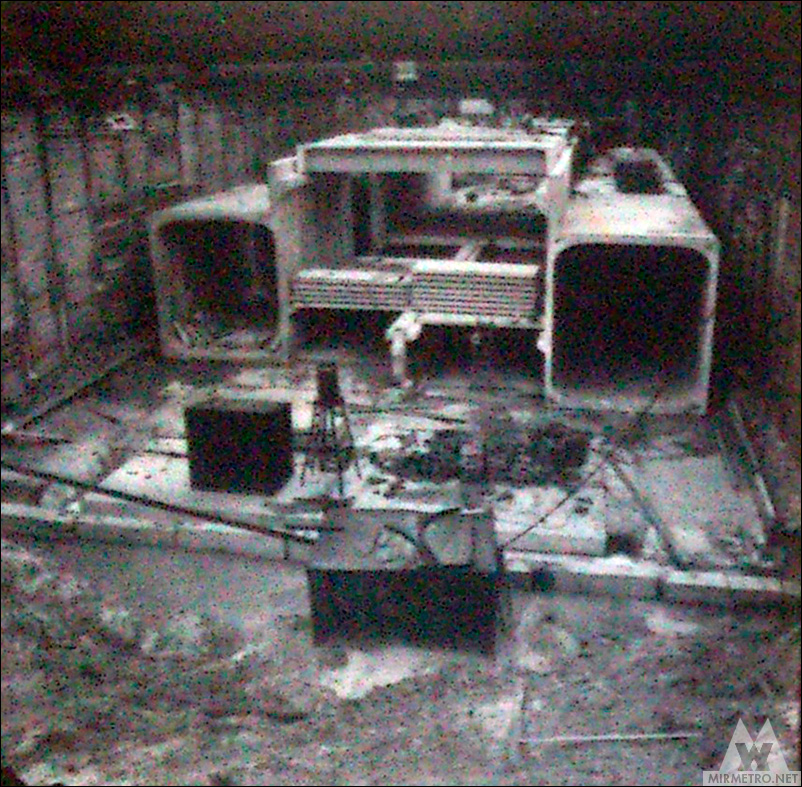
Installation of a section of tunnel lining made from precast reinforced-concrete segments.
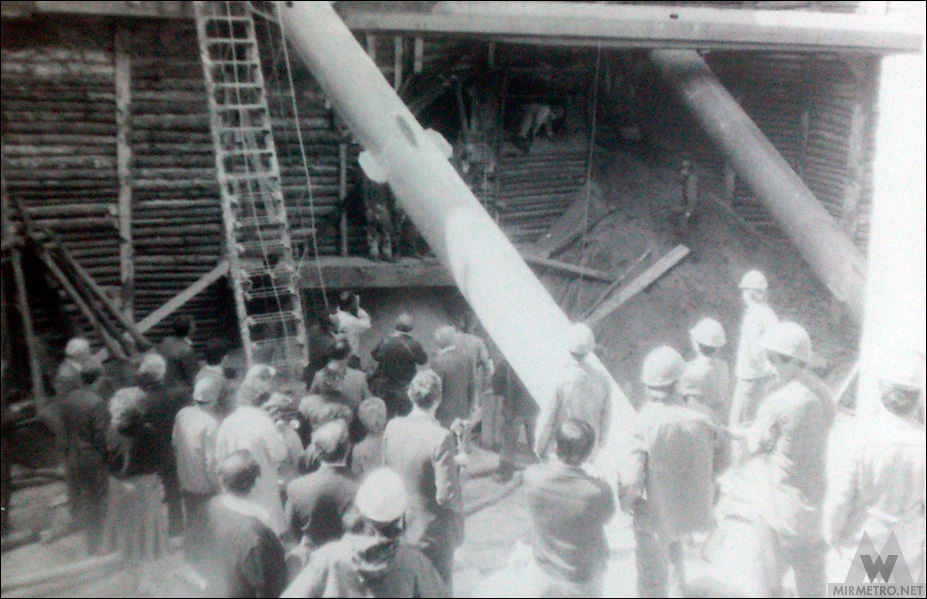
A tunnel breakthrough between Ploshcha Povstannya and Metrobudivnykiv stations. May 1990.
A miner at the entrance to a caisson chamber.

The station one year before opening.
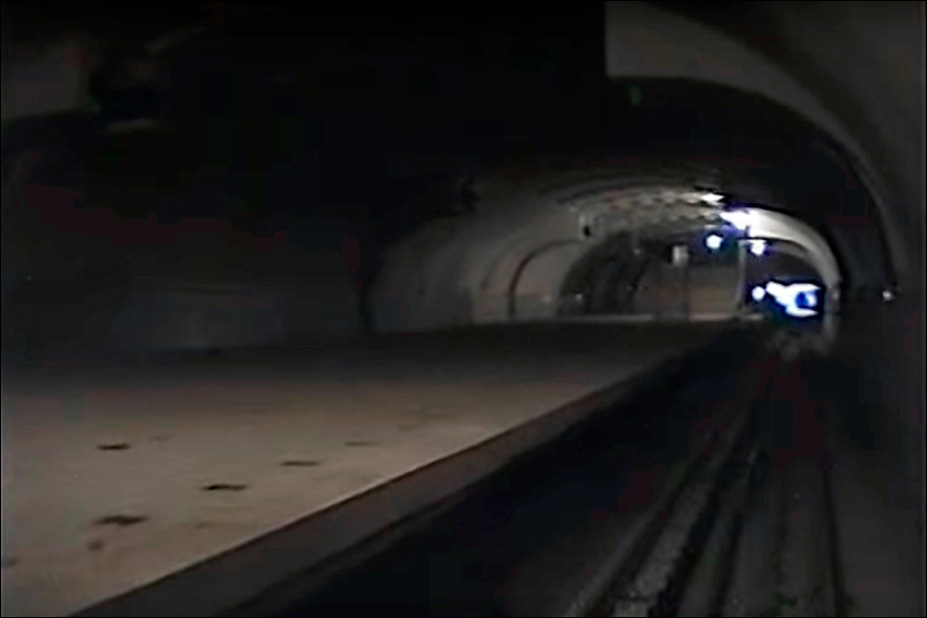
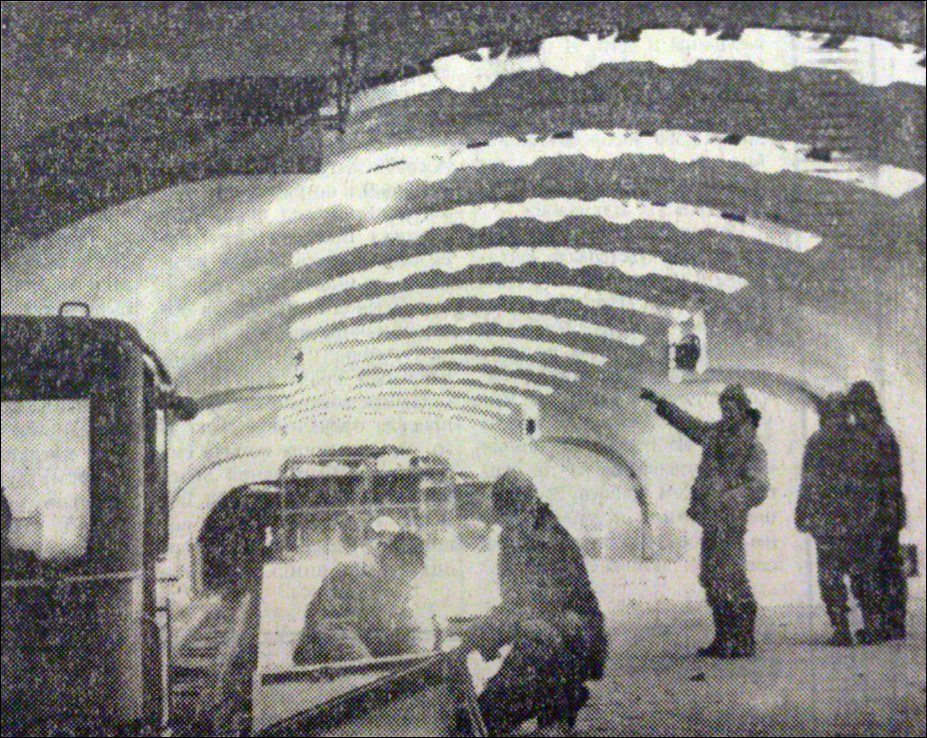
Final work on the platform. February 1995.
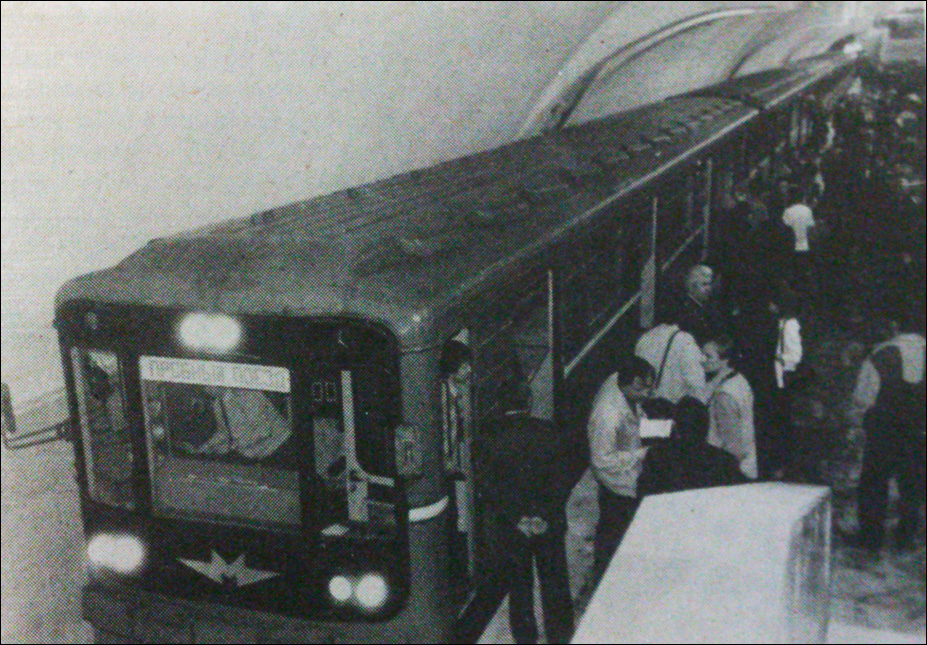
A test train at Ploshcha Povstannya station. April 27, 1995.
The approved and implemented station design.
