
Kyivska
Opening date: 11 August 1978
Architects: V. Spivachuk, P. Chechelnytskyi, O. Perepelytsia, H. Karpenko
Engineers: O. Varych, R. Denisyuk
Artists: P. Ganzha, N. Chernova
Station type: Shallow single-vault
English equivalent: Kyiv station
Average daily ridership: 11,400 passengers (2015)
The station opened on 11 August 1984 as part of the first section of the Kharkiv Metro’s second line, running from Istorychnyi muzei to Barabashova (now Akademika Barabashova) and consisting of five stations. These stations are considered the pride of the Kharkiv Metro, distinguished by their remarkable beauty and architectural expressiveness, uncommon in the architecture of that era.
Description
Kyivska station is a single-vault station built of monolithic reinforced concrete using mobile formwork, following the standard Kharkiv single-vault design.
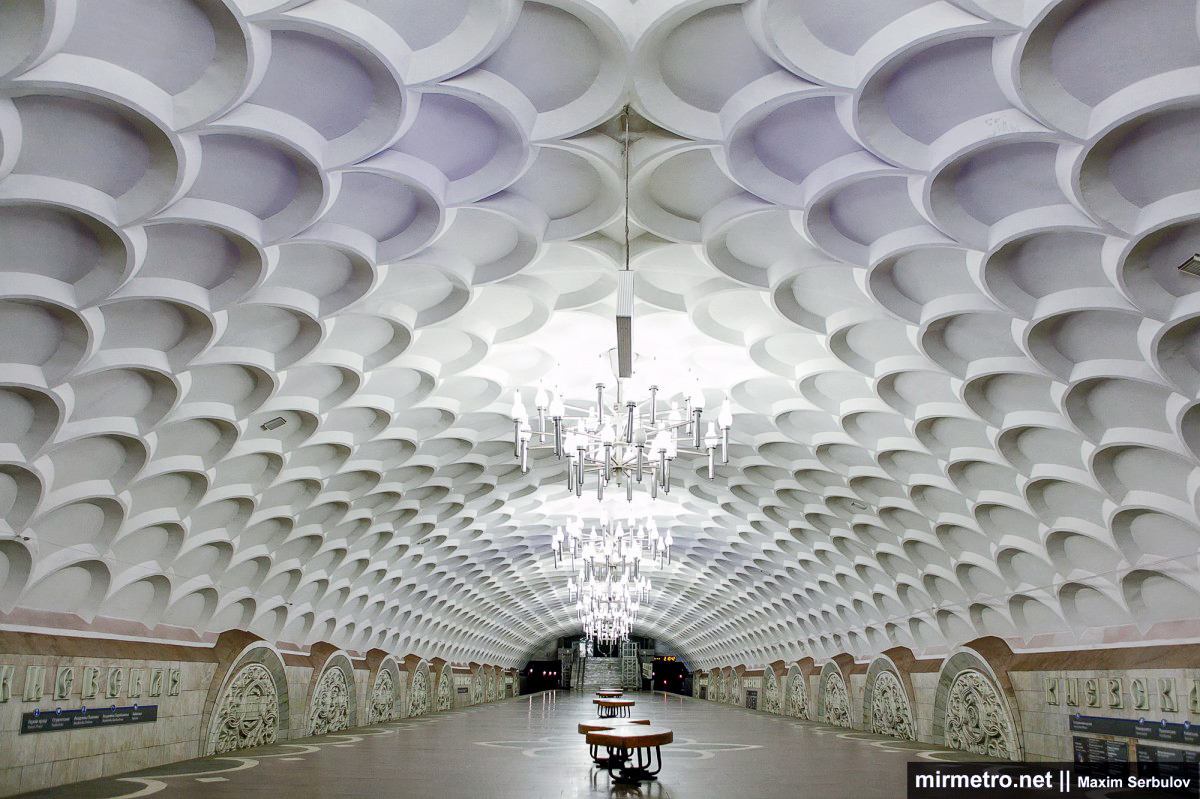
The station’s design is dedicated to the city of Kyiv, its historic monuments and landmarks. It successfully combines a large-span structural design with motifs inspired by traditional Ukrainian architecture.
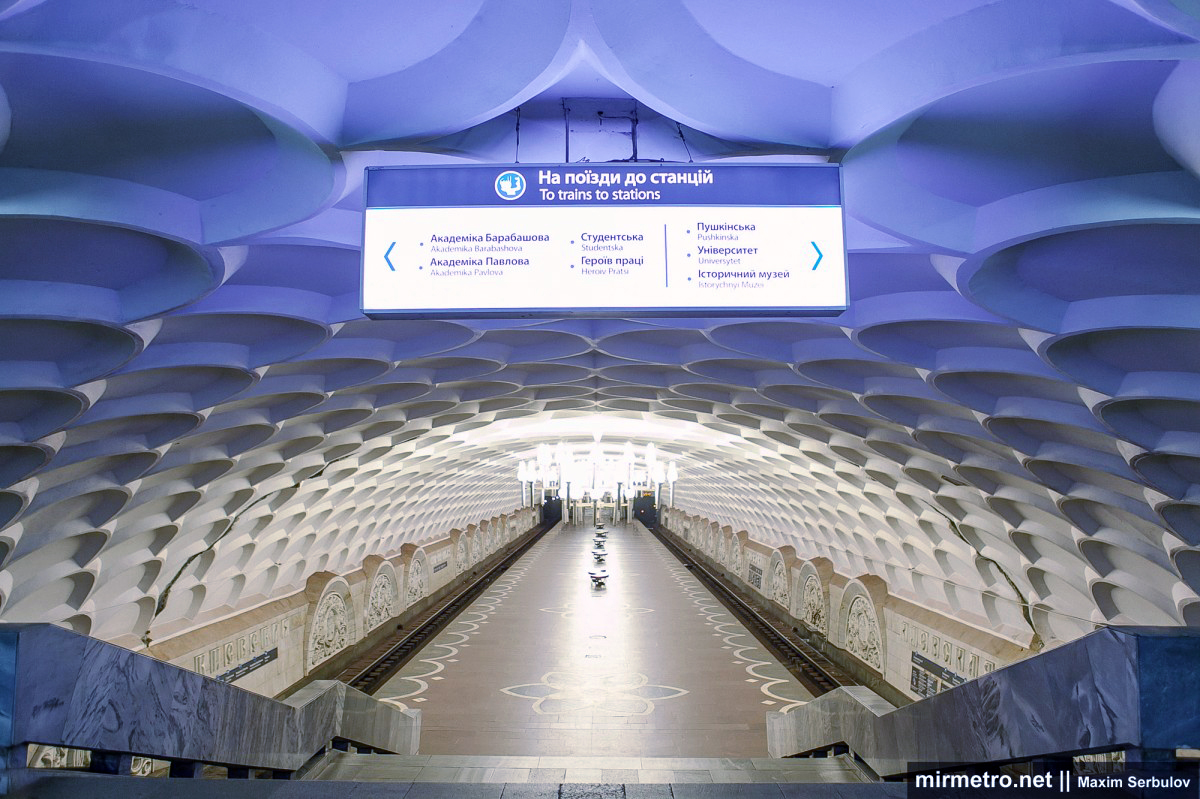
The station’s design proved so original and elegant that its architects received several state awards. For many years, Kyivska station was featured in tourist photo albums and guidebooks to Kharkiv. Scale models of the station, regarded as an outstanding example of metro architecture, are on display in the Metro Museum and at the Kharkivmetroproekt exhibition.
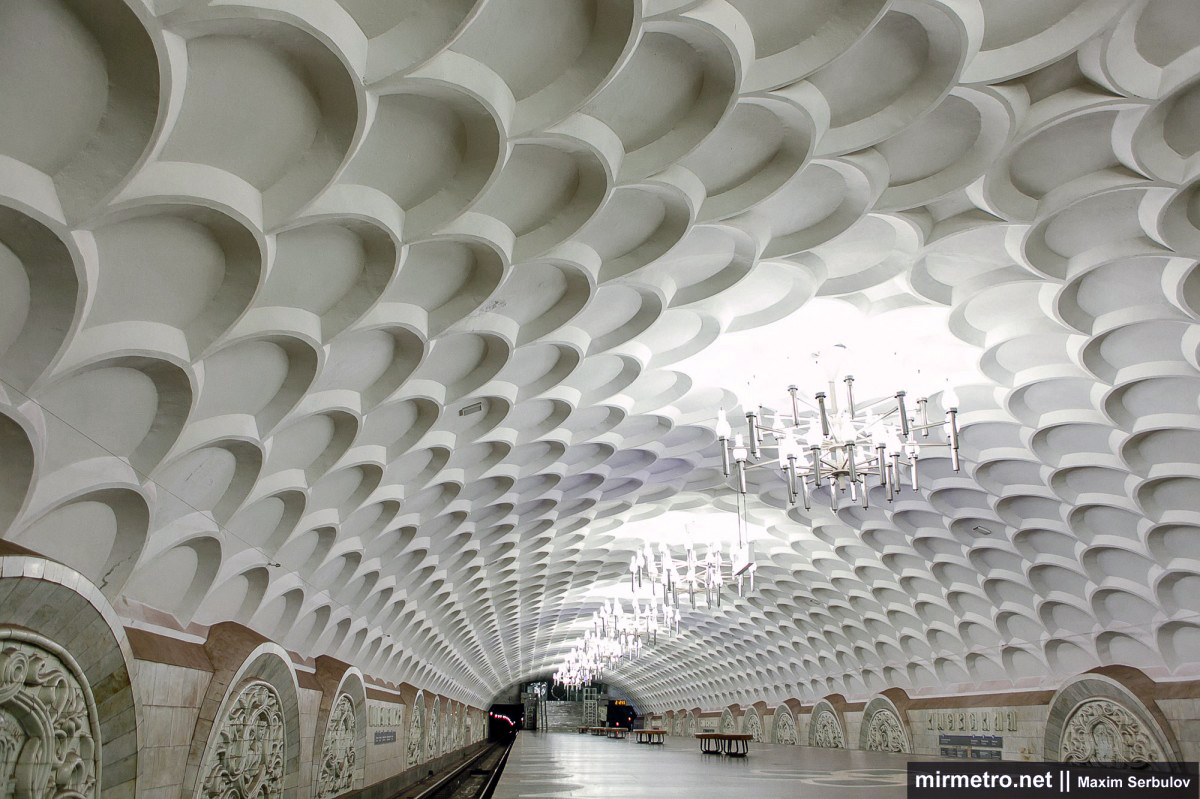
Although party officials initially viewed the station’s artistic concept with some skepticism, anyone who entered this completed underground palace could hardly hide their admiration. Unfortunately, the station looks far less impressive today because many of its original light fixtures are no longer fully illuminated. In the photographs shown here, every chandelier is fully illuminated, but under normal operating conditions this is almost never the case.

Upon entering the station, the first thing that catches the eye is its snow-white textured vault.
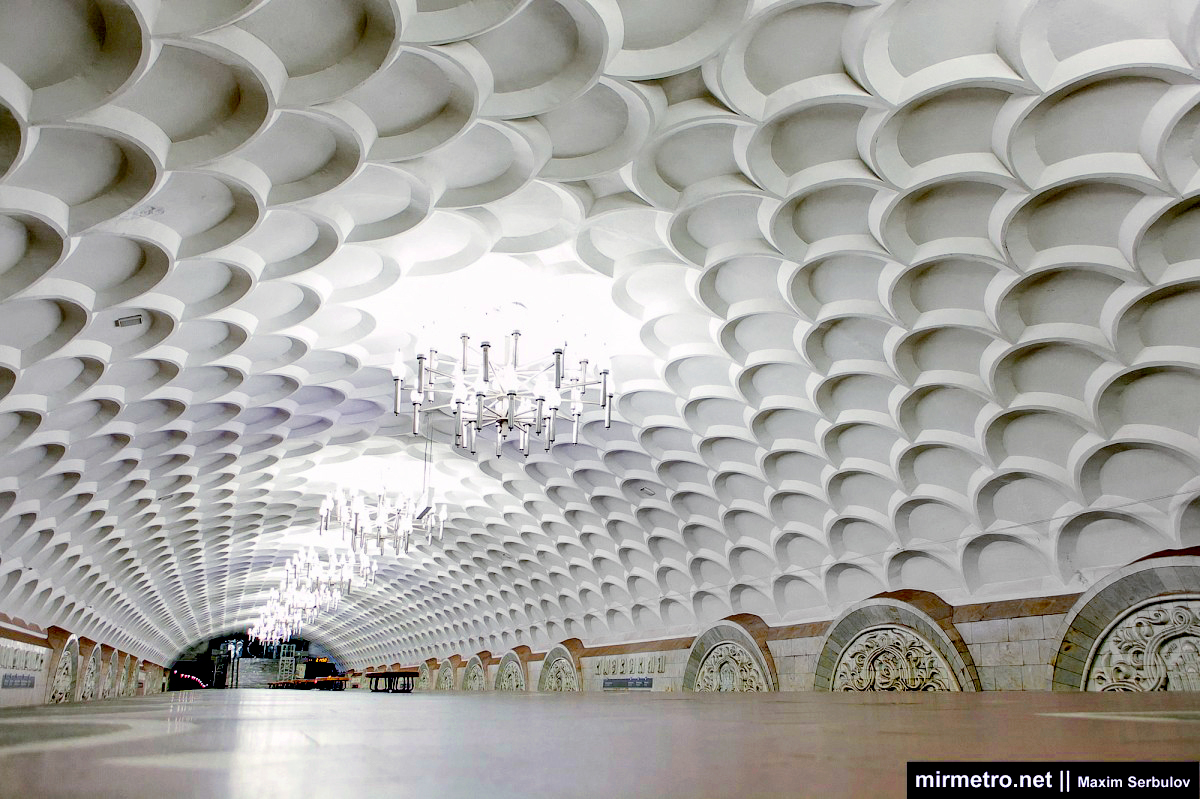
The relief pattern is arranged in arched segments and resembles either fish scales or the chain mail of a warrior from the times of Kyivan Rus.

The chandeliers at the Kyivska station are shaped like flowers and are reminiscent of antique chandeliers from palaces of the Kyivan Rus era. Their lamps are arranged in three tiers and are stylized to resemble burning torches or candles. Originally, each lamp was fitted with two glass shades, but because they were fragile and often handled carelessly, many were broken. Since the 1990s, only a single shade has remained on each lamp.

The platform edges are paved with gray granite and bordered by an arched band of white marble that echoes the pattern of the vault.
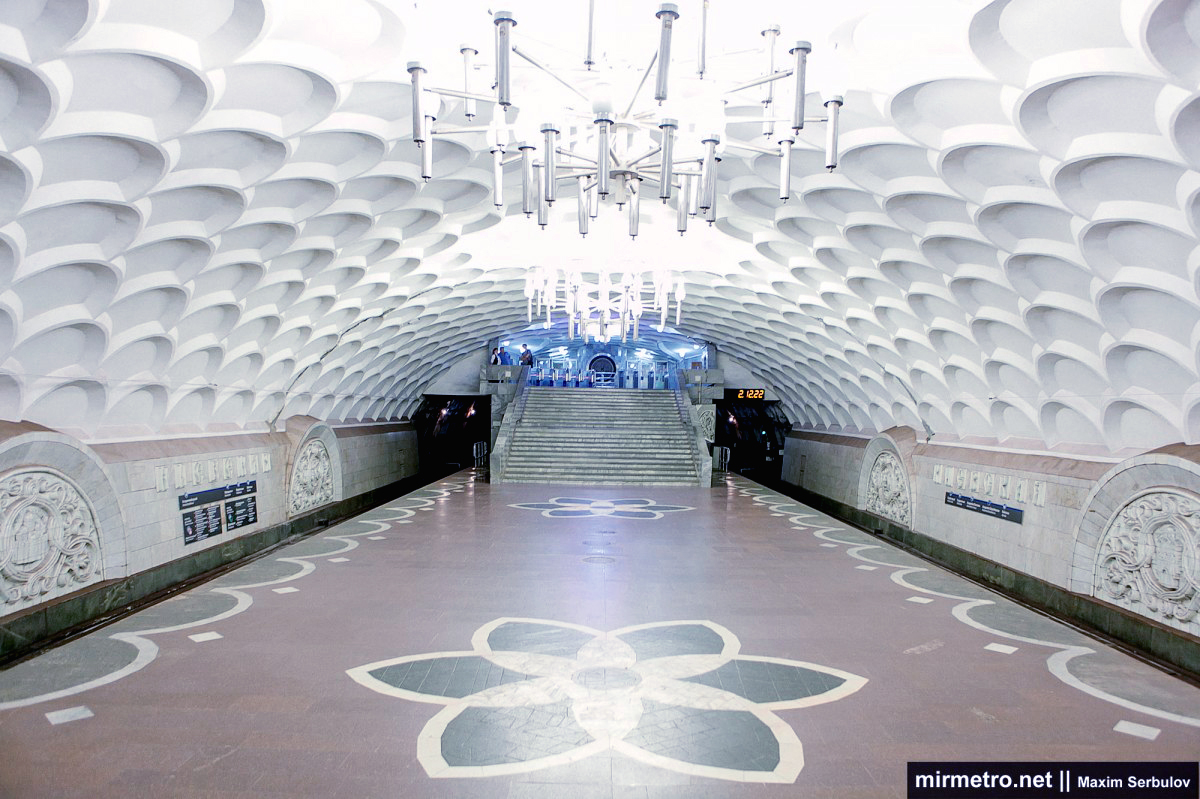
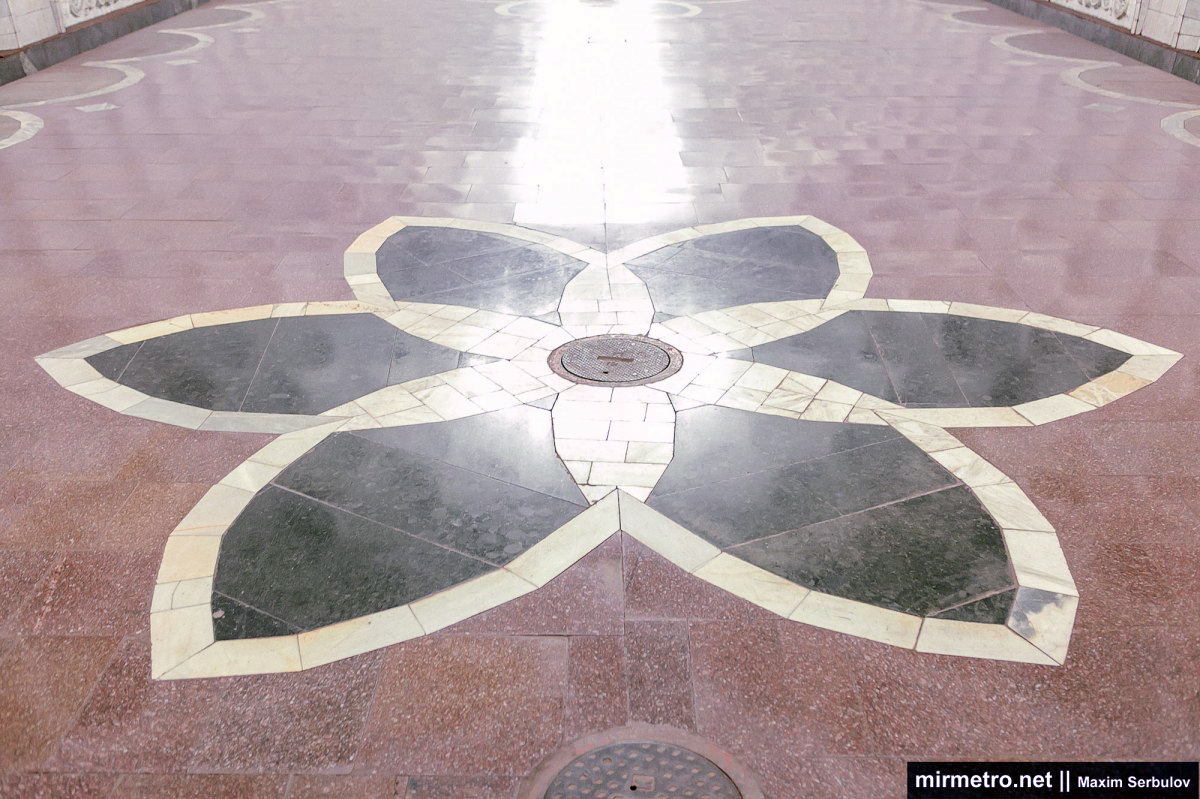
Even the station floor features an artistic design, with large floral patterns formed from black labradorite and white marble.
The track walls are faced with white marble. The base of the walls is faced with light gray granite.

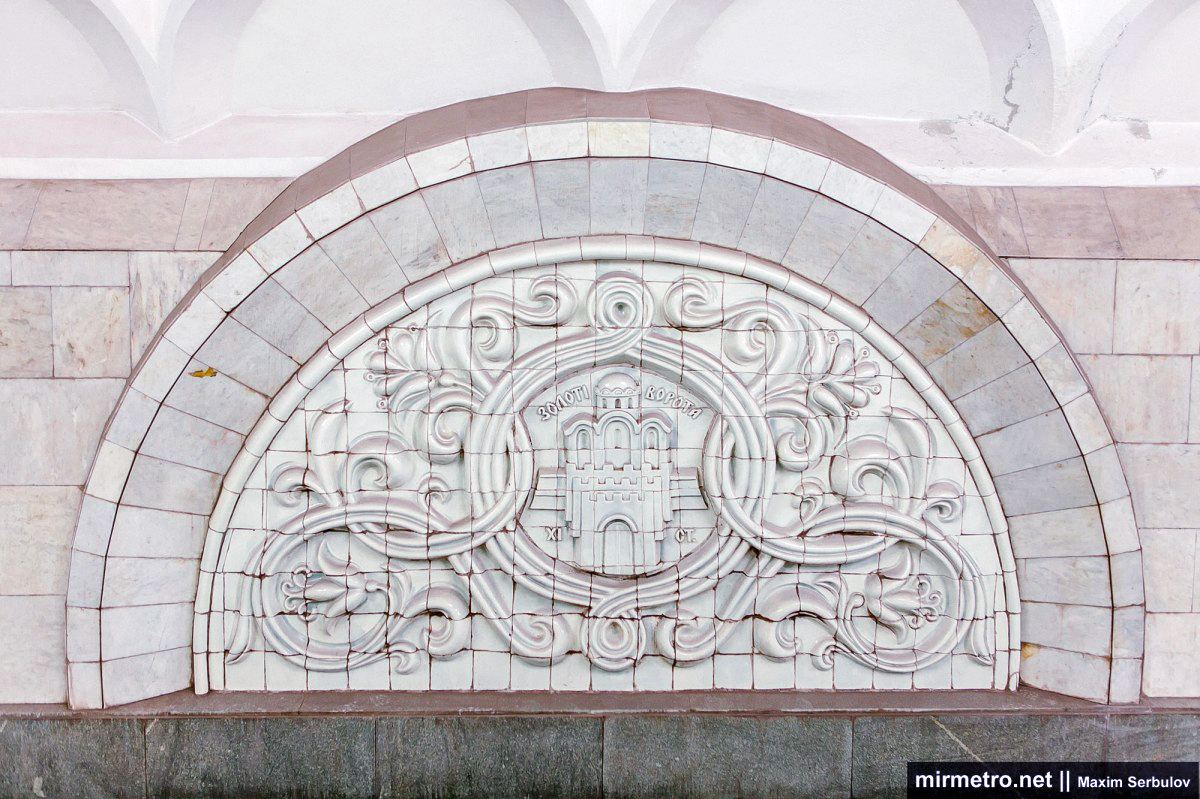
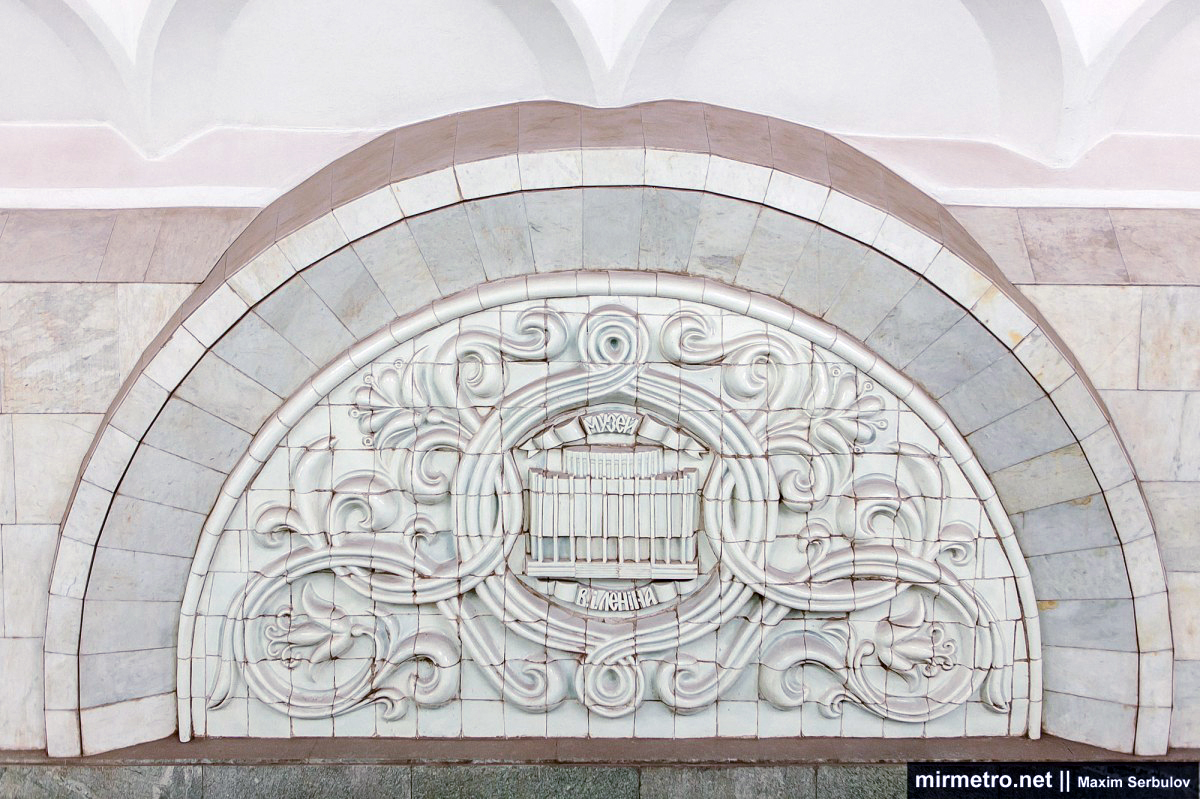
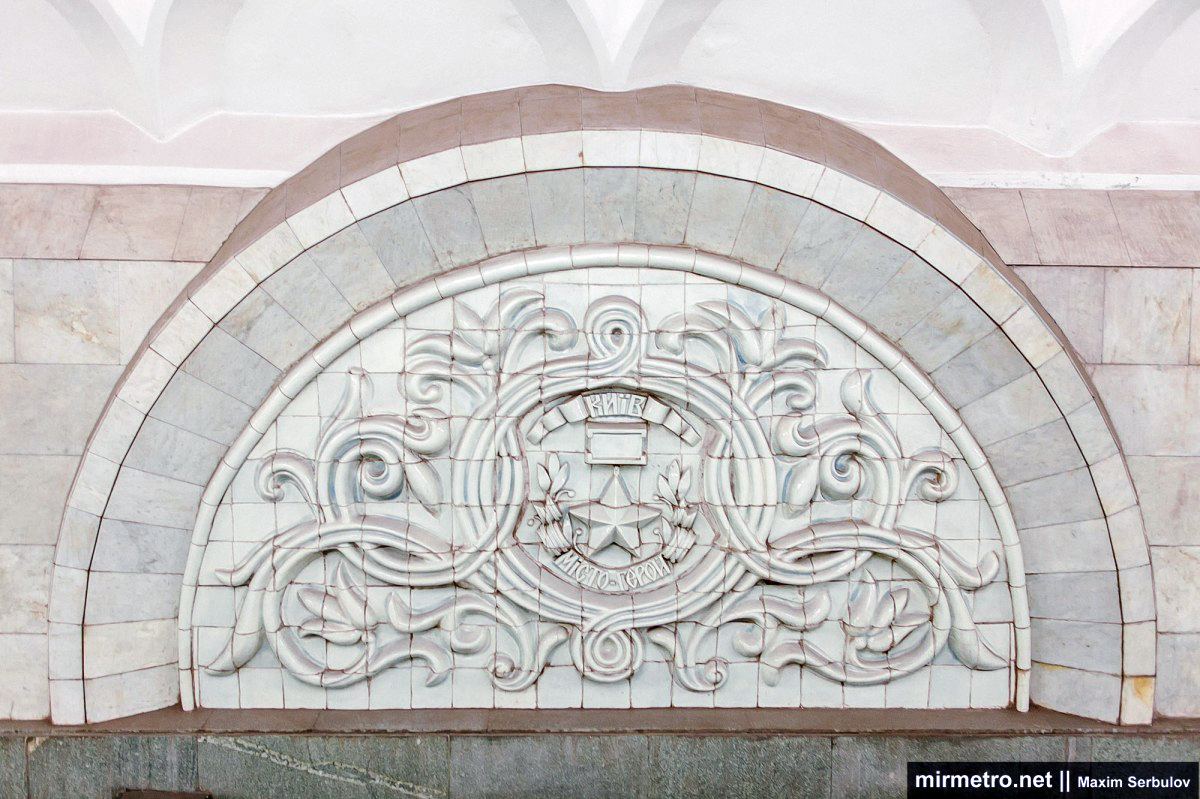
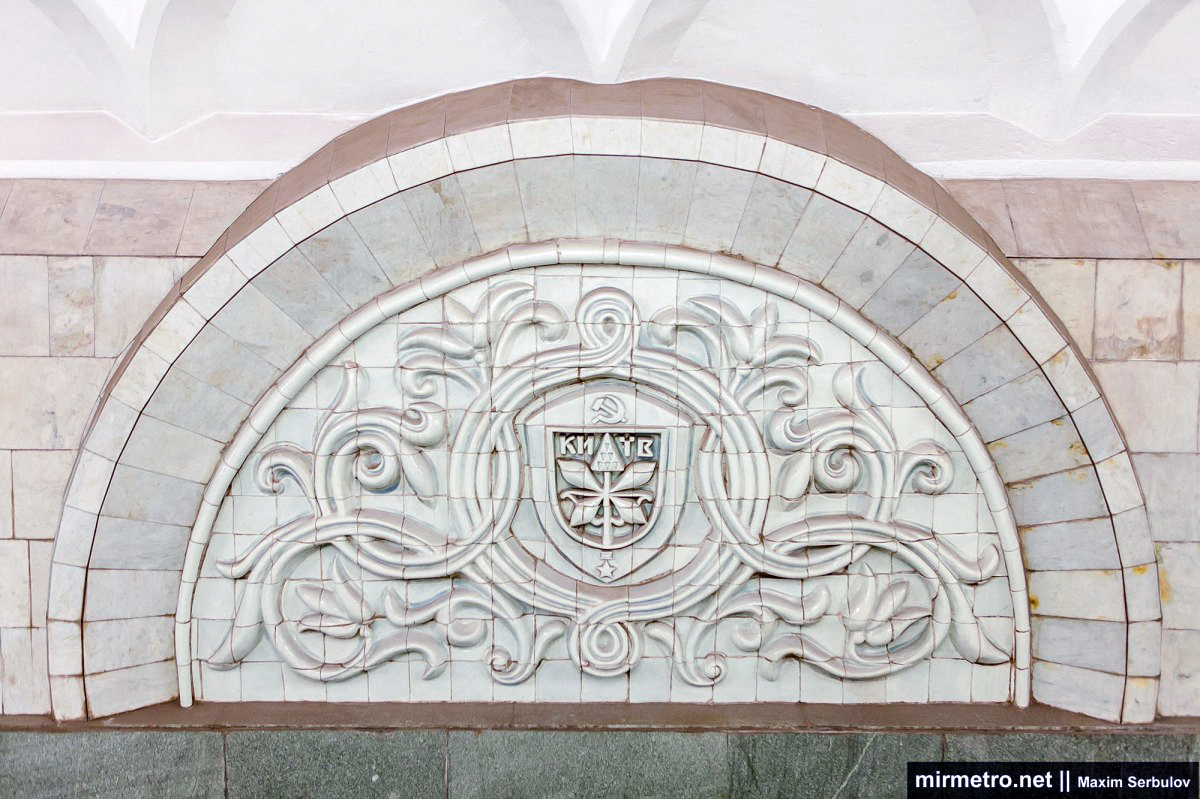
A distinctive feature of Kyivska station is the series of large three-dimensional arched compositions set into the track walls. Each wall contains thirteen compositions assembled from numerous individual elements—around five thousand in total throughout the station, every one of which required painstaking craftsmanship.
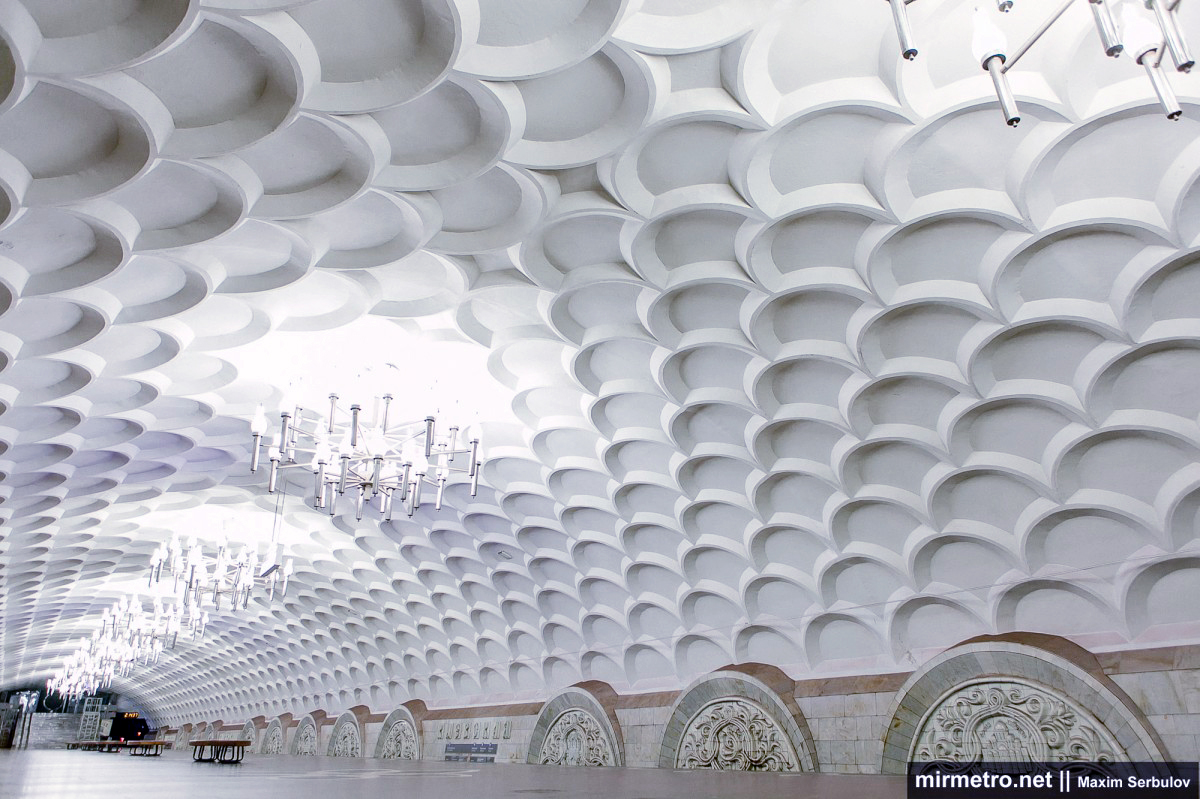
These works of art were created from faience by Honored Artists of Ukraine Petro Ganzha and Natalya Chernova, a husband-and-wife team renowned for their work in ceramics, porcelain, and traditional Ukrainian decorative art. For many years, Petro Ganzha and Natalya Chernova worked with traditional Ukrainian artistic motifs, which are fully reflected in the station’s design. To complete the project, the artists practically lived at the factory for an entire year. In 2023, the compositions were slightly modified: the hammer-and-sickle emblems, along with the inscription referring to Lenin and the Ukrainian SSR, were removed.

Each composition is framed by floral murals depicting flowers native to the Ukrainian steppes and fields. Pictured: the bas-relief “Sphinx.”

The compositions depict famous landmarks of Kyiv alongside motifs inspired by Ukrainian folk art. Although many of the artists’ ideas were realized, not all were approved—the proposed bas-reliefs of the rulers of Kyivan Rus, for example, were rejected. Pictured: Bas-relief “Bird”.

A monument from the times of Kyivan Rus – Golden Gate of Kyiv.
Saint Sophia Cathedral.
Lenin Museum (now the Ukrainian House).
Bas-relief “Hero City Kyiv”.
The building of the Verkhovna Rada.

Coat of arms of Kyiv in 1969.
Monument to the workers of the Arsenal Factory.
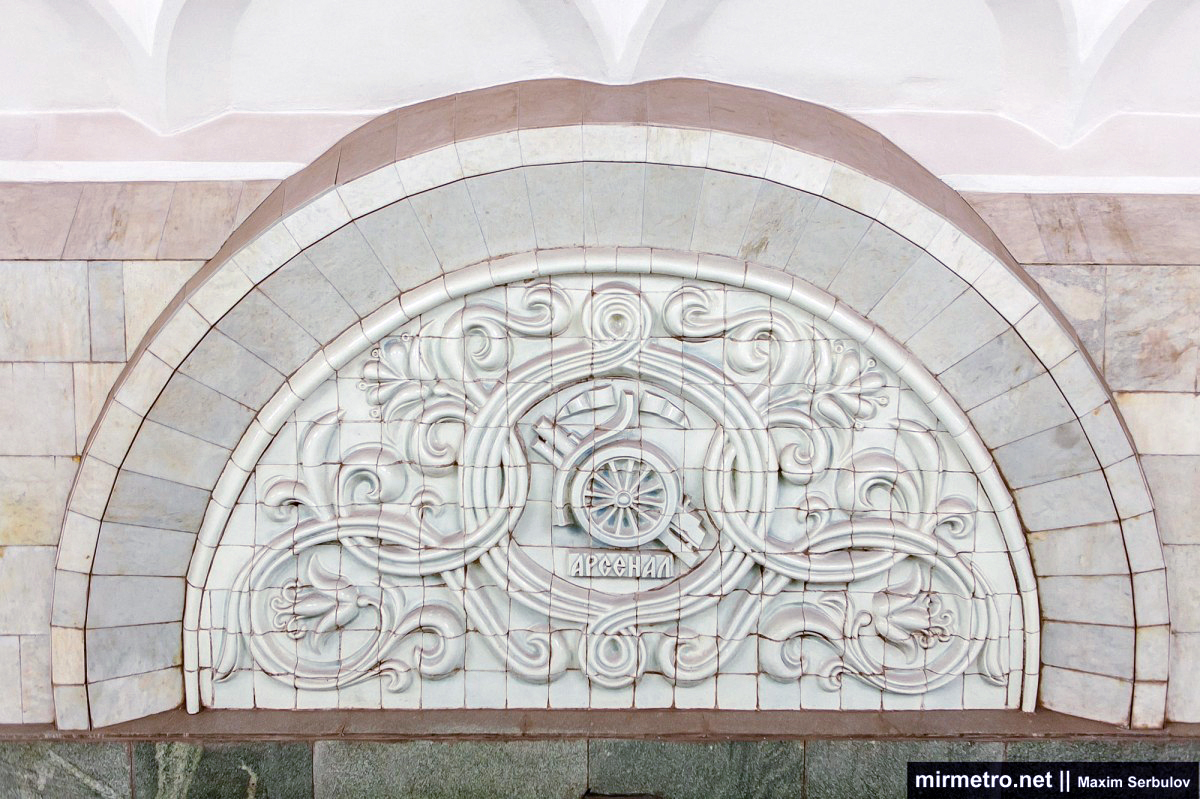
Bas-relief “1500 years of Kyiv”.

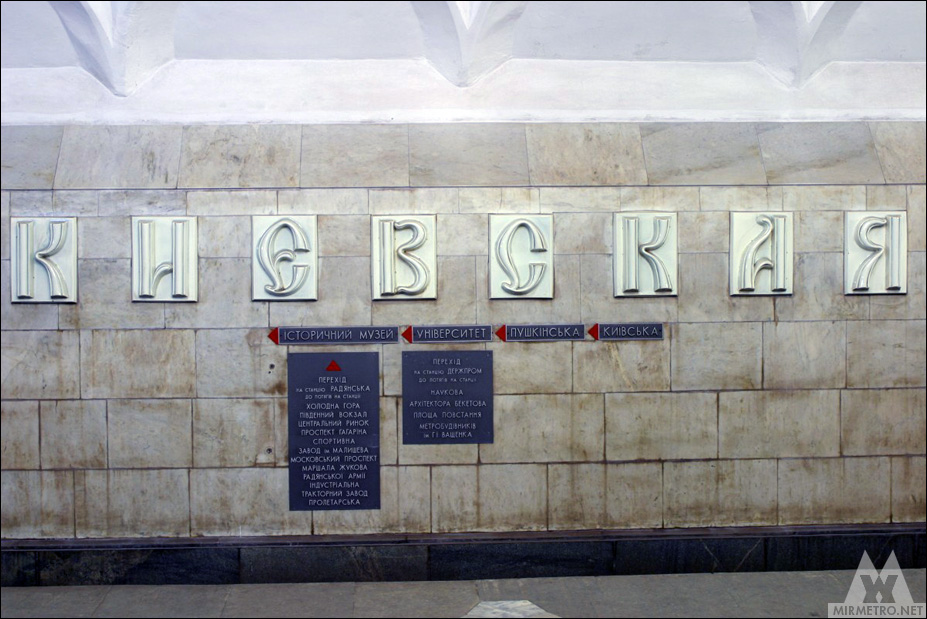
The station name is displayed on the track walls in large three-dimensional letters stylized as old Slavic script. The letters were produced by a Kyiv architectural workshop and installed in September 2023, replacing the previous Russian-language inscription while preserving the station’s original artistic style.
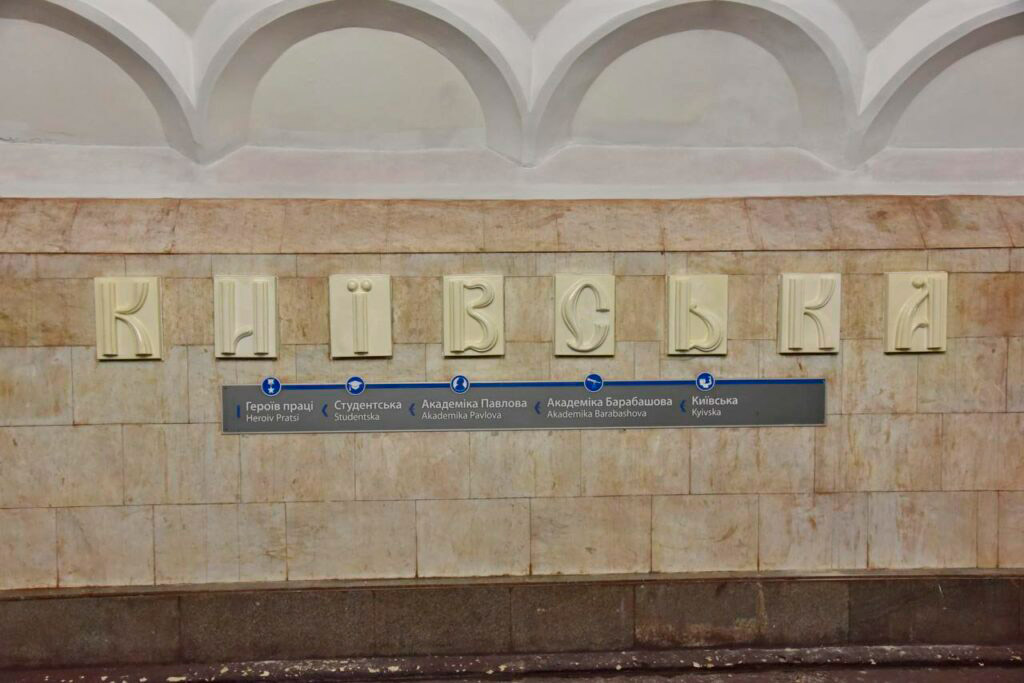
The original station name remained unchanged until 2023. The decision to name the station after the capital of Ukraine was connected with the celebration of Kyiv’s 1,500th anniversary in 1982.

The staircases are clad in gray marble, granite, and black labradorite.
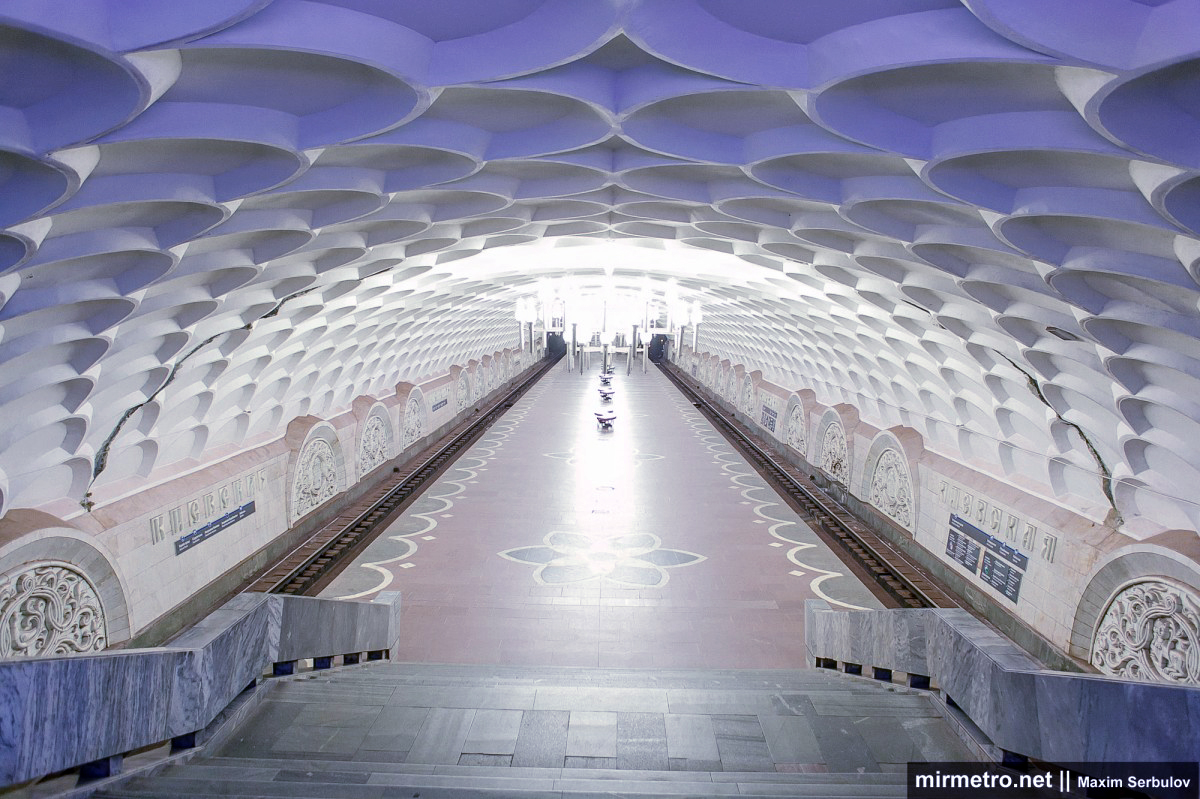
The same finishing materials were also used throughout the station vestibules.

Because of low passenger demand, only the northern concourse is currently in operation. The southern concourse, built in anticipation of future development, has never been opened to passengers, and plans to construct exits from it have remained unrealized.

The station in the early 2000s.
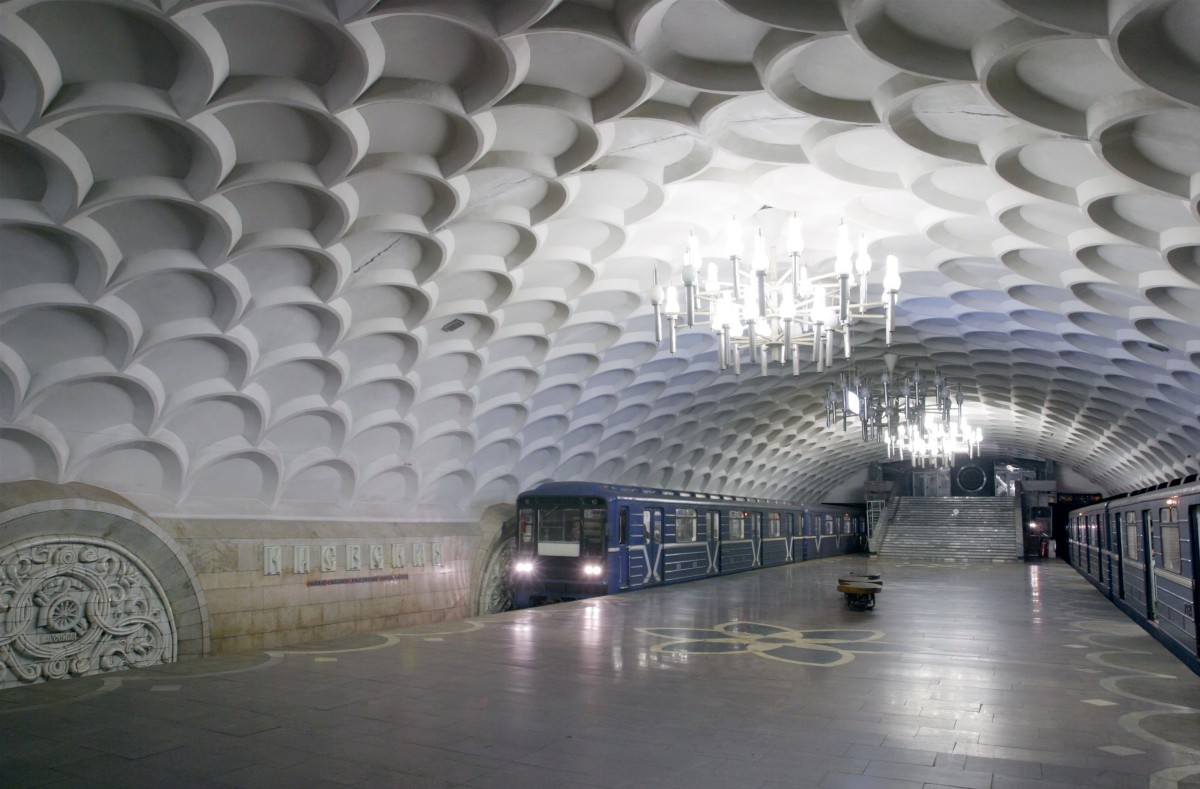
The name of the station on the track walls with old arrow signs.
Kyivska station in the first days after opening.
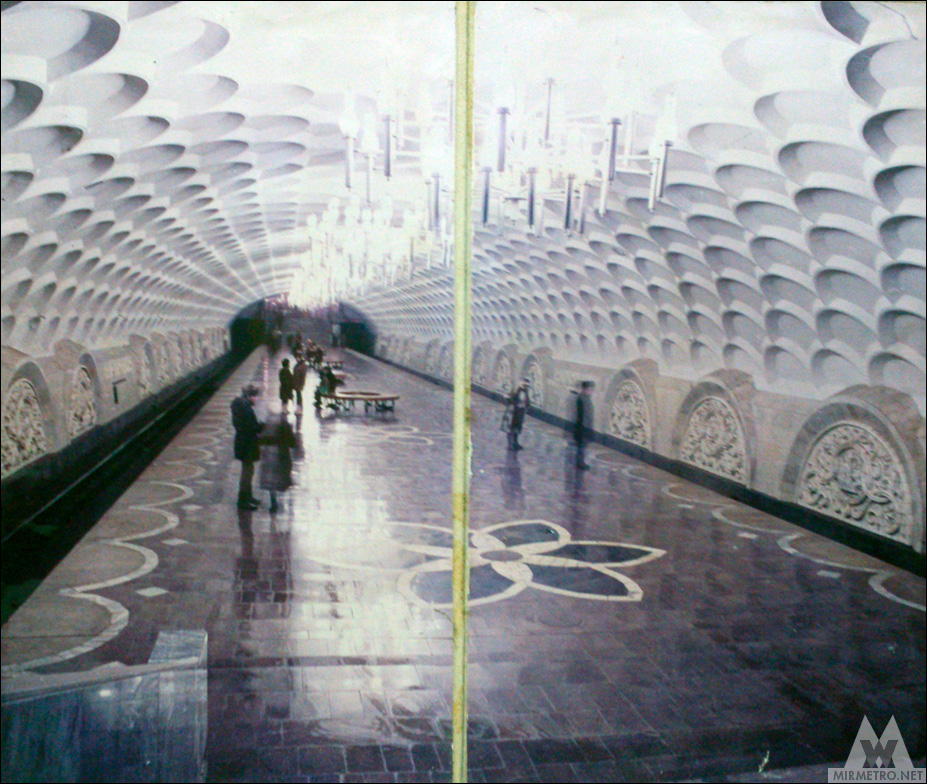

Here you can see chandeliers that had two shades for each lamp.
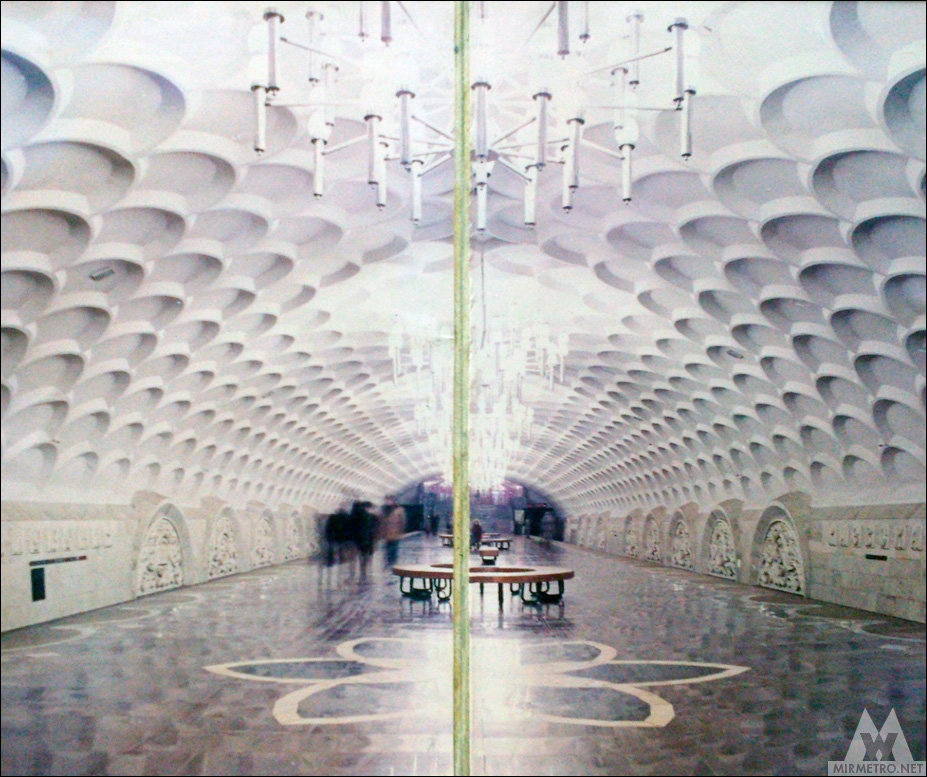
The station in the first years of operation.

Construction and projects
The station was built by the open-cut method in a large excavation pit, following a modified version of the Kharkiv single-vault design.
Construction began in the summer of 1978, with the first excavation work starting later that year. To clear the construction site, several buildings were demolished and their residents were relocated to new housing.
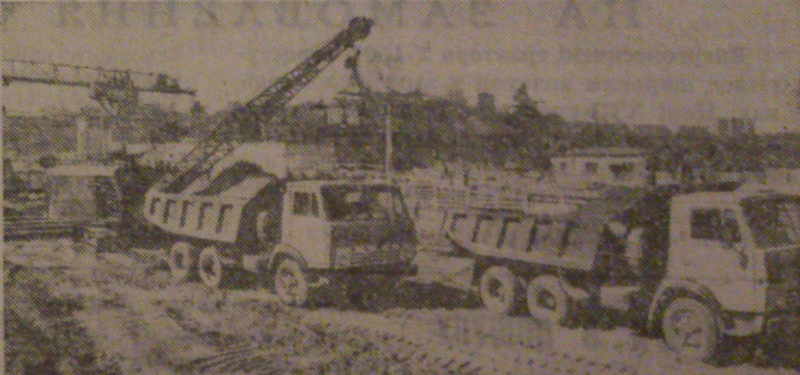
Kyivska station was built under extremely challenging hydrogeological conditions, as it is located in the floodplain of the Kharkiv River. Groundwater was encountered at a depth of only three to four metres, and conditions at the surface were equally difficult. Trucks and dump trucks struggled to reach the site, having to descend a steep slope of sticky clay from the roadway. The situation became particularly difficult during the spring floods.
Pumps and wellpoint dewatering systems were installed around the entire perimeter of the excavation. Because of the difficult geological conditions, engineers decided to install three waterproofing layers instead of the usual two, together with a concrete slab one and a half times thicker than standard. An additional layer of sand was then laid before construction of the station structure began.
Compared with the first metro line, the design of the Kharkiv single-vault station was further refined. Whereas the earlier stations were built entirely of monolithic reinforced concrete, at Kyivska the lower part of the vault—the springing, which forms the side walls—was assembled from precast reinforced-concrete blocks weighing about ten tonnes each. The upper part of the vault, as before, was cast in monolithic reinforced concrete using travelling formwork in six-metre sections. This solution offered two major advantages. First, it reduced the overall length of the station structure by 36 metres, saving approximately 200 tonnes of reinforcing steel and 250 cubic metres of concrete. Second, by that time the production of large precast reinforced-concrete elements had already been mastered, whereas during construction of the first metro line they had not yet been available in sufficient quantities. The precast blocks forming the springing were hollow, allowing electrical cables to be routed inside them instead of through cable ducts within the station walls. As a result, Kyivska does not have the usual cable access doors in the middle of its track walls. The arched relief pattern of the vault was cast directly into the formwork.
Unlike earlier stations, the reinforcement cages for the vault were assembled on the surface rather than directly on the formwork inside the excavation. They were fabricated in three-metre sections and then lowered into place by crane.
The approach tunnels were built from the surface by the open-cut method using single-section reinforced-concrete elements. Although the dewatering system proved effective, construction was far from straightforward. Metro builders encountered numerous underground utilities, including gas and sewer pipelines, storm drains, multi-core telephone cables, and a large-diameter water main. All of them had to be relocated before construction could continue.
Another problem was also solved during construction. The compressed-air pipeline supplying the site caused considerable inconvenience to nearby residents. Engineers therefore rerouted it along the banks of the Kharkiv River instead of through city streets, as had previously been customary.
An interesting discovery was made during construction. Workers unearthed the ribs of a mammoth, the shoulder blades of a bison, and the humerus and ulna of a woolly rhinoceros, all dating back approximately 50,000 years. Apparently, the remains had been carried into the area’s sandy deposits by the Kharkiv River.
Miners at the Kyivska station excavation site.

During construction of the excavation and tunnels, excavated soil was removed using a conveyor system.
Bulgarian metro builders visited the Kyivska station construction site to study Kharkiv’s experience and apply it during construction of the Sofia Metro. In the photograph, a waterproofing specialist demonstrates construction techniques to a Bulgarian colleague. Spring 1980.

Metro builders working in the station excavation pit.

A construction team working on the section between Kyivska station and the Metro Bridge.
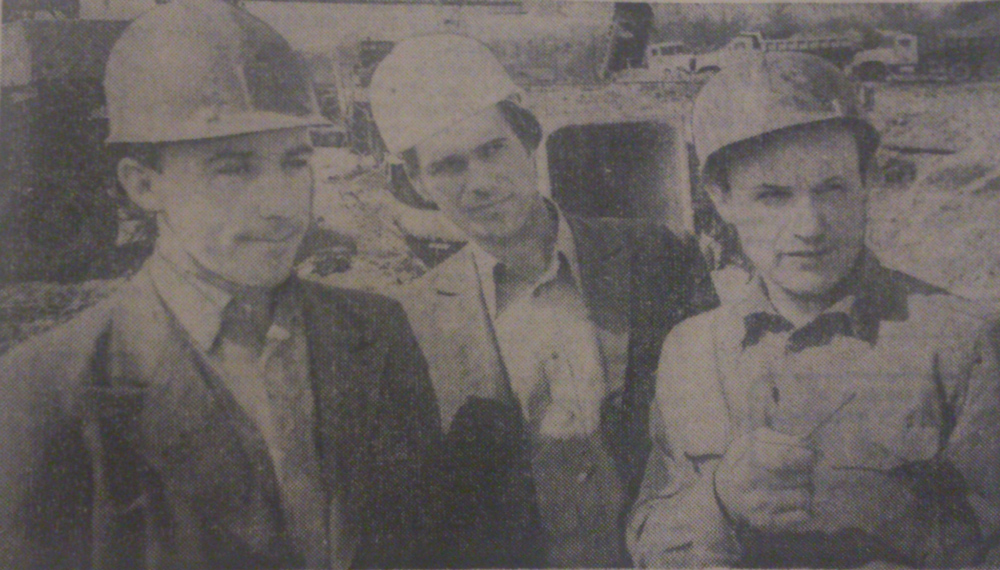
Workers tying reinforcement for the station vault.
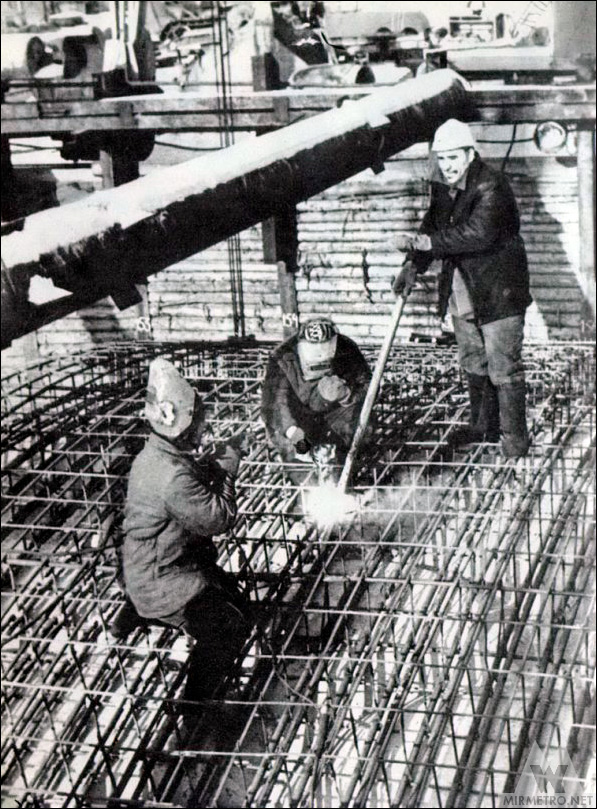
Construction of the Kyivska station is underway.
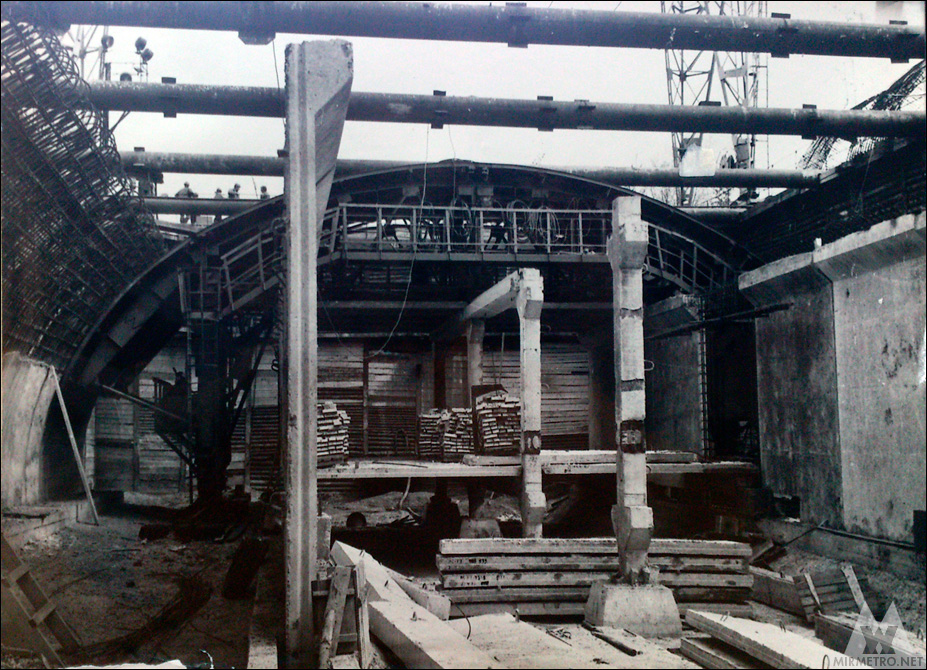
A section of the connecting tunnel beneath the Zhuravlivka slopes.
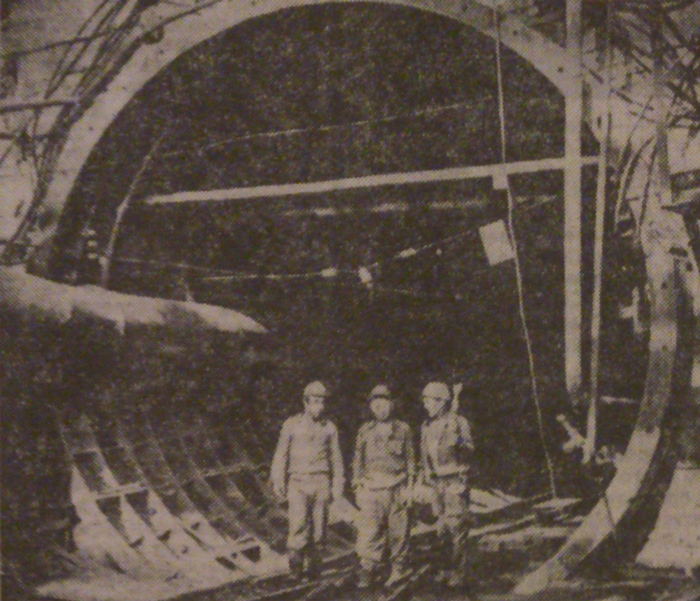
From here, the tunnel climbs toward the Metro Bridge.
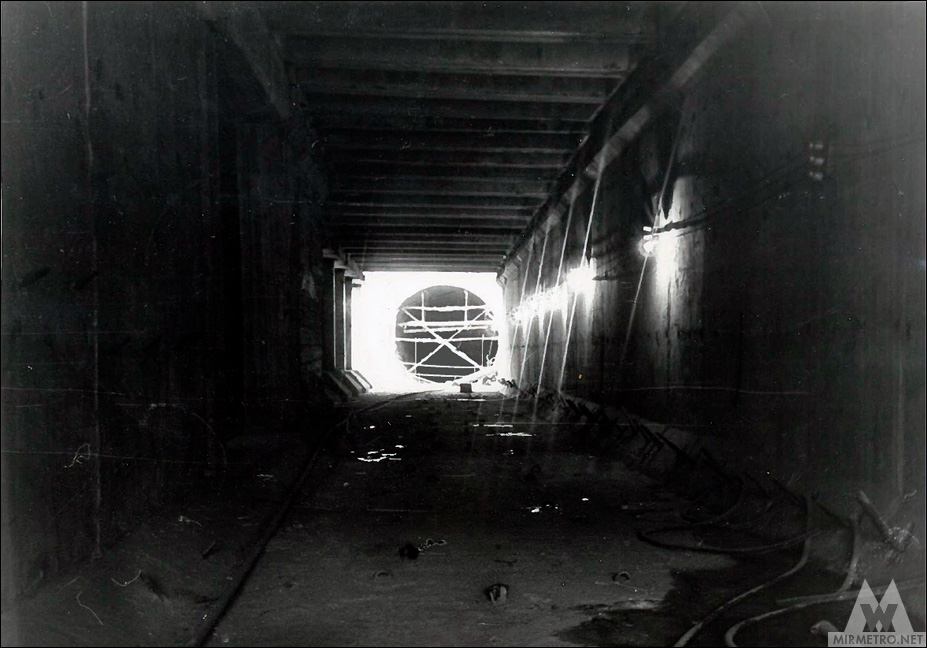
Construction of the station vestibule and staircase.
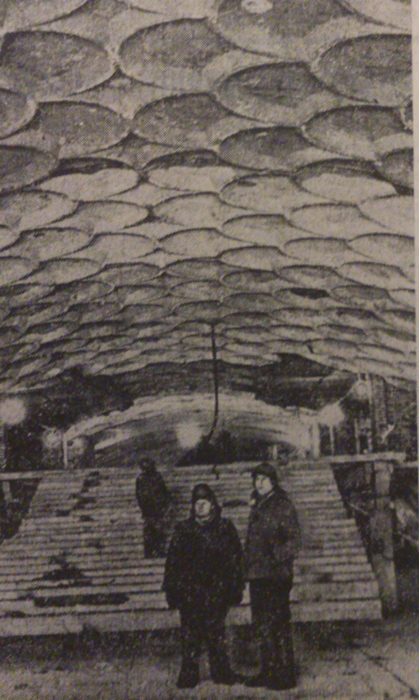
Kyivska station before the track walls were clad. November 1982.
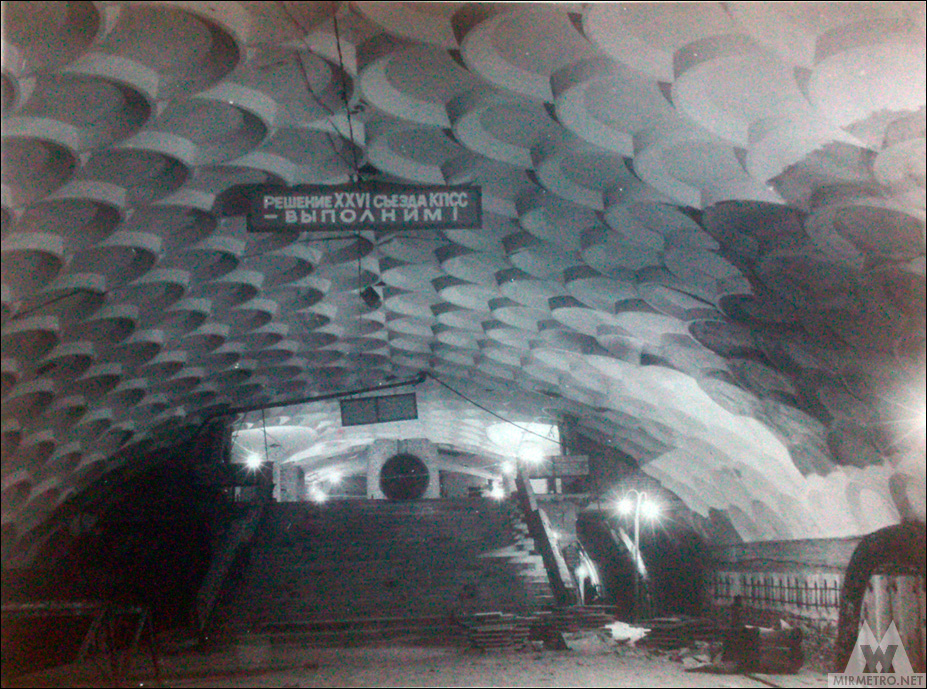
The track walls have now been clad.
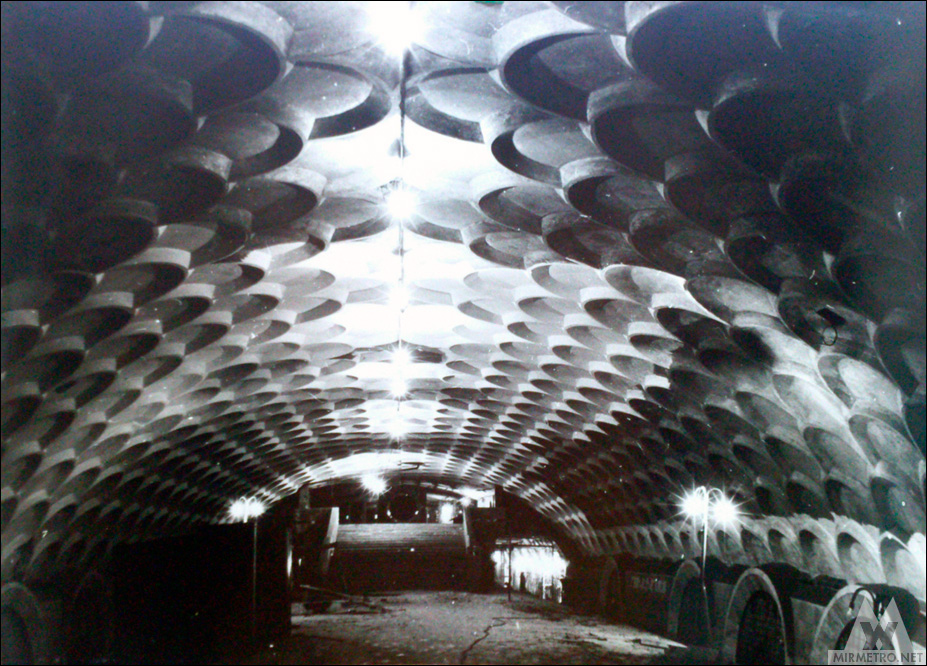
The station one year before opening, while the vault was being whitewashed. The photograph shows the temporary lighting masts used during construction.

The station vestibule before the wall cladding was installed.
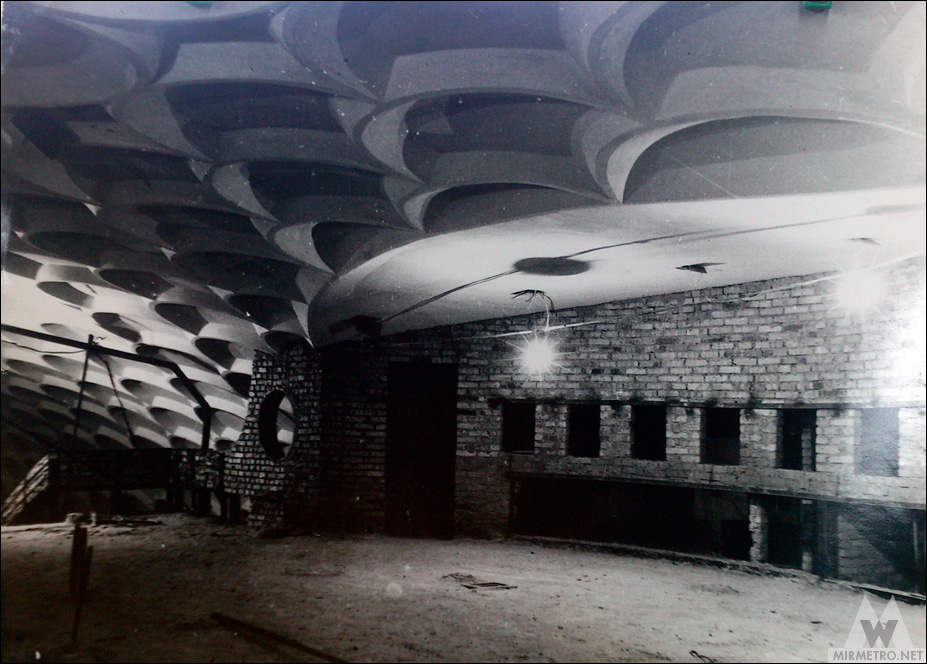
Kyivska station in the last days before opening.
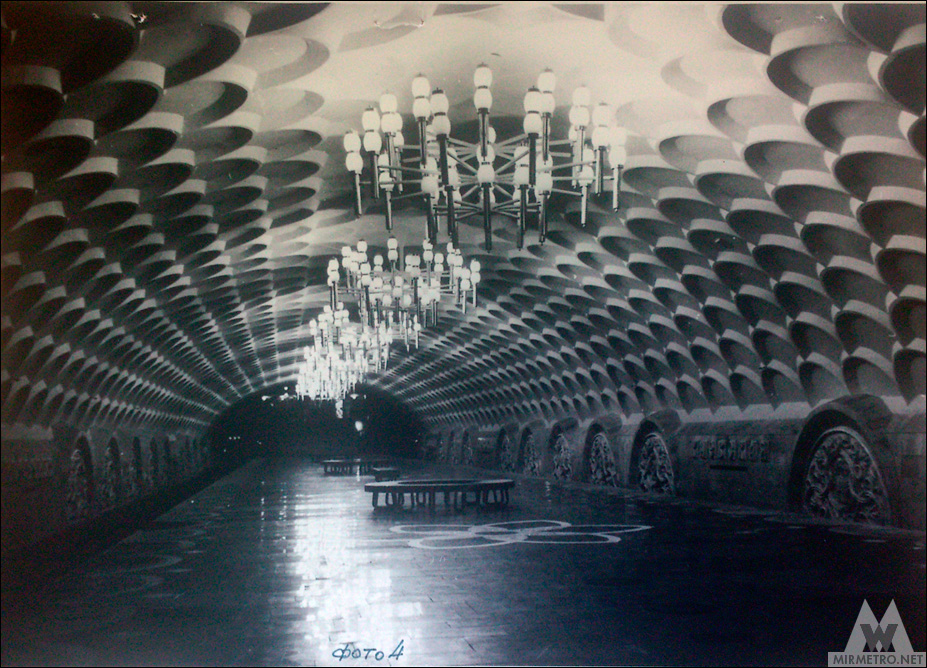
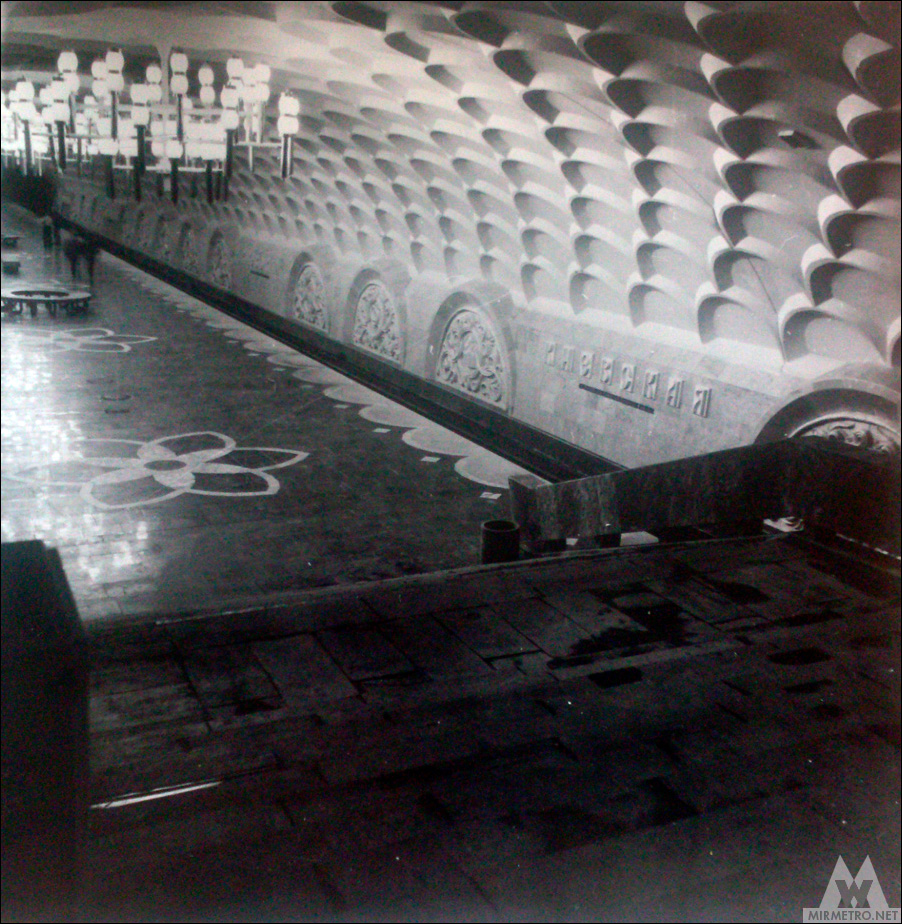
Approved and implemented concept design.
