Maidan Konstitutsii
Opening Date: 23 August 1975
Architects: V. Spivachuk, P. Chechelnitskyi, M. Krasnolobov, Yu. Nikulin
Engineers: P. Bochikashvili, Yu. Kruk, V. Tovalyuk
Artist: D. Sova
Station Type: Deep-level pylon station
English equivalent: Constitution Square
Former Name: Radyanska (“Soviet”), until 20 November 2015
Average daily ridership: 26,900 passengers (2015)
Maidan Konstitutsii was opened on 23 August 1975 as part of the first section of the Kharkiv Metro, which ran from Vulytsia Sverdlova (now Kholodna Hora) to Moskovskyi Prospekt (now Turboatom) and consisted of eight stations. The restrained architecture and clean geometric forms typical of Soviet metro construction in the 1970s characterise the stations of the original line. At the same time, each station was given its own distinctive character, thanks in large part to the work of the chief architect of the Kharkiv Metro, Volodymyr Spivachuk. The opening of the station coincided with the anniversary of the liberation of Kharkiv during the Second World War.
The station was built to provide metro access to Kharkiv’s historic city centre. It is located beneath Constitution Square, at the intersection of several of the city’s main thoroughfares.
Maidan Konstytutsii provides an interchange with Istorychnyi Muzei station on the Saltivska Line. Because it is situated in the very heart of the city and forms part of one of the metro’s busiest interchange complexes, the station remains busy throughout the day, with crowded platforms being common not only during rush hour but also during much of the morning and evening. A service connecting track linking the Kholodnohirsko-Zavodska and Saltivska lines branches off from the right-hand tunnel beyond the station.
Description
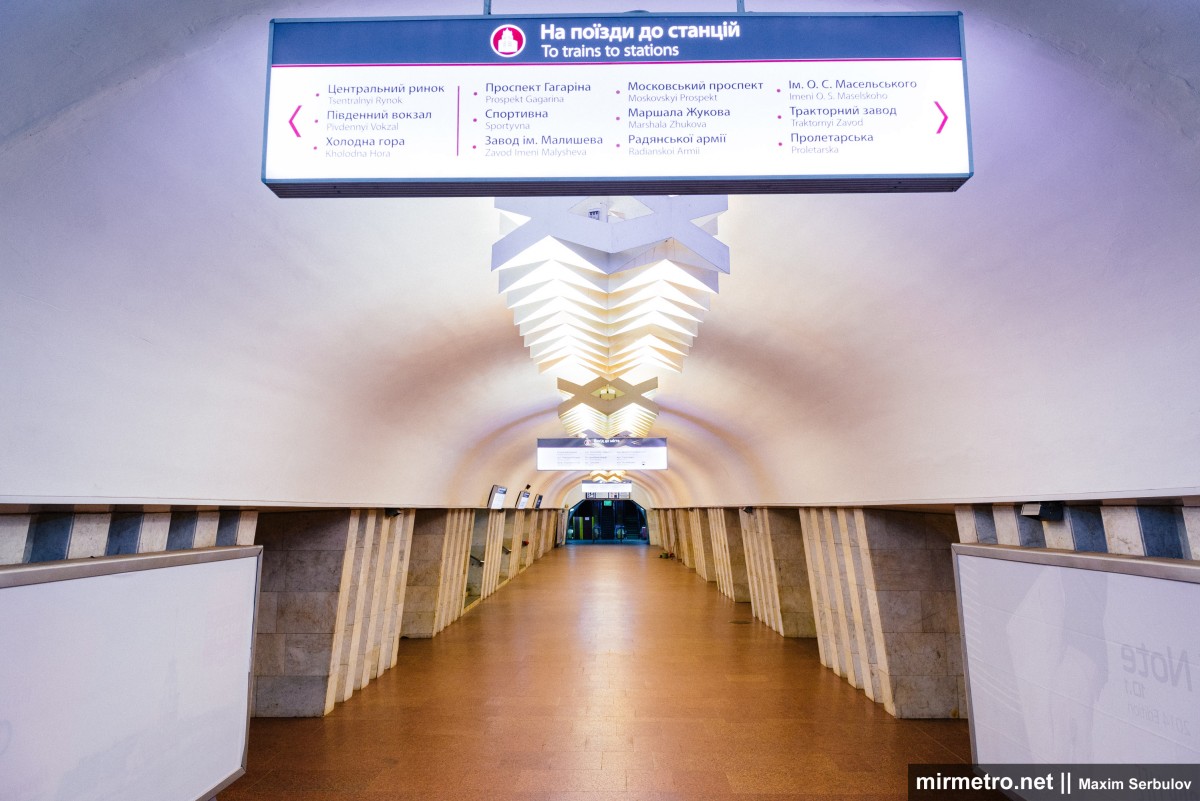
Maidan Konstytutsii is a standard deep-level pylon station. This design was chosen because of the challenging geological conditions and the need to accommodate a future interchange at this location. The station’s architectural concept reflects the history, architecture, and urban character of Constitution Square. The overall design is restrained and elegant, using light colours and simple forms. The station’s most distinctive decorative feature is its original lighting.
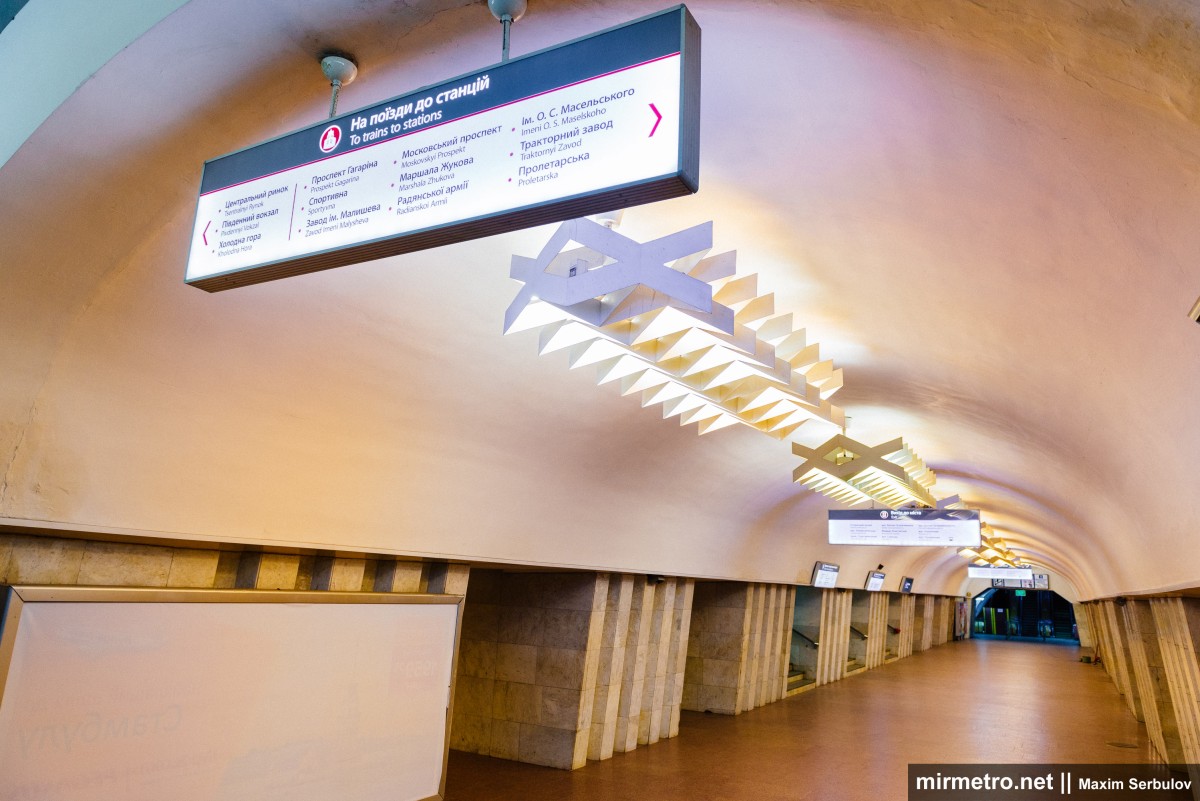
The pylons have the traditional tapered shape typical of Soviet deep-level stations and are decorated with symmetrical vertical recesses. Both the pylons and the walls of the central and platform halls are clad in white marble. The openings between the pylons are the same width as the pylons themselves, creating a balanced and harmonious appearance.
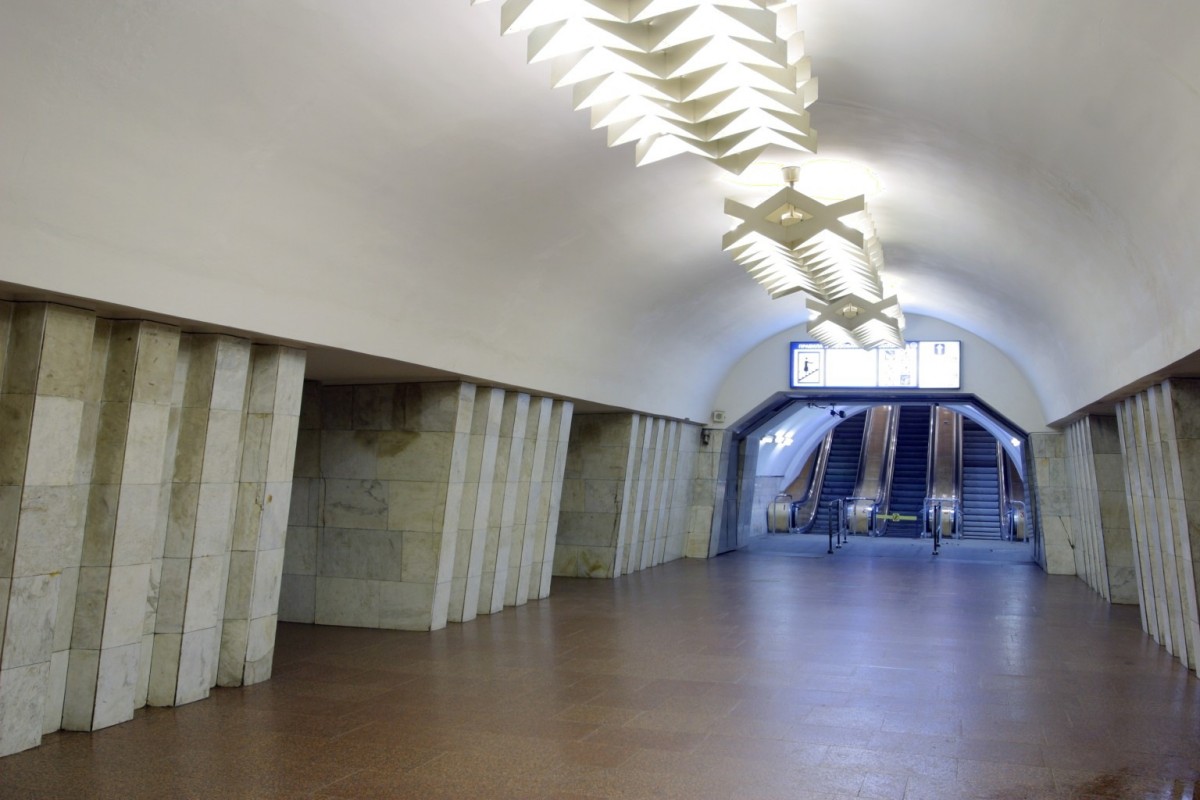
The station floor is paved with polished red granite slabs.

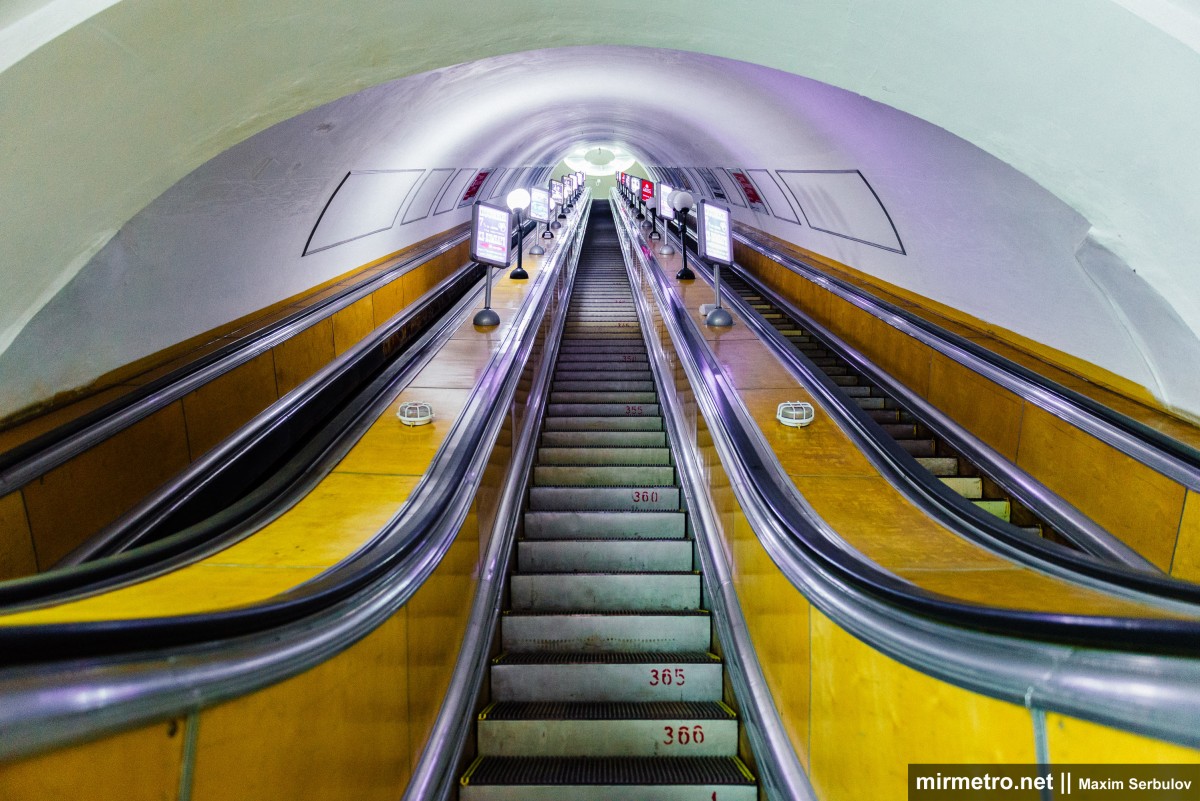
The platform is connected to the station vestibule by a three-escalator bank. A design miscalculation became apparent after the station opened: only three escalators were installed instead of the four that would have been required to handle passenger demand. Before the Saltivska Line opened, the station vestibule was chronically overcrowded. Even outside rush hours, passengers often had to spend up to ten minutes waiting in the queues before reaching the escalators.
The first pedestrian passage connecting Maidan Konstytutsii with Istorychnyi Muzei station opened simultaneously with the Saltivska Line. It remains one of the busiest pedestrian passages in the Kharkiv Metro. After almost every train arrival, heavy crowds form here.

In 2016-2017, the transfer hub was reconstructed. The walls, stairs, and railings were clad in gray granite, with a metal grate added.

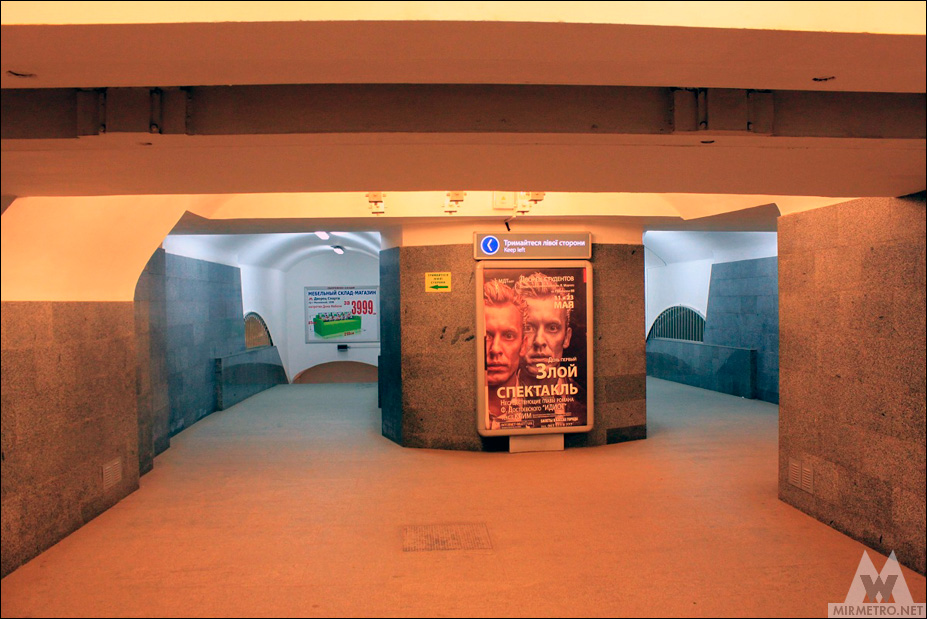
The renovated passage was finished in light grey granite.
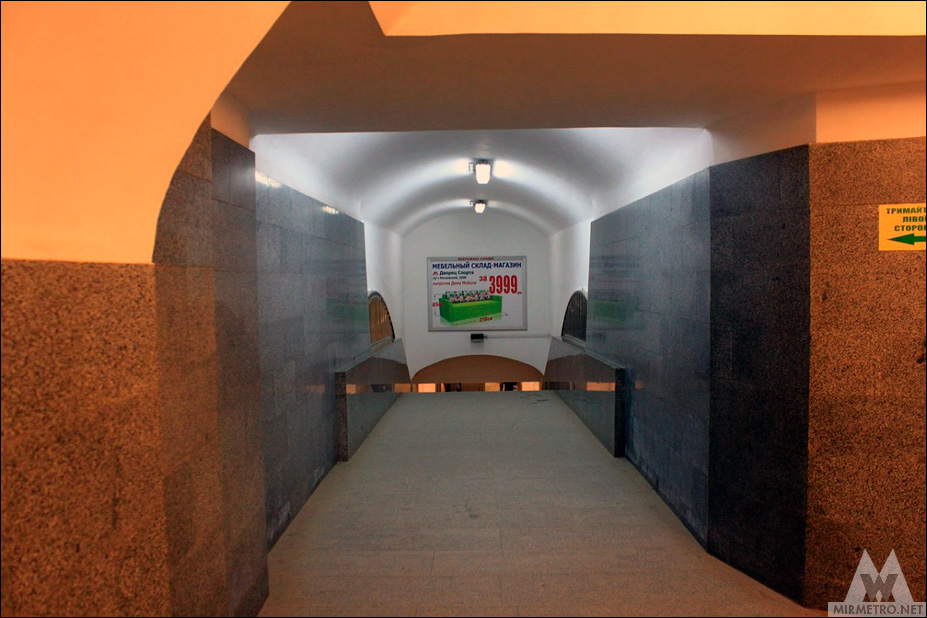
The passageway before the 2016–2017 renovation.
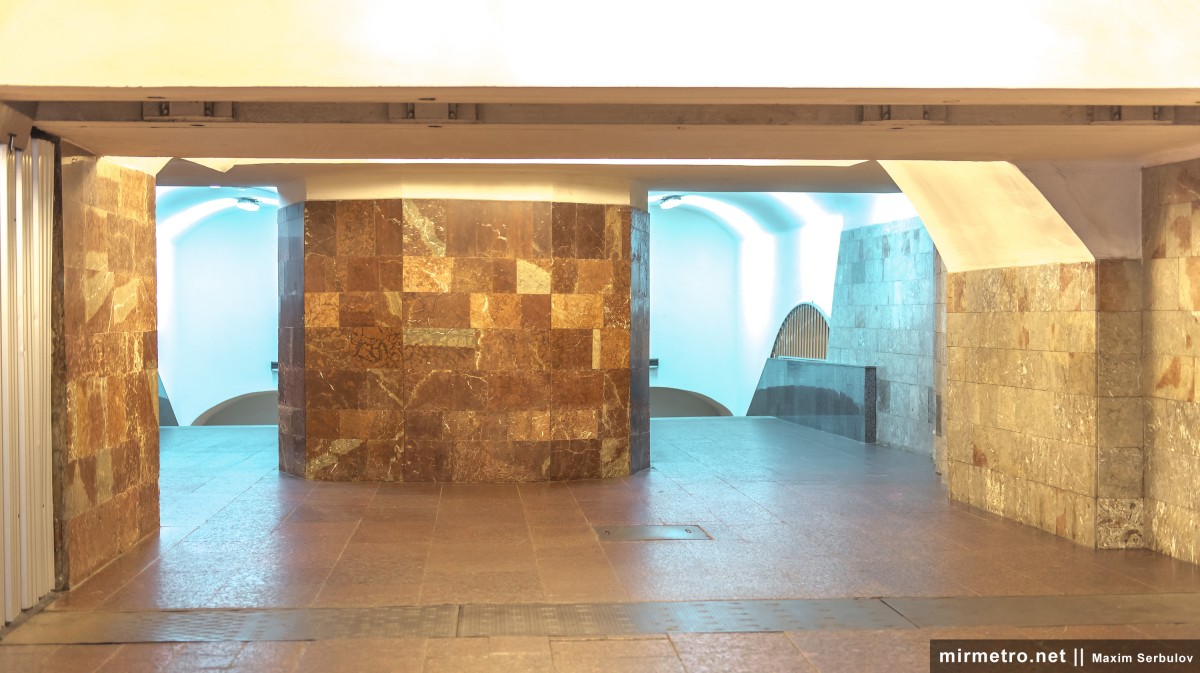
A second passage linking the two stations was opened on 31 December 1983, shortly before the Saltivska Line entered service. It was built to relieve pressure on the escalators, which had proved incapable of handling the growing passenger flow.

A commemorative plaque marking the opening of the second metro line was once installed in one corner of the passage. It was removed in 2023.
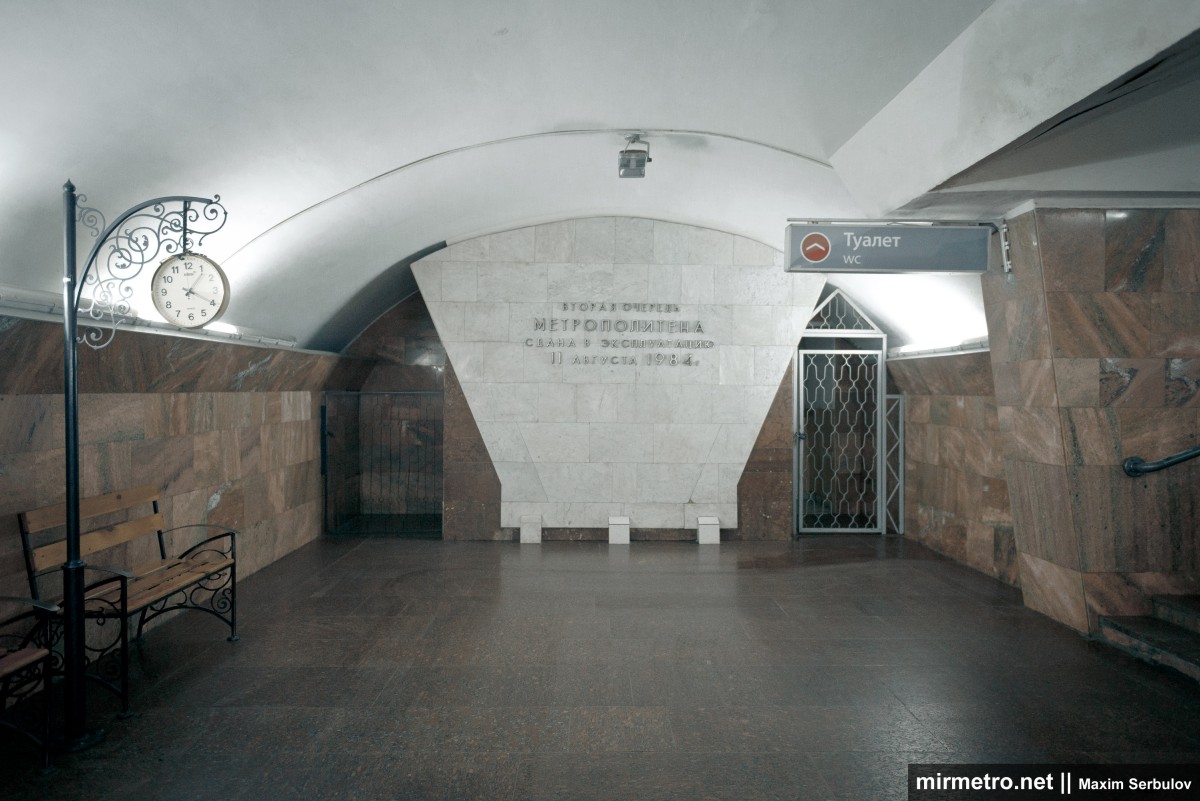
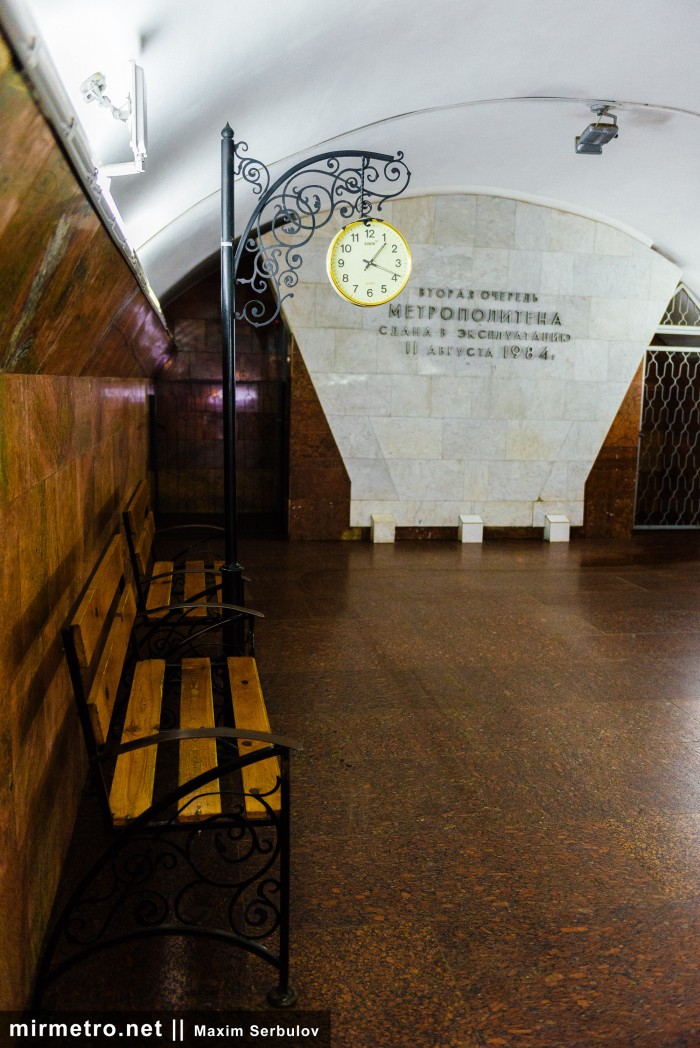
From May to June 2023, the passage hosted an exhibition dedicated to the city’s heroes.

The track walls of Maidan Konstitutsii station are faced with light yellow marble. A gray marble stripe is applied above. The station plinth is faced with brown marble. The platform edges are lined with gray granite.

Unfortunately, the abundance of advertising added in recent years has done little to enhance the station’s appearance.

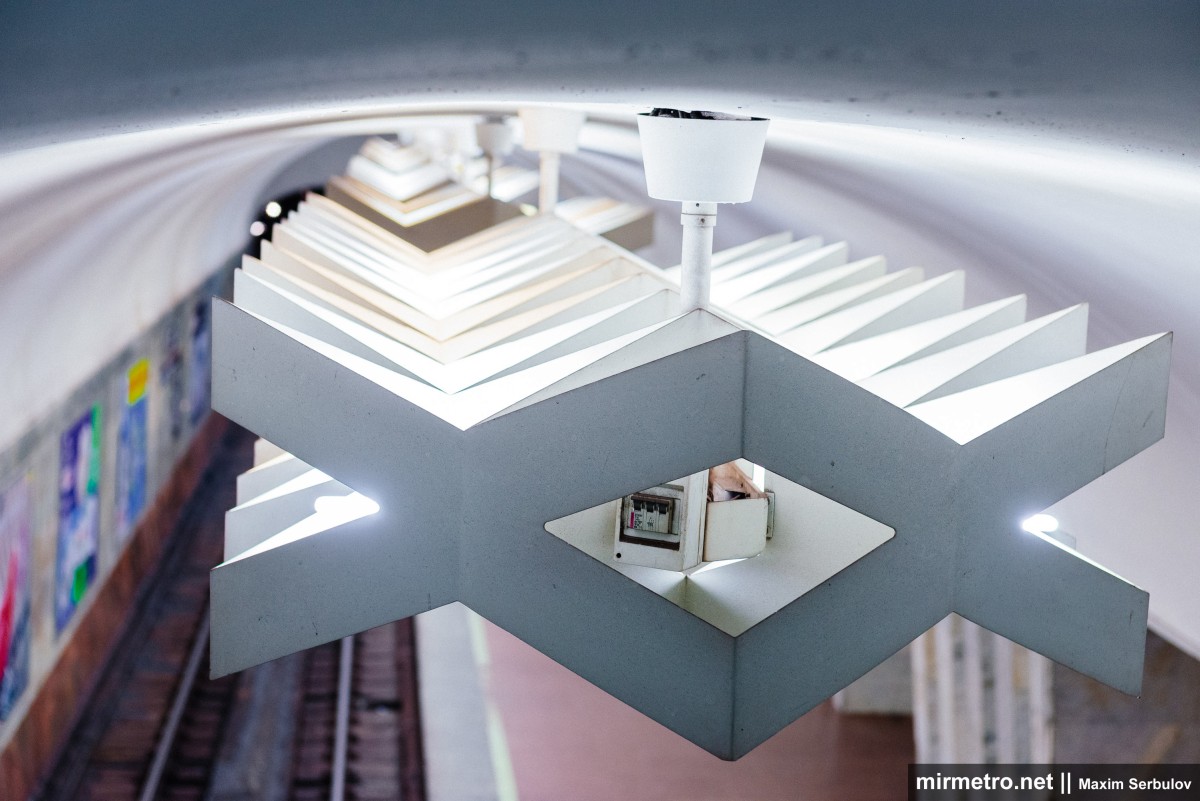
Similar light fixtures illuminate the platform halls. Each fixture consists of aluminium profiles arranged in a cross-shaped pattern, creating a composition of interlocking diamond shapes.
View of the passage to Istorychnyi Muzei station from the platform.
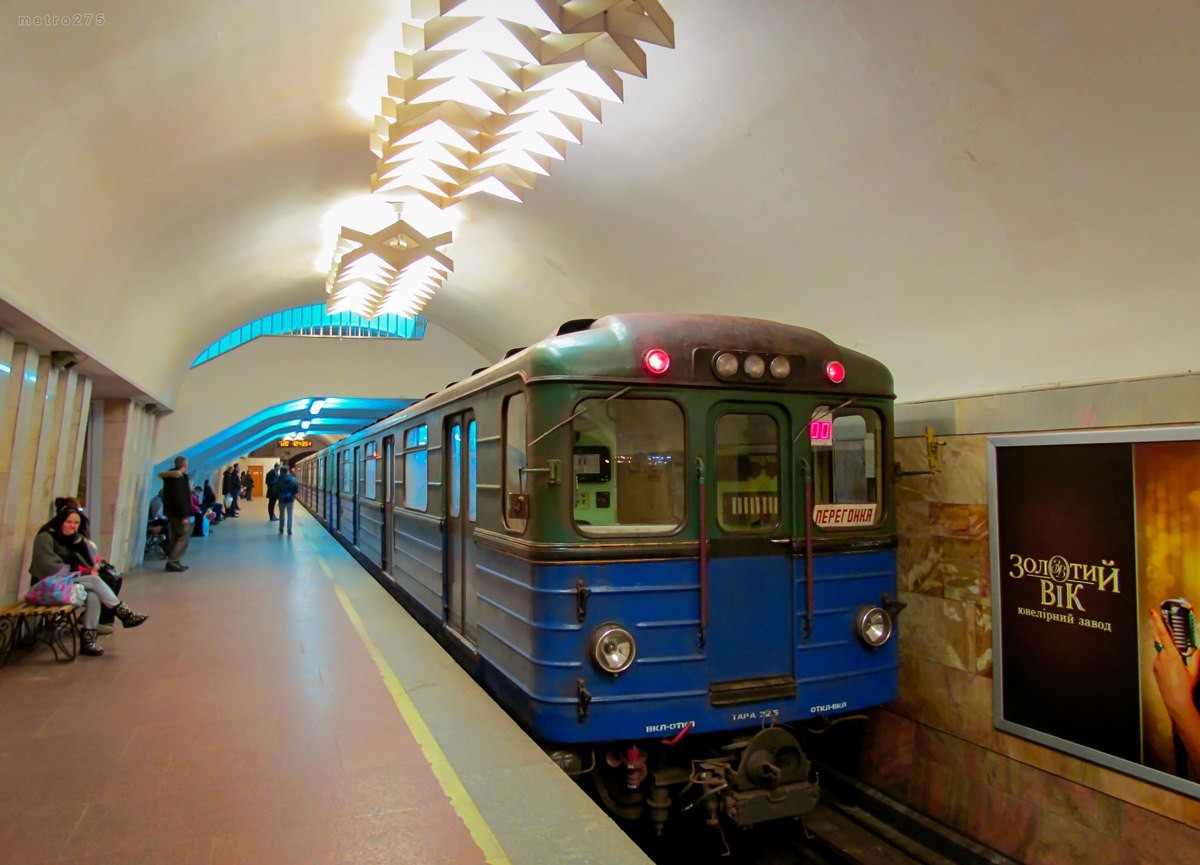
The station takes its name from Constitution Square, near which it is located. It is the oldest square in Kharkiv, dating back to 1659.

For comparison, this photograph shows the station in the 2000s. The track walls still have no advertising and bear the old name. You can also see the railings on the transfer hub before the reconstruction.

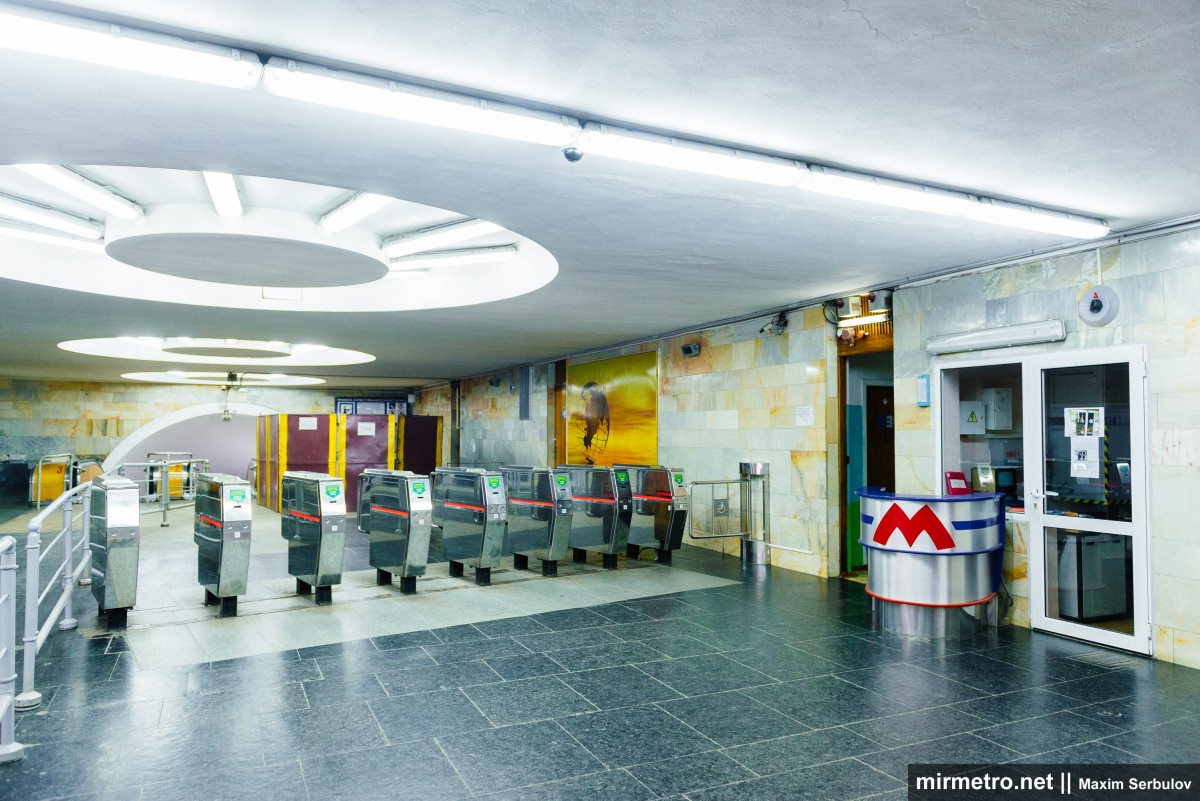
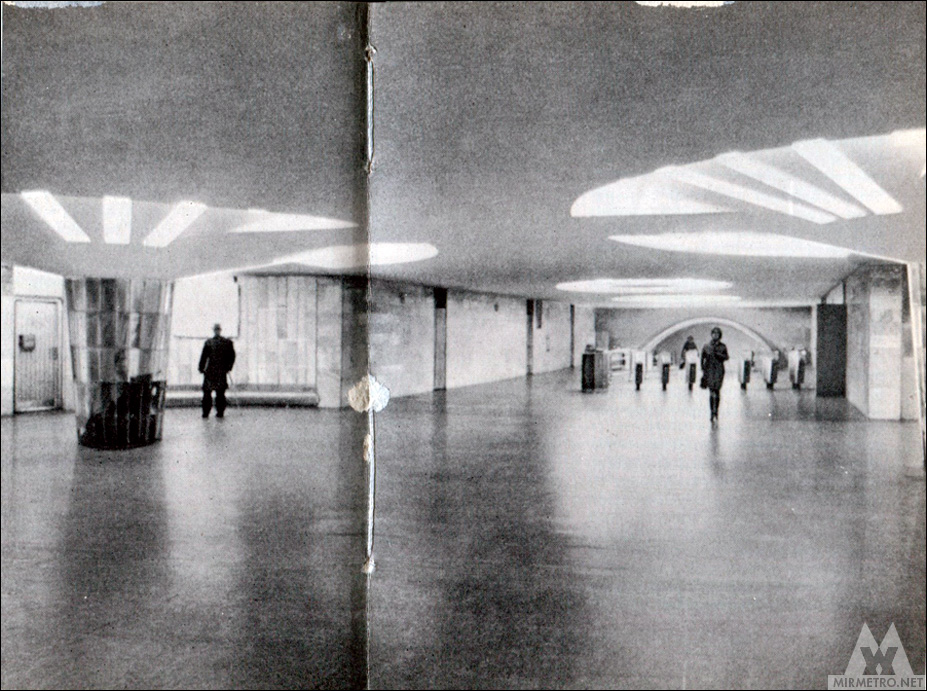
The station vestibule is spacious and was designed to accommodate heavy passenger traffic. It covers an area of approximately 500 square metres. Additional fluorescent lighting is concealed within the circular ceiling recesses above the lamps, radiating outward from the centre.
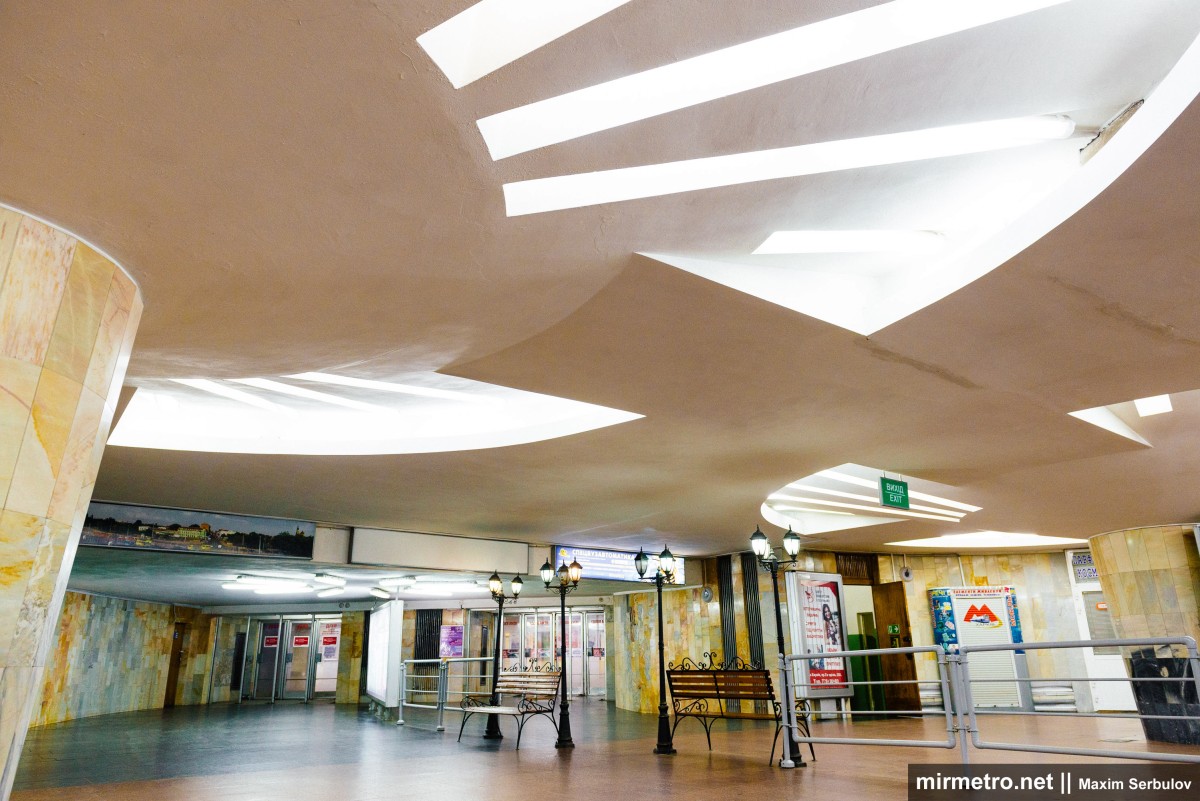
At the top of the lamps and in the round niches of the ceiling, there are fluorescent lamps that radiate out from the center.
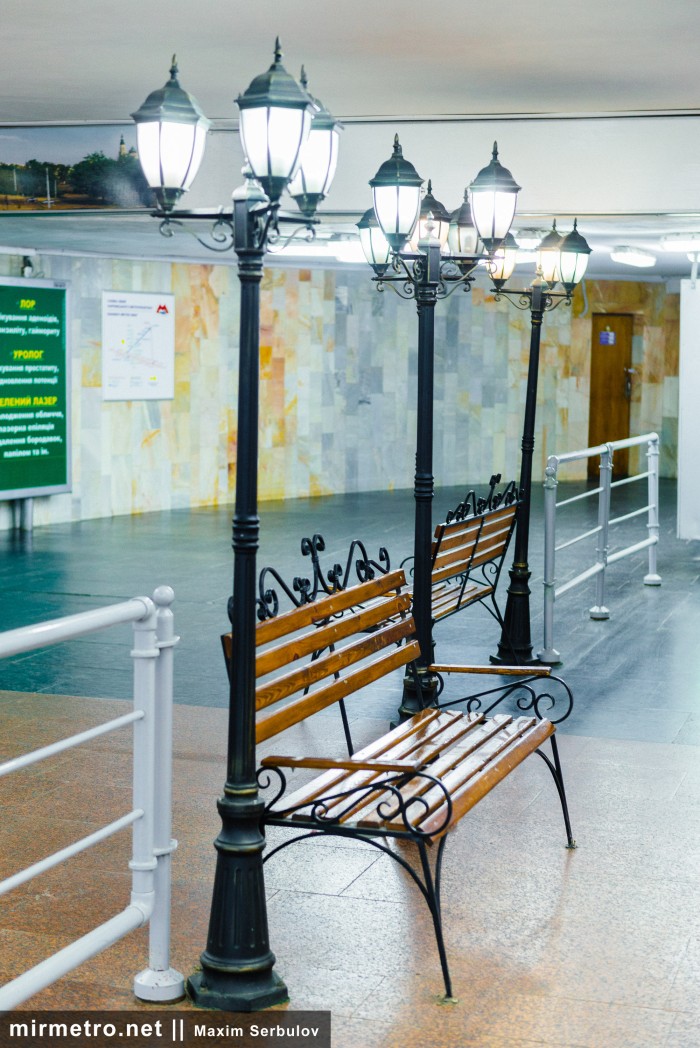
Benches with lantern-style light fixtures have also been installed near the entrance to the vestibule.
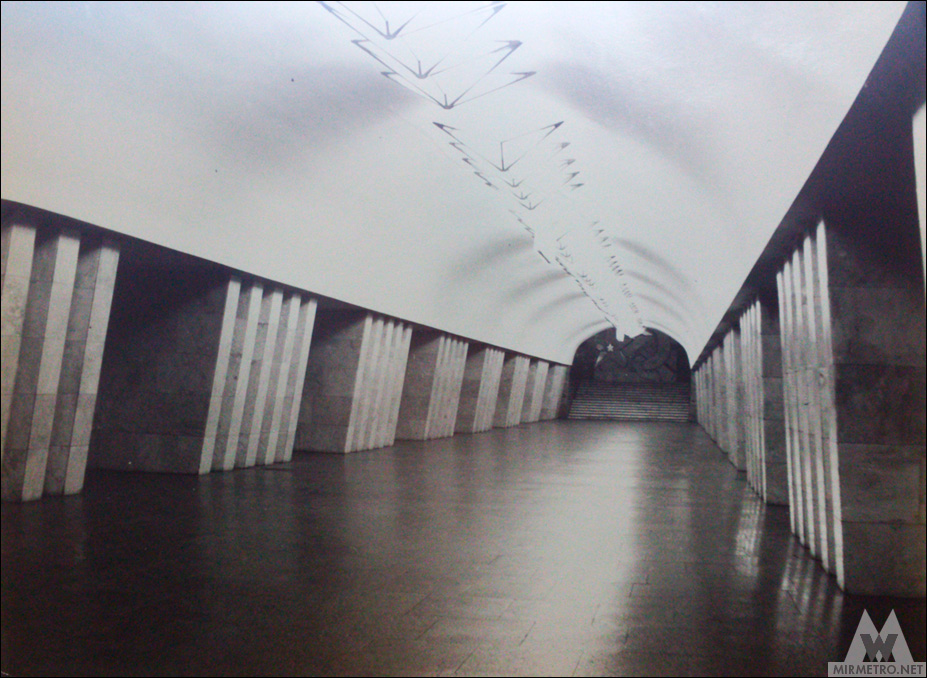
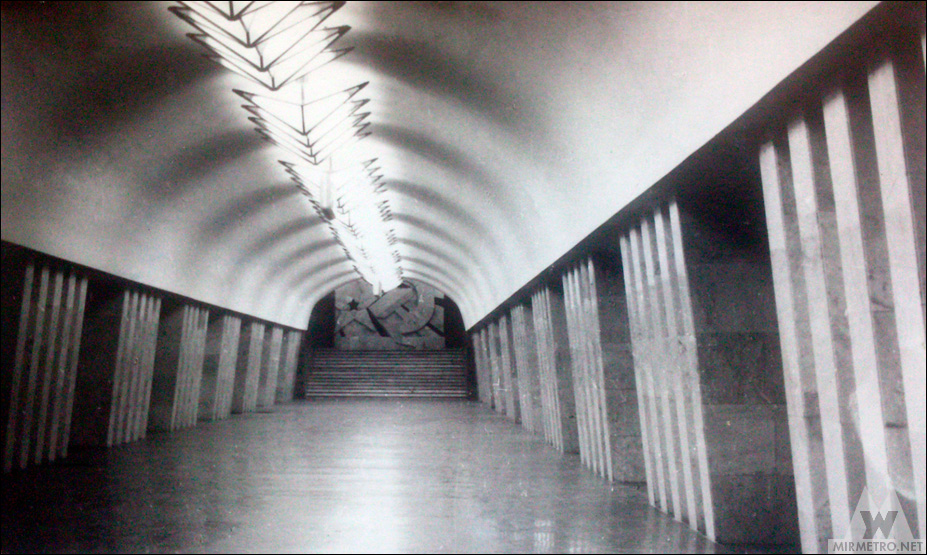
Maidan Konstitutsii station in its first days of operation. Here you can see the first light fixtures, replaced by modern ones in 1987. The original star-shaped fixtures were made of aluminum and glass. They were later replaced because they were extremely difficult to clean from dust and dirt.
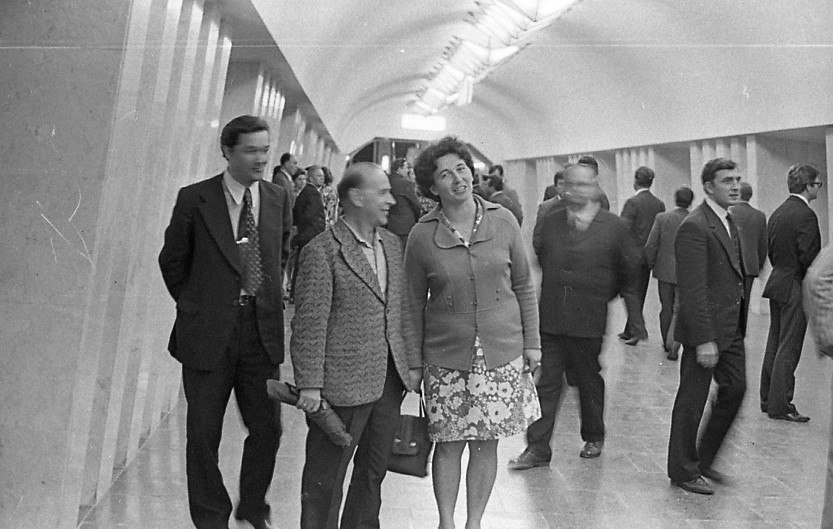
The station welcomes its first passengers. Notice how people are not simply passing through—they pause to admire one of Kharkiv’s newly built underground palaces.
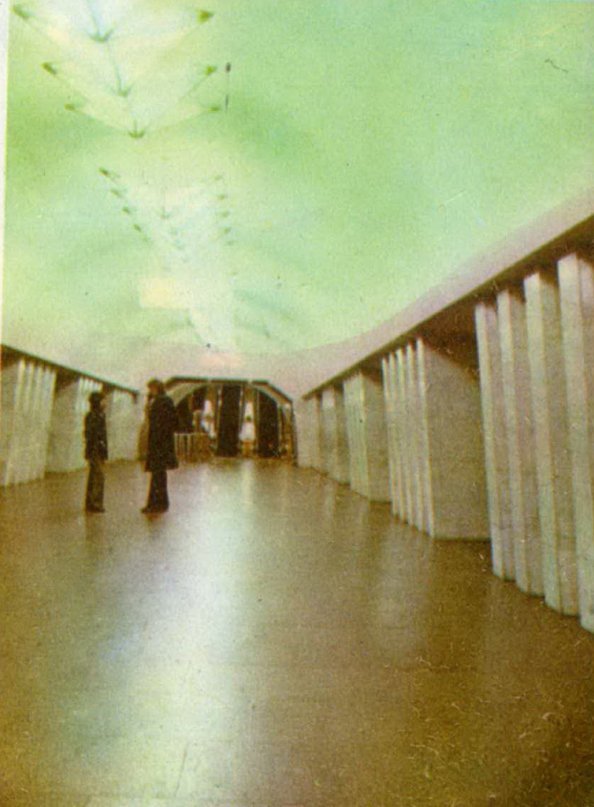
The station in the first years of operation.
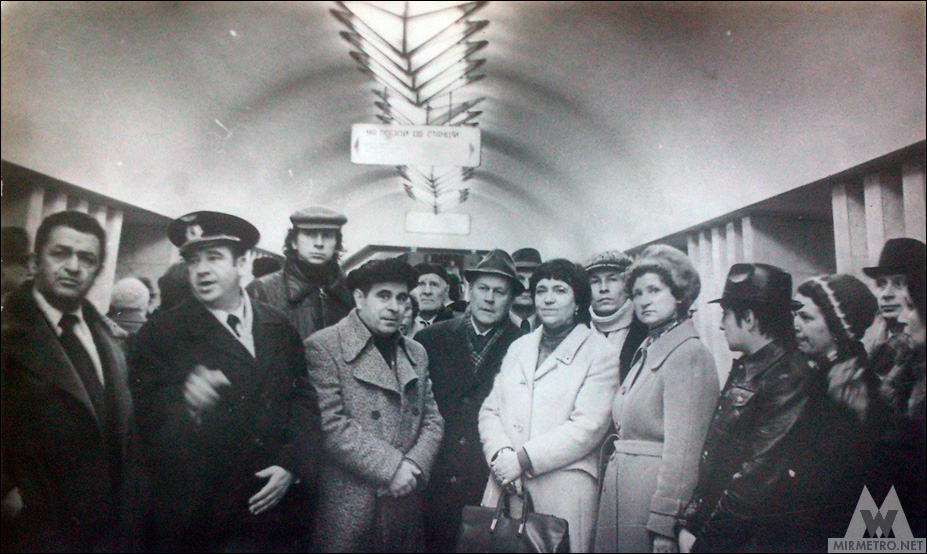
In November 1978, a scientific and practical conference on “Problems of Urban Development and the Metro” was held at Radyanska station. Chief Architect Volodymyr Spivachuk is third from the left.
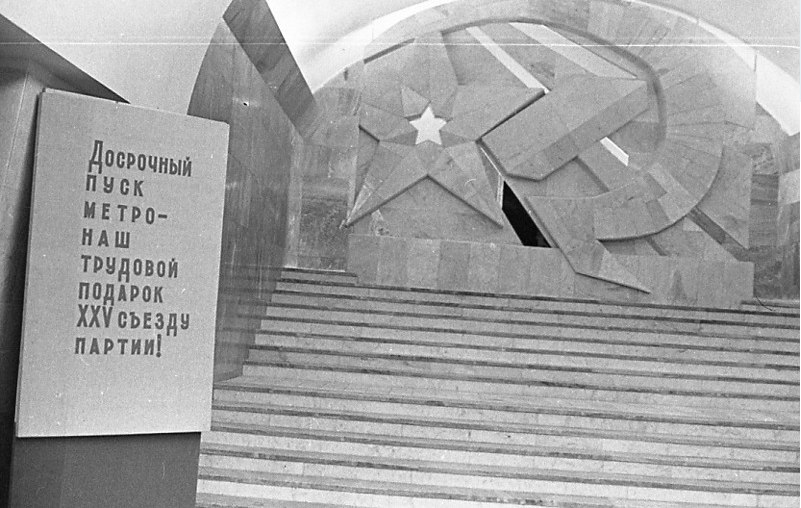
Before the second passage to Istorychnyi Muzei was opened, the end wall of the central hall featured a large marble composition depicting the hammer and sickle.
This is what the station’s vestibule looked like immediately after opening.
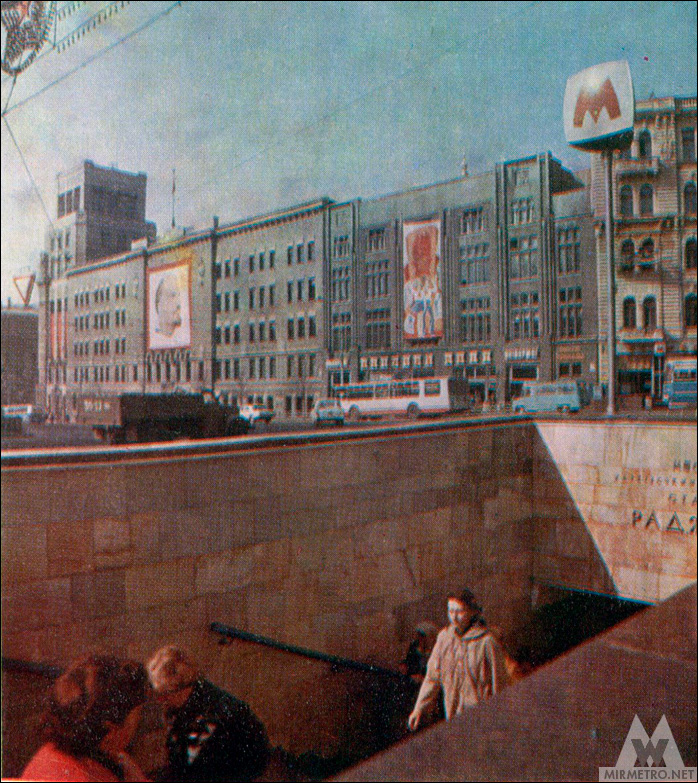
The underground pedestrian passage leading to the station vestibule had been built in 1965—ten years before the metro opened. This photograph shows one of the station entrances during its first days of operation.
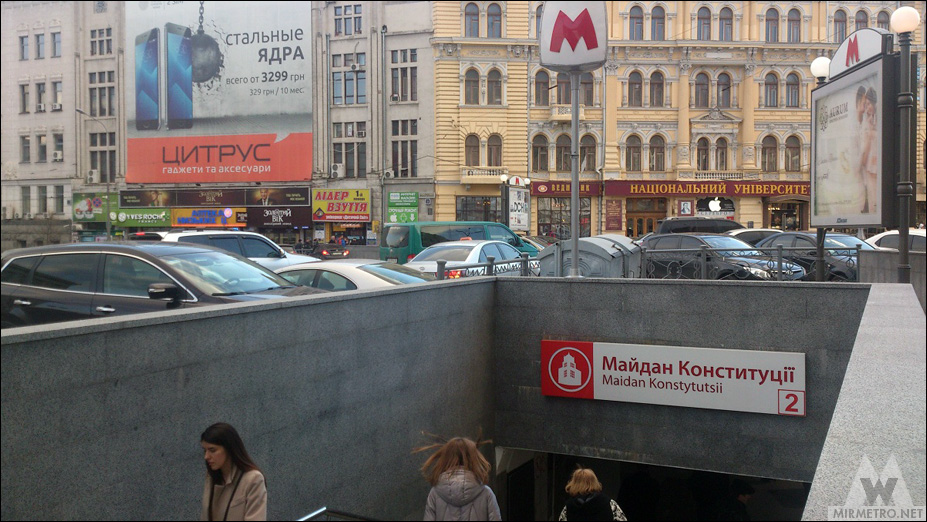
The same place in 2016.
Construction and projects
According to the original design, Radyanska station was to be located beneath Rosa Luxemburg Square (now Pavlivska Square), near the Central Department Store. However, preliminary geological surveys revealed unfavourable ground conditions at that location. To simplify construction, the route of the line was altered, and the station was relocated beneath Tevelev Square, which soon after the metro opened was renamed Soviet Ukraine Square. In many ways, the construction of the station transformed the square into the city’s new central focal point.
The station itself was constructed using the mined method, following the standard design for deep-level pylon stations. The vestibule was built by the cut-and-cover method.
As elsewhere on the first section of the metro, construction was complicated by waterlogged and unstable ground. Initially, engineers expected that artificial ground freezing, similar to that used at Pivdennyi Vokzal station, would be required here as well. Fortunately, an alternative solution was found. The builders excavated a horizontal adit, descended to the aquifer, and then returned to the surface through a pressure shaft. Excavated soil was transported along the adit in mine cars and hoisted through the main shaft. This ingenious solution eliminated the need for artificial ground freezing while allowing traffic on the surface to continue uninterrupted.
All tunnels in the vicinity of Radyanska station were driven using the caisson method. Cofferdams were constructed inside the completed tunnel sections, compressed air was introduced to hold back groundwater, and tunnelling then continued using a shield. The most difficult section was a 45-metre stretch beneath the underground channel of the Lopan River. A face dewatering system also played an important role during construction. It was from the shaft near Radyanska station that the first tunnel breakthrough of the Kharkiv Metro took place.
Construction was further complicated by vibrations from tram traffic on the surface, which constantly affected the stability of the surrounding soil.
The skill of the Kharkiv metro builders is illustrated by another remarkable fact. When engineers encountered similar geological conditions during the planning of the Warsaw Metro, construction was delayed for many years. After learning about the Kharkiv team’s success, Polish engineers visited the site to study the techniques that had been used here and later applied them in Warsaw.
When the tunnels between Radyanska and Prospekt Gagarina stations were already being constructed, a sudden rise in groundwater levels occurred in this area, resulting in water-saturated fine sand breaking through the joints of the reinforced-concrete lining. The problem was resolved by chemical ground stabilization using special polymer compounds.
During construction of the station platform, a membrane-free waterproofing system was used. The process consisted of surface preparation followed by the mechanical application of waterproofing compounds, including a primer and polymer coating. Radyanska station also became the first in the Kharkiv Metro to use waterproof concrete containing rapid-setting expansive cement.
Beginning with the concrete pouring stage, students from Kharkiv’s universities and technical colleges actively participated in the construction of the metro. Interestingly, they came not only from engineering disciplines—for example, students from the Kharkiv Medical Institute also worked at the Radyanska station construction site.
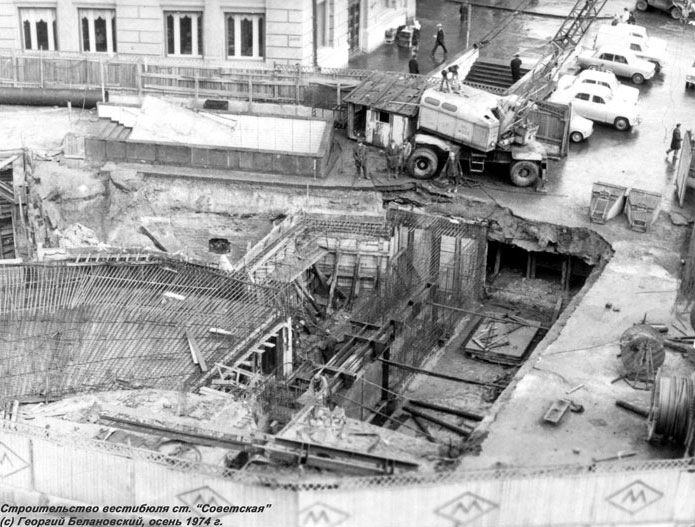
Construction of the station vestibule excavation pit, autumn 1974.
The construction shaft was sunk at the intersection with Bursatskyi Descent.

The excavation pit for the station vestibule and underground pedestrian passages.

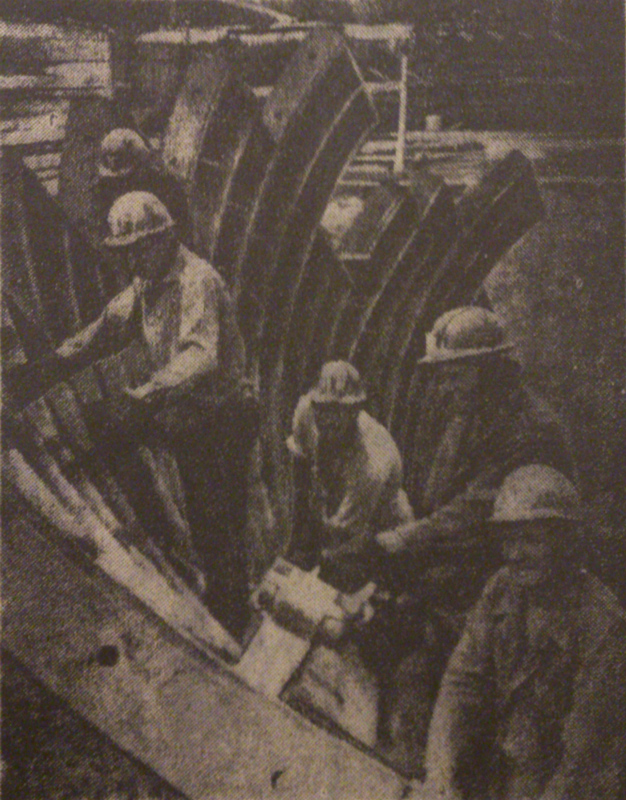
Construction of the escalator tunnel.

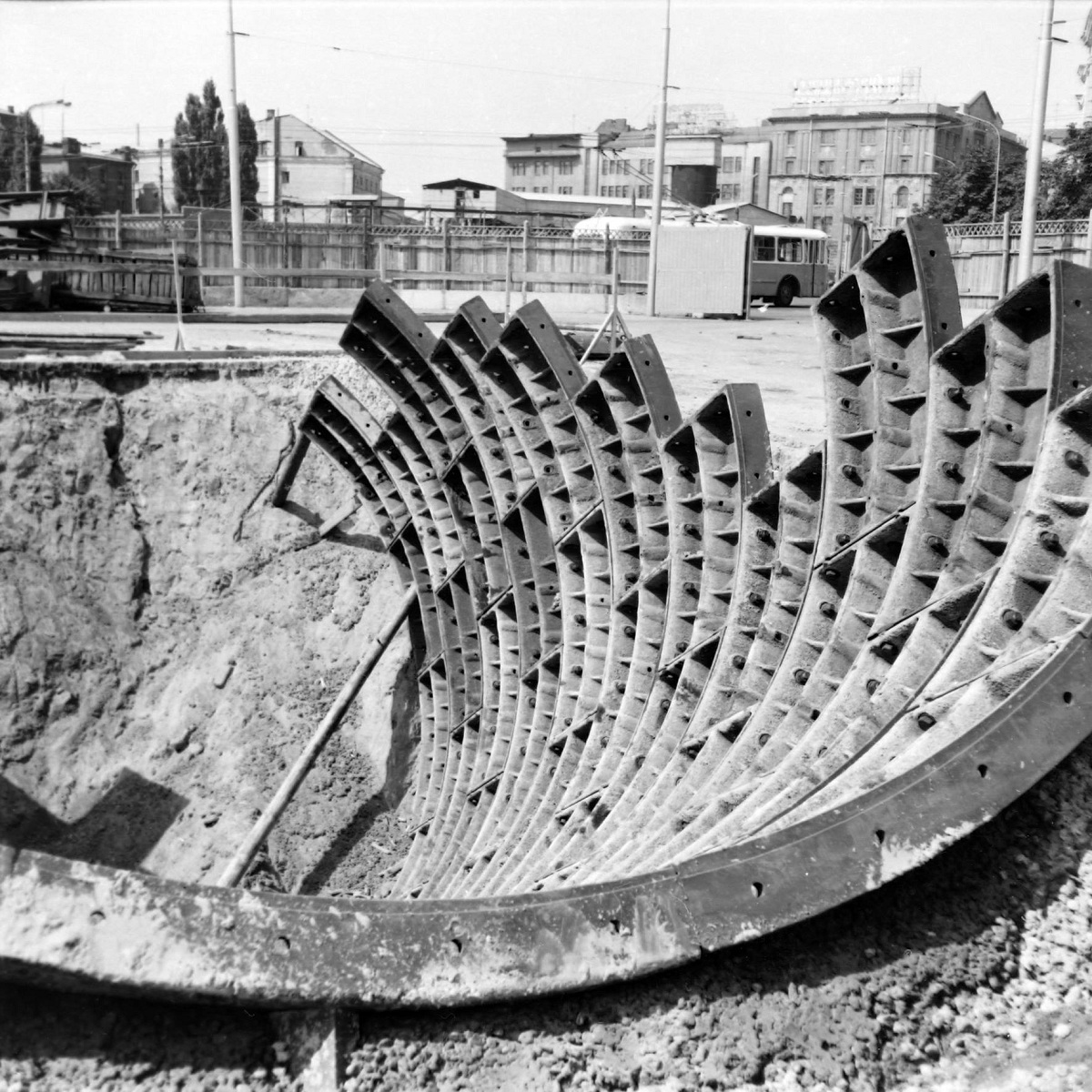
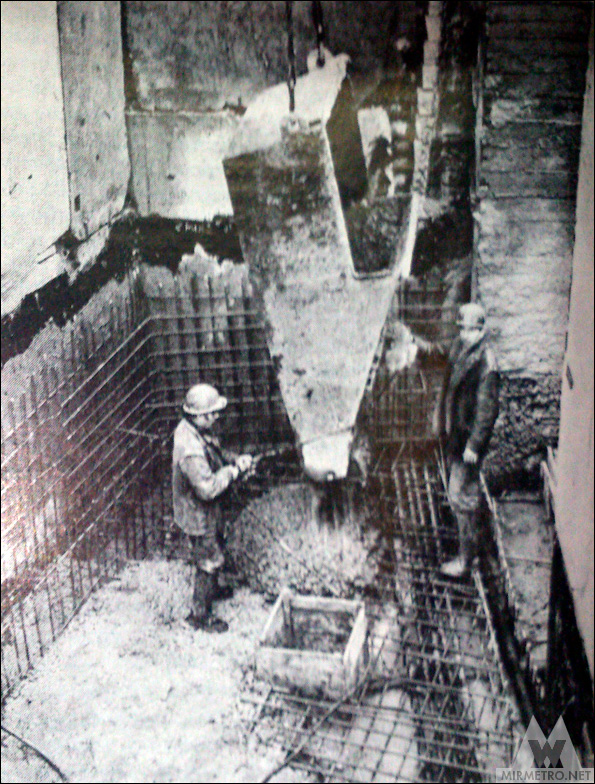
Construction of the vestibule required the excavation of 15,000 cubic metres of soil and the placement of approximately 2,000 cubic metres of reinforced concrete.

Lowering the components of the first tunnel boring shield into the construction shaft for the Radyanska–Prospekt Gagarina section.
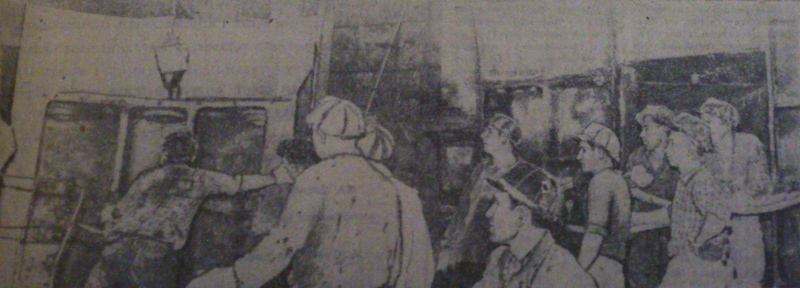
Metro builders gather in the tunnel to mark the installation of the first tunnel boring shield, August 1969.
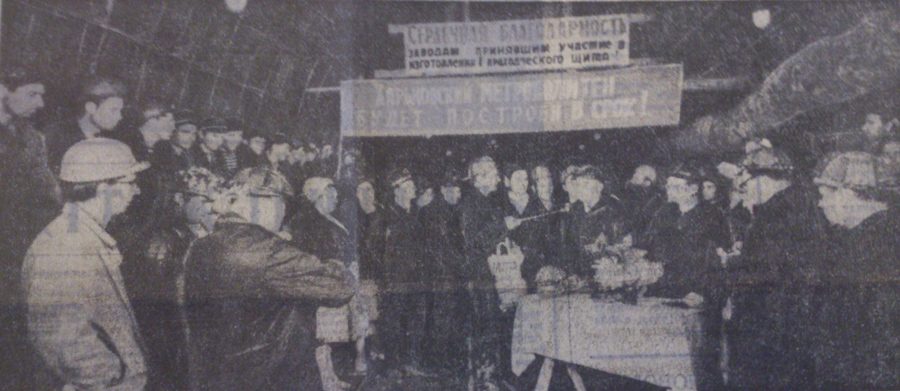
The tunnel boring shield begins operation. Thanks to it, tunnelling progress immediately increased to four metres per day.

Tunnel construction on the Radyanska–Prospekt Gagarina section.
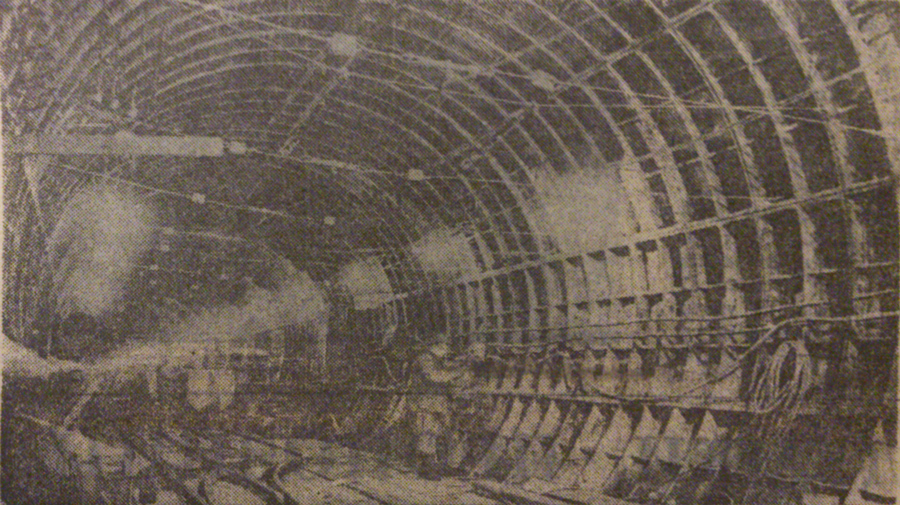
Metro builders before the first tunnel breakthrough.

Concrete pouring for the ventilation duct in the station vestibule.
A work crew receives its shift assignment in a tunnel near Radyanska station, 1971.
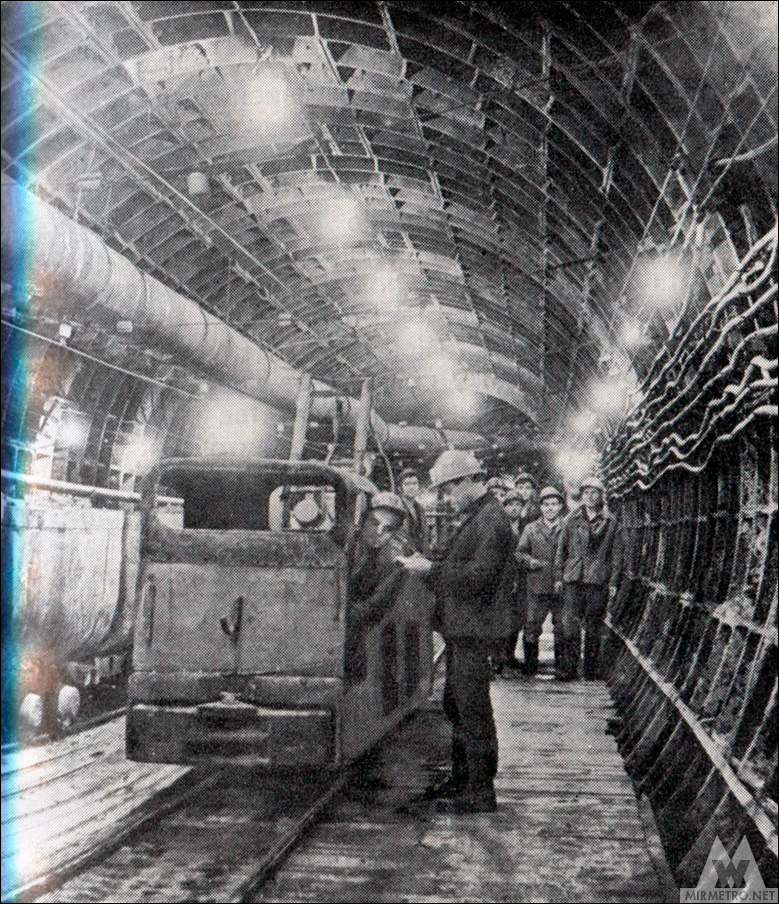
Excavated rock is removed from the tunnel in mine carts. The canvas ventilation duct is visible in the photograph.

Tunnel construction near Radyanska station.
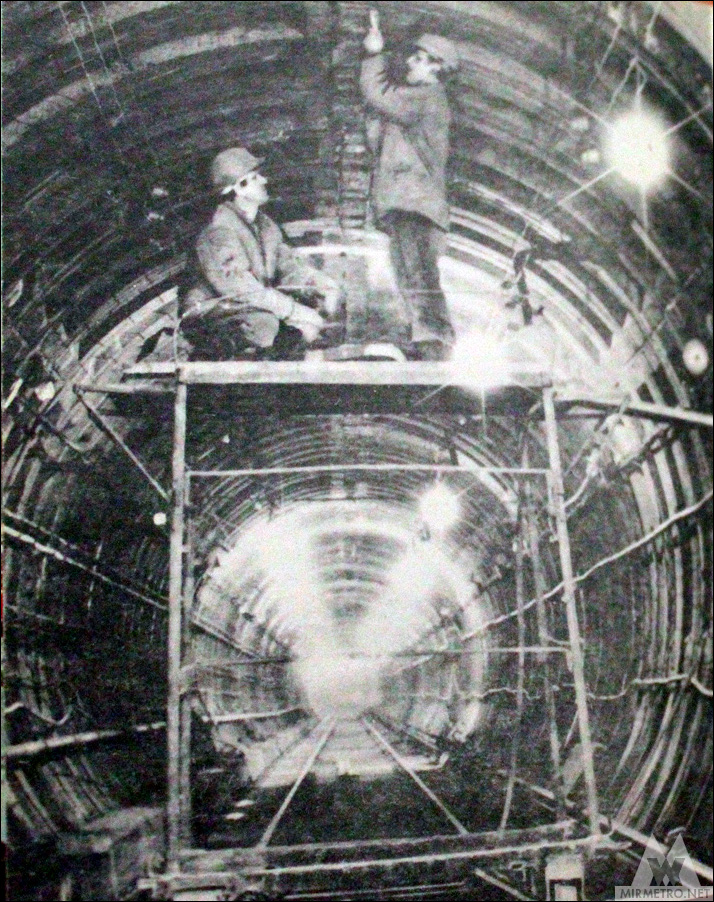
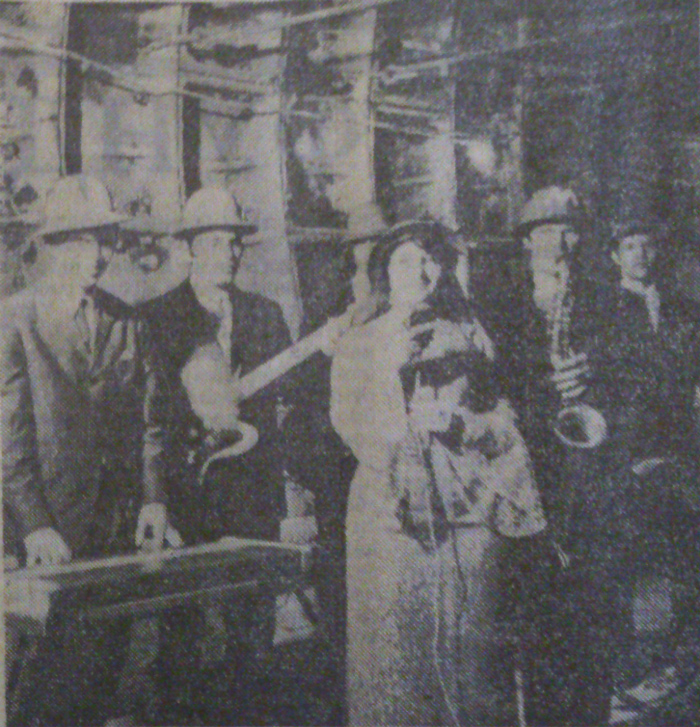
An unusual moment during construction: the Kharkiv Philharmonic’s pop ensemble gave a concert for metro builders deep underground in the future central hall of the station.

Construction of an escalator tunnel.
Mine surveyors determine the alignment of the future escalator tunnel.
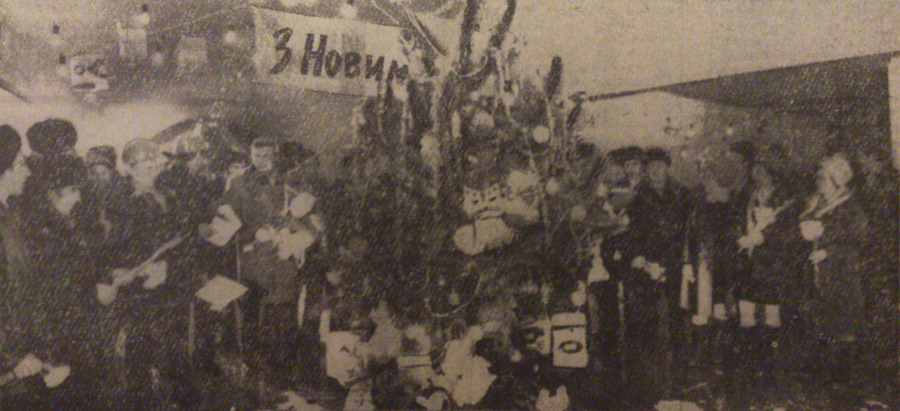
Metro builders celebrate the arrival of 1975 around a New Year’s tree in the future central hall of Radyanska station.
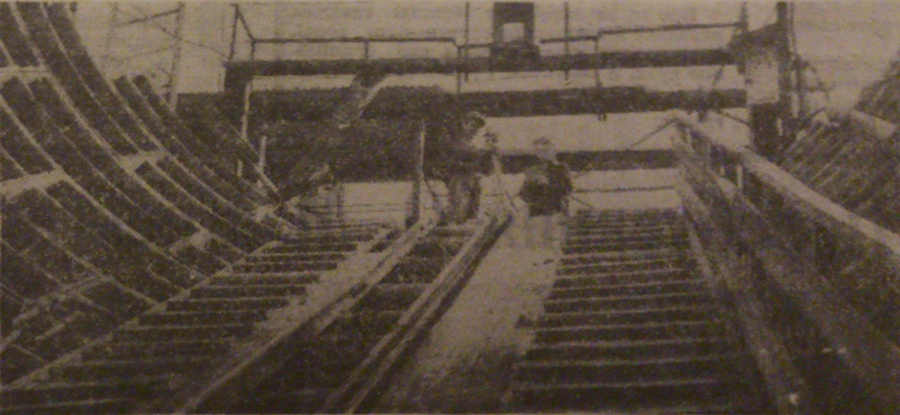
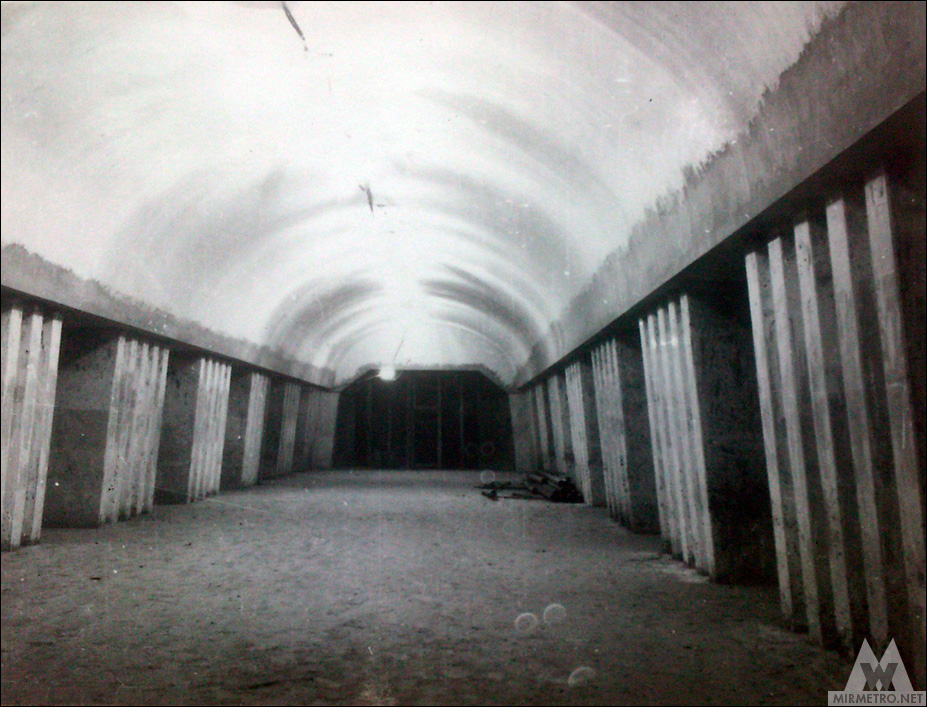
The central hall six months before the station opened.
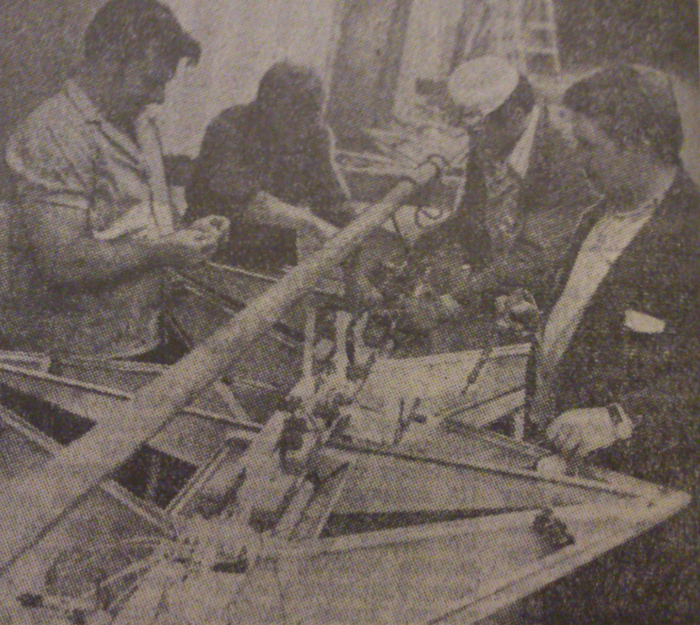
Assembling one of the station’s light fixtures before installation.
The station in the final days before opening.