Akademika Pavlova
Opening date: 24 October 1986
Architects: V. Spivachuk, O. Denisenko, P. Chechelnytskyi
Engineers: P. Pashkov, R. Denisyuk, L. Koba
Artists: M. Krylov, I. Yastrebov
Station type: Shallow single-vault
English equivalent: Academician Pavlov
Average daily ridership: 10,400 passengers (2015)
The station opened on 24 October 1986 as part of the second section of the Kharkiv Metro’s second line, running from Barabashova (now Akademika Barabashova) to Heroiv Pratsi (now Saltivska) and consisting of three stations. With the opening of this section, Saltivka, the city’s largest residential district, received a fast and convenient transport connection with the rest of Kharkiv, leading to a significant increase in metro ridership.
Description
Akademika Pavlova station is a shallow single-vault station built to a modified version of the standard Kharkiv single-vault design.

The station’s architectural concept is dedicated to science, particularly the fields to which the great physiologist Ivan Pavlov devoted his life.
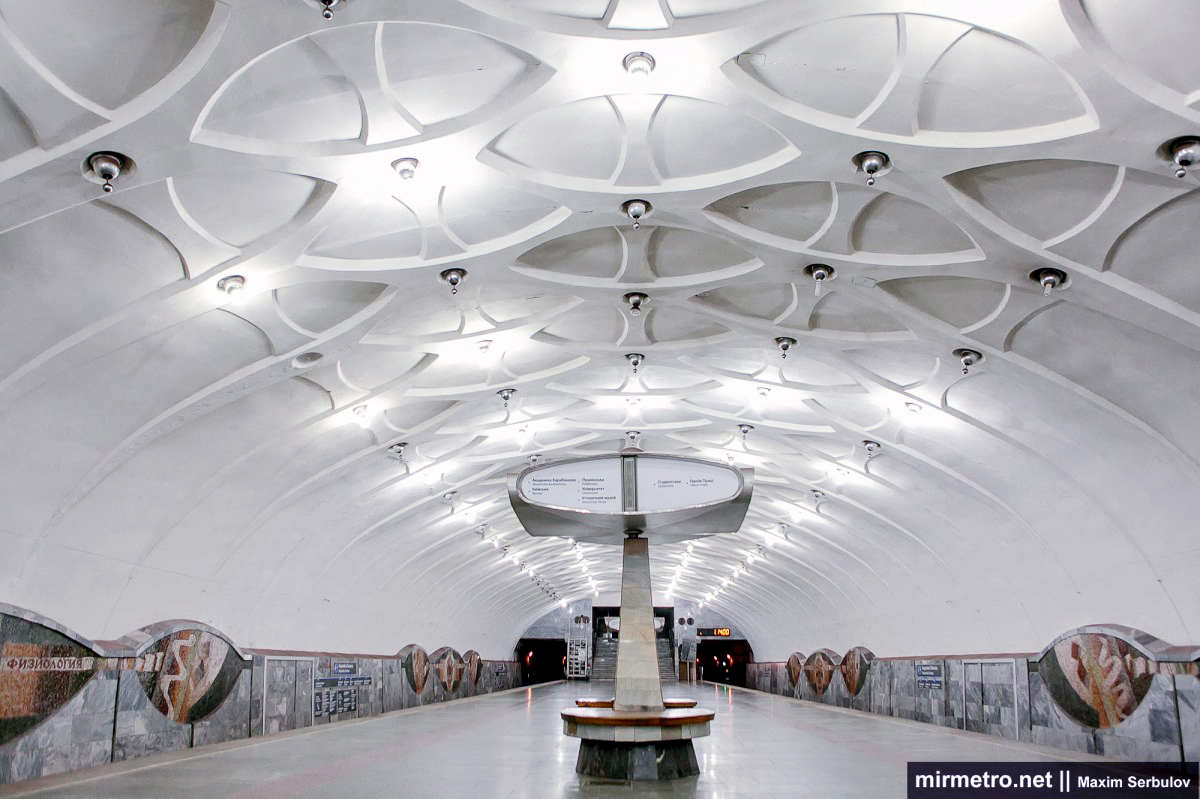
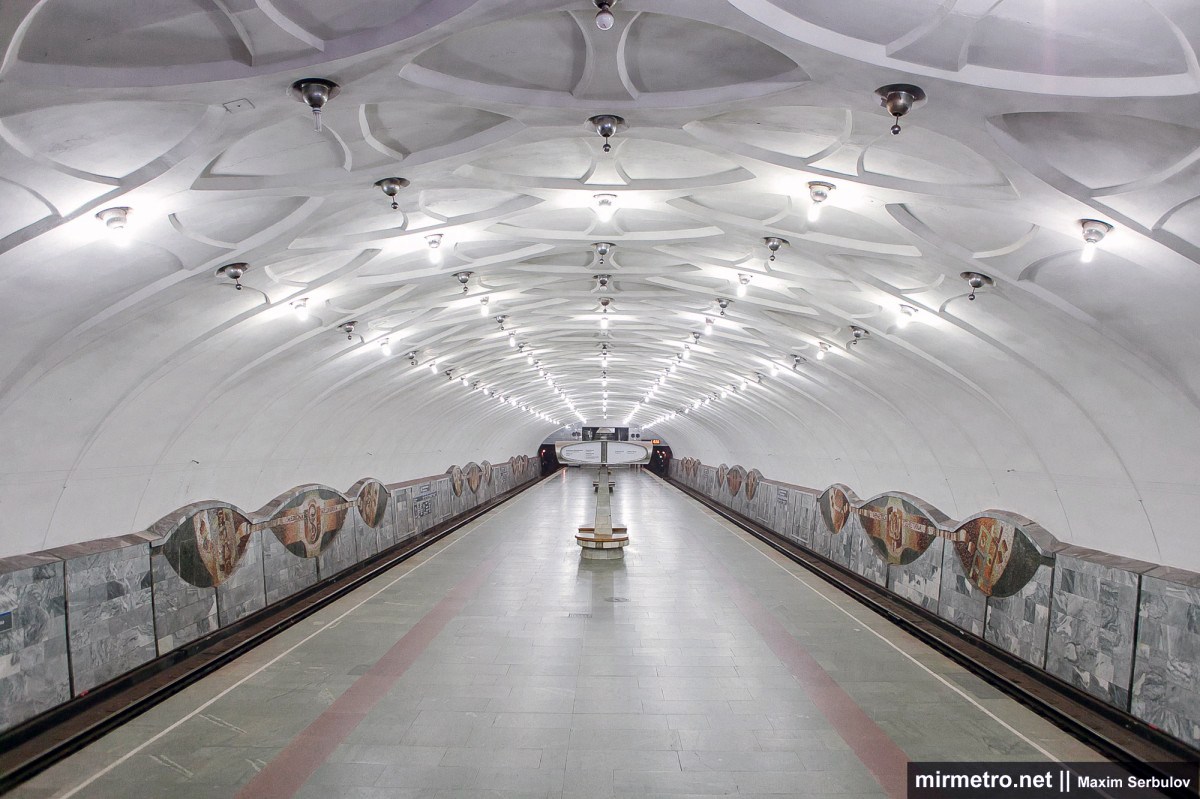
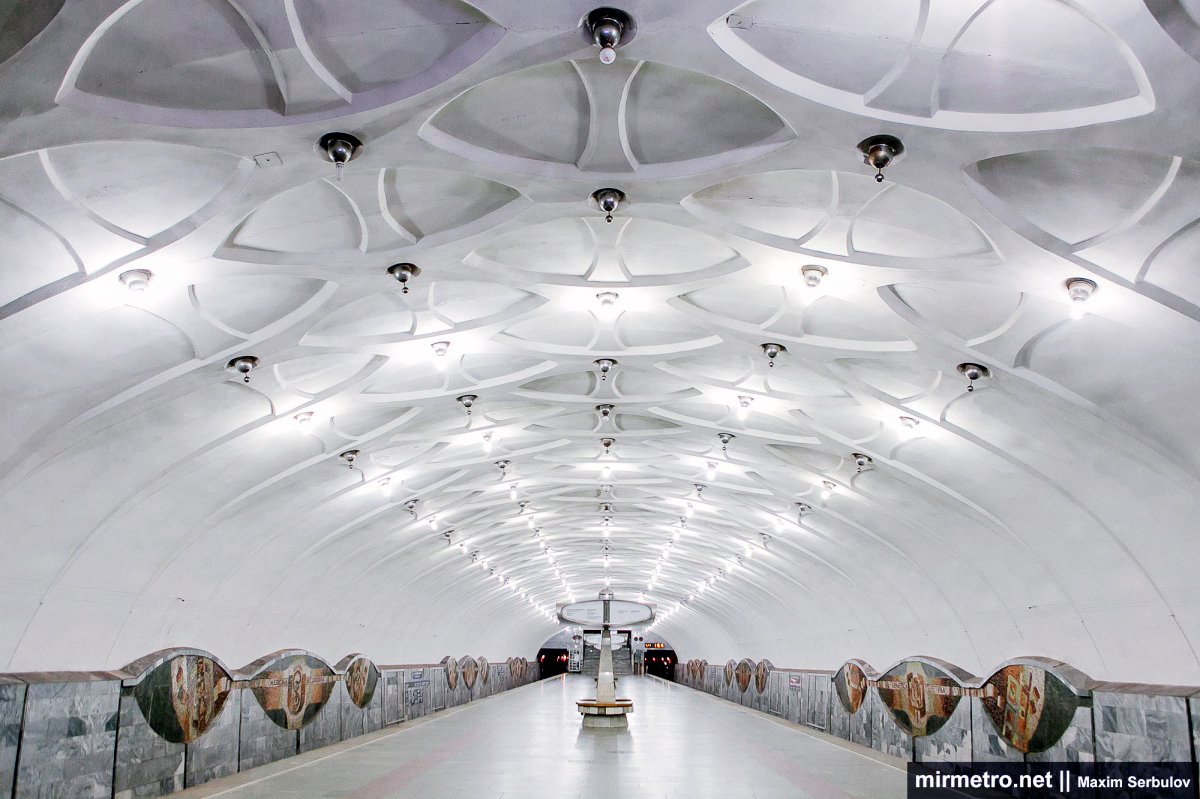
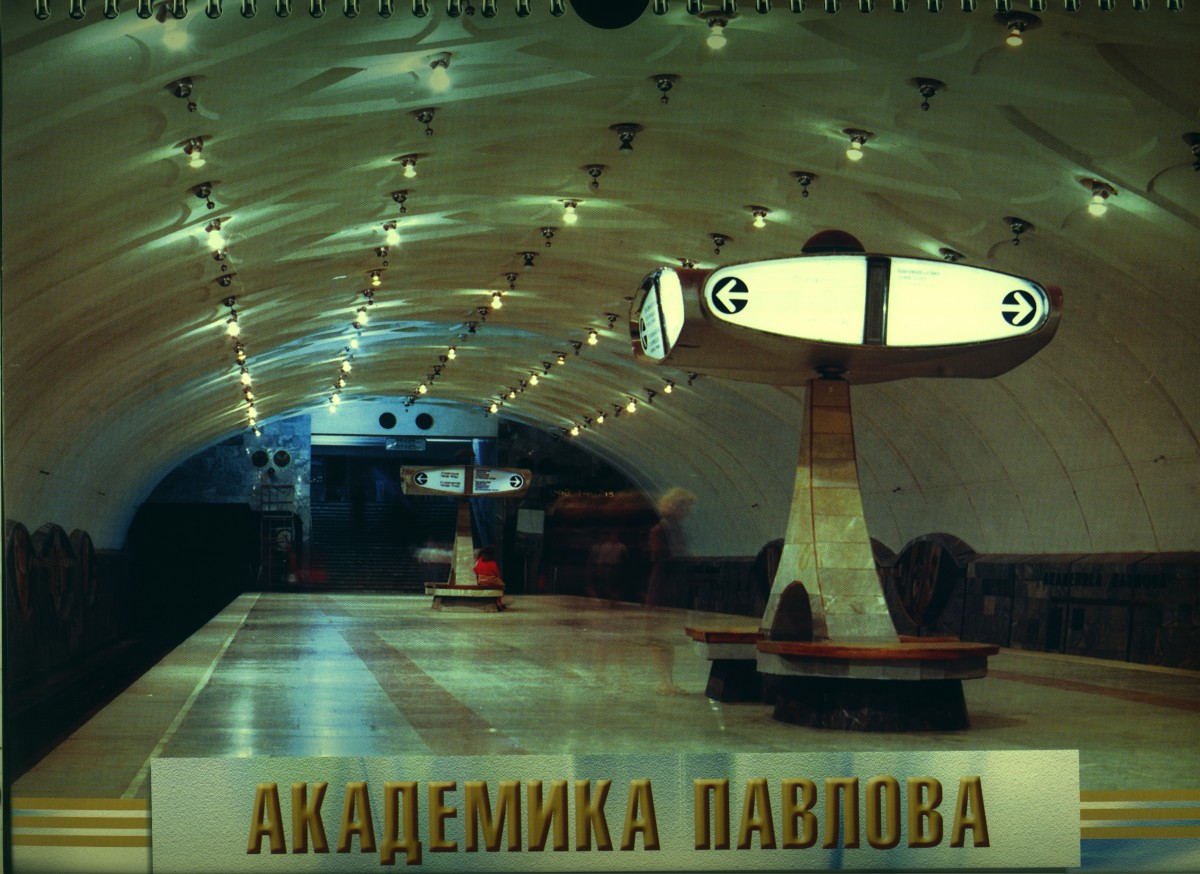
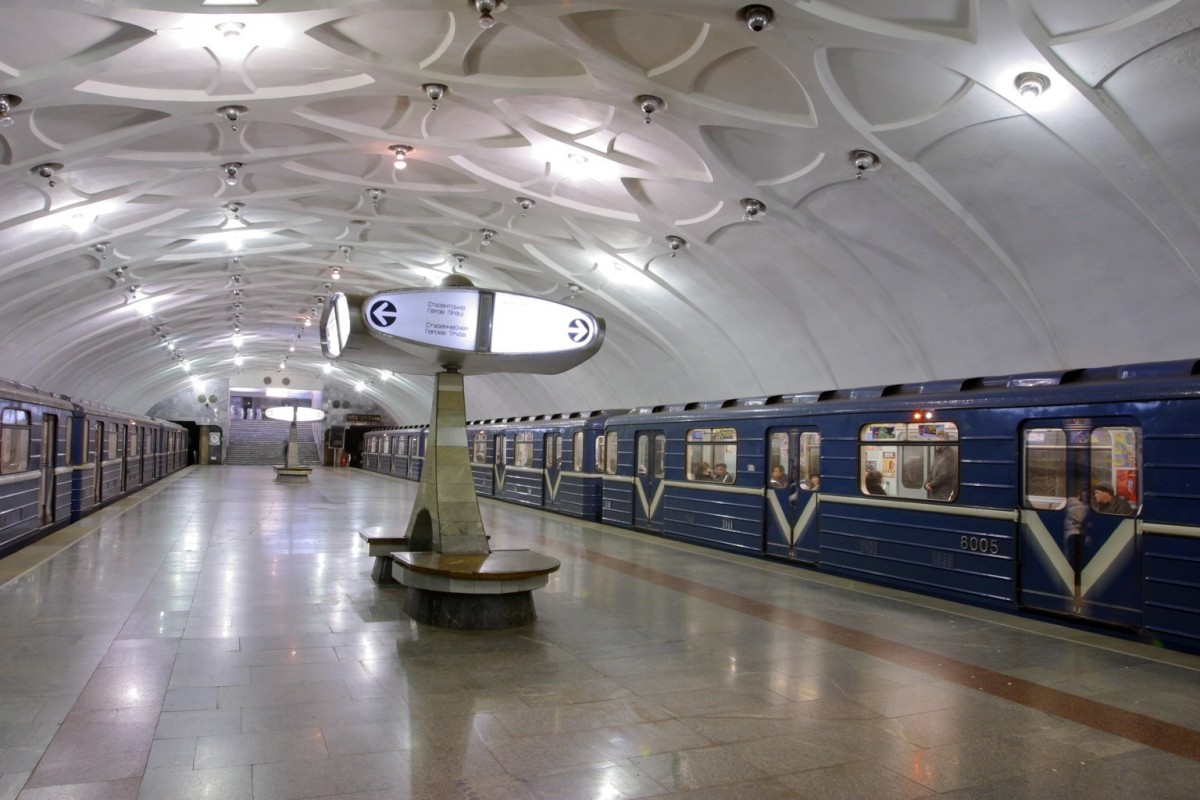
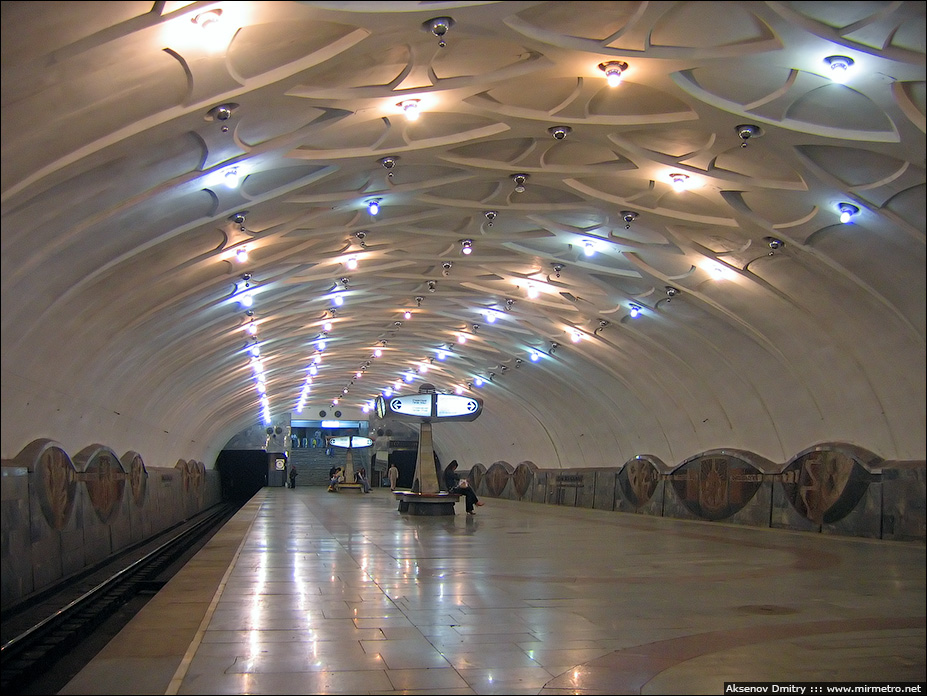
Upon entering the station, the first thing passengers notice is the striking relief vault, which was not created as a decorative element but rather was constructed using large structural elements. In keeping with the station’s design theme, the vault has a bionic shape, reminiscent of the skeletons of animals and fish.

The Akademika Pavlova station is illuminated by spotlights on the vault’s surface, arranged in triangles at regular intervals. Some of the apparent “lights” are in fact polished metal spheres installed purely for decorative effect.
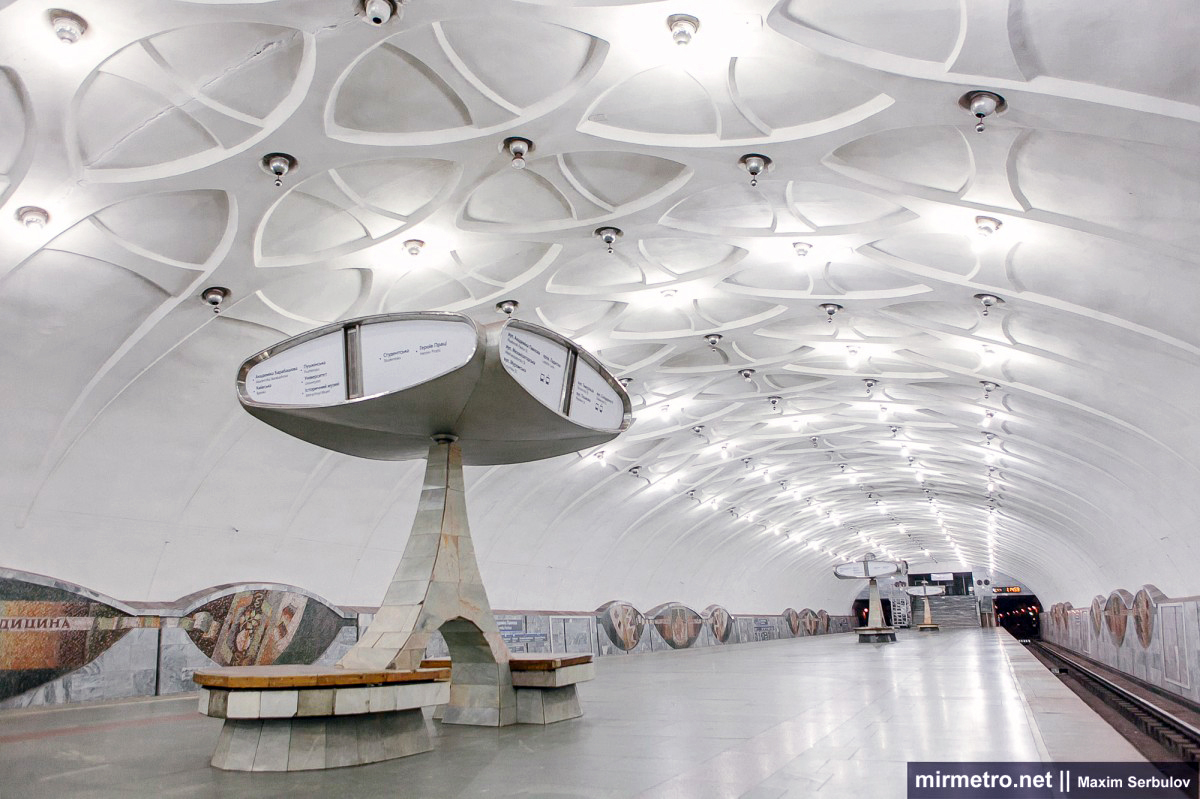
The Akademika Pavlova station was built using a different technology from the Kharkiv single-vault system, which resulted in significant savings in both cost and speed. However, either the joints between the precast elements were not sealed properly, or deficiencies occurred in the waterproofing. As a result, the vault has suffered from persistent leaks ever since, with the problem becoming particularly noticeable each spring.

The station floor is made of light-grey granite, with the addition of oval figures made of red-brown granite.
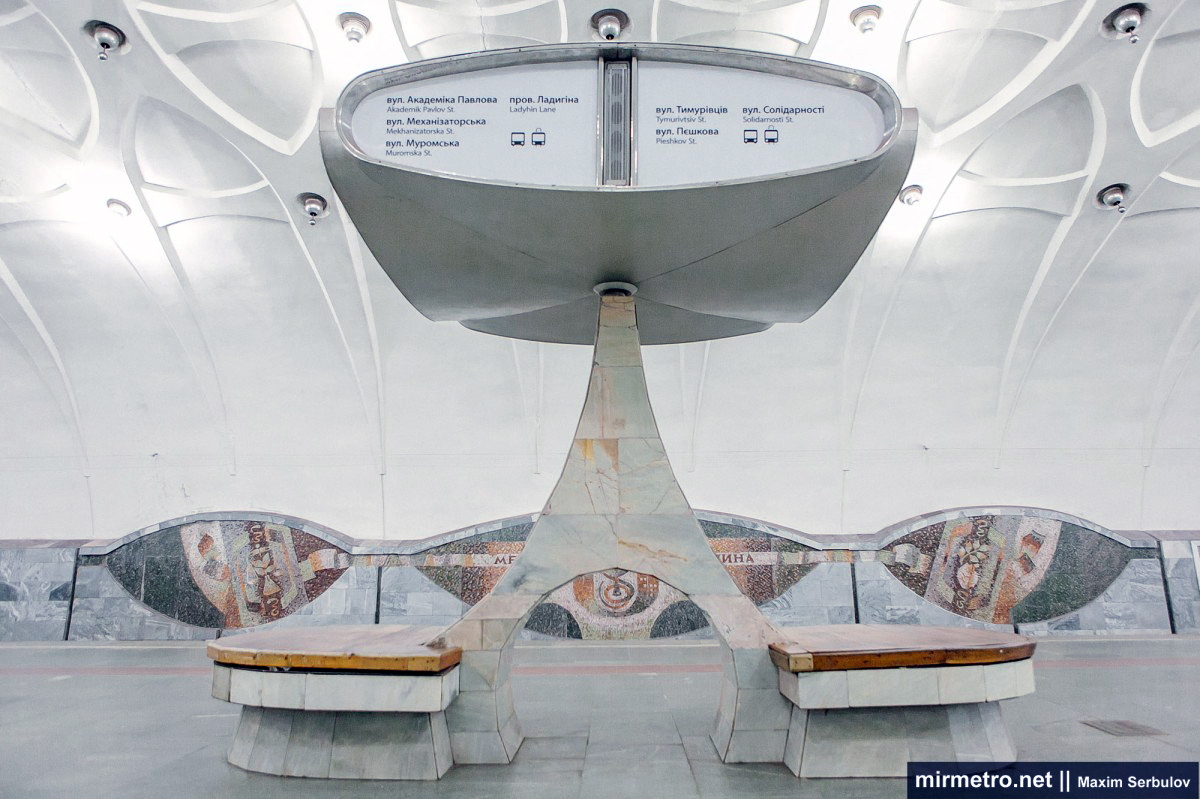
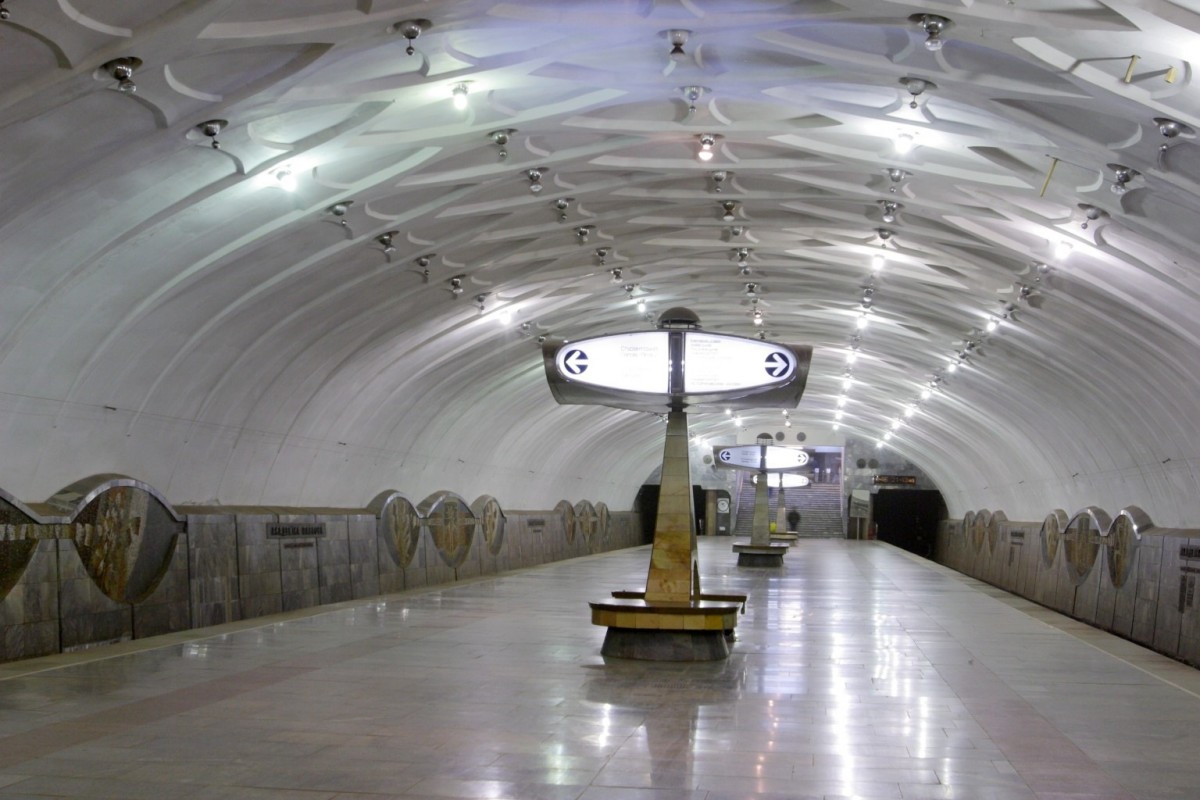
The benches at Akademika Pavlova station have a very unusual design – they resemble a canopy with a square umbrella, carrying line diagrams and exit signs. Previously, these signs were illuminated from within.
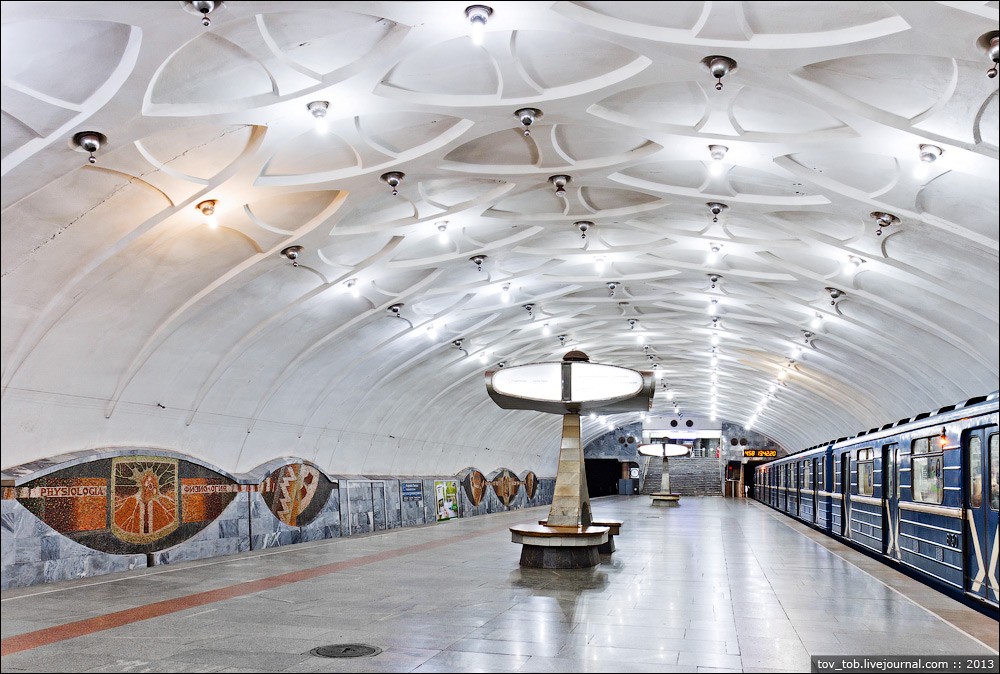
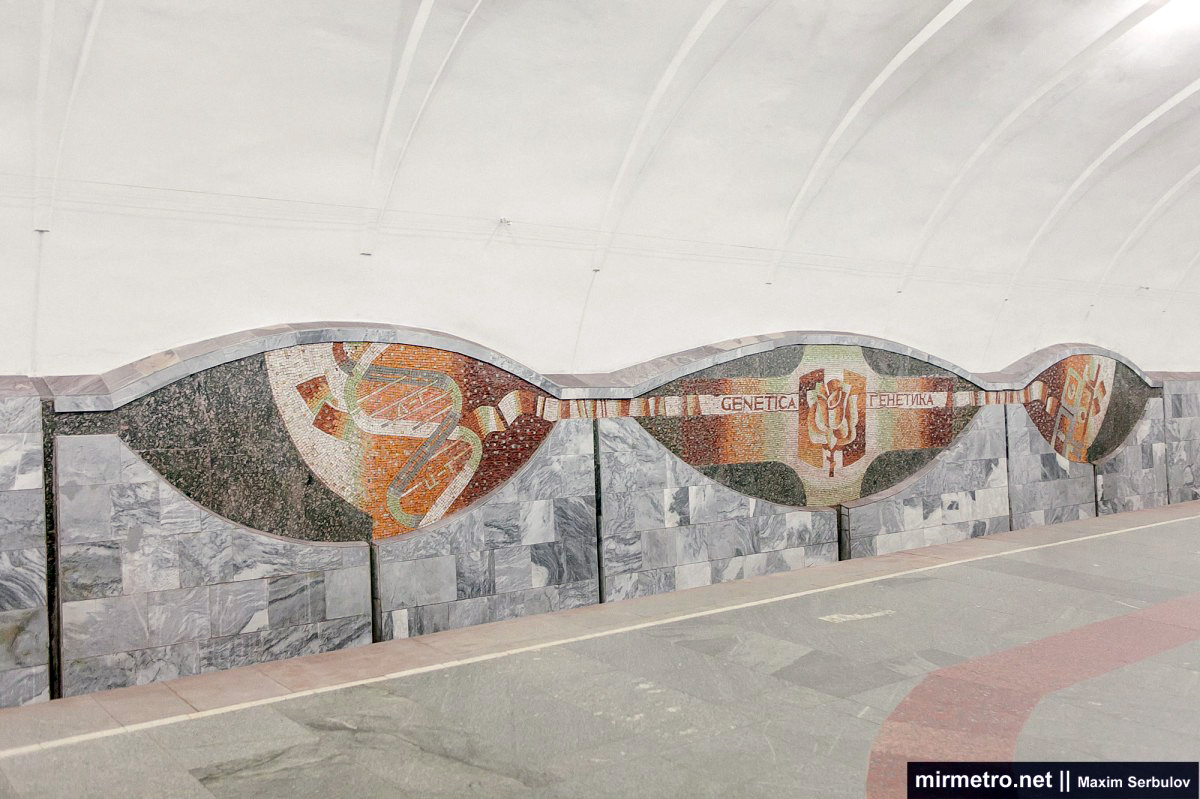
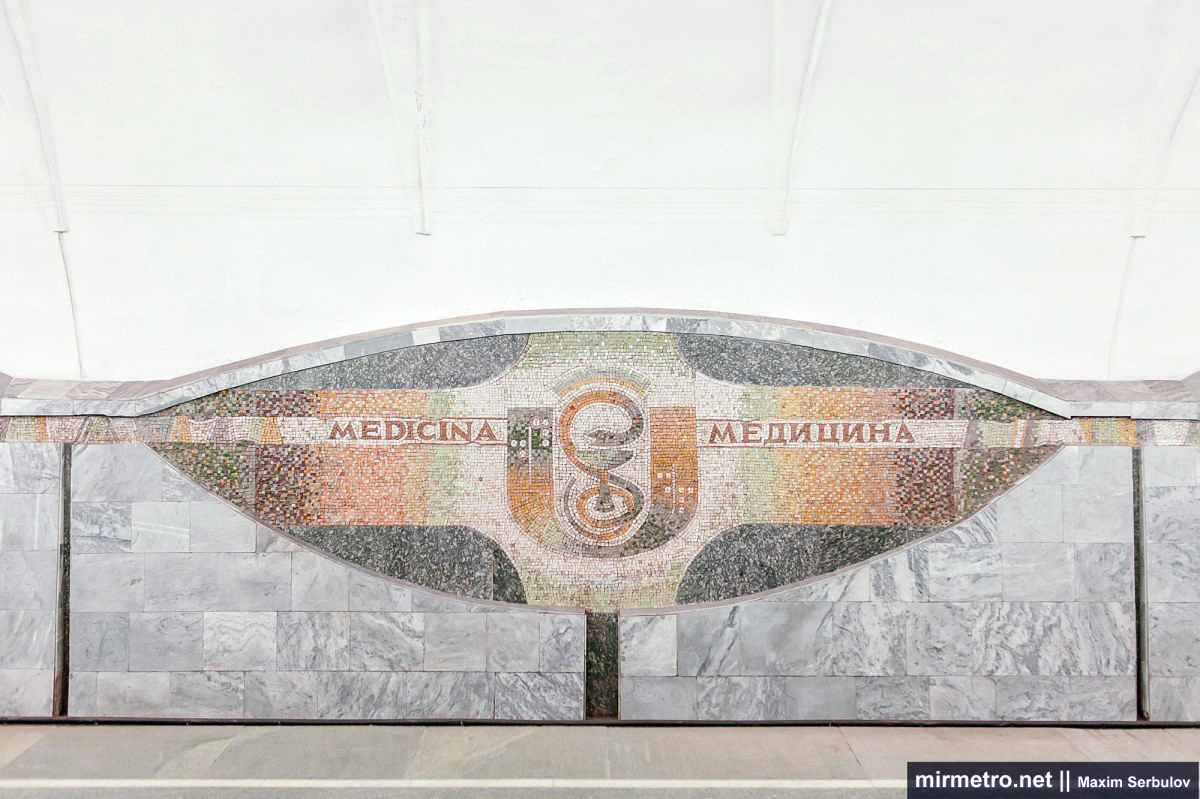
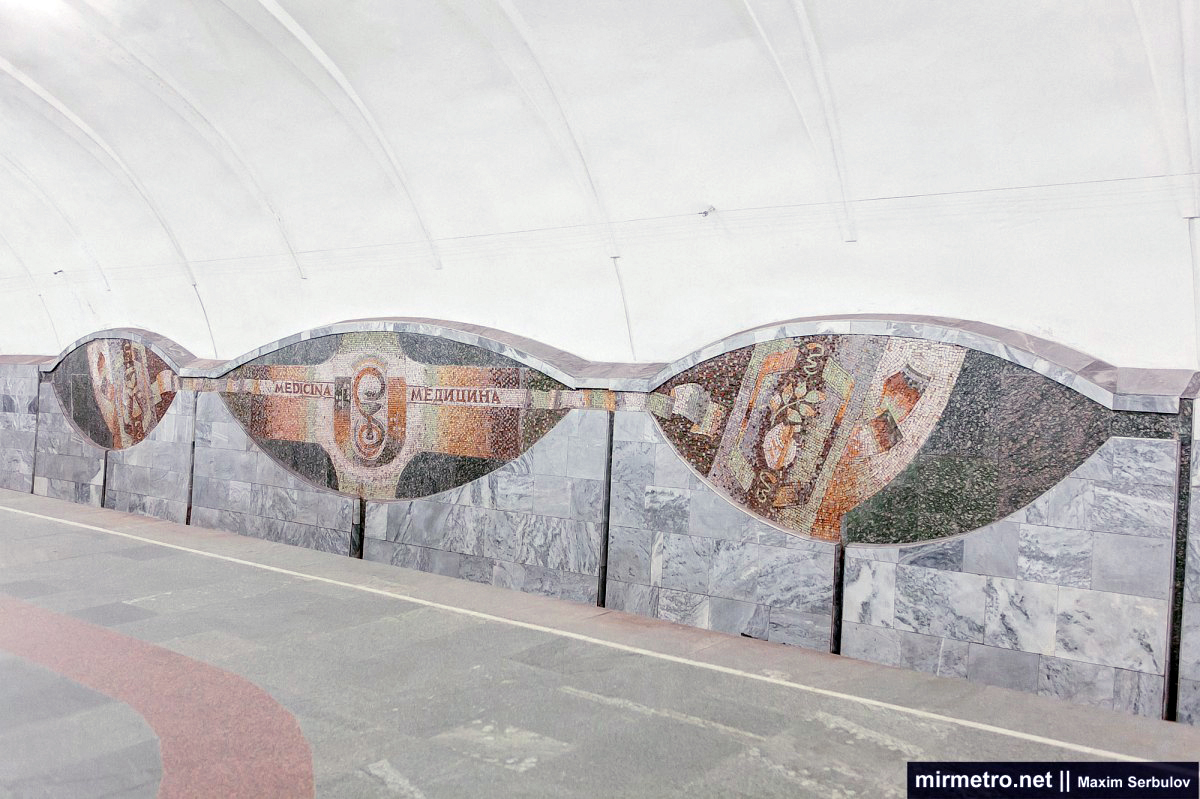
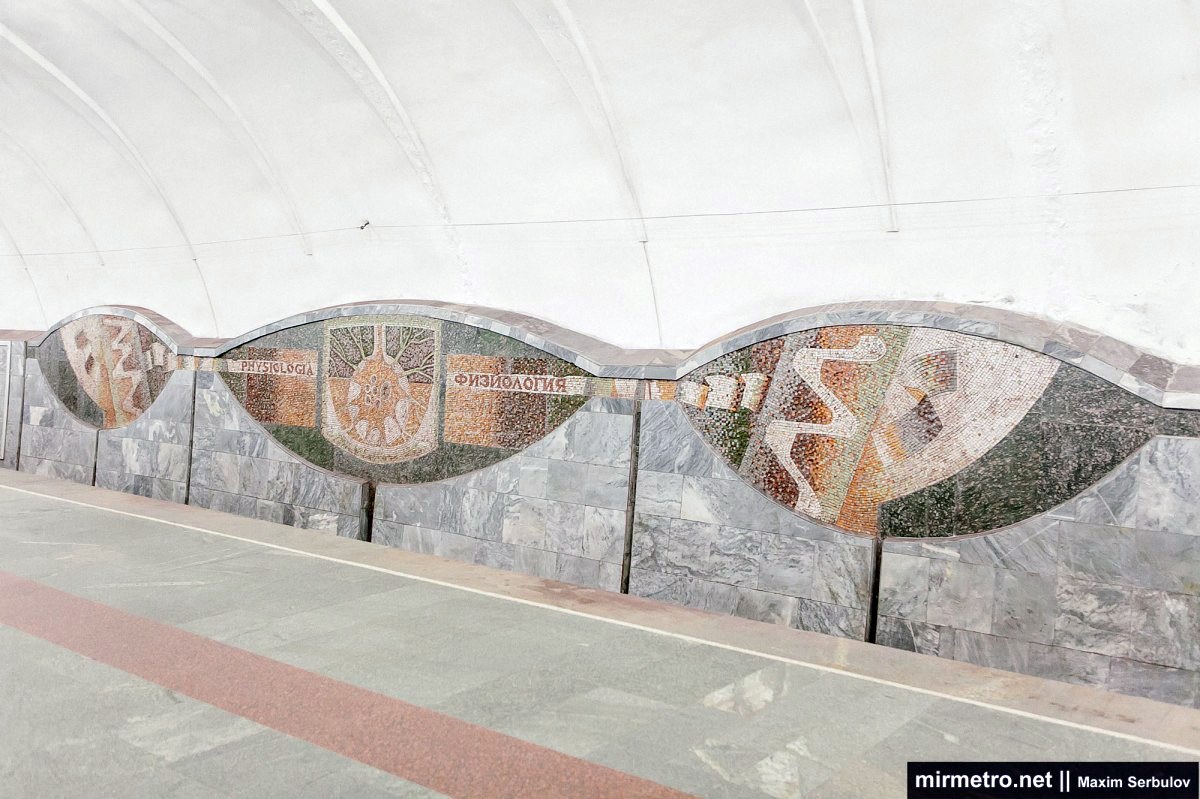
The track walls are clad in gray marble with inlays of dark gray granite. The station’s principal artistic feature is a series of smalt mosaics set into oval niches in the track walls. There are six mosaics in total—three on each side of the platform. Before creating them, artist Mykola Krylov visited the Faculty of Biology at Kharkiv University to study the subjects in greater depth. It was there that he conceived the imagery for the panels: a rose for Genetics, a flower with a butterfly for Biology, and similar symbolic compositions for the remaining mosaics.
Mosaic panel “Genetics”.

Mosaic panel “Medicine”.
Mosaic panel “Physiology”.

Mosaic panel “Physiology” (second).

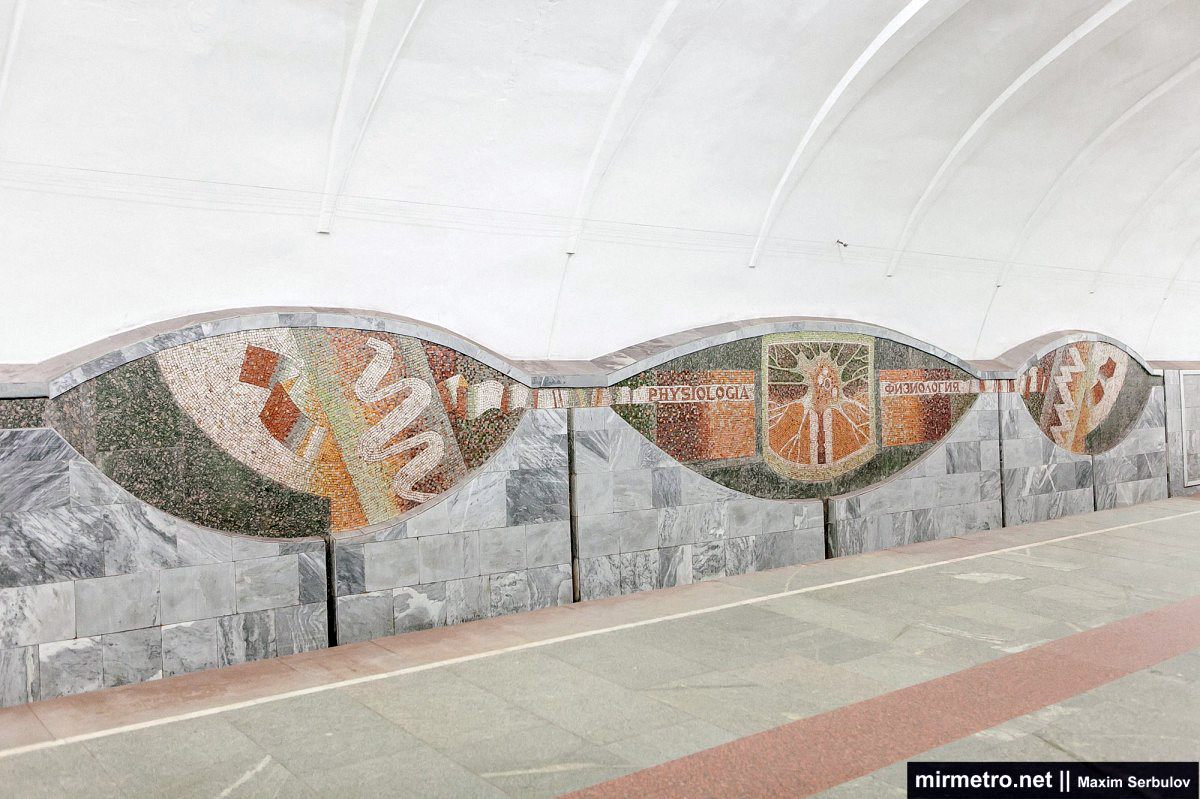
Mosaic panel “Biochemistry”.


Mosaic panel “Biology”.

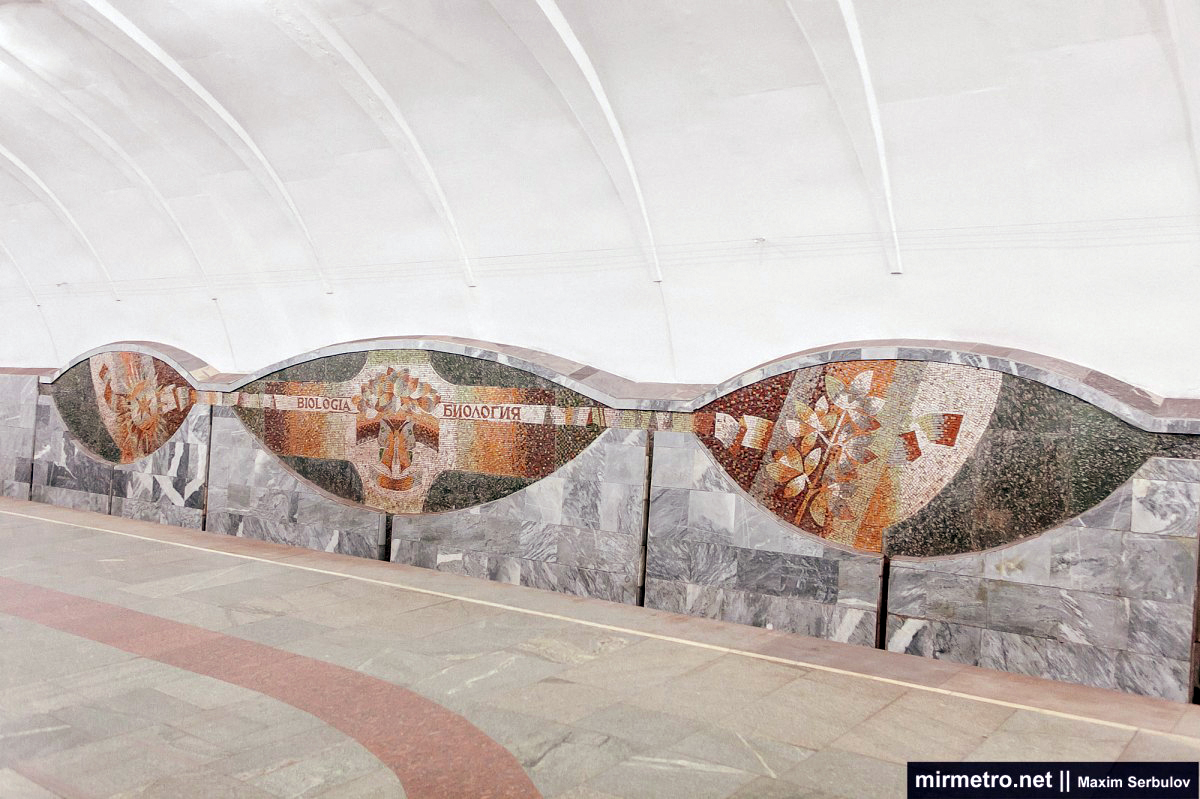
The station takes its name from Akademika Pavlova Street, beneath which it is located.
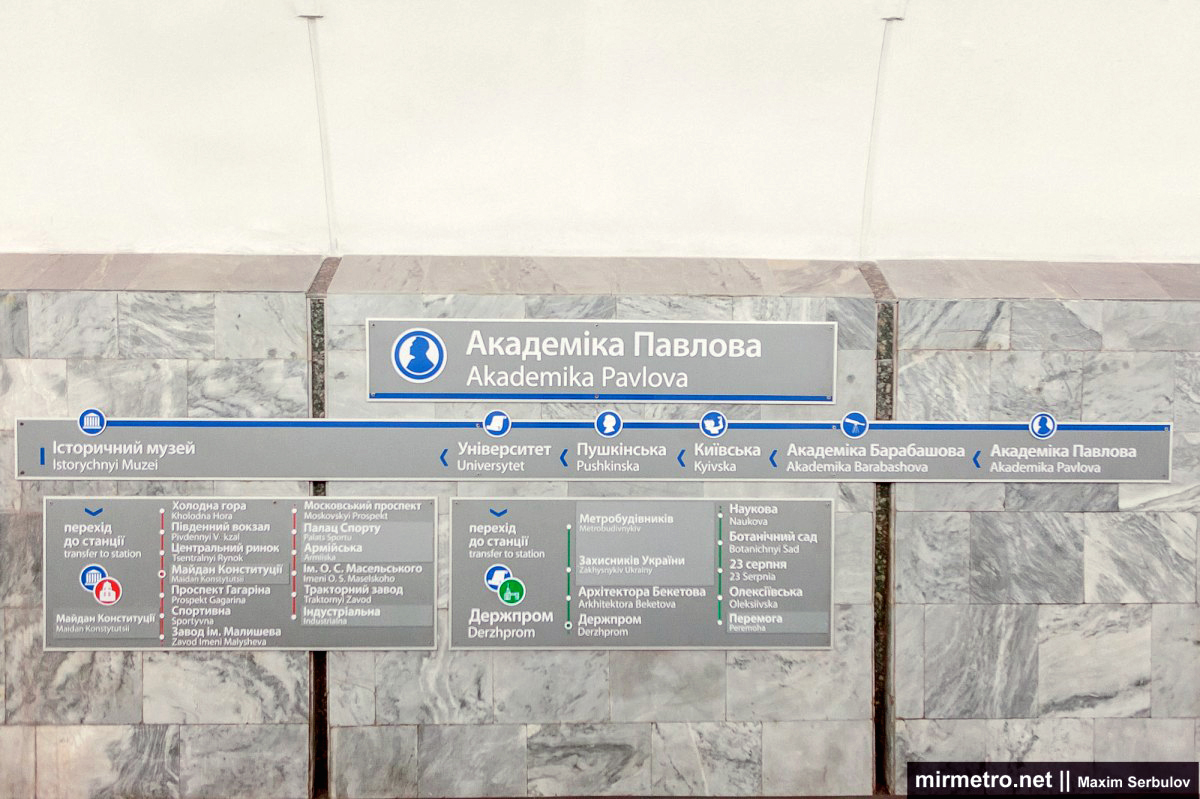
The same facing materials were used for the platform section to clad the vestibules and stairwells.

Only the southern vestibule is operational; the northern one was out of use for many years due to low passenger traffic, but a metro school was opened there in 2023.

Unlike the platform level, the station vestibules were built as columned halls rather than vaulted spaces.
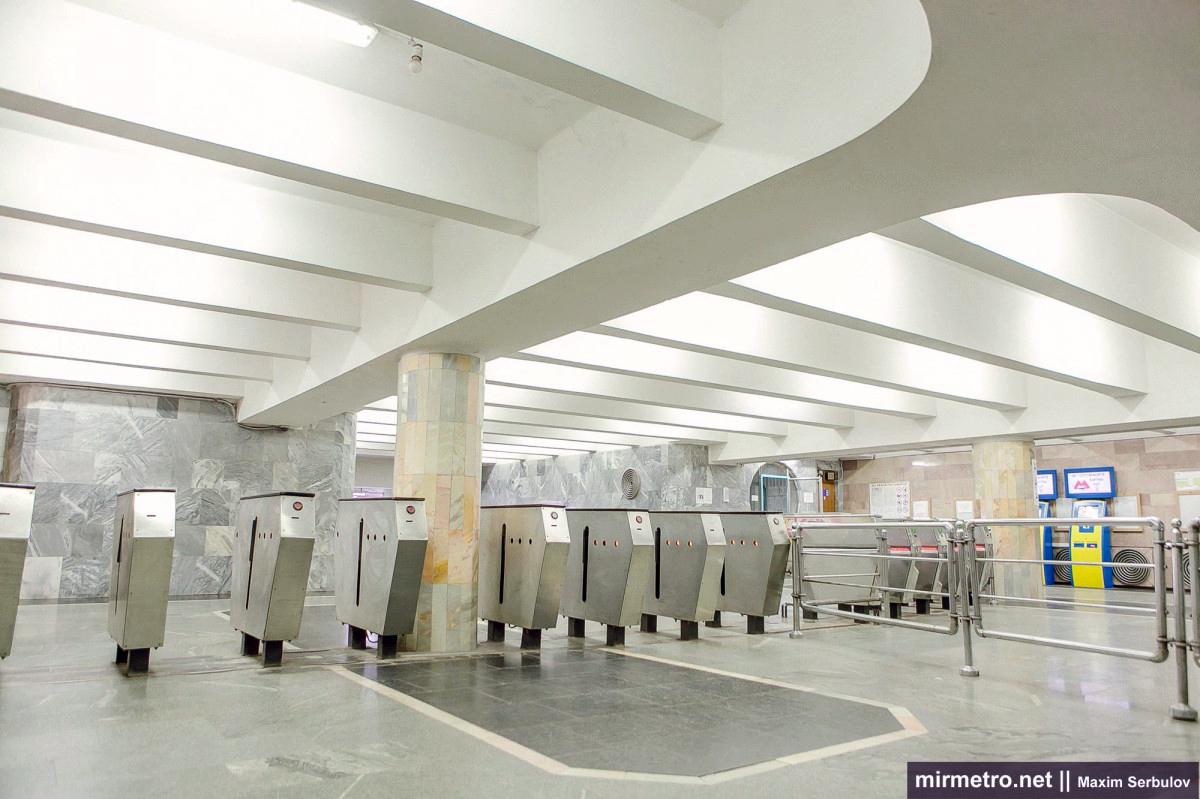
The northern vestibule houses a bust of Ivan Pavlov, crafted from concrete and marble chips.

The station in 1997.
The station in 2002.
Here you can see the old navigation, as well as the track walls, not yet spoiled by advertising.
The station in 2006.

Construction and projects
The station was constructed using the open-cut method in an excavation dug along the median of Akademika Pavlova Street. Construction of the second section of the Saltivska Line began with the start of work at Akademika Pavlova station in November 1980. Originally, the station had been intended to open as part of the first section of the line, but the plans were later revised, and the extension linking the metro network with the Saltivka residential district was expanded from two stations to three.
As expected, construction crews encountered heavily waterlogged clay soils exhibiting quicksand-like properties. To lower the groundwater level, 20-metre-deep wells were drilled around the excavation, where pumps were installed. Their capacity, however, proved insufficient, and additional sump pumps were installed at the bottom of the excavation to remove the remaining water.
Akademika Pavlova station introduced a fundamentally different structural solution. Whereas earlier Kharkiv single-vault stations were built entirely of cast-in-place reinforced concrete using mobile formwork, this station was assembled almost entirely from precast reinforced concrete elements manufactured by the Kharkiv Precast Concrete Plant. The vault itself consists of three precast segments with longitudinal hollow ducts used for electrical wiring and lighting cables.
The mobile formwork itself remained essentially unchanged, but the construction technology differed considerably. Previously, six-metre sections of the vault were formed, filled with concrete, and left to cure. At Akademika Pavlova, however, precast elements weighing up to 19 tonnes were placed onto the formwork in one-metre sections using heavy cranes. The individual elements were connected by looped reinforcing bars and grouted with concrete. Additional reinforcement was tied directly on the formwork before the joints were concreted and compacted using vibrators. The greatest challenge was not the installation of the precast elements themselves, but transporting them into the excavation through the tightly confined construction site. The formwork also made it possible to cast decorative relief directly into the concrete. Any desired ornamental pattern could be incorporated into the inner surface of the formwork, allowing the finished vault to acquire its final texture during casting rather than through later finishing work. Using a precast vault instead of a monolithic one on the platform section alone saved 146 tonnes of reinforcing steel, reduced concrete consumption by 430 cubic metres, and lowered labour costs by approximately 980 man-days. Construction was also dramatically accelerated—the vault could be completed roughly three times faster than with traditional cast-in-place reinforced concrete.
Given the difficult hydrogeological conditions, multiple layers of waterproofing were applied to both the station foundation and the vault, which should theoretically have been sufficient. The exact cause of the persistent leaks remains unclear. Most likely, they resulted either from deficiencies in the waterproofing installation or from problems during the backfilling of the excavation.
Some of the running tunnels were driven using conventional shield tunnelling with the lining pressed directly against the surrounding ground, while most of the approach tunnels were constructed by the open-cut method. At Akademika Pavlova, Kharkiv Metro engineers used a combined tunnel lining for the first time: the lower part of each tunnel ring consisted of cast-iron segments, while the upper part was assembled from reinforced concrete elements. Special transition inserts connected the two systems, being bolted to the cast-iron lining below and pinned to the reinforced concrete segments above.
The section between Barabashova and Akademika Pavlova stations—where the line climbs from the Kharkiv River floodplain onto the higher river terrace—presented a major engineering challenge. Over a distance of 240 meters, the tunnels were constructed on reinforced concrete piles driven 11 meters deep to reach stable bearing soils beneath the water-saturated ground. A reinforced concrete foundation slab was then cast on top of the piles, upon which the tunnel structures were assembled.
Construction of the excavation pit for Akademika Pavlova station. Spring 1981.

A team of metro builders in the station excavation pit.

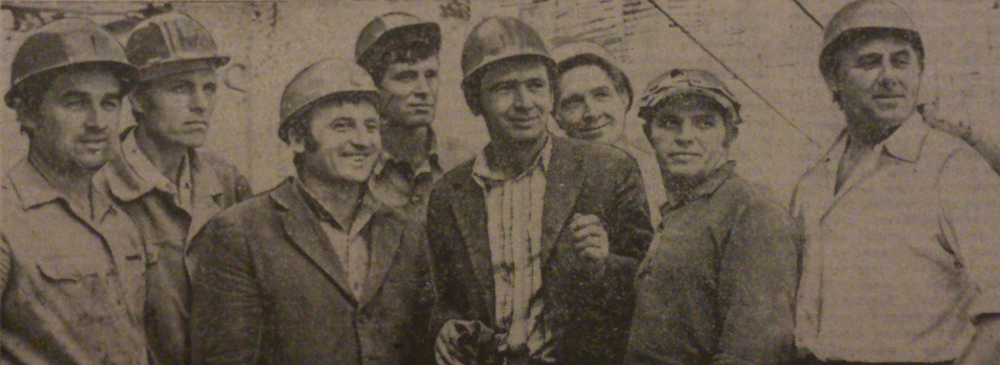
Soil removal by dump trucks.

The mobile formwork used during construction.
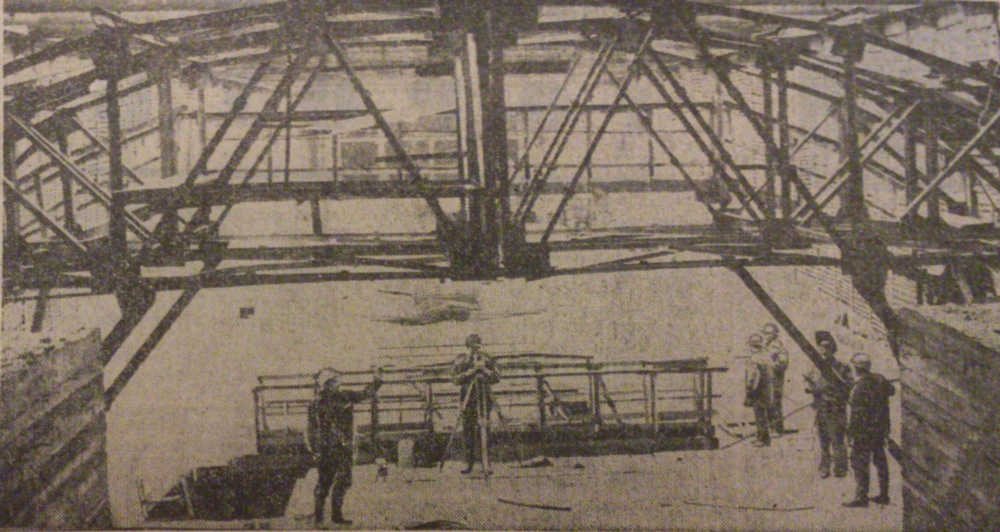
A team of miners at work.
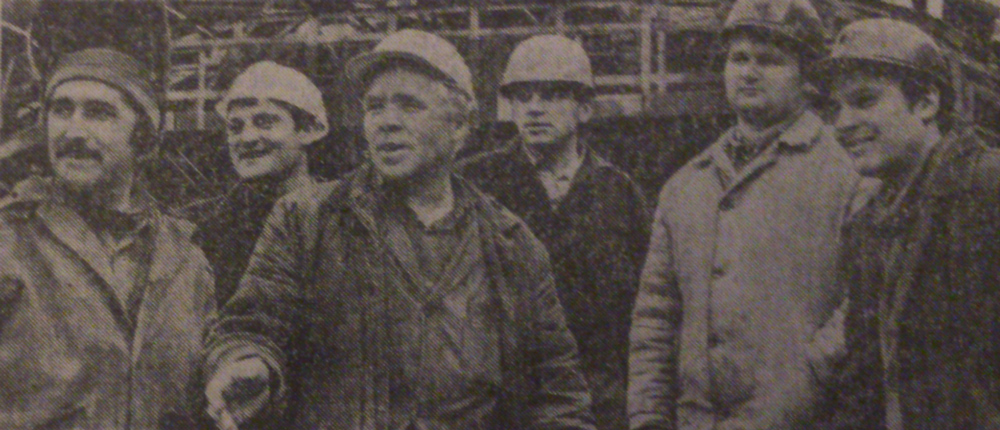
Loading precast reinforced concrete elements with a gantry crane.

The Chief Engineer and Site Manager at the construction site.
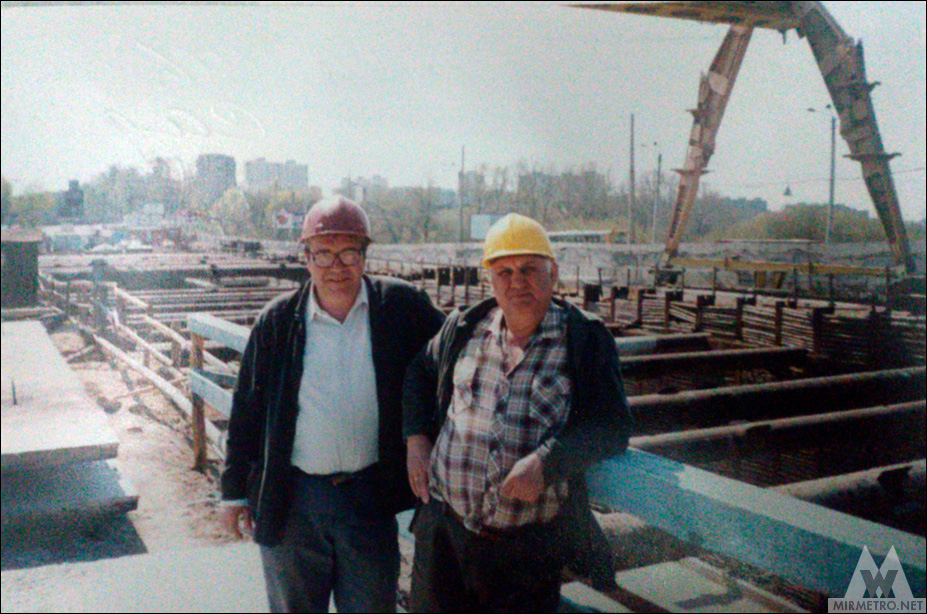
Workers join precast reinforced concrete elements.

A gantry crane lowers another reinforced concrete element into the excavation pit.
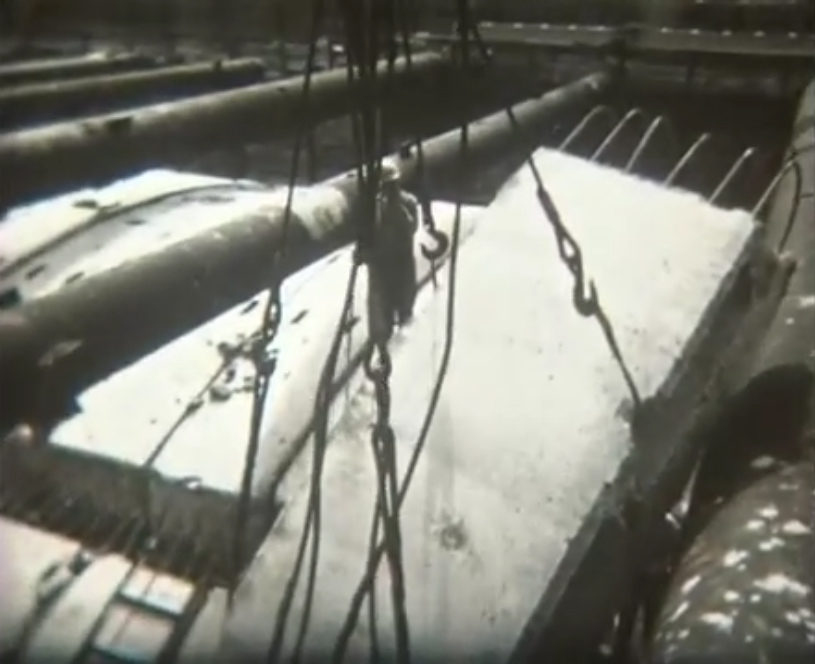
Construction of the Akademika Pavlova station platform.
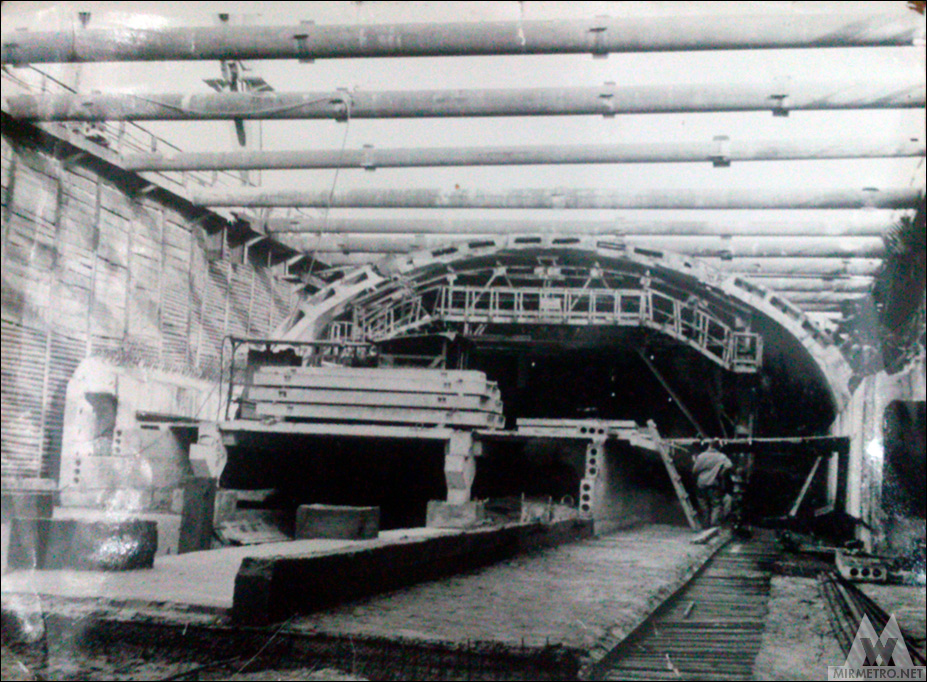
Construction of the station vault.
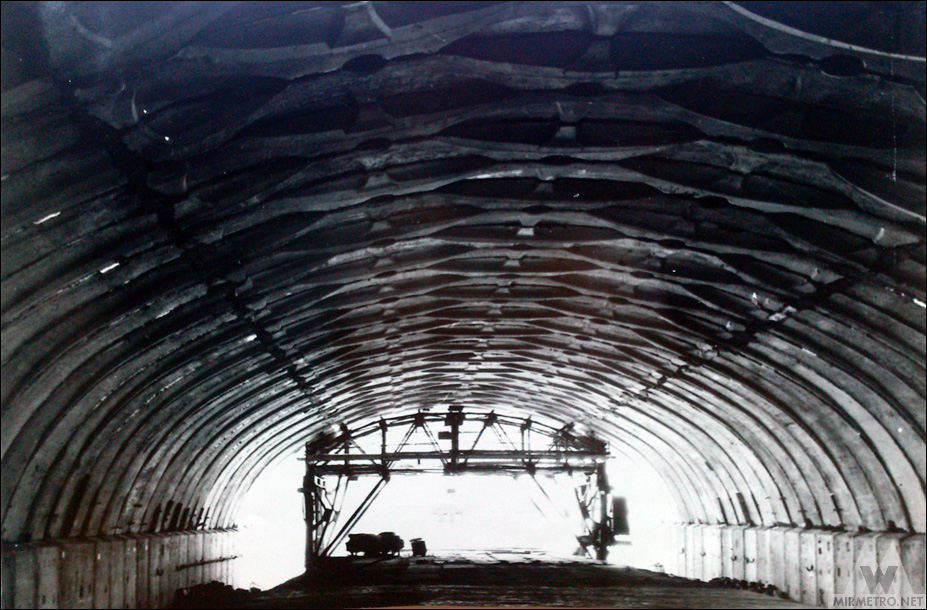
The station after completion of the structural works. April 1984.
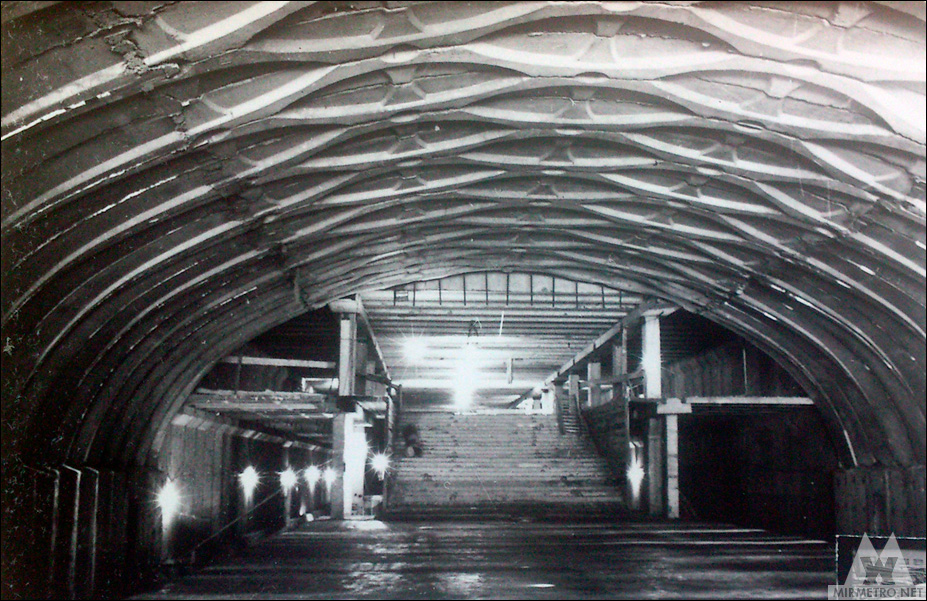
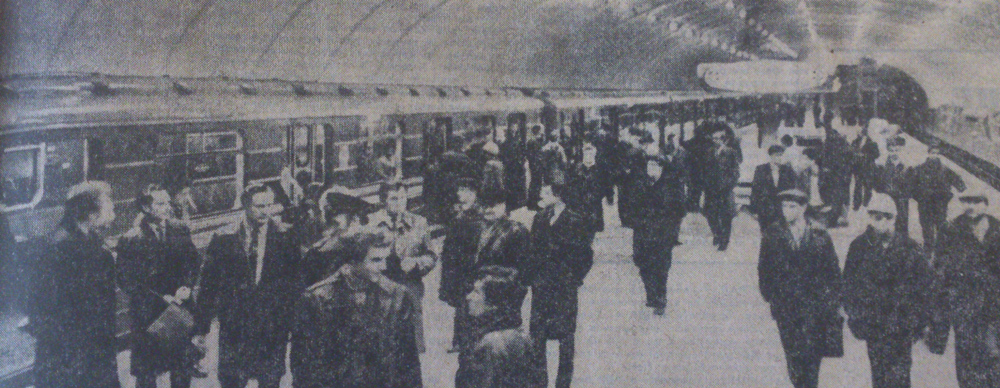
A test train with honored guests at Akademika Pavlova station. 11 October 1986.