Skip to content
Kharkiv Metro Kharkiv Metro Kharkiv Metro

Unofficial site dedicated to the Kharkiv Metro: history, stations, photographs, etc.

Kharkiv Metro Kharkiv Metro Kharkiv Metro

Unofficial site dedicated to the Kharkiv Metro: history, stations, photographs, etc.

  • Home
  • Metro history
    • Kharkiv Metro Projects (1962-1968)
    • First Stage (1968-1975)
    • Metro to Saltivka (1975-1984)
    • Third Line (1984-1995)
    • Metro to Oleksiivka (1995-2010)
    • Metro in these days (2010-2022)
    • Metro in the Years of War
  • Stations and lines
    • Kholodnohirsko-Zavodska Line (red)
      • Kholodna Hora
      • Vokzalna
      • Tsentralnyi Rynok
      • Maidan Konstitutsii
      • Levada
      • Sportyvna
      • Zavodska
      • Turboatom
      • Palats Sportu
      • Armiiska
      • Imeni O.S. Maselskoho
      • Traktornyi Zavod
      • Industrialna
    • Saltivska Line (blue)
      • Istorychnyi Muzei
      • Universytet
      • Yaroslava Mudroho
      • Kyivska
      • Akademika Barabashova
      • Akademika Pavlova
      • Studentska
      • Saltivska
    • Oleksiivska Line (green)
      • Metrobudivnykiv
      • Zakhysnykiv Ukrainy
      • Arkhitektora Beketova
      • Derzhprom
      • Naukova
      • Botanichnyi Sad
      • 23 Serpnia
      • Oleksiivska
      • Peremoha
  • Development prospects
  • Other materials
    • Kharkiv Metro Bridge
    • Rolling stock
    • Maps
    • Fare
    • Audio announcers
    • Ventilation shafts
    • Video gallery
    • About
  • Contact
  • Українська
  • Русский
  • English
  • Home
  • Metro history
    • Kharkiv Metro Projects (1962-1968)
    • First Stage (1968-1975)
    • Metro to Saltivka (1975-1984)
    • Third Line (1984-1995)
    • Metro to Oleksiivka (1995-2010)
    • Metro in these days (2010-2022)
    • Metro in the Years of War
  • Stations and lines
    • Kholodnohirsko-Zavodska Line (red)
      • Kholodna Hora
      • Vokzalna
      • Tsentralnyi Rynok
      • Maidan Konstitutsii
      • Levada
      • Sportyvna
      • Zavodska
      • Turboatom
      • Palats Sportu
      • Armiiska
      • Imeni O.S. Maselskoho
      • Traktornyi Zavod
      • Industrialna
    • Saltivska Line (blue)
      • Istorychnyi Muzei
      • Universytet
      • Yaroslava Mudroho
      • Kyivska
      • Akademika Barabashova
      • Akademika Pavlova
      • Studentska
      • Saltivska
    • Oleksiivska Line (green)
      • Metrobudivnykiv
      • Zakhysnykiv Ukrainy
      • Arkhitektora Beketova
      • Derzhprom
      • Naukova
      • Botanichnyi Sad
      • 23 Serpnia
      • Oleksiivska
      • Peremoha
  • Development prospects
  • Other materials
    • Kharkiv Metro Bridge
    • Rolling stock
    • Maps
    • Fare
    • Audio announcers
    • Ventilation shafts
    • Video gallery
    • About
  • Contact
  • Українська
  • Русский
  • English
Kharkiv Metro Kharkiv Metro Kharkiv Metro

Unofficial site dedicated to the Kharkiv Metro: history, stations, photographs, etc.

Kharkiv Metro Kharkiv Metro Kharkiv Metro

Unofficial site dedicated to the Kharkiv Metro: history, stations, photographs, etc.

  • Home
  • Metro history
    • Kharkiv Metro Projects (1962-1968)
    • First Stage (1968-1975)
    • Metro to Saltivka (1975-1984)
    • Third Line (1984-1995)
    • Metro to Oleksiivka (1995-2010)
    • Metro in these days (2010-2022)
    • Metro in the Years of War
  • Stations and lines
    • Kholodnohirsko-Zavodska Line (red)
      • Kholodna Hora
      • Vokzalna
      • Tsentralnyi Rynok
      • Maidan Konstitutsii
      • Levada
      • Sportyvna
      • Zavodska
      • Turboatom
      • Palats Sportu
      • Armiiska
      • Imeni O.S. Maselskoho
      • Traktornyi Zavod
      • Industrialna
    • Saltivska Line (blue)
      • Istorychnyi Muzei
      • Universytet
      • Yaroslava Mudroho
      • Kyivska
      • Akademika Barabashova
      • Akademika Pavlova
      • Studentska
      • Saltivska
    • Oleksiivska Line (green)
      • Metrobudivnykiv
      • Zakhysnykiv Ukrainy
      • Arkhitektora Beketova
      • Derzhprom
      • Naukova
      • Botanichnyi Sad
      • 23 Serpnia
      • Oleksiivska
      • Peremoha
  • Development prospects
  • Other materials
    • Kharkiv Metro Bridge
    • Rolling stock
    • Maps
    • Fare
    • Audio announcers
    • Ventilation shafts
    • Video gallery
    • About
  • Contact
  • Українська
  • Русский
  • English
  • Home
  • Metro history
    • Kharkiv Metro Projects (1962-1968)
    • First Stage (1968-1975)
    • Metro to Saltivka (1975-1984)
    • Third Line (1984-1995)
    • Metro to Oleksiivka (1995-2010)
    • Metro in these days (2010-2022)
    • Metro in the Years of War
  • Stations and lines
    • Kholodnohirsko-Zavodska Line (red)
      • Kholodna Hora
      • Vokzalna
      • Tsentralnyi Rynok
      • Maidan Konstitutsii
      • Levada
      • Sportyvna
      • Zavodska
      • Turboatom
      • Palats Sportu
      • Armiiska
      • Imeni O.S. Maselskoho
      • Traktornyi Zavod
      • Industrialna
    • Saltivska Line (blue)
      • Istorychnyi Muzei
      • Universytet
      • Yaroslava Mudroho
      • Kyivska
      • Akademika Barabashova
      • Akademika Pavlova
      • Studentska
      • Saltivska
    • Oleksiivska Line (green)
      • Metrobudivnykiv
      • Zakhysnykiv Ukrainy
      • Arkhitektora Beketova
      • Derzhprom
      • Naukova
      • Botanichnyi Sad
      • 23 Serpnia
      • Oleksiivska
      • Peremoha
  • Development prospects
  • Other materials
    • Kharkiv Metro Bridge
    • Rolling stock
    • Maps
    • Fare
    • Audio announcers
    • Ventilation shafts
    • Video gallery
    • About
  • Contact
  • Українська
  • Русский
  • English

Palats Sportu

Opening date: 11 August 1978
Architects: P. Chechelnytskyi, V. Spivachuk, O. Perepelytsya
Engineers: O. Varych, V. Kotov
Artist: O. Shcheglov
Station type: Shallow three-span column station
English equivalent: Palace of Sports
Former names:
Komsomolska (“Komsomol”), until 6 May 1994
Marshala Zhukova (“Marshal Zhukov”), from 6 May 1994 until 17 May 2016
Average daily ridership: 28,100 passengers (2015)


The station was opened on 11 August 1978 as part of the second section of the first Kharkiv Metro line, running from Moskovskyi Prospekt (now Turboatom) to Proletarska (now Industrialna) and comprising five stations. Unlike the stations of the first section, those built during this phase feature bolder and more varied architectural designs. The primary purpose of the extension was to connect the city’s major industrial enterprises with the city centre. The opening of the station coincided with the 60th anniversary of the Komsomol.

Description

The station follows the standard design of a shallow three-span column station.

Palats Sportu metro station, Kharkiv

Although relatively restrained in appearance, Palats Sportu makes a favourable impression thanks to its well-balanced colour palette and carefully selected decorative elements.
Palats Sportu metro station, Kharkiv

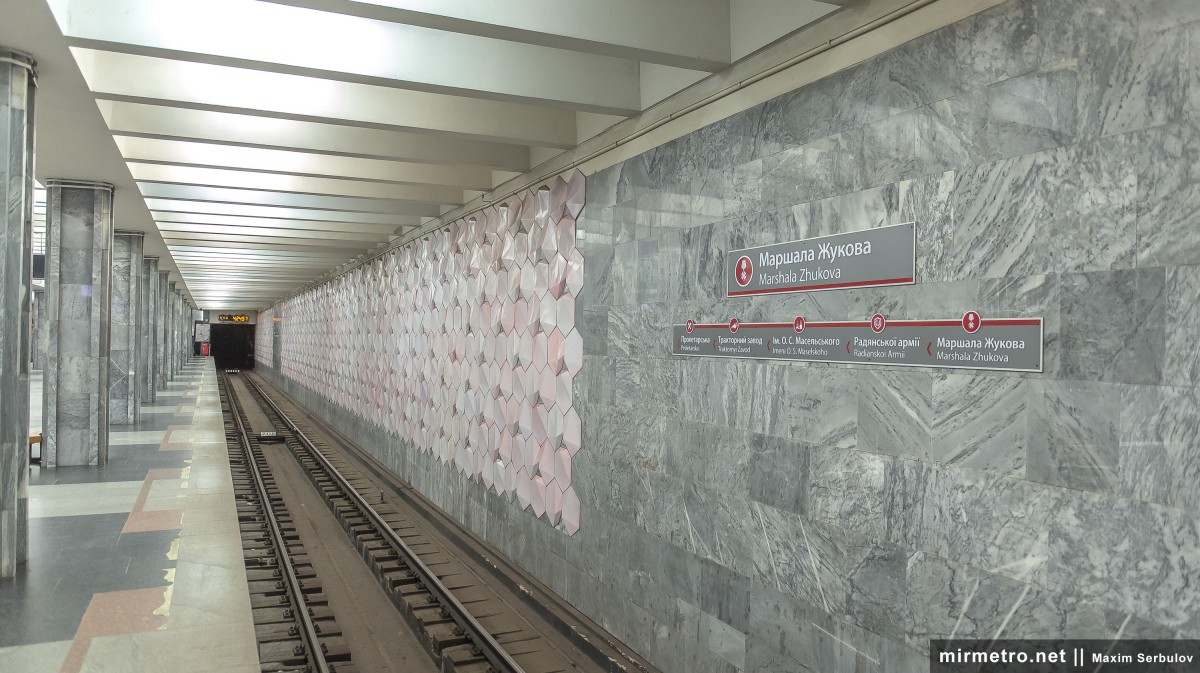
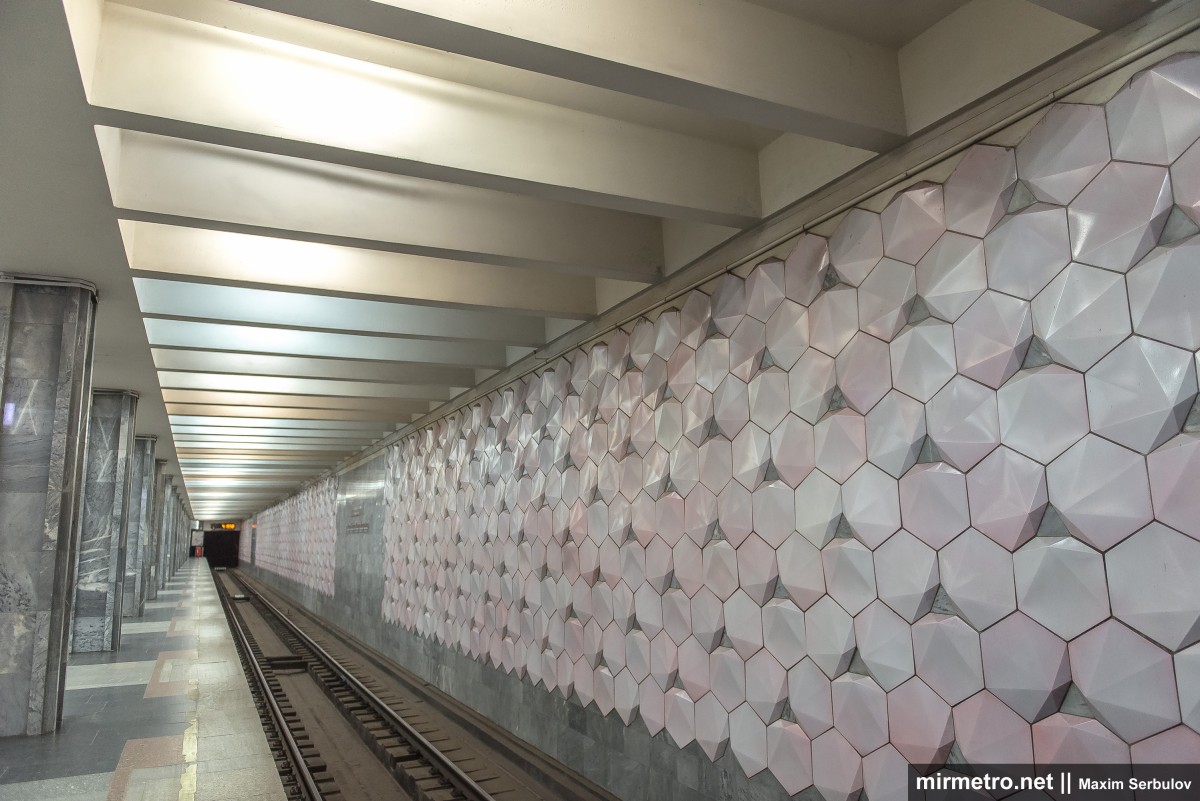
The track walls are clad in grey marble. The station’s principal decorative feature is a series of embossed metal-enamel panels made from stamped steel.
Palats Sportu metro station, Kharkiv

The panels are hexagonal with one corner cut away. They are arranged so that the missing corners form triangular gaps, while the relief pattern radiates from the cut corner rather than the centre, giving each panel the appearance of either a flower petal or a seashell.

Palats Sportu metro station, Kharkiv

The columns are also clad in grey marble and feature prominent projections on each face. This subtle architectural detail adds depth to the station’s interior and complements the overall composition.

Palats Sportu metro station, Kharkiv

The station floor is paved with red and grey granite together with black labradorite, arranged in an unusual geometric pattern of rectangles and crosses.

Palats Sportu metro station, Kharkiv

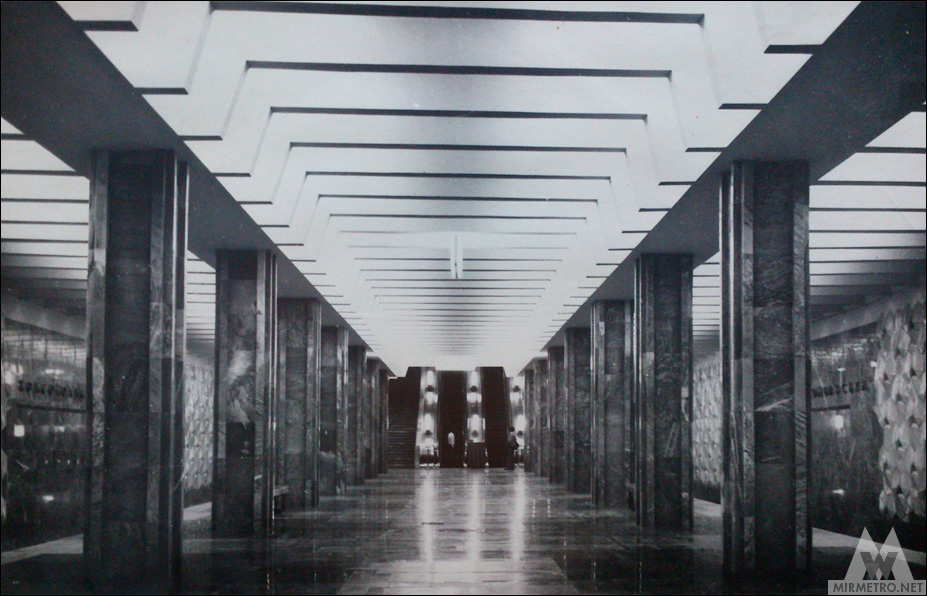
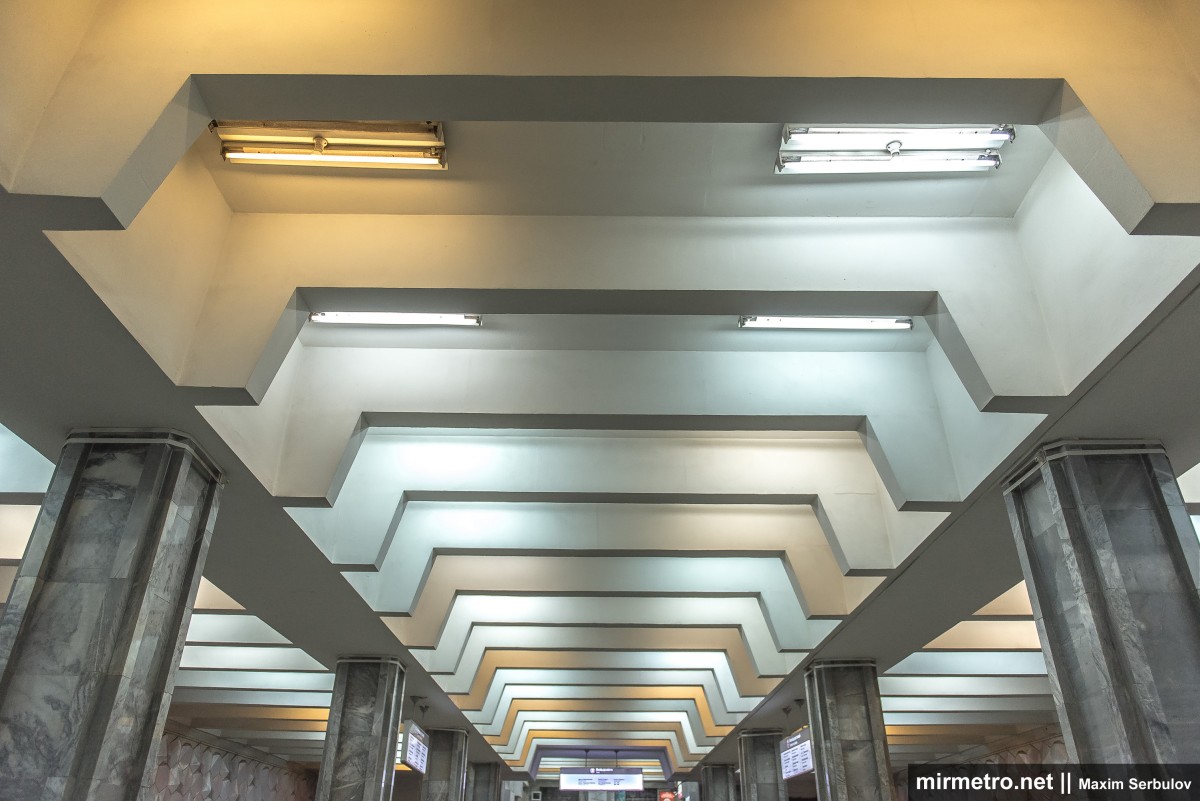
The ceiling is divided into rectangular coffers containing elongated fluorescent light fixtures that combine warm and cool lighting. The ribs separating the coffers in the central span are trapezoidal in shape, making the central hall appear higher than the platform areas.
Palats Sportu metro station, Kharkiv

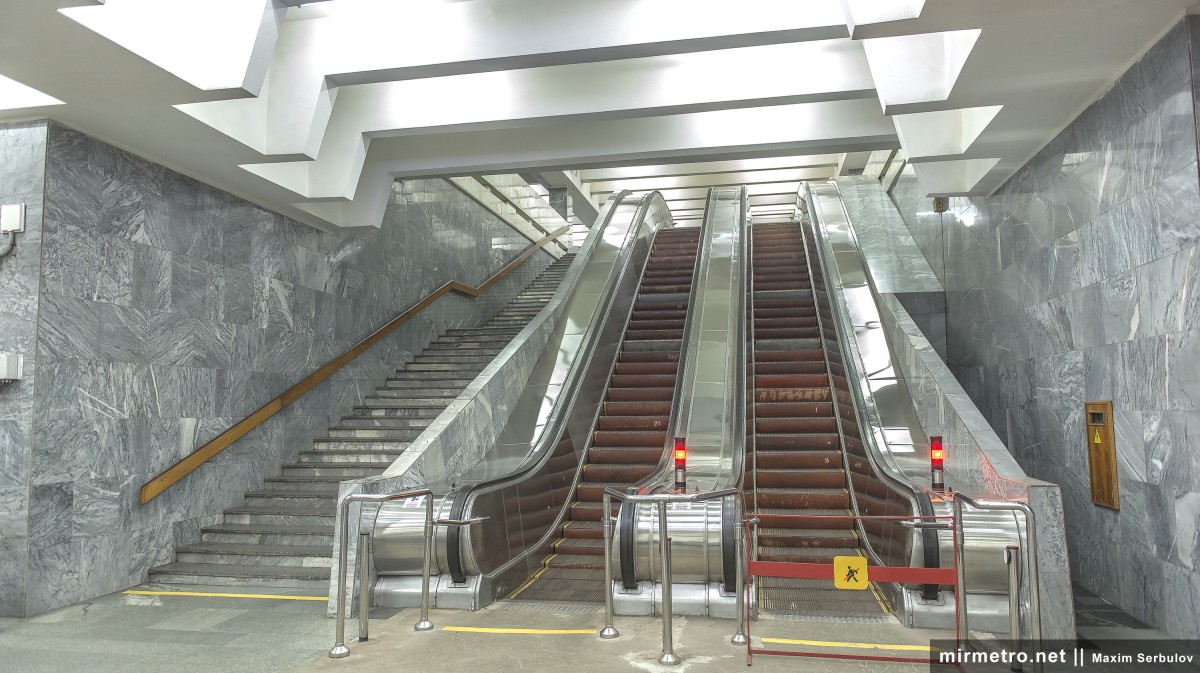
The eastern vestibule is connected to the platform by a two-escalator incline operating only in the upward direction.
Palace of Sports metro station, Kharkiv, escalator

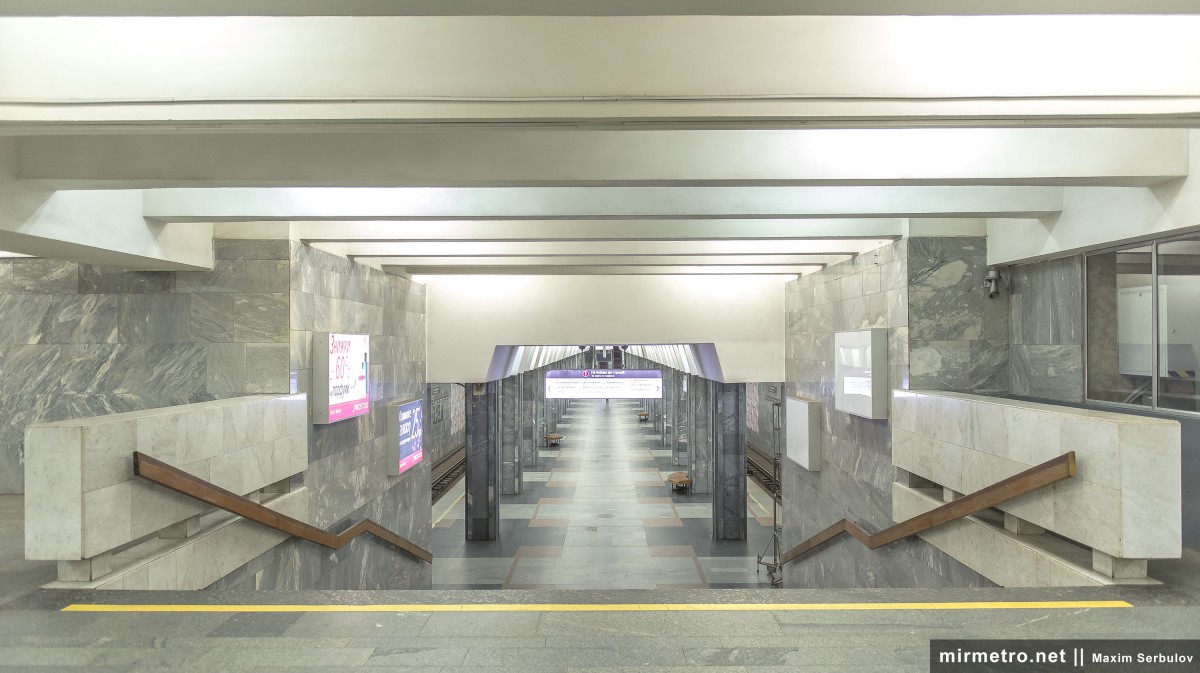
Grey marble was also used throughout the vestibules and staircases.
Palats Sportu metro station, Kharkiv

The station takes its name from the nearby Kharkiv Palace of Sports, a major indoor sports arena with a playing area of 1,600 square metres.
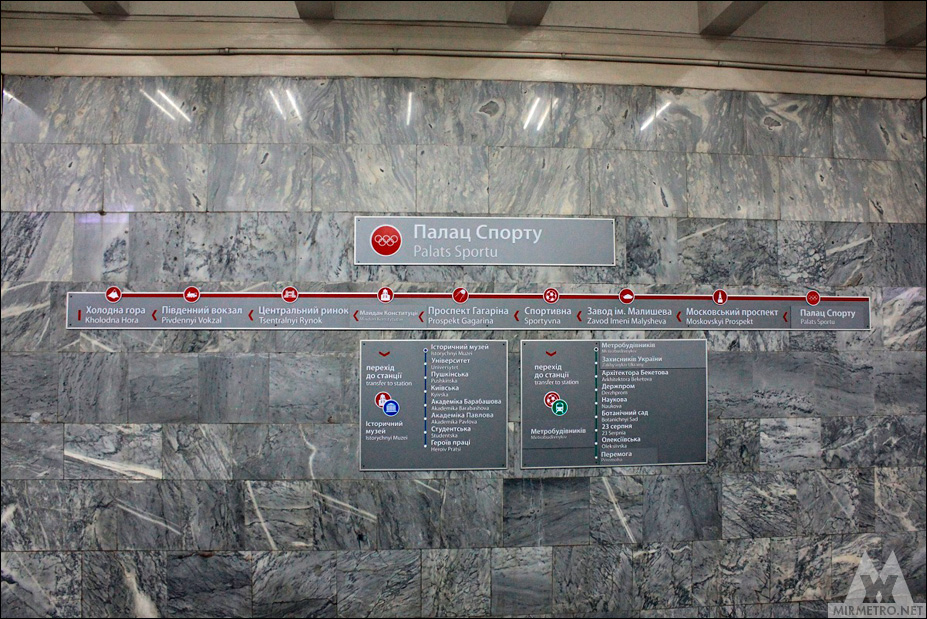
The Palace of Sports metro station in Kharkiv, a sign on the wall

From 1994 to 2016, the station was known as Marshala Zhukova, following its renaming at the initiative of Kharkiv veterans’ organisations.
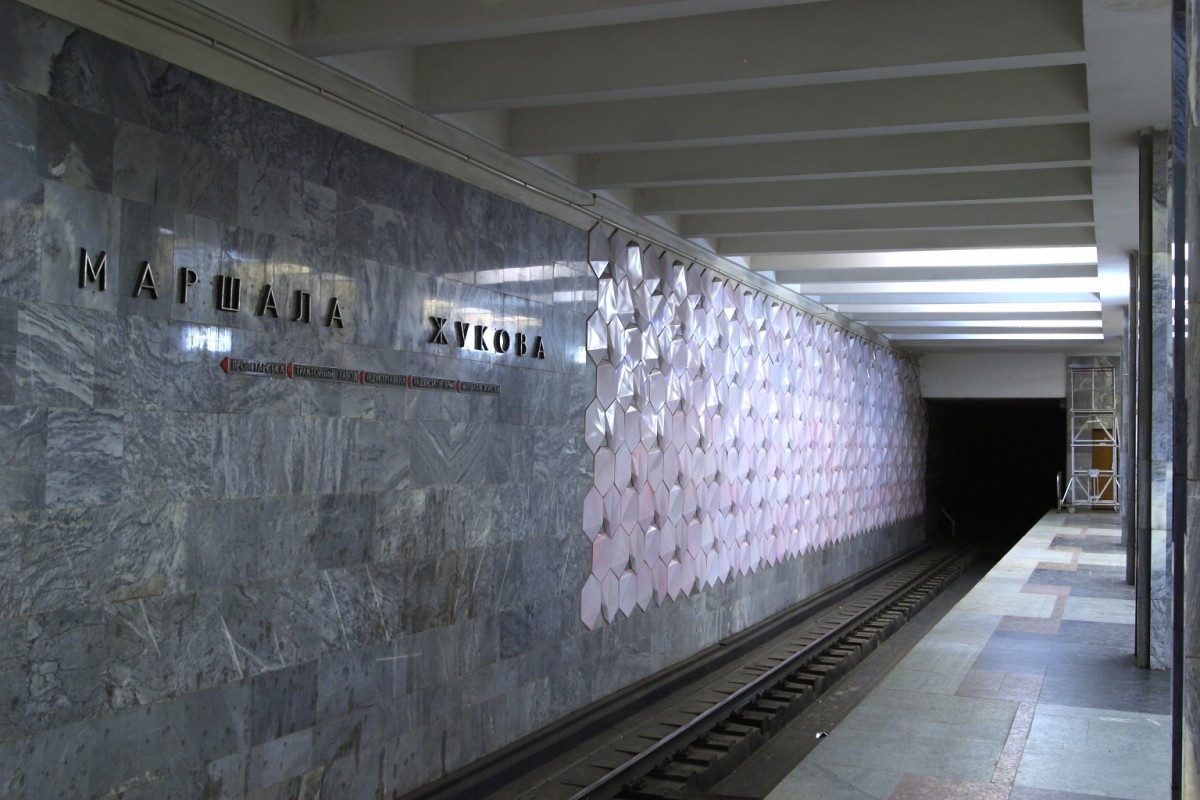
Palats Sportu metro station, Kharkiv

A bust of Marshal Zhukov was installed in the eastern vestibule in 1997. Following the station’s renaming in 2016, it was concealed behind a plasterboard wall.
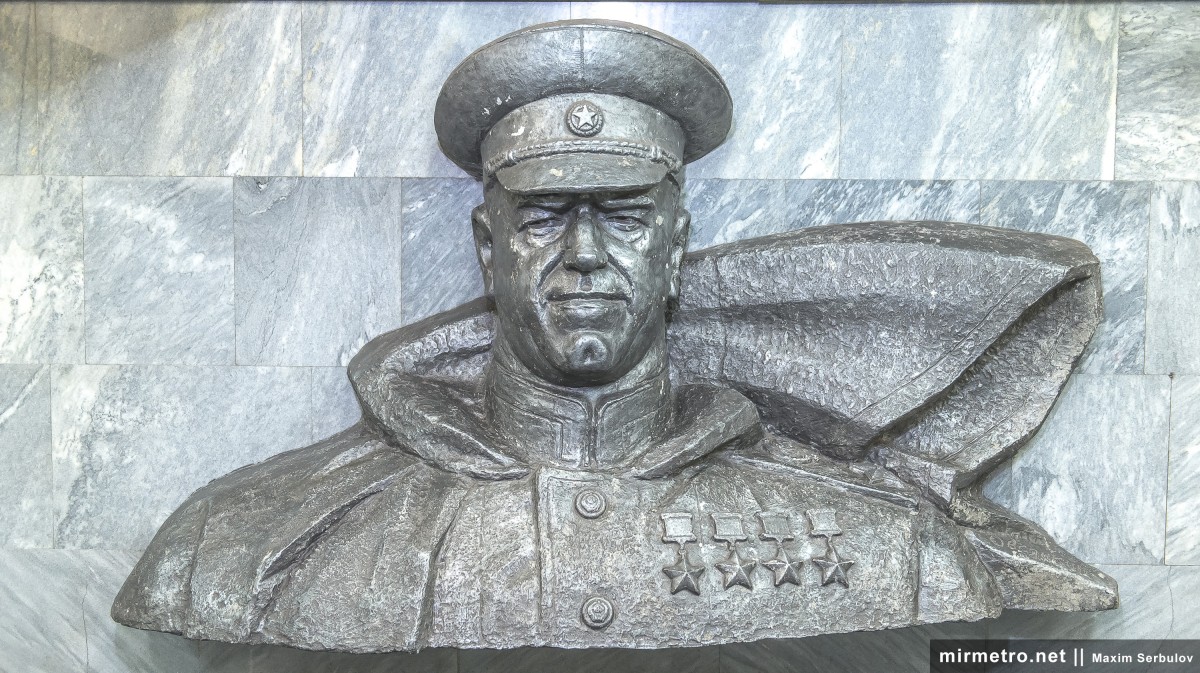
Palace of Sports metro station, Kharkiv, bust of Zhukov

The station staff on the day of the opening.
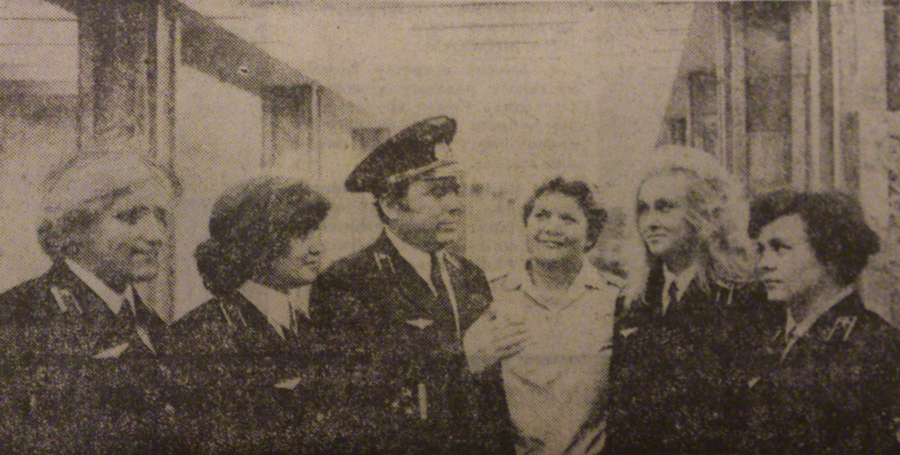
Palats Sportu metro station, Kharkiv, old photo

Komsomolska station during its first years of operation.
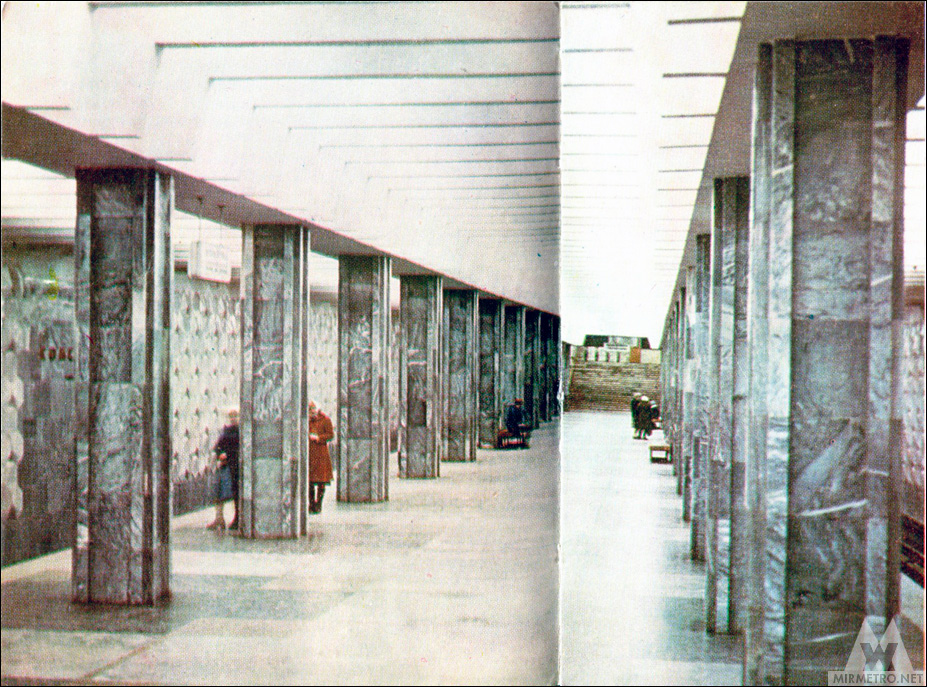
Palats Sportu metro station, Kharkiv, old photo

Palats Sportu metro station, Kharkiv, old photo

Palats Sportu metro station, Kharkiv, old photo

The photograph shows the original escalator operator’s booth, which was removed in the early 1990s.
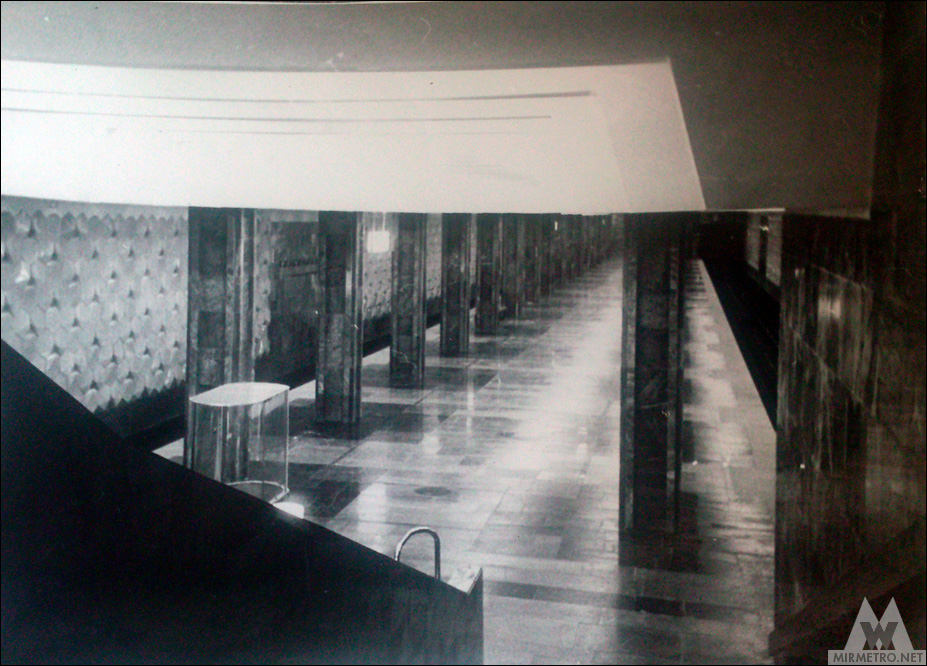
Palats Sportu metro station, Kharkiv, old photo

The sculptor beside his work.

Palats Sportu metro station, Kharkiv, old photo

Until the early 1990s, a cast-metal composition dedicated to the Komsomol stood above the escalator.

Bas-relief at the Palats Sportu metro station

Construction and projects

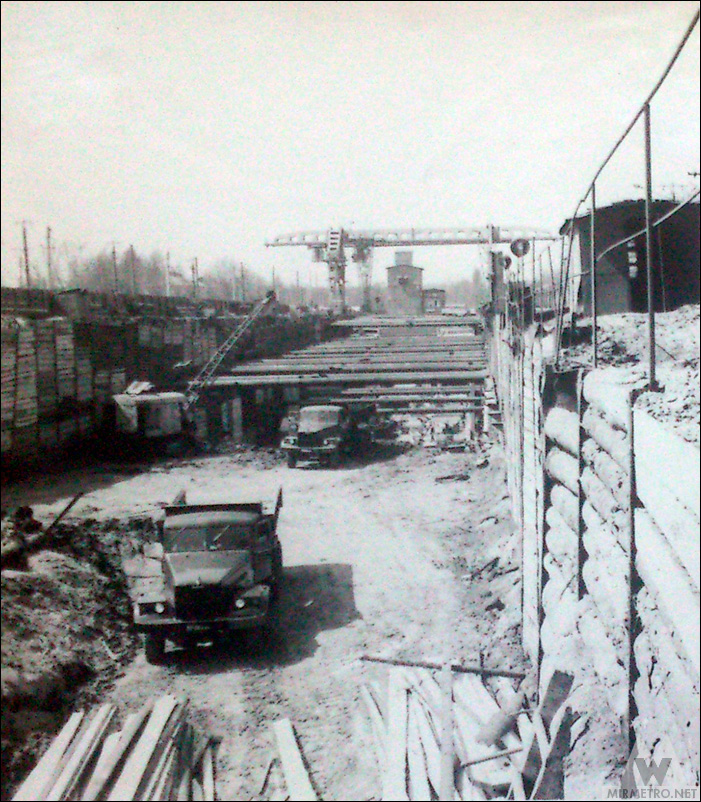
Palats Sportu station was built using the cut-and-cover method at a shallow depth, following the standard three-span column station design. A large excavation pit was opened along Moskovskyi Prospekt (now Heroiv Kharkova Avenue), where the station was assembled from large prefabricated reinforced concrete elements manufactured at the Kharkivmetrobud reinforced concrete plant. The running tunnels, however, were excavated using underground mining methods.

The greatest challenge during construction was the dense network of underground utilities, particularly major water supply pipelines, many of which had to be relocated before work could proceed. The metro builders also had to exercise exceptional precision while driving the tunnels beneath the surface tracks leading from Turboatom station to the depot, where only a relatively thin layer of soil separated the two structures.

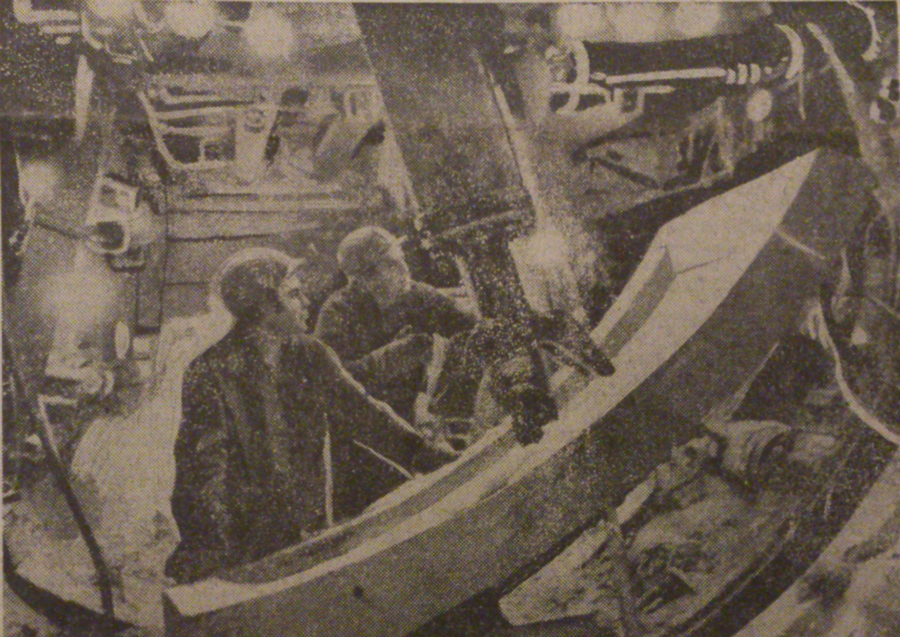
The local geology consisted mainly of ordinary sand and clay, providing much more favourable conditions than those encountered during the construction of the first section. This made it possible to use conventional mining techniques and, for the first time, a mechanized tunnelling shield with compressed concrete lining. The new technology increased the tunnelling rate to approximately 200 metres per month while significantly reducing ground settlement.

Mechanized tunnelling shield in the excavation pit of Komsomolska station.
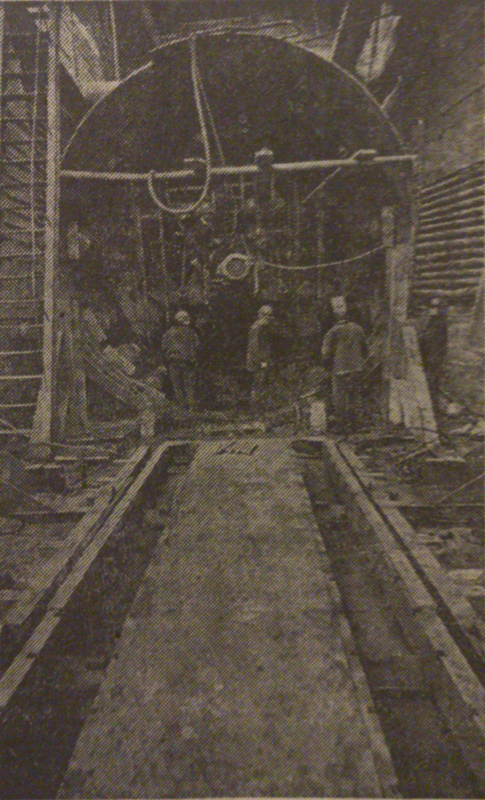
Construction of the Palats Sportu (Komsomolska) metro station, Kharkiv

The shift foreman and miners discuss the day’s work beside the tunnelling shield.
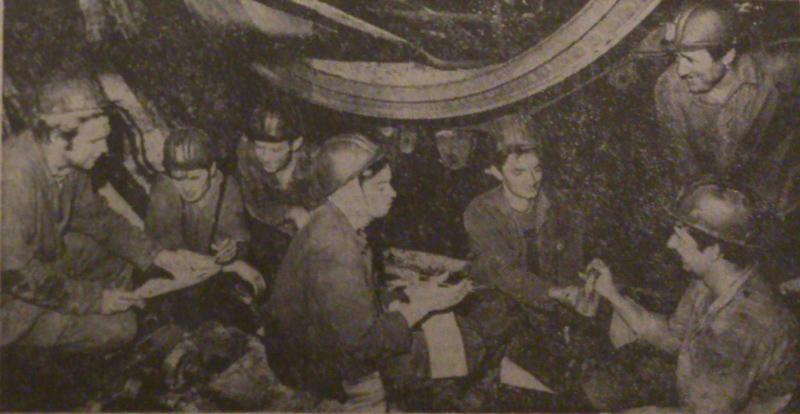
Construction of the Palats Sportu (Komsomolska) metro station, Kharkiv

Metro builders install precast reinforced concrete tunnel sections on the Komsomolska – Moskovskyi Prospekt section.
Construction of the Palats Sportu (Komsomolska) metro station, Kharkiv

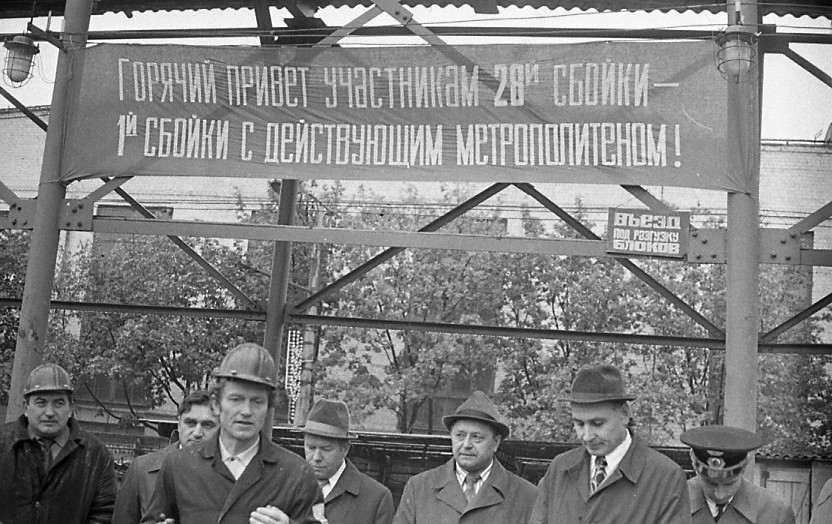
A team of metro builders at a ceremonial gathering following the tunnel breakthrough at Komsomolska station.
Construction of the Palats Sportu (Komsomolska) metro station, Kharkiv

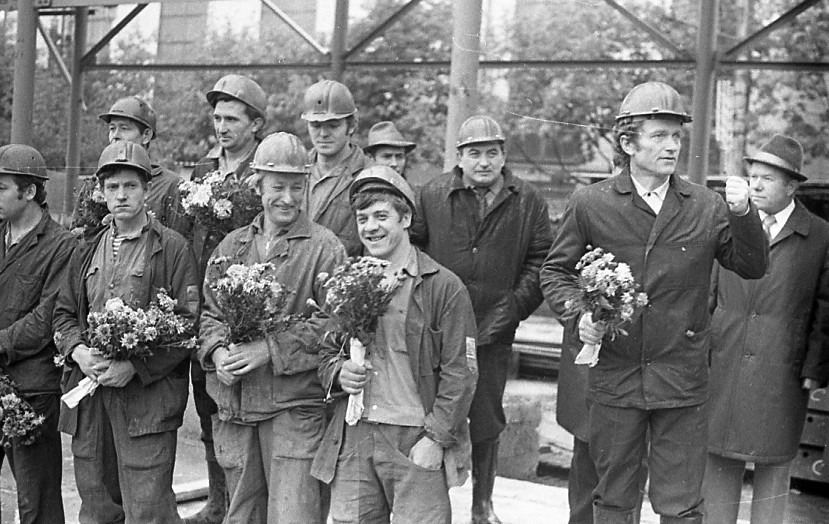
The metro builders are congratulated by the management of Kharkivmetrobud and employees of the nearby factory.
Construction of the Palats Sportu (Komsomolska) metro station, Kharkiv

The excavation pit of the station.

Construction of the Palats Sportu (Komsomolska) metro station, Kharkiv

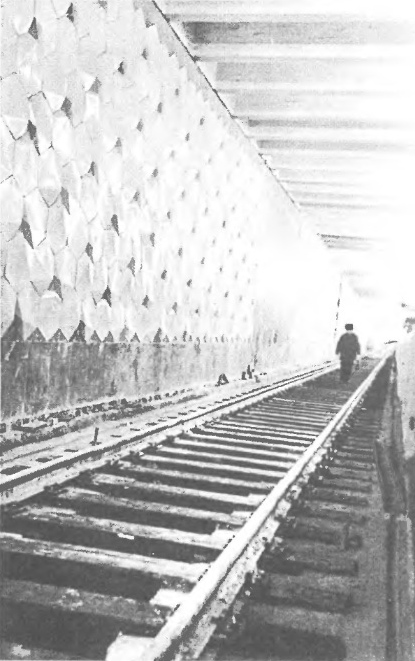
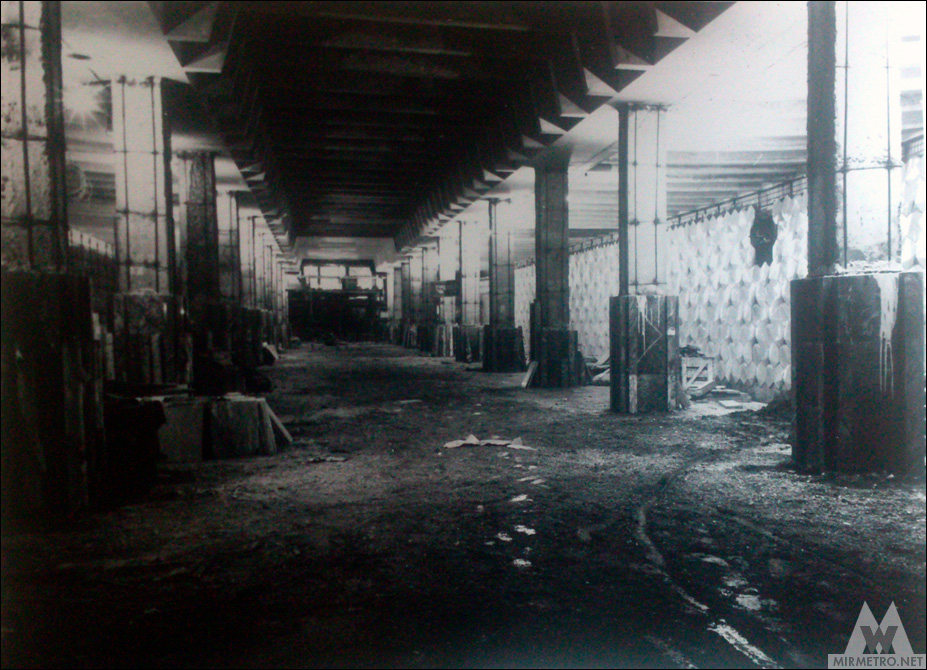
The station seven months before opening.
Construction of the Palats Sportu (Komsomolska) metro station, Kharkiv

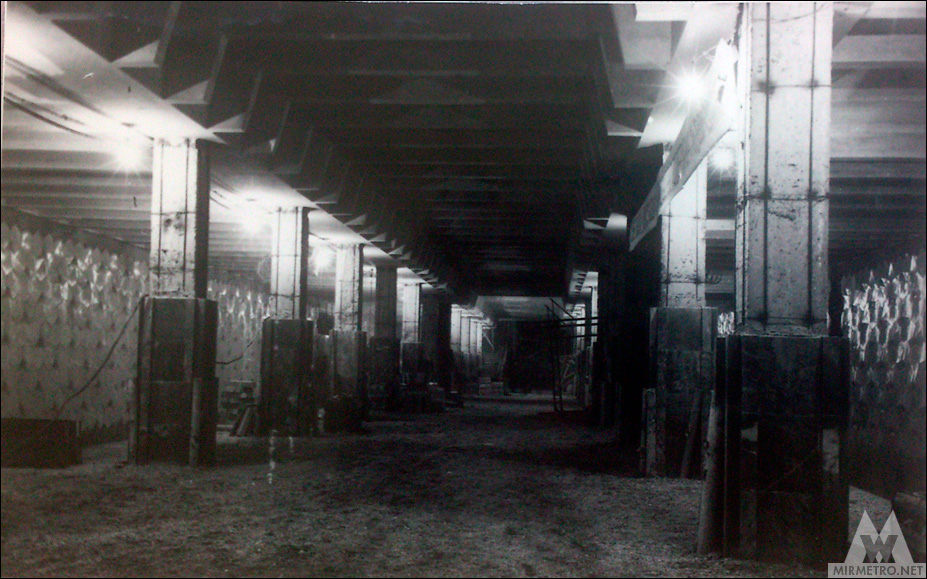
Cladding work on the station columns is underway.
Construction of the Palats Sportu (Komsomolska) metro station, Kharkiv

The ceiling light fixtures have not yet been installed, so the station is temporarily illuminated by large suspended work lights.
Construction of the Palats Sportu (Komsomolska) metro station, Kharkiv

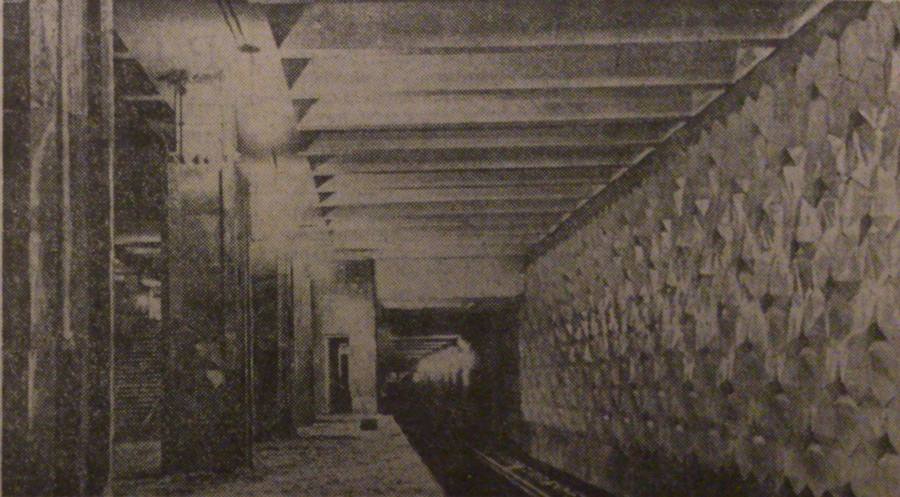
The station four months before opening.
Construction of the Palats Sportu (Komsomolska) metro station, Kharkiv

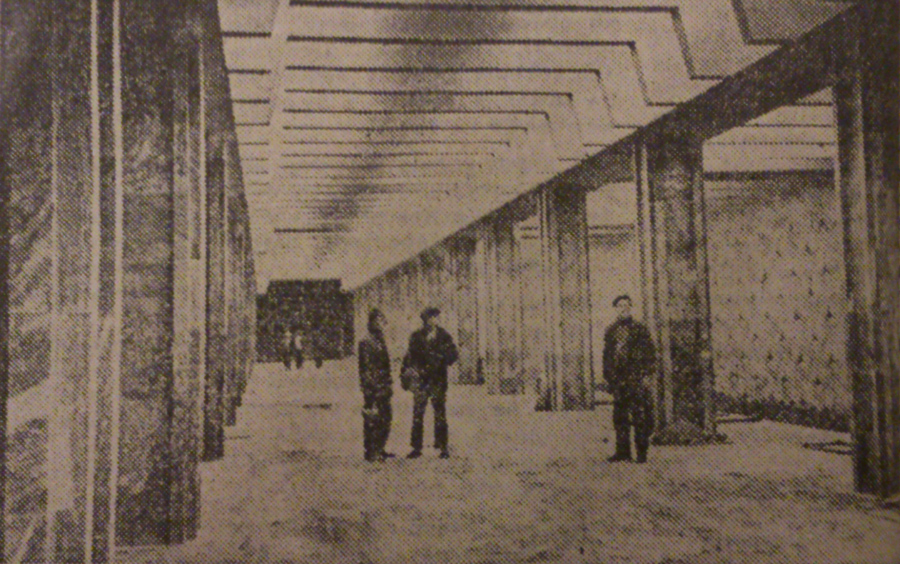
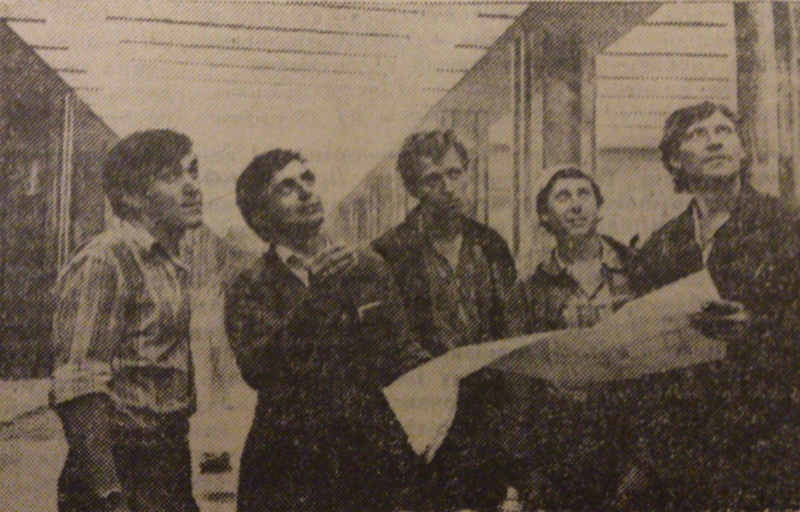
Final inspection of the station before commissioning.
Construction of the Palats Sportu (Komsomolska) metro station, Kharkiv

Electricians test the station lighting.
Construction of the Palats Sportu (Komsomolska) metro station, Kharkiv

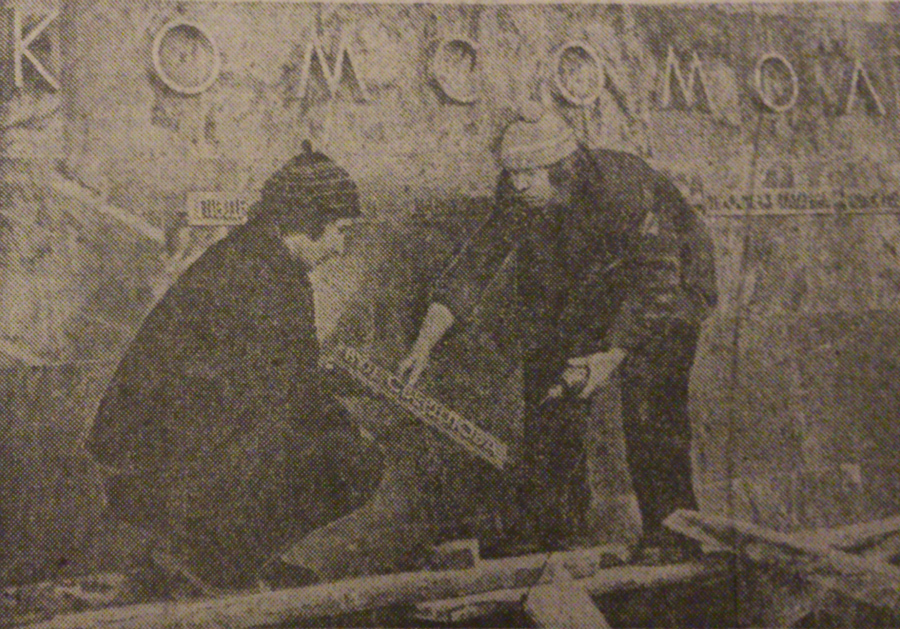
Installation of the station name lettering and track wall signage.
Construction of the Palats Sportu (Komsomolska) metro station, Kharkiv

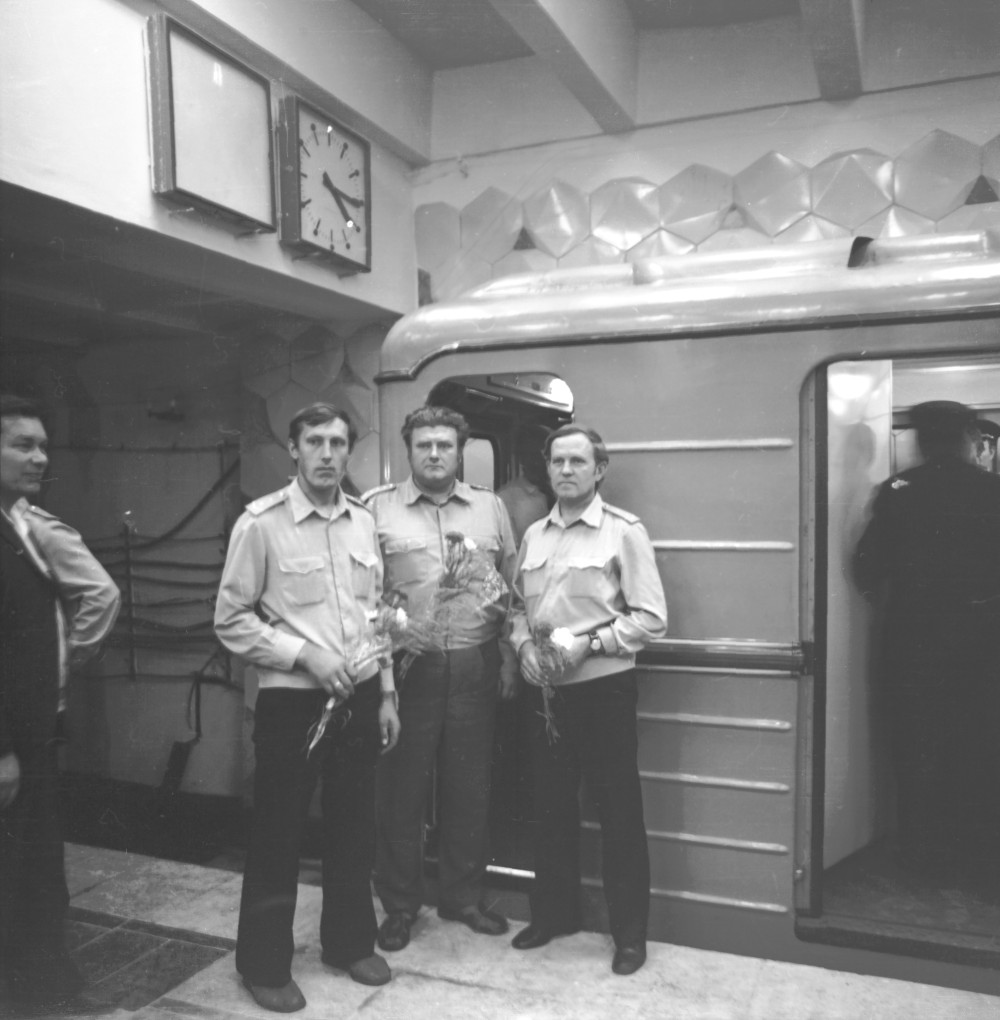
A test train at Komsomolska station, 20 July 1978. The photograph shows the original pointer-type interval clock, which was replaced with an electronic version in 1980.
Construction of the Palats Sportu (Komsomolska) metro station, Kharkiv

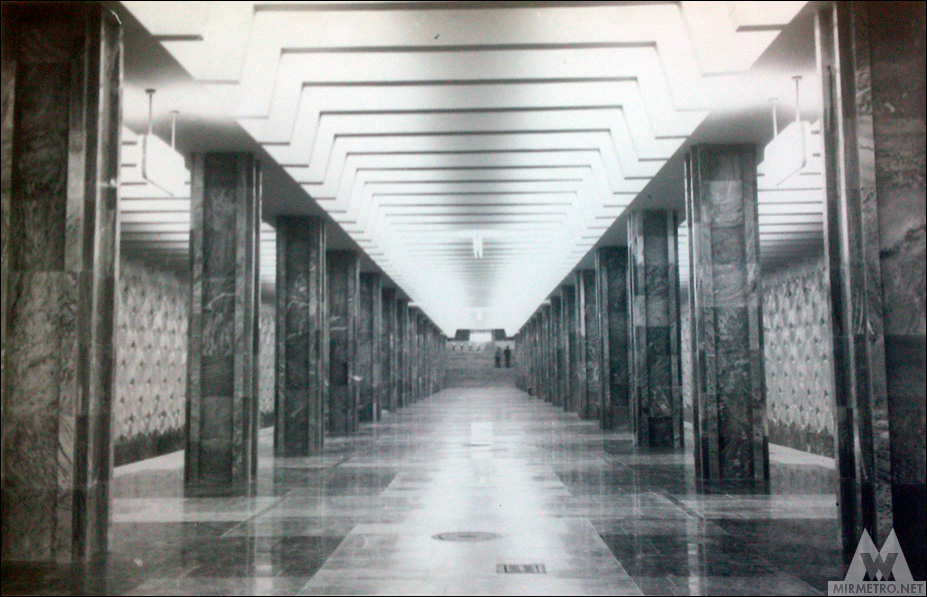
The station in the final days before opening.
Construction of the Palats Sportu (Komsomolska) metro station, Kharkiv

The approved concept design.

The design of the Palats Sportu (Komsomolska) metro station, Kharkiv

No Comment! Be the first one.

Leave a Reply Cancel reply

Your email address will not be published. Required fields are marked *

4 × 4 =