First Stage (1968-1975)
With the appearance of the first construction site, fenced off with boards bearing the letter “M”, the attention of Kharkiv residents was immediately focused on the progress of the work. Watching from outside, only piles of earth from excavated pits, the work of cranes and bulldozers, and dump trucks carrying building materials, people were interested in how the metro builders were working and what labour achievements they had accomplished, but the most frequently asked question was when the first blue express trains would run under the streets and squares of Kharkiv. Apart from the metro builders themselves, few knew what titanic work lay ahead and how many obstacles had to be overcome. The construction of the Kharkiv Metro was undertaken by a team of specialists in their field, many of whom had already worked on the construction of the Moscow, Baku and other metros, while some had taken part in the building of coal mines, hydroelectric power stations and underground railway tunnels. Therefore, the metro builders were ready for difficulties and undertook to put the first launch section into operation by the new year of 1976 (such was the initially set deadline).
The first station to be started was Pivdennyi Vokzal, as it was the most complex to build and one of the most significant. On 23 August 1968, on the 25th anniversary of the liberation from the Nazi invaders, construction of the Radyanska station began with the sinking of a shaft on Constitution Square. Within two years, construction sites for four more stations had appeared.
Without exaggeration, it can be said that the metro builders who constructed the stations and tunnels of the first launch section accomplished a real feat. Tunnels were driven under major transport arteries and densely populated neighbourhoods, in terrain with a considerable difference in elevation. Three-quarters of the route passed through weak, unstable and highly water-saturated soils, where in places over 200 cubic metres of water per hour entered the face. Working in such conditions is enough to drive any underground construction worker mad. To cope with the underground elements, various methods of combating groundwater were employed – the caisson method, ground freezing, dewatering, chemical stabilisation of soils, and so on.
For artificial dewatering, deep-well pumps, ejector units and light wellpoint installations were used. The main weapon in the fight against groundwater proved to be face dewatering installations. Characterised by their small dimensions and high degree of vacuum, these installations made it possible to effectively drain pits and the invert sections of tunnels where thin interlayers of water-bearing sands alternated with loams and clays and where filtration coefficients were low. Dewatering above an aquiclude, using submersible pumps and the main components of suction systems, is performed by means of a series of complex devices and components: a water-jet pump, a water-collecting manifold, wellpoints, connecting pipelines and hoses. This is precisely how the builders overcame groundwater at the Tsentralnyi Rynok, Radyanska, Prospekt Gagarina and Sportyvna stations.
Twenty per cent of the total length of the launch section was driven using the caisson method under compressed air – the most unpleasant one for metro builders. This method was especially indispensable when negotiating quicksands under the Lopan and Kharkiv rivers. Its essence is as follows: in the already driven tunnel, powerful bulkheads with airlock devices are erected for the passage of people, the removal of spoil and the delivery of materials. Compressed air at high pressure is supplied behind the bulkhead, which holds back the groundwater and prevents it from entering the face. Builders who work in such conditions must be in good health and are under constant medical supervision. Understandably, such work does not pass without a trace for one’s health – many of the builders who worked in the caisson subsequently fell seriously ill and died while still of quite able-bodied age.
For the construction of tunnel and station structures, precast or cast-in-situ reinforced concrete was mainly used, but under the most difficult conditions, such as at the Pivdennyi Vokzal and Radyanska stations, cast-iron tubbings served as the load-bearing structures of the tunnels and stations. Deep-level station structures were assembled using a hydraulic mine crane on a rail-mounted chassis. Spoil was brought to the surface by a cantilever inclined hoist.
When designing open-cut stations, Kharkivmetroproekt proposed standardising the precast reinforced concrete components in order to reduce their number, simplify assembly, and make the construction of the station cheaper overall. Their production was quickly mastered by the Kharkiv Reinforced Concrete Structures Plant. Such standardised components were used for the first time during the construction of the Vulytsia Sverdlova station. Among the new technical solutions was the design for constructing running tunnels in an open pit by assembling rectangular reinforced concrete blocks measuring approximately 4×5 m. The tunnel sections adjacent to shallow-level stations were built in this way. Subsequently, monolithic sections came to be used in the construction of other metros in the USSR.
To speed up and mechanise the construction process, Kharkiv enterprises manufactured a tunnelling shield, which was first used on 11 August 1969 in the driving of the Radyanska – Prospekt Gagarina section. The components of this shield were produced at Kharkiv factories, delivered to the construction site, then lowered down through a shaft and assembled into a tunnelling shield at the face. The use of tunnelling shields made it possible to increase the rate of tunnel driving, reduce labour and material costs, and improve the quality of the work.
Of course, the most difficult undertaking was the construction of the Pivdennyi Vokzal station, where the builders faced the most challenging soils with quicksand properties – extremely waterlogged clays and granular sandstones, with around 230 cubic metres of water per hour entering the face. In order to build the station in soils that were half water, the entire underground area around the station was artificially frozen. In this way, the groundwater was turned into a solid ice shell, inside which the tunnellers drove the station and running tunnels. To freeze the entire required volume of soil, about one and a half thousand boreholes had to be drilled – a total of 24 kilometres. Through them, a cooled solution of calcium chloride or sodium chloride was pumped into the ground using powerful compressors. Because of the aforementioned circumstances, the station was even built with a shortened platform – 80 metres – and could only accommodate four-car trains. The platform was extended to the required length only a few years after the station opened. But the problem was not confined to the difficult geological conditions; the work was significantly complicated by the proximity of three massive buildings – the headquarters of the South Railway, the Kharkiv Main Post Office, and the railway station building itself. A mistake during construction could have led to severe subsidence on the surface and damage to the buildings.
The navigators of the underground routes — the mine surveyors — also did their job perfectly. Since the line’s routing passes through hilly terrain with a large difference in elevation, carrying out the calculations is substantially more complicated. Nevertheless, the assembly of the structures at all stations was executed with impeccable precision, and the deviation in axes when meeting counter-headings, with a maximum permissible of 50 millimetres, usually did not exceed 10 millimetres and in many cases was close to zero.
Yet another colossal “surprise” was a sudden inrush of water-saturated sand through the seams of the tunnel lining on the section between Radyanska and Prospekt Gagarina, caused by a rise in the groundwater level, as a result of which the tunnels were flooded with water over more than two-thirds of their cross-section. Traditional strengthening of the tunnels with a reinforced concrete “jacket” would have been expensive and time-consuming, so a decision was made to apply chemical stabilisation of the soils, using compounds with carbide resins where oxalic acid serves as a hardener. Thanks to these measures, leaks and soil ingress in the tunnels were almost completely eliminated.
For the waterproofing of the tubbing and block tunnel linings under difficult geological conditions, Kharkiv specialists developed a new quick-setting expanding cement. This waterproofing material is characterised by a simpler composition, low cost and high reliability. Penetrating between the gaps in the tunnel lining, this cement instantly fills all voids. A unique feature of this mortar is that, depending on the proportions of the components, the setting time can be regulated over a wide range. Another new waterproofing material that also found application was hydrostekloizol (glass-fibre waterproofing mat), which fundamentally changed the work technology. It is applied by heating with the flame of a gas burner, rather than with molten bitumen as with other materials. This also yielded benefits in terms of quality, time and cost.
The builders were greatly troubled by various utilities — the relocation of cables for different purposes, sewer mains, storm drains, water pipelines, as well as tram and trolleybus tracks. The area around the Zavod Imeni Malysheva and Moskovskyi Prospekt stations was especially rich in underground utilities — obviously owing to the industrial area. Therefore, despite the fact that the geological conditions for their construction were favourable, the builders also had to take great pains over the relocation of underground services.
A true innovation in metro construction was the design of a single-vault shallow-level station, developed by the team of the Kharkivmetroproekt institute. The single-vault station received a fundamentally new structure, built of cast-in-situ reinforced concrete by an industrial method using travelling metal formwork. Tsentralnyi Rynok, Sportyvna and Moskovskyi Prospekt stations were built according to this design. This method of construction proved to be incomparably simpler and more economical than the single-vault construction technologies existing at that time. The design turned out to be so successful that single-vault stations of this type are still being built today in the CIS countries and Eastern Europe.
As for the familiar column-type stations, the large-size reinforced concrete elements were slightly modified and their main dimensions standardised, which also reduced the construction time and its cost. Among the new technical solutions of Kharkiv’s engineers are also the monolithic section elements used to build the tunnel sections adjoining shallow-level stations. Besides the saving in cost, the monolithic sections made it possible to reduce the labour intensity of assembly and of the surface preparation work for waterproofing.
Every year the builders fulfilled the annual plan ahead of schedule. This enabled them to undertake to complete all the work by 23 August 1975 — that is, more than four months earlier than the original deadline. The names of the heroes who gave the city these underground palaces will forever go down in the metro’s chronicle.
Mykola Kvitko

Anatolyi Mamon
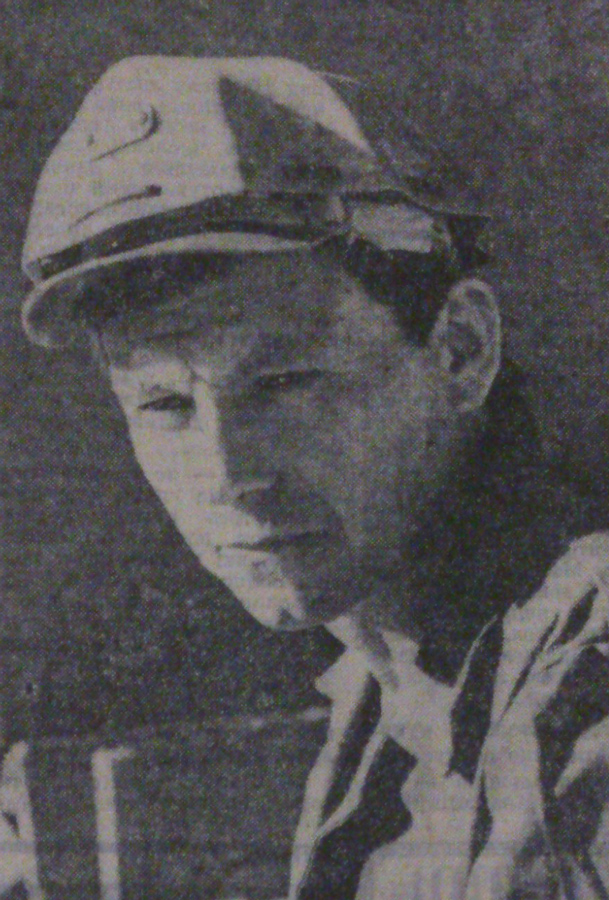
Mykhailo Lalazarov

Although the phrase “Friendship of Peoples” is traditionally associated with clichés of Soviet propaganda, it was no empty phrase during the construction of the Kharkiv Metro. Representatives of 32 nationalities worked on the building of the stations and tunnels.

The Kharkivmetroproekt institute played a decisive role in determining what kind of underground palaces the people of Kharkiv would receive. For each station, it was necessary to create its own architectural composition that would reflect the station’s name and the features of the surrounding area, while taking into account all the structural aspects imposed by the geology, terrain and urban development. In particular, care had to be taken to ensure that neighbouring stations were as dissimilar as possible and could not be confused with one another. It must be said that the architects’ work produced an excellent result: on a relatively modest budget, each station acquired its own unique architectural image, which did not leave Kharkiv residents indifferent.
Chief Architect Volodymyr Spivachuk
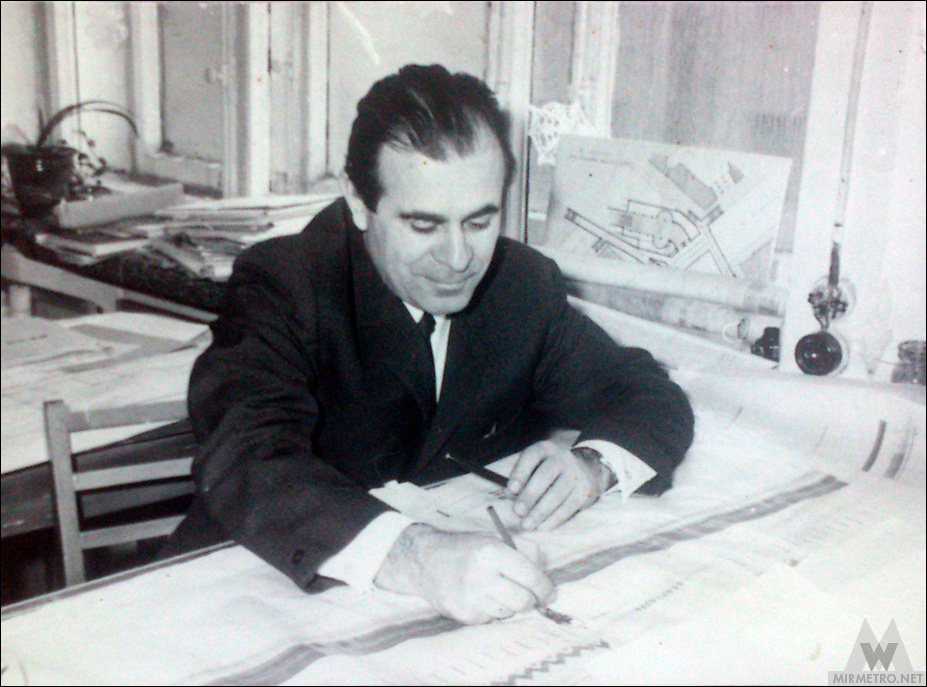
Architect Pavlo Chechelnitskyi
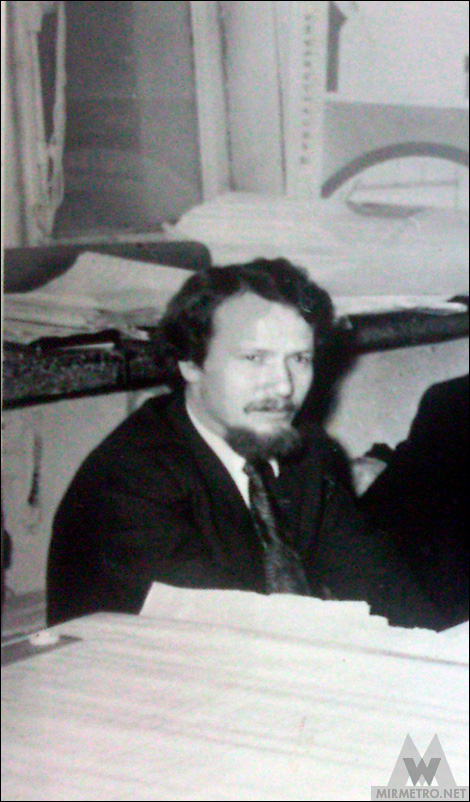
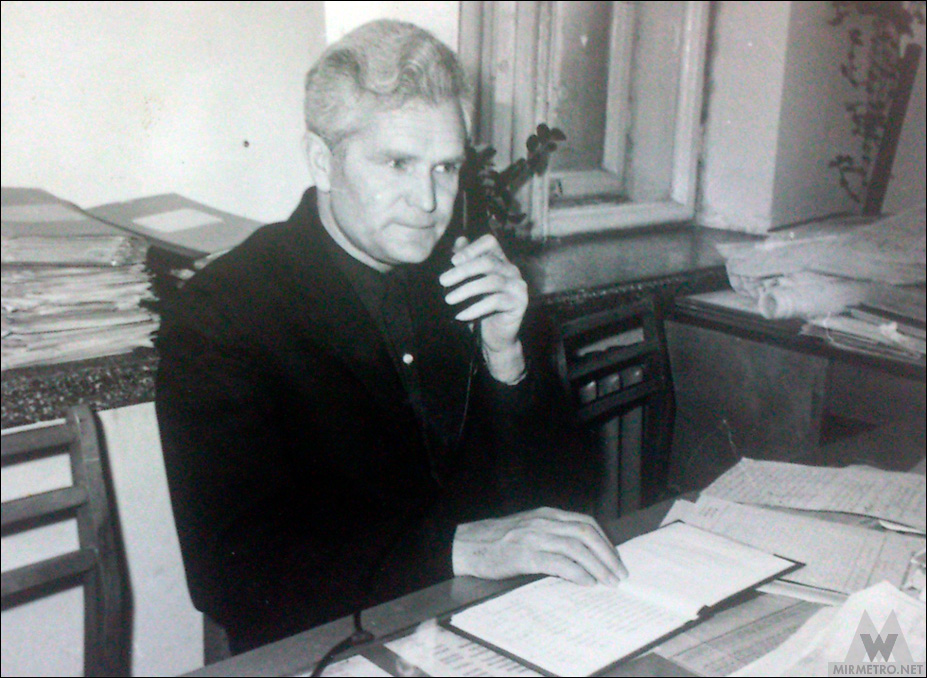
Head of the Design Department Petro Pashkov
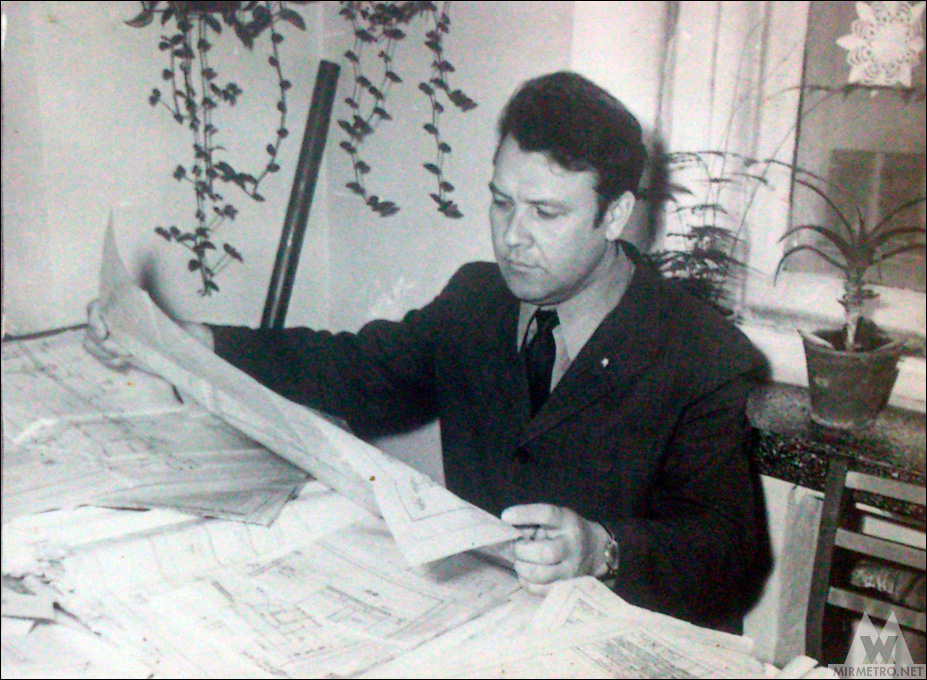
Chief Design Engineer Olexandr Varych
Unfortunately, not everything went smoothly in the architects’ work. Censorship imposed by party bodies introduced its own corrections, and often ruined striking architectural and artistic solutions. In the opinion of many metro builders, at that time it was simply impermissible for the architecture of the Kharkiv metro stations to rival those of the capital. Only the Sportyvna station was approved without problems, and its realisation underwent only minor changes compared to the project. For the other stations, architectural competitions usually selected the project whose decoration was more modest. Thus, highly original design solutions for the Pivdennyi Vokzal and Radyanska stations were rejected, and the decorative elements of the Tsentralnyi Rynok station were cut back. Of course, the greatest loss in this respect was the Prospekt Gagarina station, which in the project was called Levada. Its track walls were to be decorated with ceramic tiles depicting field grasses, cereals and flowers; the project had already been approved in Moscow and Kyiv, but several representatives of the Kharkiv authorities did not like it: they objected to the cornflowers, which are “weeds and pests of the fields”; to some, such decoration seemed nationalistic; and one of the party workers simply did not like the idea of using ceramics instead of marble. As a result, the station that was supposed to become one of the most beautiful in the USSR of that time turned out to be an ordinary and unremarkable “centipede” (a colloquial name for a typical column station).
The approved design for the Pivdennyi Vokzal station
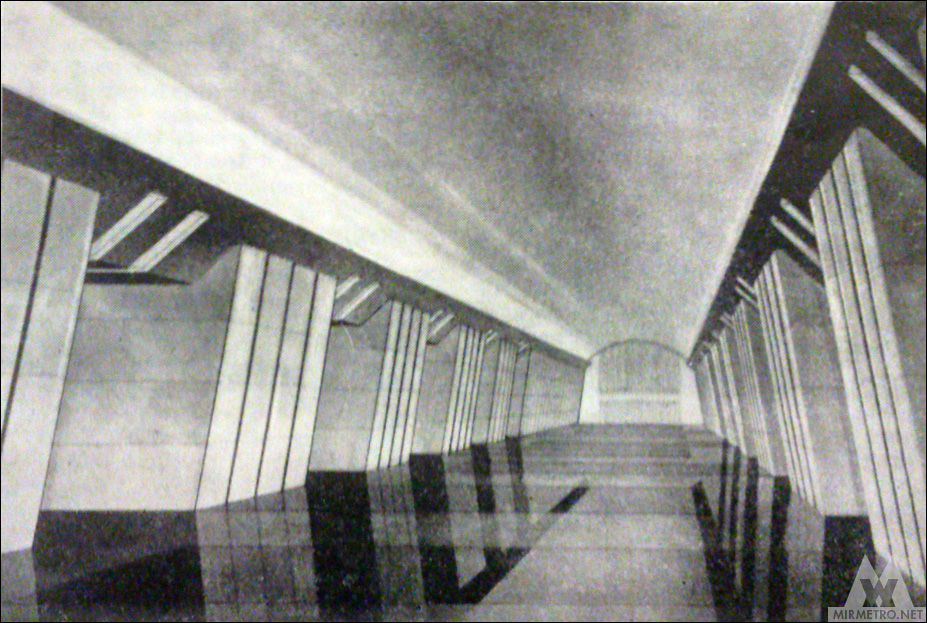
The approved design for the Tsentralnyi Rynok station

The approved design for the Prospekt Gagarina (Levada) station

The builders were supplied with materials by enterprises from the most diverse corners of the USSR. Thus, cast-iron tubbings came from Dnepropetrovsk and Leningrad; machinery and reinforced concrete structures from Moscow, Baku and Kiev; pipes and rolled metal from the plants of the Urals. The technological equipment for the metro was manufactured by Kharkiv factories.
The scale of the work carried out can also be judged from the following figures. Since the start of construction, more than 23 kilometres of tunnels had been driven, 24 holings-through completed, over 1.3 million cubic metres of soil excavated, 190,000 cubic metres of cast-in-situ and precast reinforced concrete laid, and 22 kilometres of permanent track installed. In total, 80 million Soviet roubles were spent on the construction of the first launch section of the Kharkiv Metro.
Finally, on 30 July 1975, the first trial train ran along the line. And on 21 August, a state commission headed by the chief of the Southern Railway, Mykola Konarev, signed the acceptance certificate for the operation of the first section of the first line of the Kharkiv Metro, grading it “excellent”. Eight stations were put into operation: Vulytsia Sverdlova (now Kholodna Hora), Pivdennyi Vokzal (now Vokzalna), Tsentralnyi Rynok, Radyanska (now Maydan Konstitutsii), Prospekt Gagarina (now “Levada”), Sportyvna, Zavod Imeni Malysheva (now Zavodska), Moskovskyi Prospekt (now Turboatom), as well as the Moskovske electric depot (now Nemyshlianske).
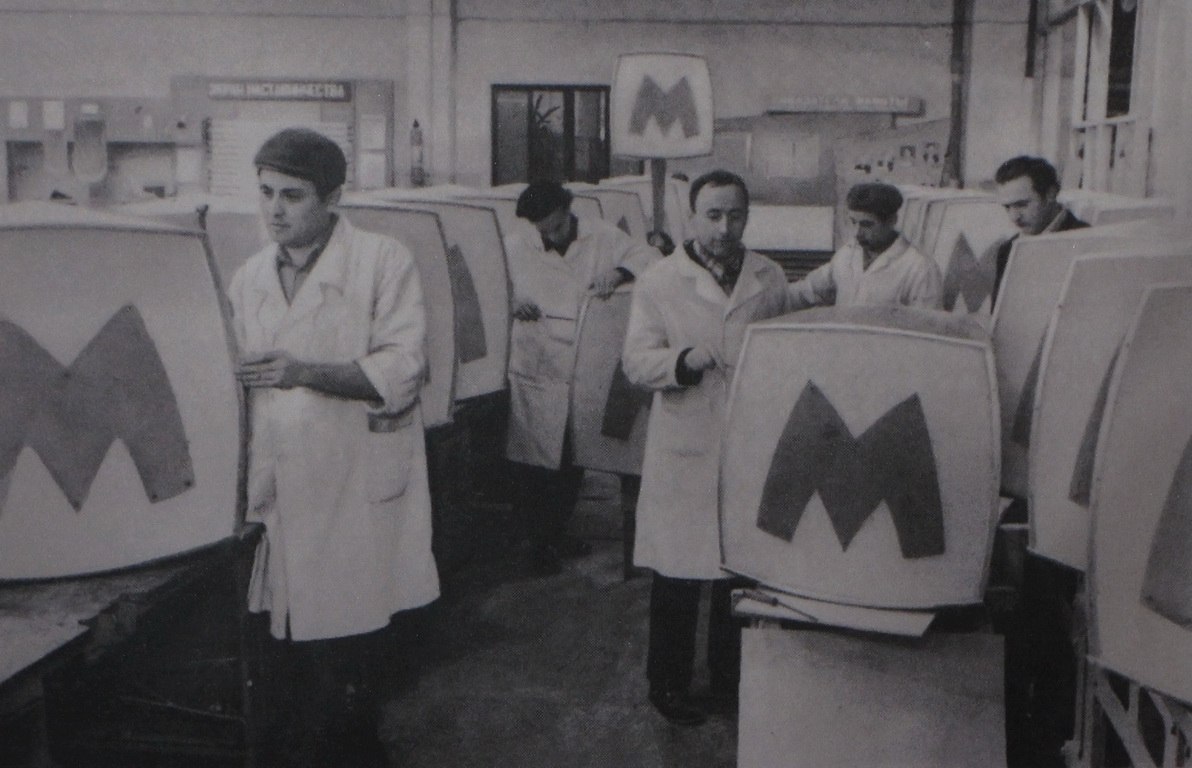
Manufacturing of signs with the letter “M” at the Kharkiv Aviation Plant
Metro administration building

Preparations for the launch of the first stage of the metro

Meeting of the state commission for the commissioning of the first stage of the metro
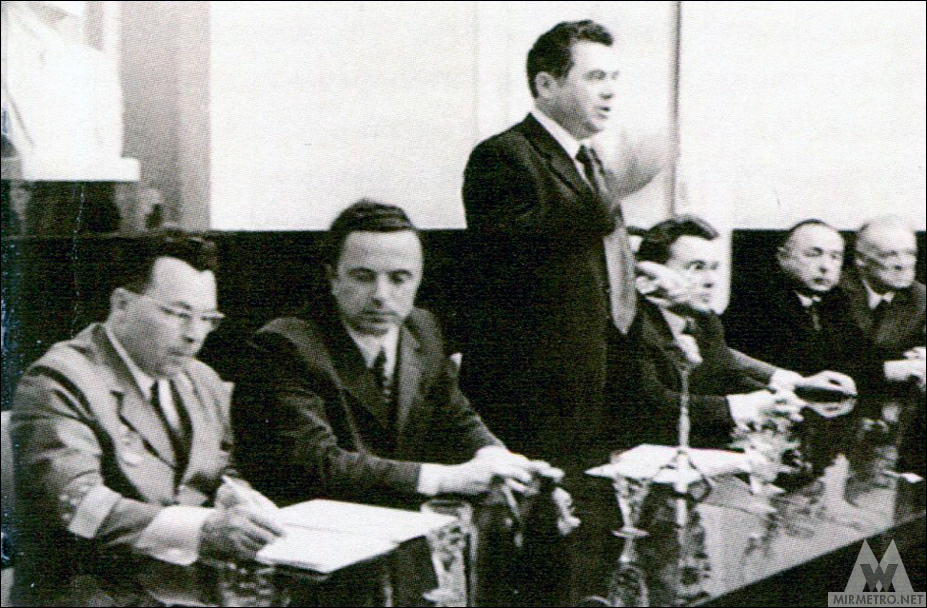
On 22 August 1975 at 4 p.m., a ceremonial meeting was held at Moskovskyi Prospekt station, attended by the metro builders themselves, designers, representatives of the city authorities and honoured guests.
The head of the metro construction department handed a symbolic key to the metro to the delegation of the operating staff of the Kharkiv Metro. It was received by the first head of the metro, Mykola Bessonov. A solemn moment arrived. To applause, a scarlet ribbon was cut. The meeting participants were invited to board the train.
Ceremonial meeting at Moskovskyi Prospekt station to mark the opening of the Kharkiv Metro.
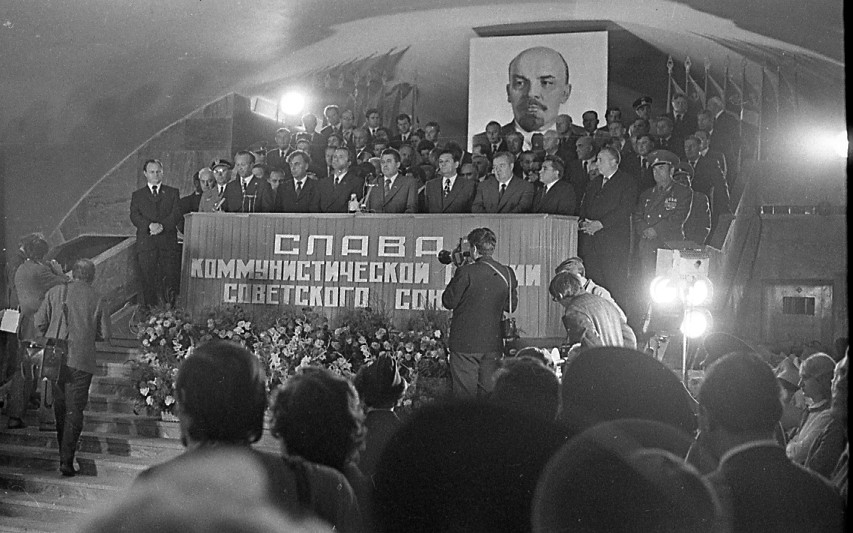
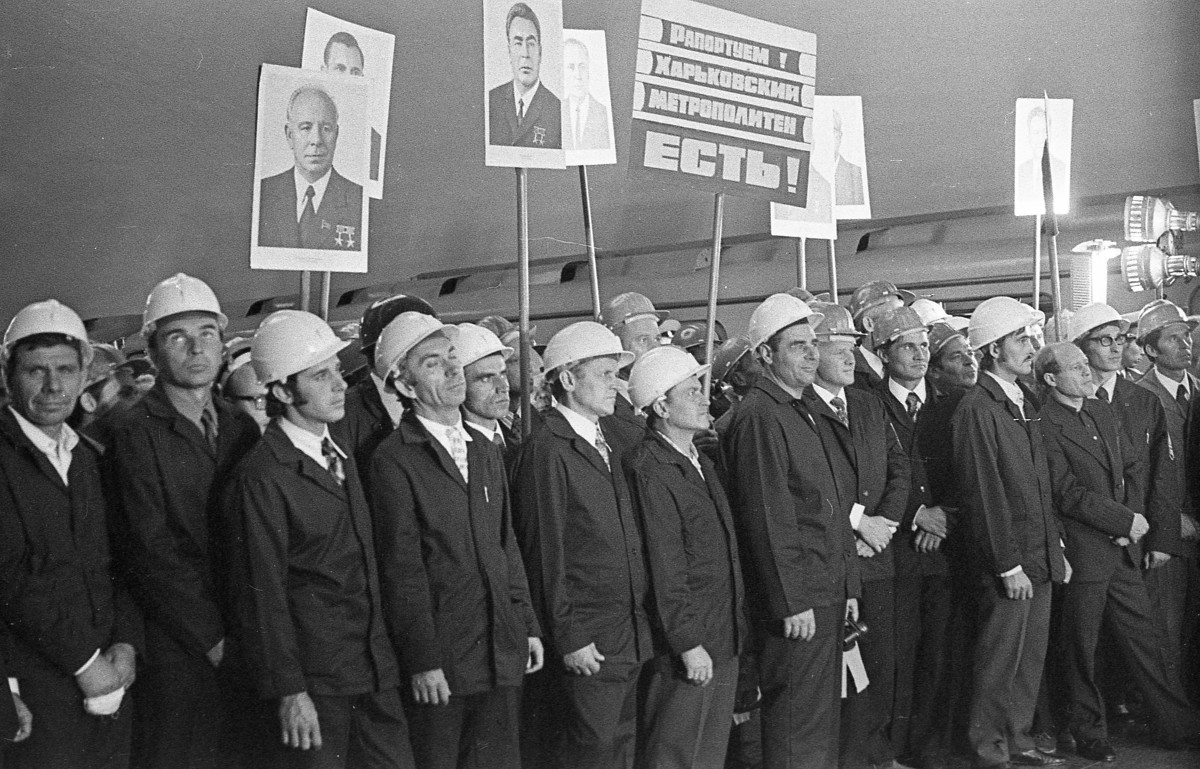
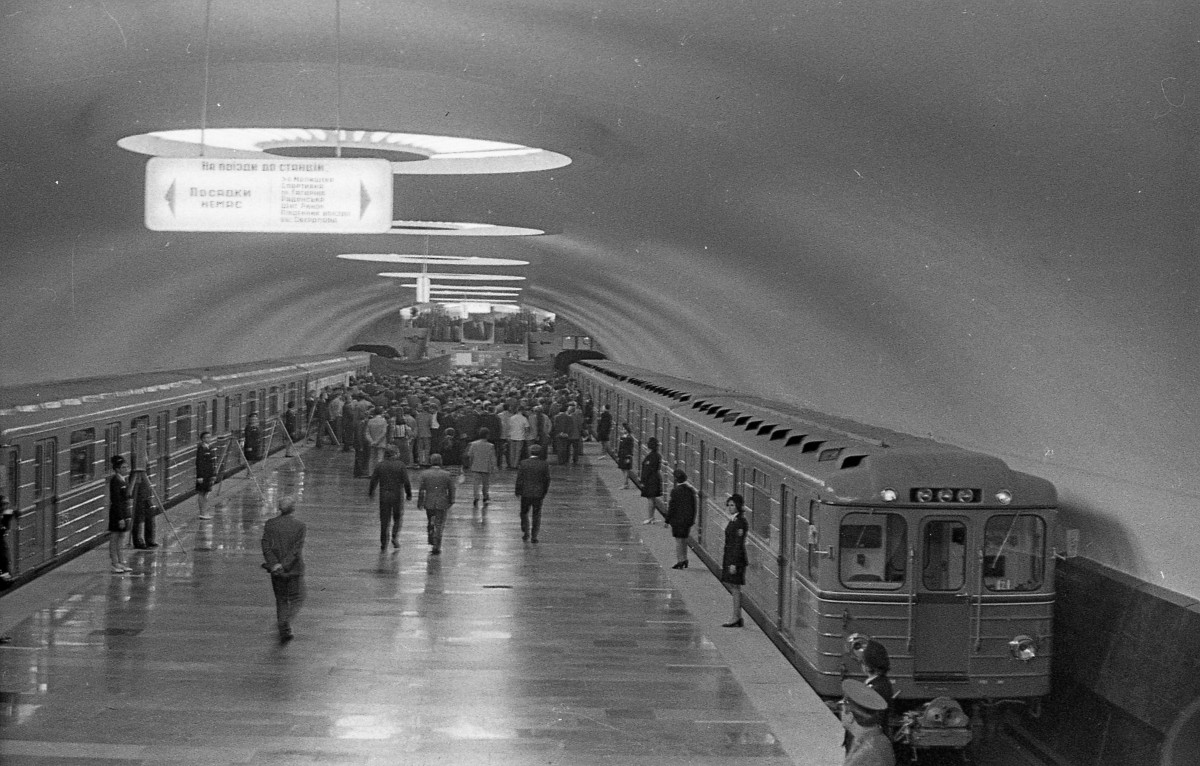
On 23 August 1975 at 6 a.m., crowds of Kharkiv residents were already thronging at the entrances to the newly built underground palaces. Although the architecture of the first stations was on the whole modest and restrained, people did not hide their joy and delight, and the visitors’ book was filled with numerous messages of gratitude. On the first day of the metro’s operation, 413,000 passengers used its services.
This became possible not only thanks to generous funding from the state. Great attention was paid to the construction of the metro at all levels of state structures. The whole city helped to build the metro – tens of thousands of Kharkiv workers took part in the construction. More than 300 enterprises and factories across the country supplied various materials, granite and marble, structures and equipment. The main role was played by the enormous labour and high qualifications of the builders who came from the most diverse parts of the country.
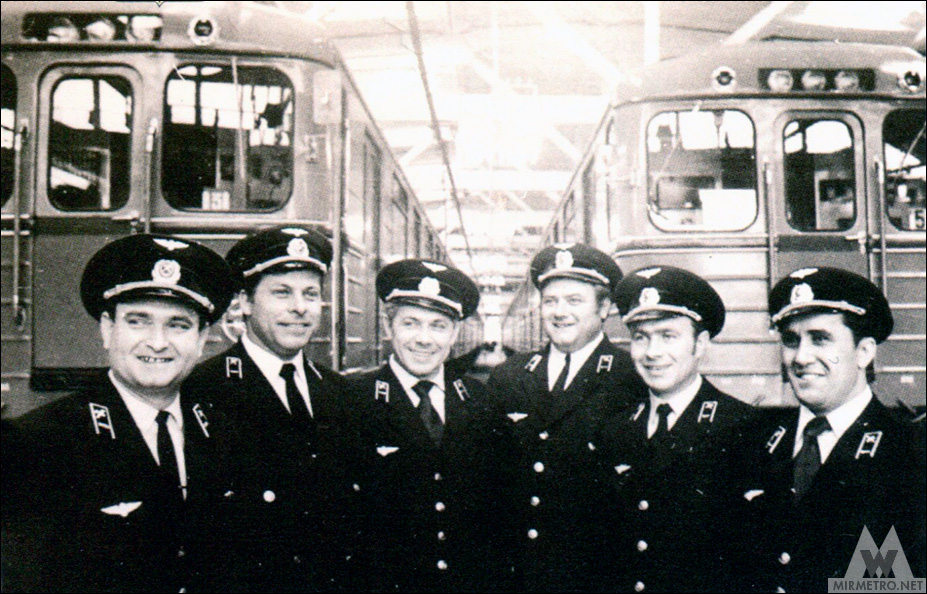
The first drivers of the Kharkiv Metro.
Ceremonial meeting on the occasion of the opening of the Kharkiv Metro at the Palace of Culture of the Kharkiv Electromechanical Plant.

Another pleasant feature also brought joy. Usually, when each metro in the USSR was opened, the first launch section, until its further extension, served more of a decorative and tourist function rather than truly solving the city’s transport problem. The Kharkiv Metro, already in the first month of its existence, carried a passenger flow of 300,000, thus providing more than 10% of all passenger transport, and during peak hours the carriages were densely filled. But most importantly, the opening of the metro made it possible to significantly relieve the surface transport along the entire route of the line.
Both the designers and the builders rejoiced immensely at the opening of the metro, and no one intended to rest on their laurels – everyone understood that a large horizon of work and many labour victories still lay ahead.