
Saltivska
Opening date: 24 October 1986
Architects: V. Spivachuk, O. Denisenko, P. Chechelnytskyi, E. Dorogozhylova
Engineers: P. Pashkov, L. Gryshyna, R. Denisyuk, L. Koba
Artist: V. Zinukhov
Station type: Shallow three-span column station
English equivalent: Saltivka district
Former name: Heroiv Pratsi (“Heroes of Labor”), until 26 July 2024
Average daily ridership: 45,000 passengers (2015)
The station opened on 24 October 1986 as part of the second section of the Kharkiv Metro’s second line, running from Barabashova (now Akademika Barabashova) to Heroiv Pratsi (now Saltivska) and consisting of three stations. With the opening of this section, Saltivka, the city’s largest residential district, received a fast and convenient transport connection with the rest of Kharkiv, leading to a significant increase in metro ridership.
Saltivska is the northern terminal station of the Saltivska Line. Beyond the station lies a track layout used for train turnback operations. The station is almost always busy and ranks second in the metro system by passenger traffic. This is because it serves not only residents of the eastern and northern parts of Saltivka, for whom it is the nearest metro station, but also functions as a major transport hub. Numerous bus and trolleybus routes from different parts of Saltivka, as well as from several towns in the Kharkiv region, converge here.
Description
Saltivska station follows the standard design of a three-span column station but incorporates several original architectural solutions. Its artistic concept is dedicated to creative labor and the professions that were considered the most honorable at the time. Accordingly, the station’s architectural and decorative design was fully aligned with its former name, Heroiv Pratsi (“Heroes of Labor”).

The architects and engineers of Kharkivmetroproekt made the greatest contribution to the station’s design, transforming a standard project into a station with its own distinctive character.
Ironically, Saltivska was the only station in the Kharkiv Metro whose artistic concept was so heavily influenced by Soviet ideology.
Because of local geological conditions, Saltivska station is particularly vulnerable to flooding and has been inundated several times during periods of heavy rainfall. For the same reason, construction of an additional station entrance and underground pedestrian passages, which began in 2014, was delayed by approximately a year and a half.

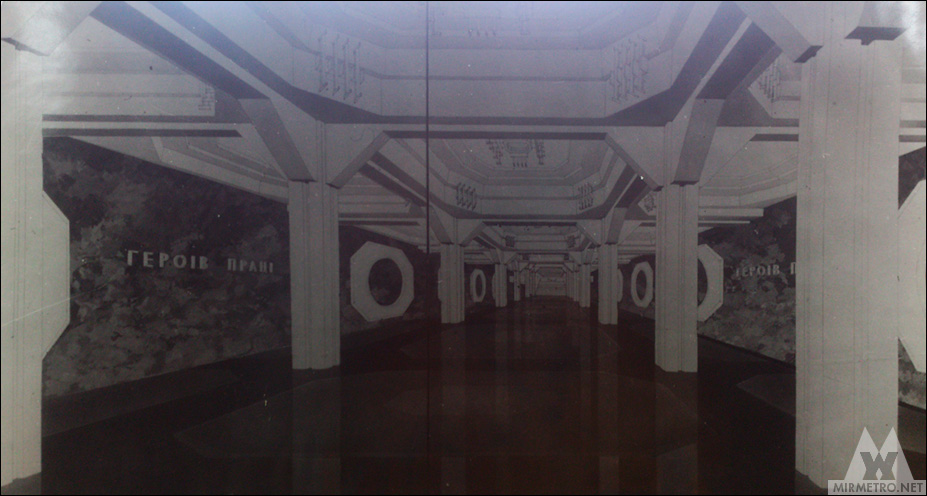
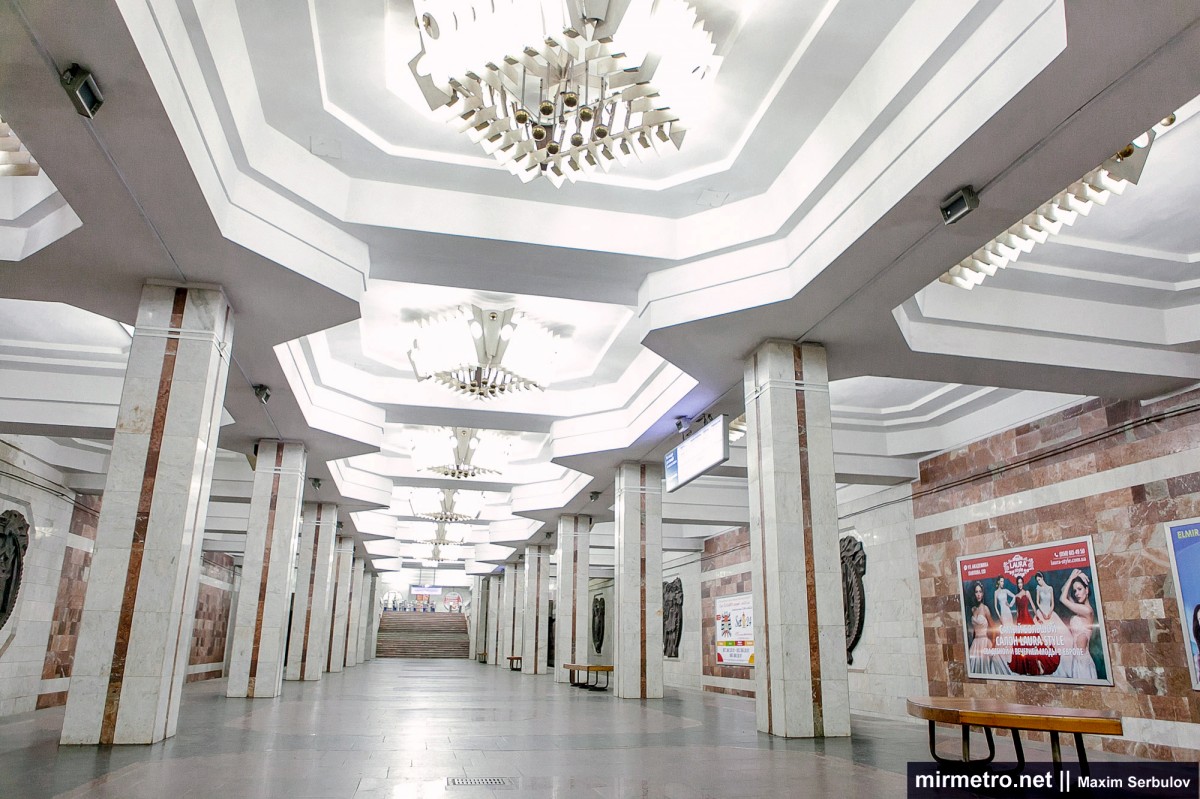
The station’s most distinctive feature is its ceiling, formed by octagonal reinforced-concrete coffered slabs. Each coffer has a cascading profile, with its diameter gradually decreasing toward the top. The coffers in the central span contain unique light fixtures assembled from vertical steel ribs and decorative spherical elements, giving the station an especially ceremonial appearance.
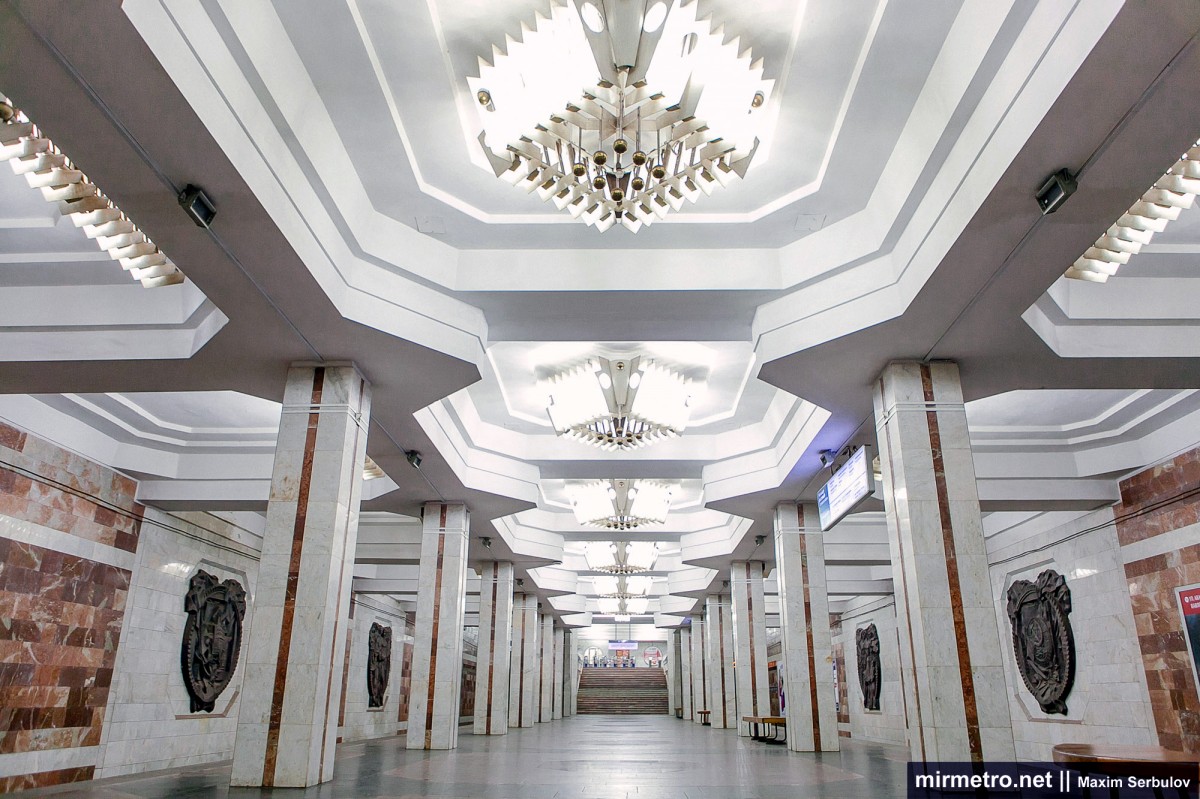
At both ends of the platform, where the ceiling rises higher, the lighting fixtures are supplemented by an additional cylindrical section containing fluorescent lamps.
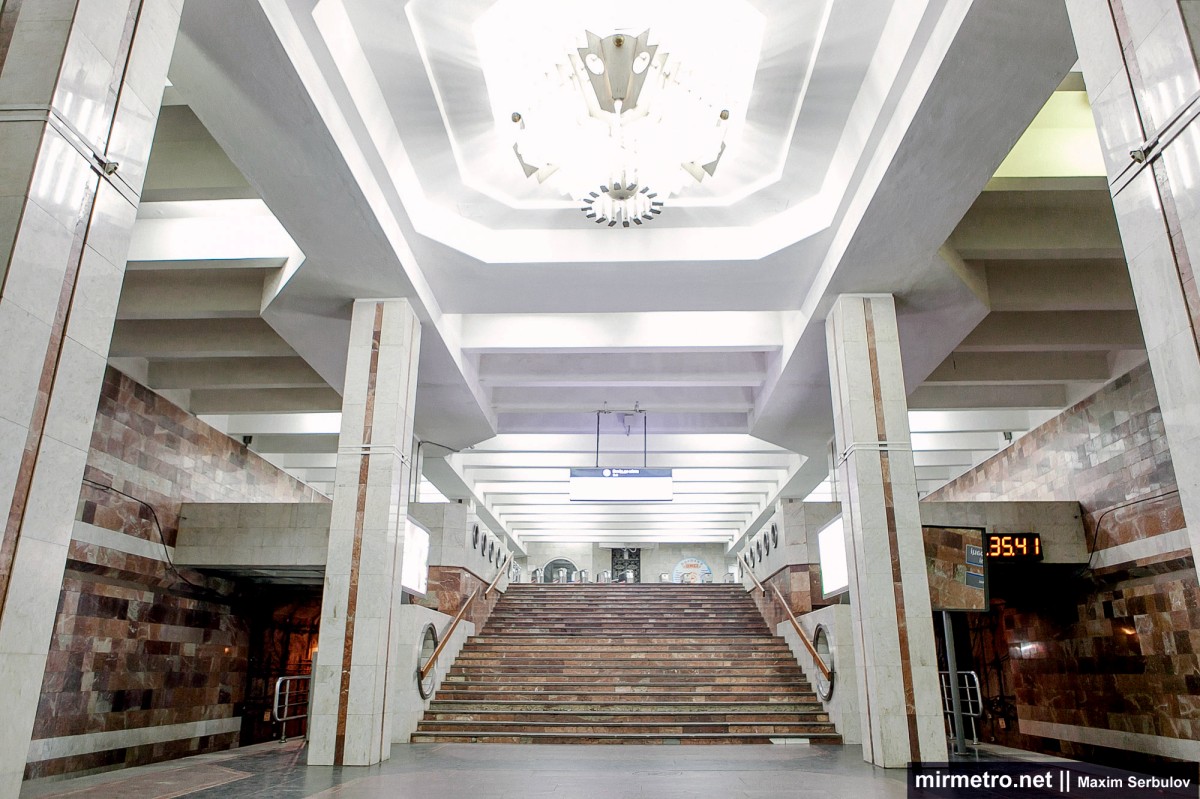
In the side spans, the coffers are illuminated by straight rows of steel ribs.

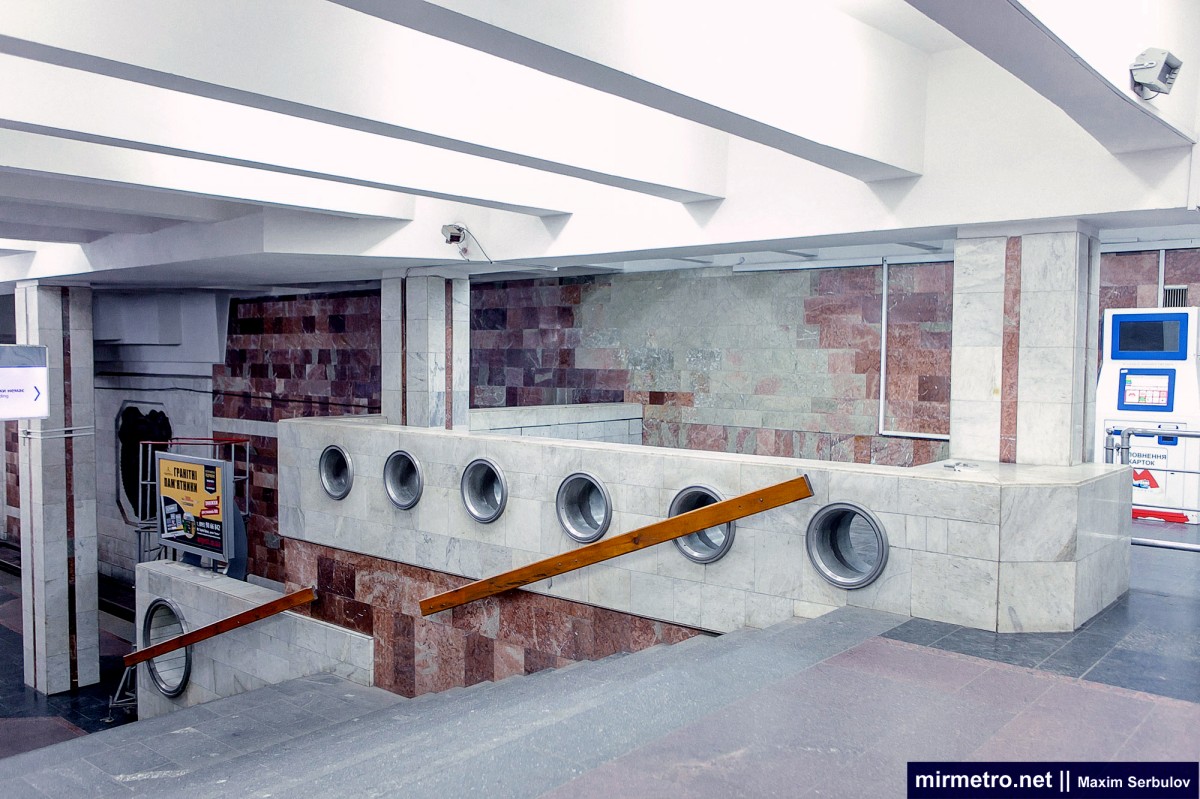
Saltivska became the first station in the Kharkiv Metro where the vestibules open directly onto the platform.

Thanks to this design, each vestibule includes a balcony from which passengers can admire the station without passing through the ticket barriers.
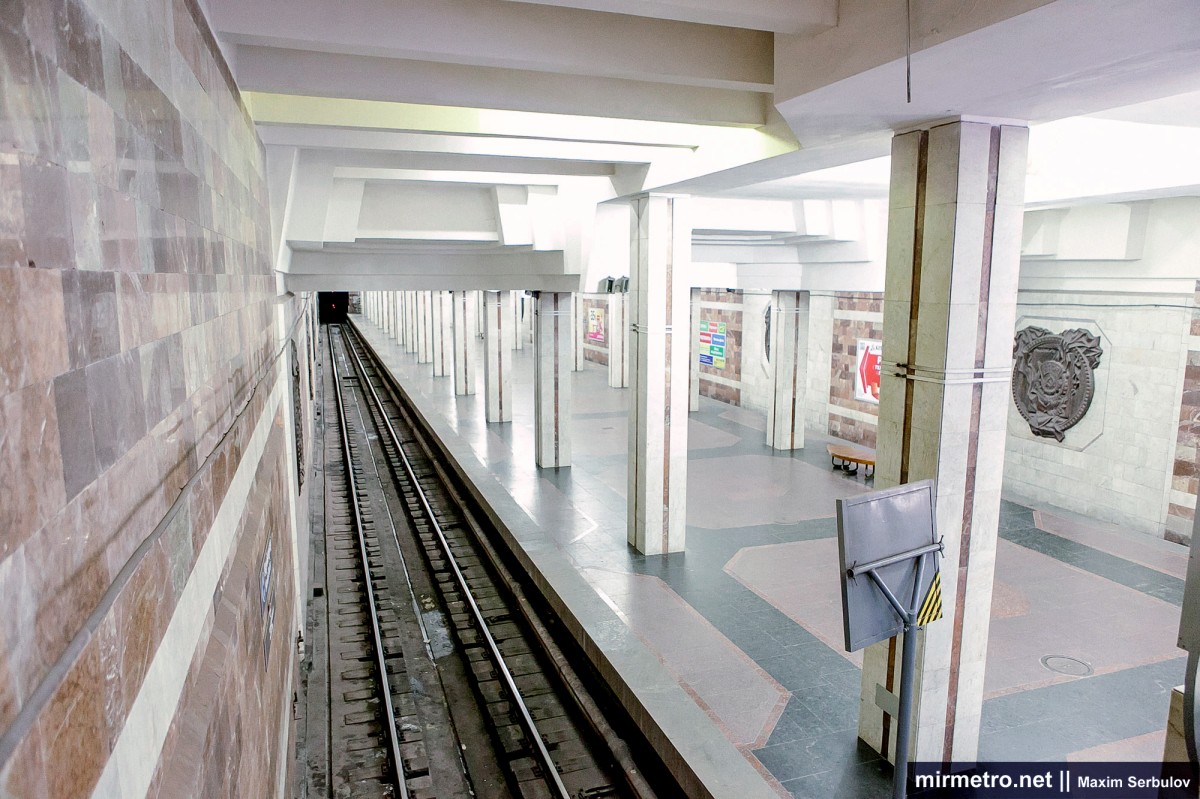
The station floor consists of octagonal patterns that precisely mirror the geometry of the ceiling.

It is paved with black labradorite and two shades of reddish-brown granite.

Originally, the outlines of these geometric figures were made of white marble, but over time the marble gradually lost its appearance.
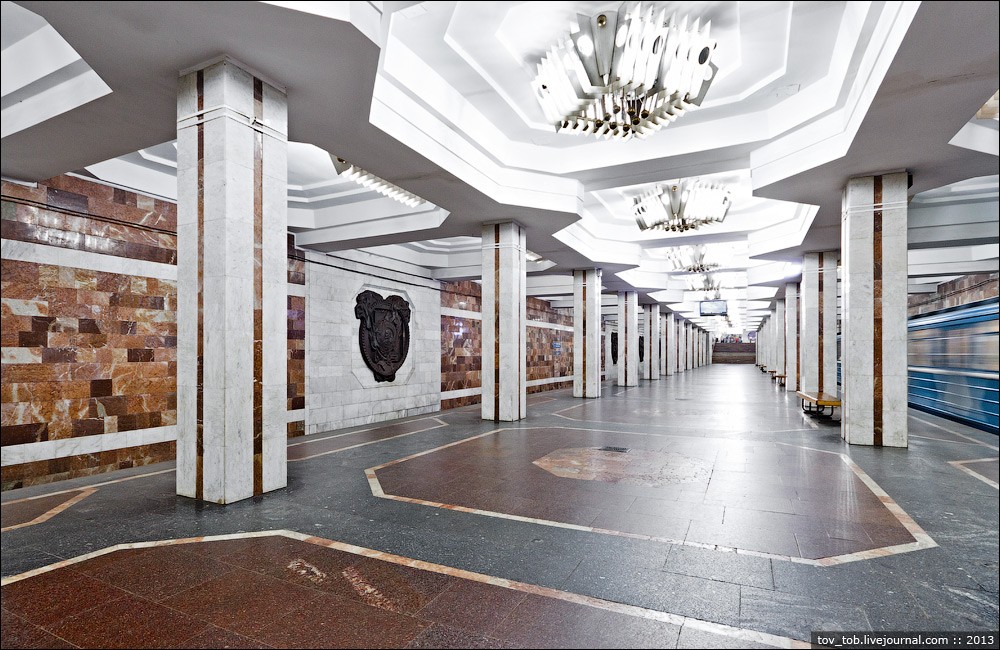
During the floor renovation in 2015–2016, the marble was replaced with granite, slightly altering the original composition.
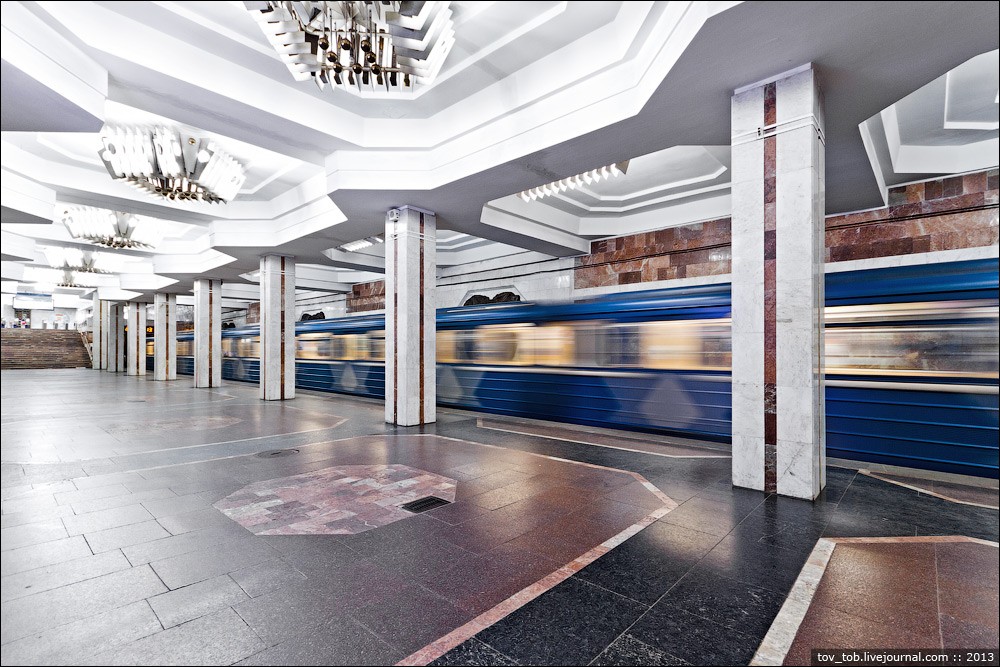
The track walls are clad in alternating sections of white and brown marble. The brown sections are framed by two white horizontal bands, while the white sections project slightly toward the platform, adding rhythm and elegance to the station’s interior.

The square columns are also faced with alternating white and brown marble and feature vertical decorative inserts along the centre of each face.

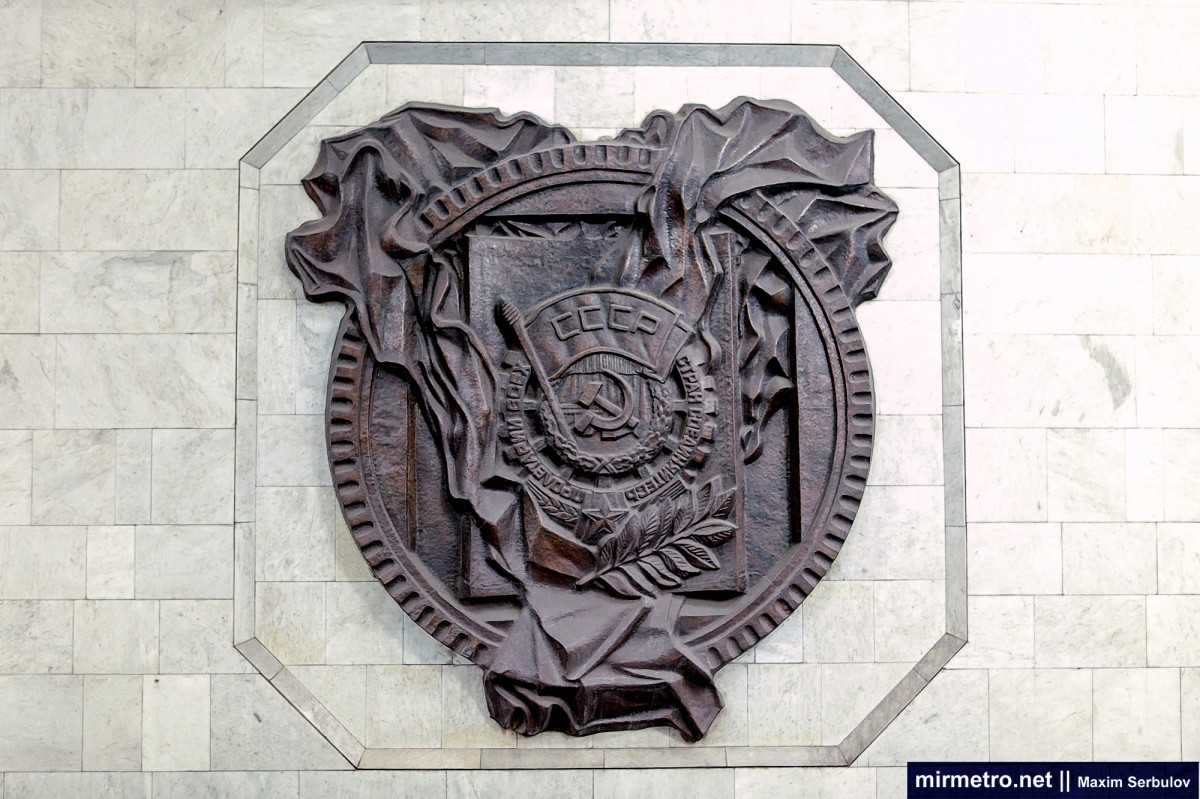
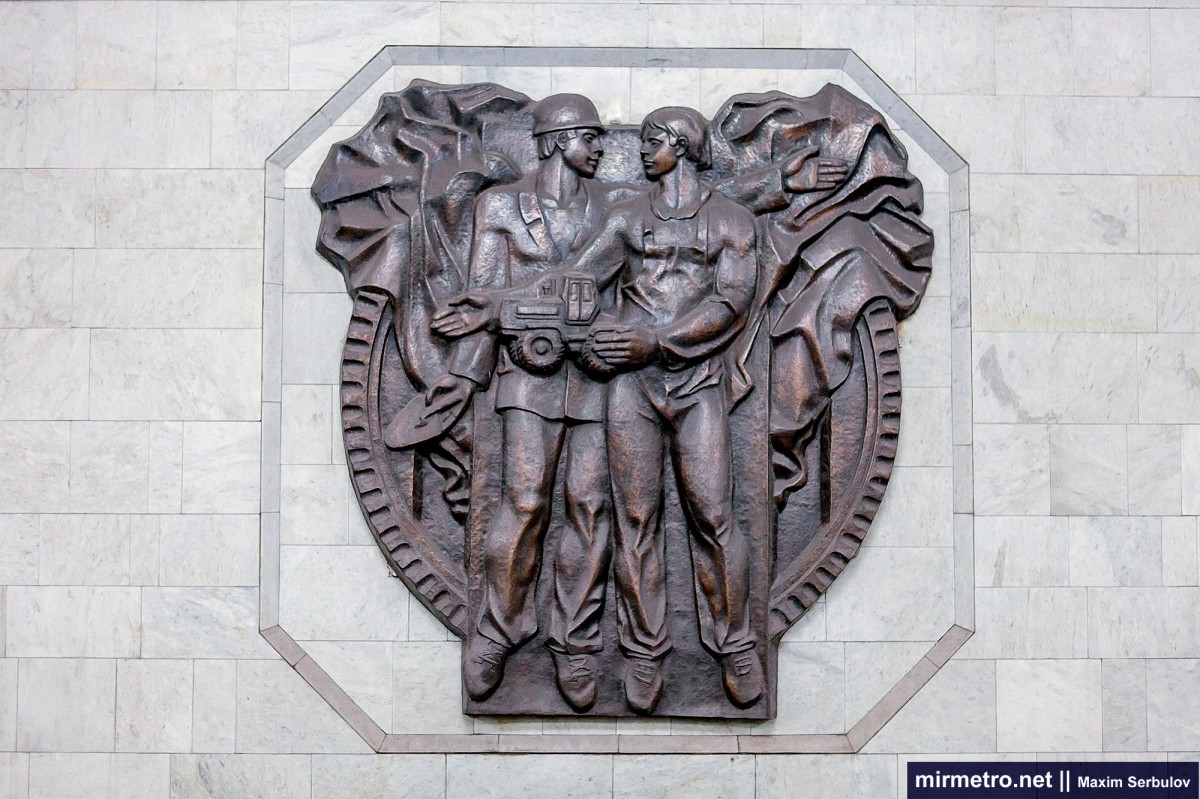
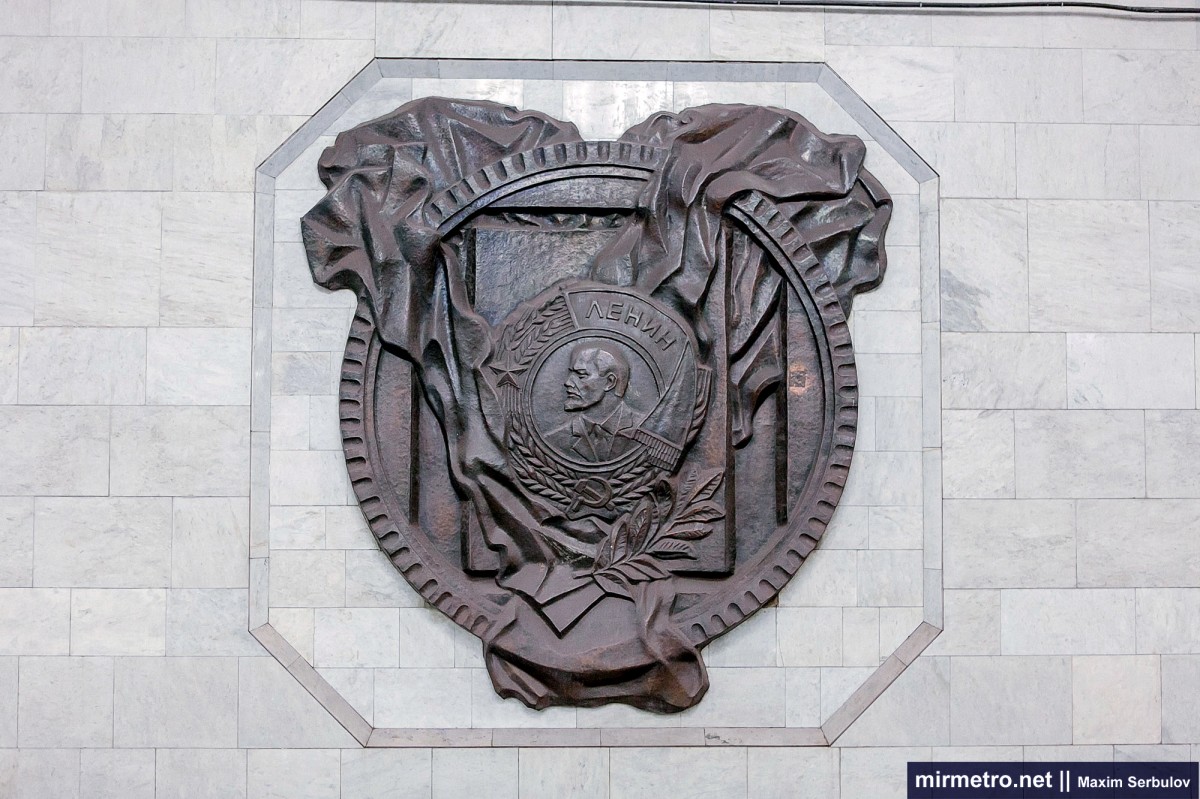
The competition for the station’s artistic design was won by sculptor Viktor Zinukhov, who proposed a series of embossed copper bas-reliefs. Produced at the Kharkiv Sculpture Factory, these reliefs were installed in octagonal niches along the track walls. Their craftsmanship is exceptional—even the folds of clothing are rendered with remarkable detail. The compositions depict Soviet-era orders and medals awarded for labour achievements, alongside representations of the most respected professions of the period. Eight reliefs are installed on each side of the station. Remarkably, these reliefs remained untouched for many years despite decommunization efforts. They were only concealed behind advertising panels in March 2023. Most likely, this was because removing them without disrupting train service would have been extremely difficult, and only the circumstances of the full-scale war prompted a practical solution. Pictured: the Order of the Red Banner of Labour.
Order of the Badge of Honour.

Bas-relief symbolizing the work of scientists and cultural workers.

Bas-relief symbolizing the work of engineers and builders.
Order of Labor Glory.

Order of Lenin.
Order of the October Revolution.
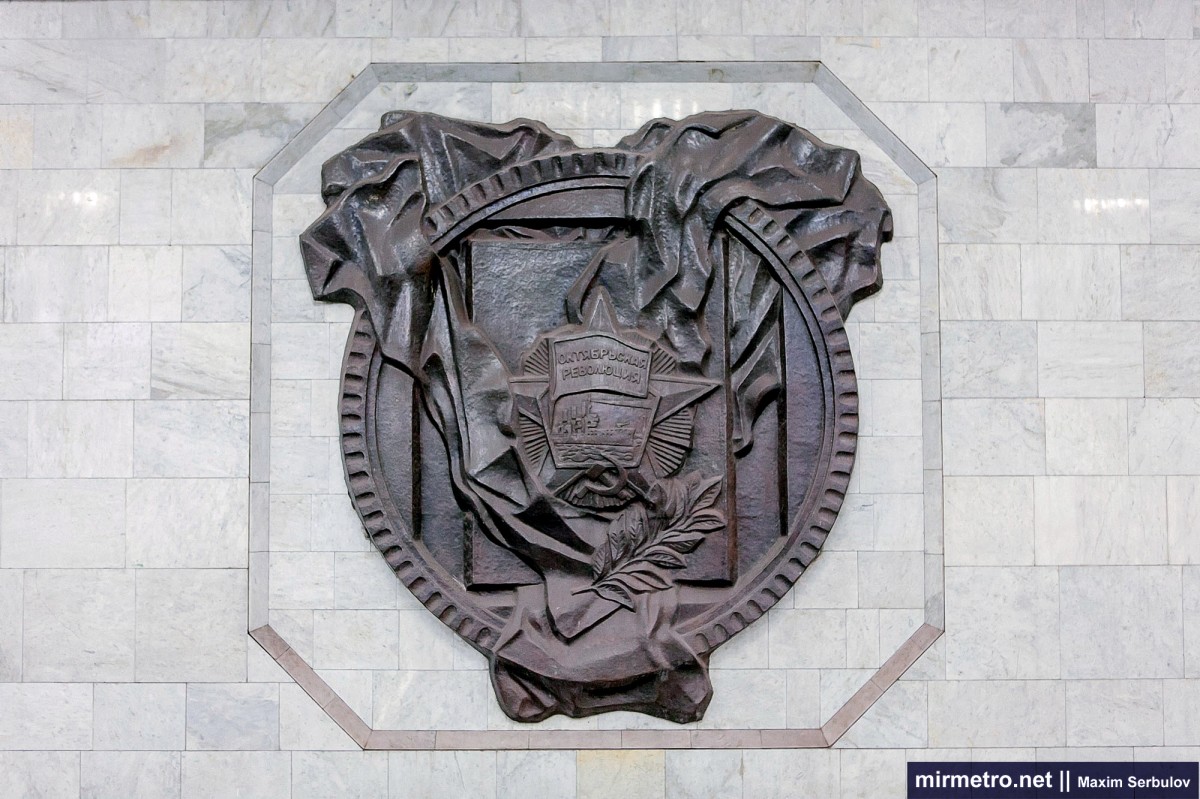
Medal “Veteran of Labor”.

Order of Friendship of Peoples.

Medal “For Distinguished Labor”.

Bas-reliefs depicting the Hero of Socialist Labour medal were originally installed in the station vestibules but were removed in 2007 to make room for ticket machines.

The station takes its current name from the Saltivka residential district. Its former name was derived from Heroiv Pratsi Street (now Neskorenykh Street), beneath which the station is located.

The station in the 2000s.


On the opening day of the second section of the line, a ceremonial event was held at Heroiv Pratsi station to mark the occasion. Metro builders, designers, representatives of the city authorities, and executives from the organizations involved in the construction of the metro took part in the celebration.

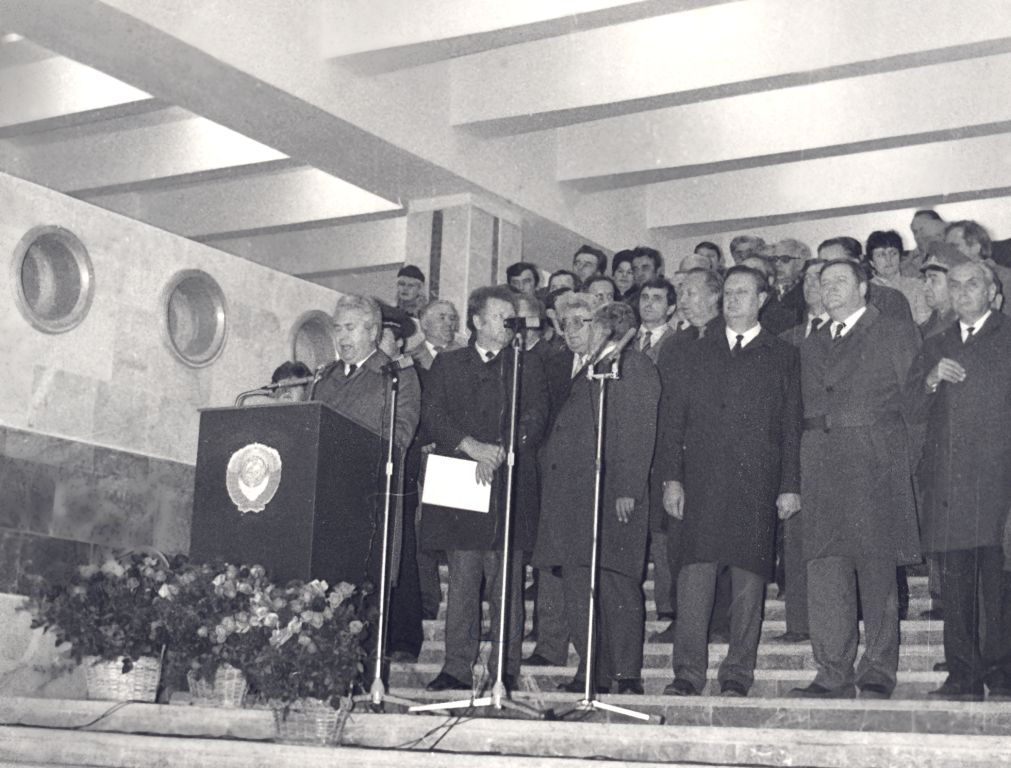
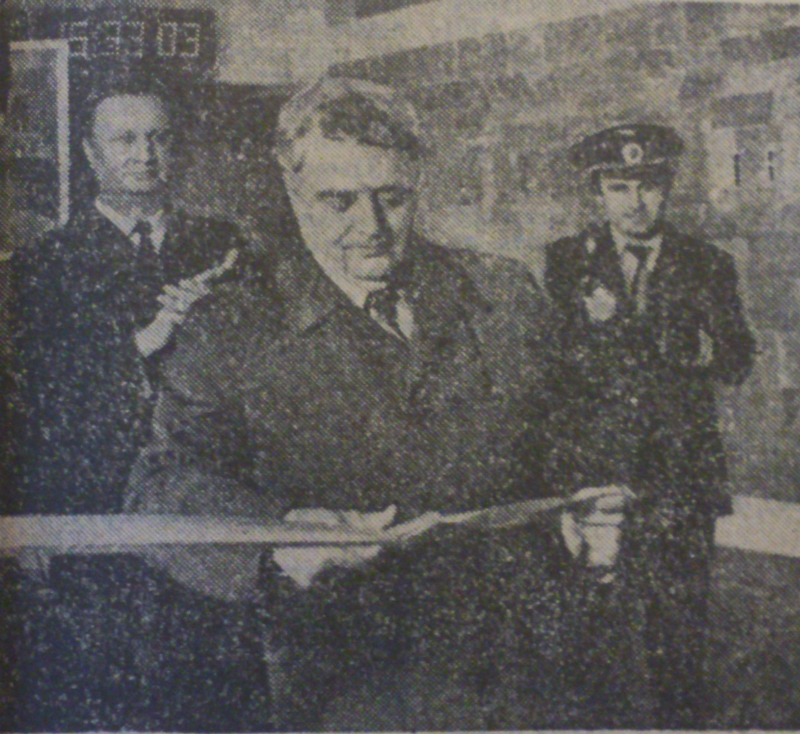
Following the traditional ribbon-cutting ceremony, the invited guests boarded the inaugural train.
Construction and projects
Saltivska Station was constructed from large, standardized reinforced concrete elements. Construction began in early 1983, when excavation started at the intersection of Akademika Pavlova Street and Neskorenych Street. The station was constructed using the traditional open-pit method, but this was the first time in Kharkiv Metro construction that the section from the neighboring station was also built entirely from the surface using the open-pit method.
The station’s construction conditions proved extremely challenging for a number of reasons. The soils in the area consisted of soft, waterlogged sandstones with quicksand properties, mixed with clays. The area has an exceptionally high groundwater level, was a major factor. The situation was further exacerbated by the fact that streams flowed intensively from natural underground springs located beneath the hills of the Saltivskyi residential area, forming a large underground lake. To construct the station under these conditions, engineers implemented a two-stage dewatering system consisting of deep wells and a network of wellpoints. A sump (water collection basin) was placed at the bottom of the excavation pit, which was simply pressed into the soft soil under pressure. Thanks to this combination of measures and the tightly braced walls, the excavation remained relatively dry.
A new construction technology was used at Saltivska station. Typically, when constructing a column-based station, the structure is first built using reinforced concrete, then the roof is added, and then the platform is erected. For the first time, the platform slab was constructed before the rest of the station structure, allowing the walls and roof to be erected simultaneously and significantly reducing construction time.
The most challenging stage turned out to be the construction of the turnaround sidings and the combined traction substation. Due to disruptions in material deliveries and delays in relocating the heating main and tram lines, construction of the turnaround sidings and the combined traction substation began six months later than scheduled, forcing the entire project to be carried out at an accelerated pace and under unfavorable conditions—it was winter, and Kharkiv was experiencing severe frosts. To save time, the waterproofing membrane was applied to the structural elements before they were lowered into the excavation pit.
The tunnels on the Studentska-Heroiv Pratsi section were constructed entirely using open-cut construction, using new, two-meter-long, single-section reinforced concrete blocks that were installed from the surface using a crane. The use of these blocks offered several advantages, including faster construction and the elimination of the need to plaster the tunnel’s exterior walls before applying a waterproofing layer. The use of these structures was made possible by the fact that the section is almost perfectly straight along its entire length. Unfortunately, open-cut construction created inconveniences due to the need to close off the section and arrange a detour for ground traffic, fortunately, Akademika Pavlova Street was wide enough to accommodate temporary traffic diversions.
A team in the excavation pit of Heroiv Pratsi station.
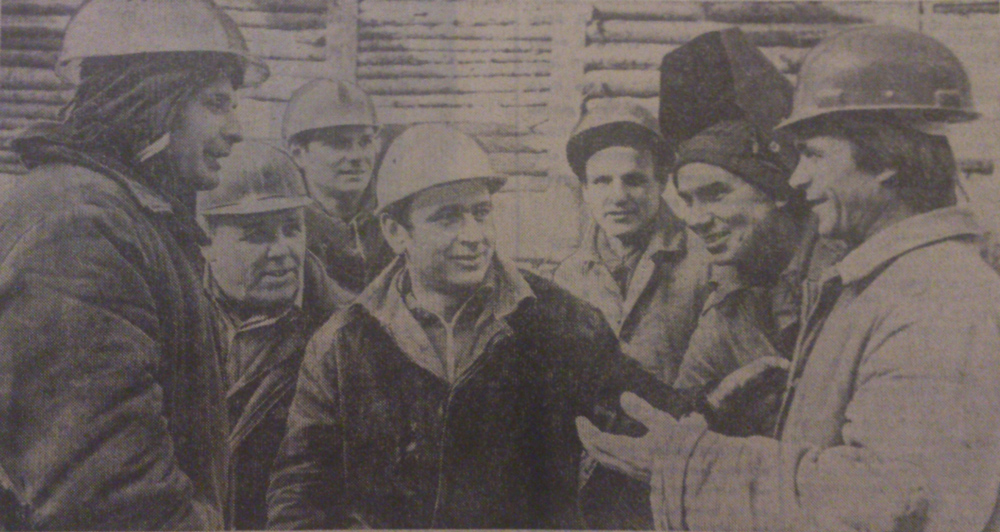
Workers tying reinforcement for the platform slab.

Platform slabs being installed by crane.
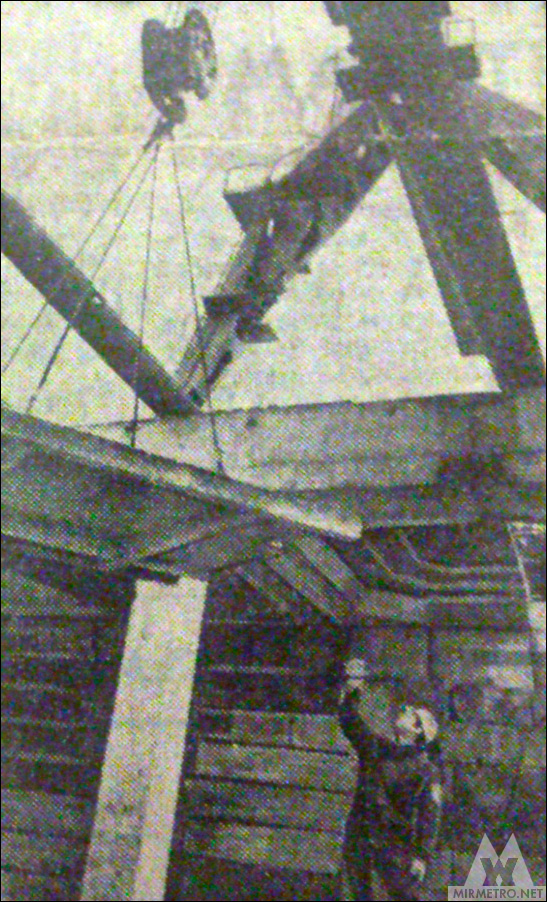
Part of the station structure has already been completed. April 1984.
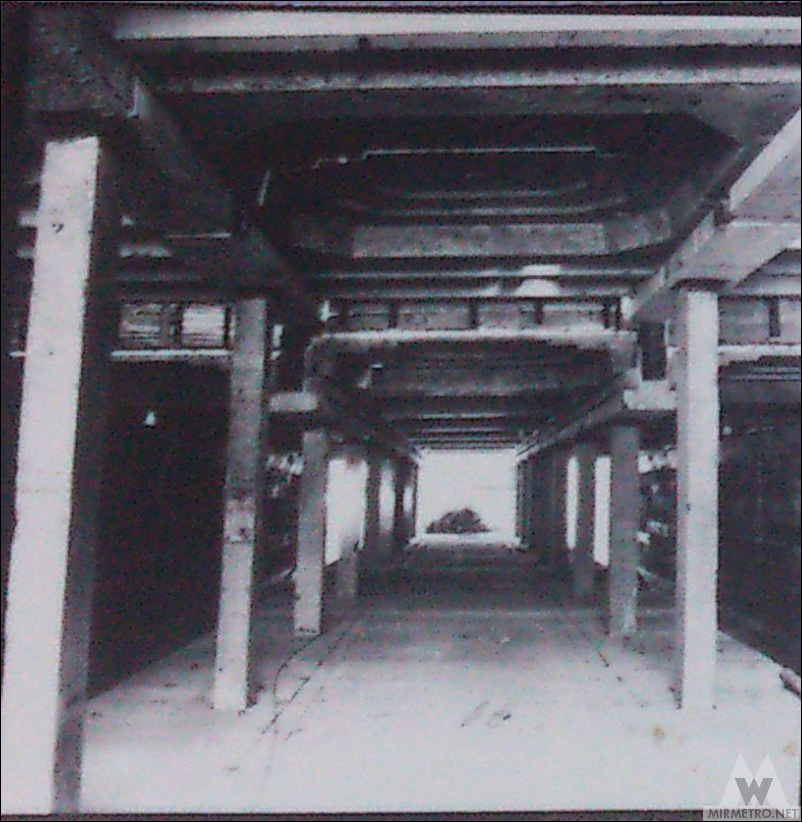
Heroiv Pratsi station a few weeks before opening.

The station is ready to welcome its first passengers.

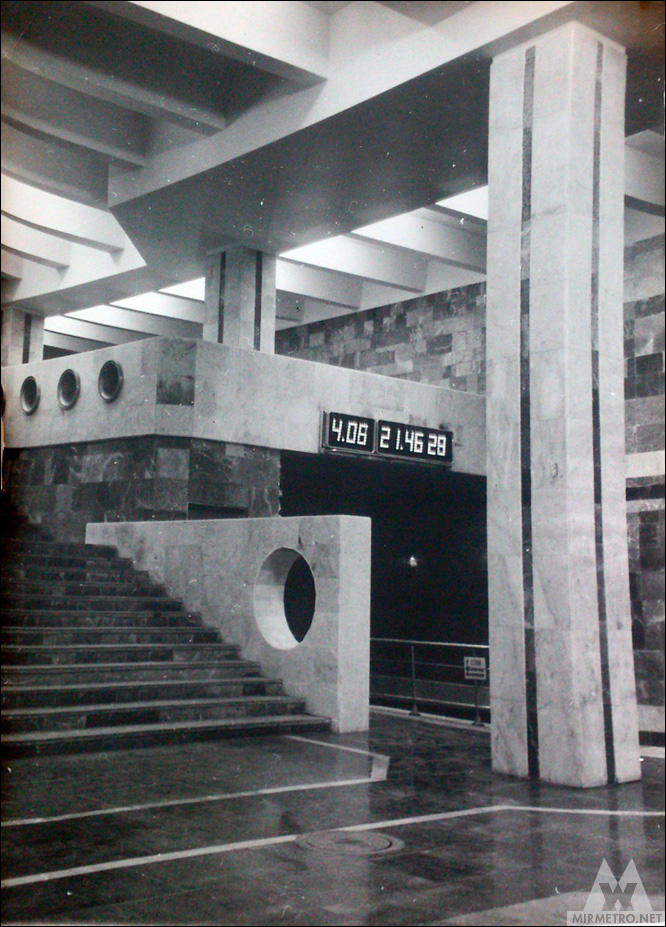
Approved and implemented concept design.